- Release
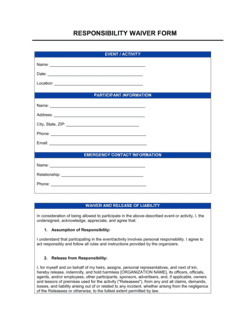
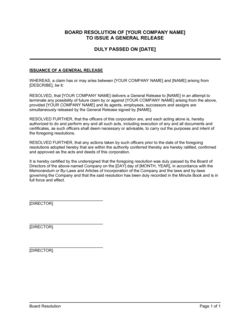
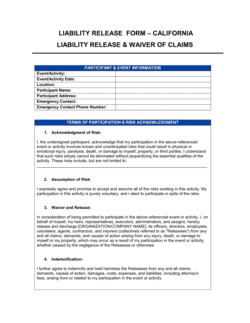
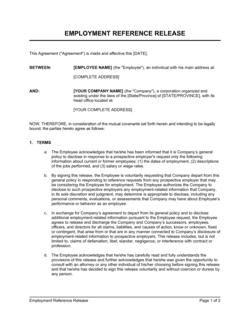
- A signed document in which one party gives up specified legal claims against another, typically in exchange for consideration.
- Releasor
- The party giving up their right to bring a claim — the one signing away the right to sue.
- Releasee
- The party being protected from claims by the terms of a release agreement.
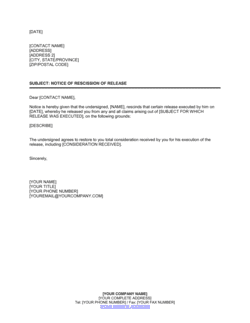
- Rescission
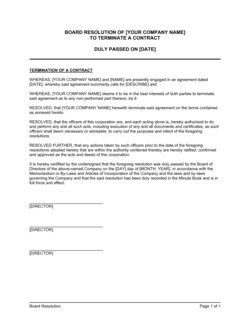
- The legal act of cancelling a contract and restoring both parties to their positions before the contract was made.
- Indemnification
- An obligation by one party to compensate another for specified losses, damages, or legal costs if a claim arises.
- Consideration
- Something of value exchanged between parties to make a contract legally binding — a payment, a service, or a mutual release.
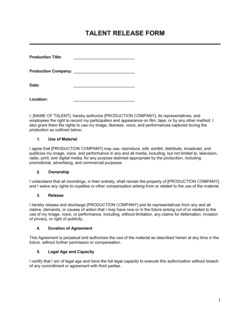
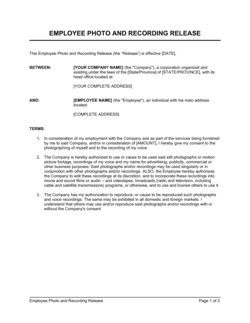
- Talent release
- Written permission from a person authorizing a business to use their name, image, voice, or likeness in specified media.
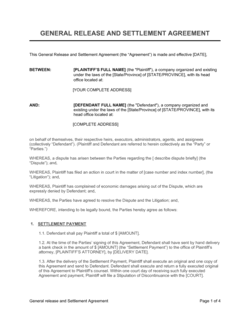
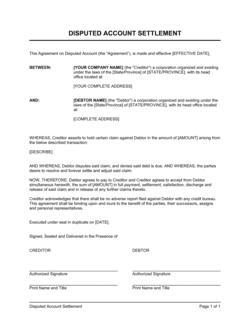
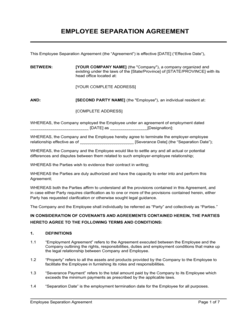
- Settlement agreement
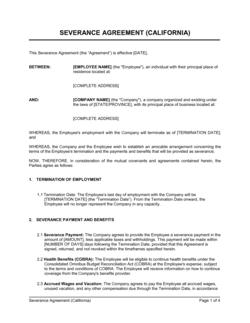
- A contract that resolves a dispute by setting out the agreed terms, obligations, and payments each party will fulfill to end the matter.
- Phantom equity
- A contractual right to receive a cash payment tied to company value, structured to mimic equity economics without transferring actual shares.
- Photo license
- A grant of permission to use a specific image under defined conditions, without transferring copyright ownership to the licensee.
- Press release
- A written announcement distributed to media outlets that communicates a newsworthy business event in a standardized editorial format.
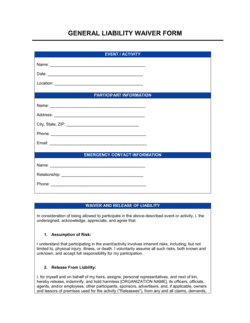
- Hold harmless
- A clause or agreement in which one party agrees not to hold another responsible for losses or damages arising from specified activities.