Multimedia Publicity - Privacy Release Template

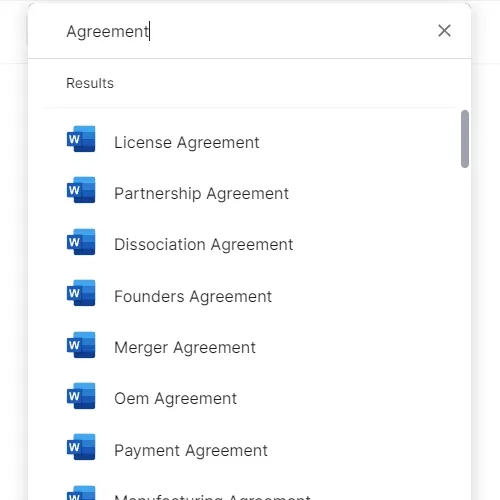
Free Word download β€’ Edit online β€’ Save & share with Drive β€’ Export to PDF

3 pagesβ€’20–30 min to fillβ€’Difficulty: Standardβ€’Signature requiredβ€’Legal review recommended
Learn more ↓
FreeMultimedia Publicity - Privacy Release Template

At a glance

What it is
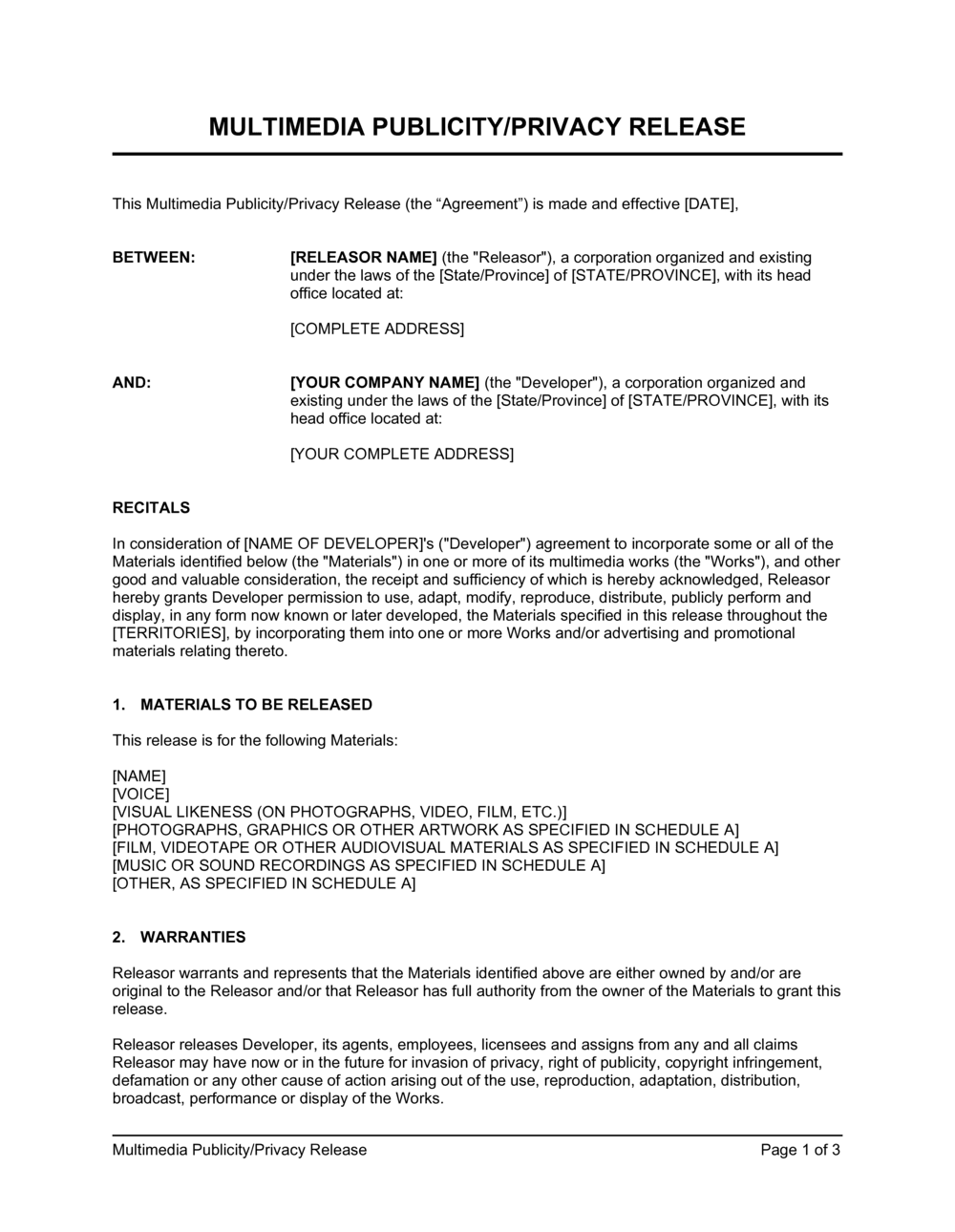
A Multimedia Publicity Privacy Release is a legally binding agreement in which an individual (the subject) grants a business or individual (the releasee) the right to use their name, likeness, image, voice, photograph, video footage, and other personal media for specified commercial or editorial purposes. This free Word download is editable online and exportable as PDF β€” ready for photography sessions, video productions, advertising campaigns, and digital content initiatives.
When you need it
Use it whenever you capture or plan to publish a person's image, voice, or identifying information in marketing materials, social media, websites, advertisements, broadcast media, or any commercial or editorial content. It is required before the media is used, not after publication.
What's inside
Grant of rights covering image, voice, and likeness; permitted media and platforms; compensation or consideration; waiver of claims; moral rights provisions; representations and warranties; governing law; and a signature block for both parties.

What is a Multimedia Publicity Privacy Release?

A Multimedia Publicity Privacy Release is a legally binding agreement in which an individual β€” the releasor β€” grants a business or individual the right to use their name, image, likeness, voice, photographs, video footage, and other identifying media for specified commercial or editorial purposes. The agreement documents the subject's informed, voluntary consent, defines the permitted scope of use across all relevant platforms and formats, and waives specified claims the releasor might otherwise bring for unauthorized use of their personal media. It functions simultaneously as a consent record, a license grant, and a liability shield for anyone who captures and publishes media featuring real people.

Why You Need This Document

Publishing a person's image, name, or likeness in advertising, on a website, or across social media without written consent exposes your business to right-of-publicity and privacy claims in virtually every jurisdiction where you operate or distribute content. In the United States alone, over 30 states have right-of-publicity statutes β€” California and New York among the strictest β€” and violations can result in injunctions, statutory damages, and disgorgement of profits derived from the unauthorized use. Without a signed release on file, a former employee featured in a recruitment video, a customer photographed at your event, or a subject who appeared in an ad campaign can demand that content be removed and seek damages, often years after the media was published. A properly executed Multimedia Publicity Privacy Release creates a clear, enforceable record of consent that is specific to the media type, the permitted uses, and the territory β€” eliminating the ambiguity that drives disputes and protecting your investment in creative production.

Which variant fits your situation?

If your situation is…Use this template
Photography session with a professional model or talentModel Release Form
Customer testimonial video for use in advertisingCustomer Testimonial Video Release
Employee featured in internal or external corporate communicationsEmployee Publicity Release
Minor child photographed or filmed at a school or public eventMinor Child Media Release Form
Event where all attendees may be photographed or filmedEvent Photo and Video Release
Property or location used as backdrop in commercial productionProperty Release Form
Podcast or audio recording featuring a named guestAudio Recording Release Agreement

Common mistakes to avoid

❌ Obtaining consent after publication

Why it matters: Publishing media without a signed release exposes the business to right-of-publicity and privacy claims. Retroactive consent is difficult to enforce and signals the original use was unauthorized.

Fix: Build release collection into your pre-production checklist. No media should enter the publication queue without a confirmed, signed release on file.

❌ Using a generic photo release for video and audio

Why it matters: A release that mentions only 'photographs' does not cover video footage, audio recordings, or AI-generated likenesses. Courts interpret release scope narrowly.

Fix: Use a release that explicitly names every media type captured β€” photograph, video, audio, digital likeness β€” and covers derivative works.

❌ No consideration documented

Why it matters: Without documented consideration, a court may treat the release as a gratuitous promise rather than an enforceable contract, leaving the releasee unprotected.

Fix: Always record what the releasor is receiving, even if it is nominal. State it is 'acknowledged as received' at the time of signing.

❌ Failing to get parental consent for minors

Why it matters: A minor cannot legally consent to a binding contract in any major jurisdiction. A release signed only by the minor is void, leaving the business fully exposed to the parents' claims.

Fix: Add a mandatory parental consent section and verify the signatory is the legal guardian before proceeding with any media capture or publication.

❌ Omitting prohibited uses

Why it matters: A broadly worded grant of rights may be interpreted to cover political advertising, adult content, or competitor co-promotions β€” uses the releasor never anticipated and would strongly object to.

Fix: Add an explicit list of prohibited uses proportionate to the sensitivity of the subject matter and the releasor's reasonable expectations.

❌ Not specifying the governing jurisdiction

Why it matters: Right-of-publicity law varies dramatically by state and country. Without a governing law clause, a dispute may be litigated under laws far less favorable to the releasee than expected.

Fix: Include a governing law clause naming the specific state or country, and confirm it aligns with where the releasee operates and where disputes would practically be resolved.

The 10 key clauses, explained

Parties and identification

In plain language: Identifies the releasor (the individual granting rights) and the releasee (the business or person receiving rights), including full legal names and contact details.

Sample language
This Multimedia Publicity and Privacy Release ('Agreement') is entered into as of [DATE] by and between [RELEASOR FULL NAME] ('Releasor') of [ADDRESS] and [COMPANY/INDIVIDUAL NAME] ('Releasee') of [ADDRESS].

Common mistake: Using only a first name or username for the releasor. If the release is ever disputed, an unambiguous legal name is required to prove who signed it.

Grant of rights

In plain language: The core clause granting the releasee specific permission to use the releasor's name, image, likeness, voice, and other media in defined formats and platforms.

Sample language
Releasor hereby grants to Releasee a perpetual, irrevocable, worldwide, royalty-free license to use, reproduce, modify, distribute, and display Releasor's name, image, likeness, voice, photograph(s), and video recordings ('Media') in connection with [DESCRIBED PURPOSE] across all media channels now known or hereafter developed.

Common mistake: Limiting the grant to only 'current platforms' without including future media. A release that names only Instagram or print ads will not cover new channels developed after signing.

Permitted uses and restrictions

In plain language: Defines exactly what the releasee may and may not do with the media β€” specific campaigns, channels, purposes, and any prohibited uses such as political advertising or adult content.

Sample language
Permitted uses include: advertising, marketing, social media, website content, editorial publications, and promotional materials for [COMPANY/PRODUCT]. Prohibited uses include: [POLITICAL ADVERTISING / ADULT CONTENT / COMPETING BRANDS / OTHER RESTRICTIONS].

Common mistake: Omitting a prohibited-use list. Without explicit carve-outs, the releasee may argue a broad grant covers uses the releasor never intended β€” including sensitive or reputationally damaging contexts.

Consideration

In plain language: States what the releasor receives in exchange for granting rights β€” making the agreement legally binding as a contract rather than a unilateral waiver.

Sample language
In consideration of the sum of $[AMOUNT] / [GOODS OR SERVICES DESCRIBED] / the opportunity to participate in [PROJECT NAME], the receipt and sufficiency of which are hereby acknowledged, Releasor agrees to the terms of this Agreement.

Common mistake: Leaving consideration blank or implied. Courts in many jurisdictions require documented consideration to enforce a release β€” 'love and affection' language is insufficient for commercial releases.

Waiver of claims and indemnification

In plain language: The releasor waives claims against the releasee for uses covered by the release and agrees to indemnify the releasee against third-party claims arising from the releasor's breach of their representations.

Sample language
Releasor waives any right to inspect or approve the finished product and releases Releasee from any claims, damages, or liability arising from the authorized use of the Media. Releasor shall indemnify and hold harmless Releasee from any third-party claims arising from Releasor's breach of this Agreement.

Common mistake: Making the waiver mutual without intending to. A mutual waiver prevents the releasor from suing even for uses clearly outside the permitted scope β€” keep indemnification one-directional unless specifically negotiated.

Moral rights and right of approval

In plain language: Addresses whether the releasor retains any right to review finished content, object to edits, or require attribution β€” and typically waives these rights for commercial use.

Sample language
To the fullest extent permitted by applicable law, Releasor waives any moral rights, rights of attribution, and rights of integrity in the Media. Releasor acknowledges that Releasee is not obligated to provide approval of any edited or derivative version of the Media.

Common mistake: Assuming US moral rights law applies globally. In Canada, the UK, and the EU, moral rights exist by statute and cannot be fully waived in some contexts β€” specific waiver language is required.

Representations and warranties

In plain language: The releasor confirms they are of legal age, have authority to grant the rights, and that granting these rights does not violate any other agreement they have entered into.

Sample language
Releasor represents and warrants that: (a) Releasor is at least [18] years of age; (b) Releasor has full authority to enter into and perform this Agreement; and (c) the execution of this Agreement does not conflict with any prior commitment or agreement to which Releasor is a party.

Common mistake: Skipping the age representation for adult subjects. If a releasor is a minor, their parent or guardian must co-sign β€” an adult signature line alone does not cover this.

Duration and territory

In plain language: Defines how long the release lasts and in which geographic territories the rights apply β€” often perpetual and worldwide for commercial releases, but may be limited for specific campaigns.

Sample language
The rights granted herein shall be: (a) Duration: perpetual and irrevocable / for a period of [X] years from the date of this Agreement; and (b) Territory: worldwide / limited to [SPECIFIC COUNTRY OR REGION].

Common mistake: Defaulting to perpetual and worldwide without considering the releasor's expectations. A subject who agreed to appear in a regional print ad may object to their image being used globally and indefinitely β€” scope should match the actual project.

Governing law and dispute resolution

In plain language: Specifies which jurisdiction's law governs the agreement and how disputes will be resolved β€” through arbitration, mediation, or litigation in a named court.

Sample language
This Agreement shall be governed by the laws of [STATE / PROVINCE / COUNTRY]. Any dispute arising under this Agreement shall be resolved by [binding arbitration / mediation / litigation] in [CITY, JURISDICTION], and the parties consent to exclusive jurisdiction in that forum.

Common mistake: Selecting a governing law that is inconvenient or unenforceable for one party. If the releasor lives in California, a release governed by New York law will still be subject to California's robust right-of-publicity statutes.

Minor child provision and parental consent

In plain language: When the subject is under 18, requires a parent or legal guardian to sign on the minor's behalf and represent they have authority to do so.

Sample language
If Releasor is under 18 years of age, this Agreement must be signed by Releasor's parent or legal guardian. By signing below, the undersigned parent/guardian represents that they have legal authority to grant the rights described herein on behalf of [MINOR'S NAME], born [DATE OF BIRTH].

Common mistake: Including a minor child provision as optional boilerplate when minors are actually expected to be subjects. Unsigned parental consent for a minor's media makes the entire release unenforceable for that subject.

How to fill it out

  1. 1

    Identify both parties with full legal names

    Enter the releasor's full legal name and address, and the releasee's registered business name and address. Do not use brand names, stage names, or usernames in place of legal identities.

    πŸ’‘ If collecting releases at an event, prepare a stack of pre-filled forms with your company details already printed β€” staff only need to collect the releasor's information and signature.

  2. 2

    Define the specific media being released

    Describe the photographs, video footage, audio recordings, or other media captured β€” referencing the shoot date, location, or project name so the scope is clear.

    πŸ’‘ Attach a reference to the session or project (e.g., 'Spring 2026 Campaign shoot at [LOCATION] on [DATE]') rather than a generic description to avoid scope disputes later.

  3. 3

    Specify permitted uses and any prohibited uses

    List each channel and purpose the media may be used for β€” social media, print advertising, website, television, email campaigns β€” and explicitly name any uses that are off-limits.

    πŸ’‘ If you are uncertain about future uses, draft a broad permitted-use clause but add a specific carve-out for sensitive contexts like political advertising or adult-content platforms.

  4. 4

    State the consideration clearly

    Record exactly what the releasor is receiving β€” a dollar amount, free product, photo copies, or a nominal fee of $1 β€” and confirm it is acknowledged as received.

    πŸ’‘ Even $1 creates valid consideration in most jurisdictions. Leaving this section blank is riskier than offering a nominal amount.

  5. 5

    Set the duration and territory

    Choose perpetual or a fixed term (e.g., 3 years), and define the geographic scope β€” worldwide or limited to specific countries or regions β€” based on your actual distribution plan.

    πŸ’‘ For a local event or regional campaign, limiting territory reduces the releasor's exposure and makes them more likely to sign without negotiation.

  6. 6

    Address minor child provisions if applicable

    If any subjects are under 18, activate the parental consent section and collect the parent's or guardian's signature, full name, and relationship to the minor.

    πŸ’‘ Verify the signer is actually the legal guardian β€” a grandparent or older sibling does not have authority to sign unless they hold legal guardianship.

  7. 7

    Execute before capturing or publishing media

    Have the releasor sign the agreement before the shoot begins or, at latest, before any media is published. Retroactive releases are harder to enforce and create credibility problems if later disputed.

    πŸ’‘ Use a digital signing tool to timestamp signatures and store executed copies automatically β€” this removes the risk of lost paper forms after an event.

  8. 8

    Retain executed copies in a searchable archive

    File a copy indexed by releasor name, project, and date. Link the executed release to the corresponding media files in your asset management system.

    πŸ’‘ Media libraries grow fast β€” a release that cannot be located when a subject later objects is effectively no release at all.

Frequently asked questions

What is a multimedia publicity privacy release?

A multimedia publicity privacy release is a legally binding agreement in which an individual grants a business or person the right to use their name, image, likeness, voice, and other identifying media for specified commercial or editorial purposes. It protects the releasee from right-of-publicity and privacy claims by documenting the subject's informed, voluntary consent before media is captured or published.

When is a publicity release legally required?

A signed release is required in most jurisdictions whenever a person's image, name, or likeness is used for commercial purposes β€” advertising, product packaging, endorsements, and promotional content. Editorial and newsworthy uses may fall under different standards, but commercial use without consent is a recognized legal claim in nearly every US state and in most countries with right-of-publicity or privacy statutes.

Does a publicity release need to be signed before or after the shoot?

It should be signed before the shoot begins or, at the latest, before any media is published. Retroactive releases β€” obtained after content is already live β€” are harder to enforce because the releasor may argue they were signed under pressure. Obtaining consent in advance also ensures the releasor understands exactly what they are agreeing to before media is captured.

What is valid consideration for a publicity release?

Consideration can be monetary (even $1), a free product, photo copies, a gift card, or the opportunity to participate in a project. It must be something of value exchanged between the parties. Releases with no documented consideration are at greater risk of being challenged as unenforceable gratuitous waivers in jurisdictions that require exchange for a binding contract.

Can a minor sign their own publicity release?

No. Minors lack legal capacity to enter binding contracts in all major jurisdictions. A parent or legal guardian must sign on the minor's behalf and represent they have legal authority to do so. Any release signed only by the minor is generally void, leaving the business with no enforceable consent for the media used.

Does a publicity release cover social media and future platforms?

Only if the grant-of-rights clause is drafted broadly enough. A release limited to named platforms or formats will not automatically cover new channels developed after signing. Include language such as "all media channels now known or hereafter developed" to ensure coverage extends to future platforms without requiring a new release.

What is the difference between a publicity release and a model release?

A model release is a specific type of publicity release typically used in professional photography and film for paid talent or models. A multimedia publicity privacy release is a broader document that covers any individual β€” employees, customers, event attendees β€” across any type of media. Both accomplish the same legal purpose; the difference is scope and the context in which they are used.

Can a signed publicity release be revoked?

Generally no, if it is drafted as irrevocable and supported by valid consideration. However, some jurisdictions β€” particularly in the EU under GDPR β€” provide individuals with the right to withdraw consent for personal data processing, which can intersect with publicity rights. In the US, an irrevocable release with documented consideration is typically enforceable; in the EU, businesses should consult legal counsel on the interplay between contractual releases and data subject rights.

Do I need a separate release for each media type?

Not if your release explicitly covers all media types in a single document. A well-drafted multimedia release should name photographs, video footage, audio recordings, digital likenesses, and derivative works in the grant-of-rights clause. Separate releases for each format create administrative burden and gaps β€” a single comprehensive release for all media captured in a session is the standard practice.

How this compares to alternatives

vs Non-Disclosure Agreement

An NDA protects confidential information flowing from one party to another and restricts the recipient from disclosing it. A publicity release does the opposite β€” it authorizes disclosure and public use of a person's image and likeness. Both are consent-based agreements, but they operate in opposite directions and serve entirely different legal purposes.

vs Model Release Form

A model release is a narrower instrument designed for professional photography and film production contexts with paid talent. A multimedia publicity privacy release is broader, covering employees, customers, and event attendees across any media type. For professional shoots with paid models, a model release is typical; for all other subjects and mixed-media contexts, a multimedia release provides more complete protection.

vs Media Consent Form

A media consent form is often a shorter, one-page document used in healthcare, education, and events to collect basic permission for photo and video capture. A multimedia publicity privacy release is a full legal agreement with indemnification, moral rights waivers, representations and warranties, and governing law β€” providing significantly stronger legal protection for commercial use.

vs Talent Release Agreement

A talent release is used specifically for compensated on-screen talent in film, television, and advertising productions β€” it typically includes performance rights, residual use terms, and union provisions. A multimedia publicity privacy release is appropriate for non-talent subjects such as customers, employees, and event attendees where union and residual considerations do not apply.

Industry-specific considerations

Advertising and marketing

Campaign-level releases covering all deliverables and channels before creative production begins, with explicit carve-outs for competitor usage and political advertising.

Media and entertainment

Talent releases for film, television, podcast, and streaming productions that address residual use, international distribution, and streaming platform rights alongside standard publicity terms.

Healthcare

Patient testimonial releases must comply with HIPAA and cannot be used to imply medical endorsement β€” releases require specific language limiting use to approved communications only.

Education

Schools and universities collecting student or alumni media require FERPA-compliant releases with parental consent for minors and specific restrictions on commercial third-party use.

Retail and e-commerce

Customer-generated content and unboxing video campaigns require releases that cover social media reposts, product page embedding, and email marketing alongside standard advertising use.

Corporate and professional services

Employee and client releases for case studies, recruitment videos, and LinkedIn content need to address internal versus external use and the right to remove content if the employment or client relationship ends.

Jurisdictional notes

United States

Right-of-publicity law is governed at the state level β€” over 30 states have statutes, with California, New York, and Tennessee among the most protective. California's Civil Code Β§3344 requires written consent for commercial use of a living person's likeness, and Β§3344.1 extends protections post-mortem. New York restricts use of name and likeness for advertising without written consent. Several states, including Illinois under BIPA, also regulate biometric data including voice prints and facial geometry β€” relevant for AI-generated likenesses.

Canada

Canada has no single federal right-of-publicity statute; protection derives from provincial privacy laws, tort law, and PIPEDA. British Columbia and Quebec have the strongest privacy protections β€” Quebec's Act Respecting the Protection of Personal Information in the Private Sector (Law 25) significantly strengthens consent requirements for personal data use including images. Moral rights under the Copyright Act cannot be fully waived by contract in some circumstances and require express written waiver language.

United Kingdom

The UK does not have a standalone right-of-publicity statute; protection relies on the tort of misappropriation, passing off, data protection law under the UK GDPR, and the Human Rights Act 1998. Post-Brexit, the UK GDPR operates independently from EU GDPR but maintains broadly equivalent consent requirements for processing personal data including images. Releases used for commercial purposes should include explicit data processing consent language compliant with UK GDPR, including a clear statement of the lawful basis for processing.

European Union

In the EU, the use of a person's image in commercial contexts intersects directly with GDPR. A publicity release used as the basis for processing personal data (including photographs and video) must meet GDPR Article 7 consent standards β€” freely given, specific, informed, and unambiguous. Subjects retain the right to withdraw consent at any time, which can conflict with a contractually irrevocable release. Businesses operating across EU member states should seek legal advice on balancing contractual release terms with GDPR data subject rights, particularly for long-term or perpetual use.

Template vs lawyer β€” what fits your deal?

PathBest forCostTime
Use the templateStandard commercial photography, corporate content, events, and customer testimonials in a single domestic jurisdictionFree15–20 minutes per release
Template + legal reviewCampaigns involving sensitive populations (minors, patients), major advertising placements, or multi-jurisdiction distribution$300–$8002–5 days
Custom draftedHigh-profile talent, entertainment productions, AI likeness usage, or releases required to comply with GDPR, CCPA, or HIPAA simultaneously$1,500–$5,000+1–3 weeks

Glossary

Right of Publicity
A person's legal right to control the commercial use of their name, image, likeness, and other personal attributes.
Right of Privacy
A person's legal right to control whether and how private facts, images, or recordings of them are disclosed to the public.
Releasee
The business or individual receiving permission to use the subject's likeness and media β€” typically the photographer, production company, or brand.
Releasor
The individual granting rights to their name, image, voice, or likeness β€” the subject of the media.
Consideration
Something of value exchanged to make the release legally binding β€” can be monetary payment, a free product, a copy of the photos, or nominal payment of $1.
Likeness
Any visual or audio representation of a person that is recognizable as them, including photographs, video, digital avatars, and voice recordings.
Waiver of Claims
A clause in which the releasor gives up the right to sue the releasee for specified uses of their image or likeness covered by the release.
Moral Rights
Rights protecting an author or subject's personal connection to a work, including the right to attribution and the right to object to distortion β€” recognized more broadly in civil-law countries than in the US.
Perpetual License
A grant of rights with no expiration date, allowing the releasee to use the media indefinitely unless the agreement specifies otherwise.
Derivative Works
New content created by modifying, editing, or building upon the original media β€” such as cropping a photo, adding graphics to a video, or using an AI-generated version of someone's likeness.
Indemnification
A contractual obligation for one party to cover legal costs and damages incurred by the other party as a result of a specified breach or third-party claim.

Part of your Business Operating System

This document is one of 3,000+ business & legal templates included in Business in a Box.

  • Fill-in-the-blanks β€” ready in minutes
  • 100% customizable Word document
  • Compatible with all office suites
  • Export to PDF and share electronically

Create your document in 3 simple steps.

From template to signed document β€” all inside one Business Operating System.
1
Download or open template

Access over 3,000+ business and legal templates for any business task, project or initiative.

2
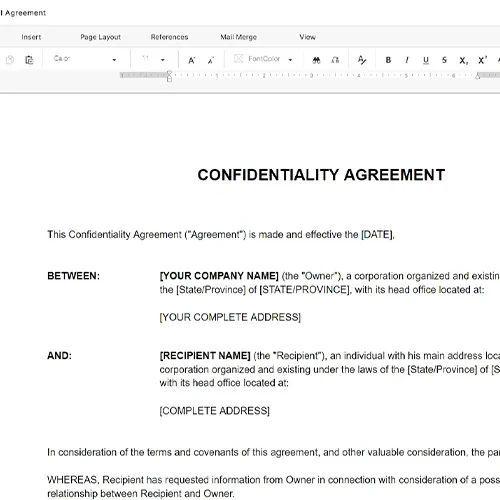
Edit and fill in the blanks with AI

Customize your ready-made business document template and save it in the cloud.

3
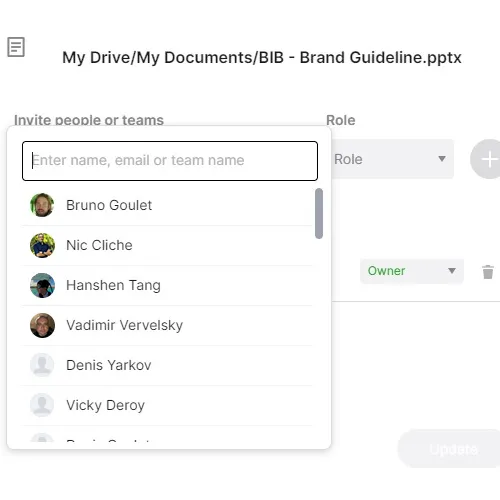
Save, Share, Send, Sign

Share your files and folders with your team. Create a space of seamless collaboration.

Save time, save money, and create top-quality documents.

β˜…β˜…β˜…β˜…β˜…

"Fantastic value! I'm not sure how I'd do without it. It's worth its weight in gold and paid back for itself many times."

Managing Director Β· Mall Farm
Robert Whalley
Managing Director, Mall Farm Proprietary Limited
β˜…β˜…β˜…β˜…β˜…

"I have been using Business in a Box for years. It has been the most useful source of templates I have encountered. I recommend it to anyone."

Business Owner Β· 4+ years
Dr Michael John Freestone
Business Owner
β˜…β˜…β˜…β˜…β˜…

"It has been a life saver so many times I have lost count. Business in a Box has saved me so much time and as you know, time is money."

Owner Β· Upstate Web
David G. Moore Jr.
Owner, Upstate Web

Run your business with a system β€” not scattered tools

Stop downloading documents. Start operating with clarity. Business in a Box gives you the Business Operating System used by over 250,000 companies worldwide to structure, run, and grow their business.

Free Forever PlanΒ Β·Β No credit card required