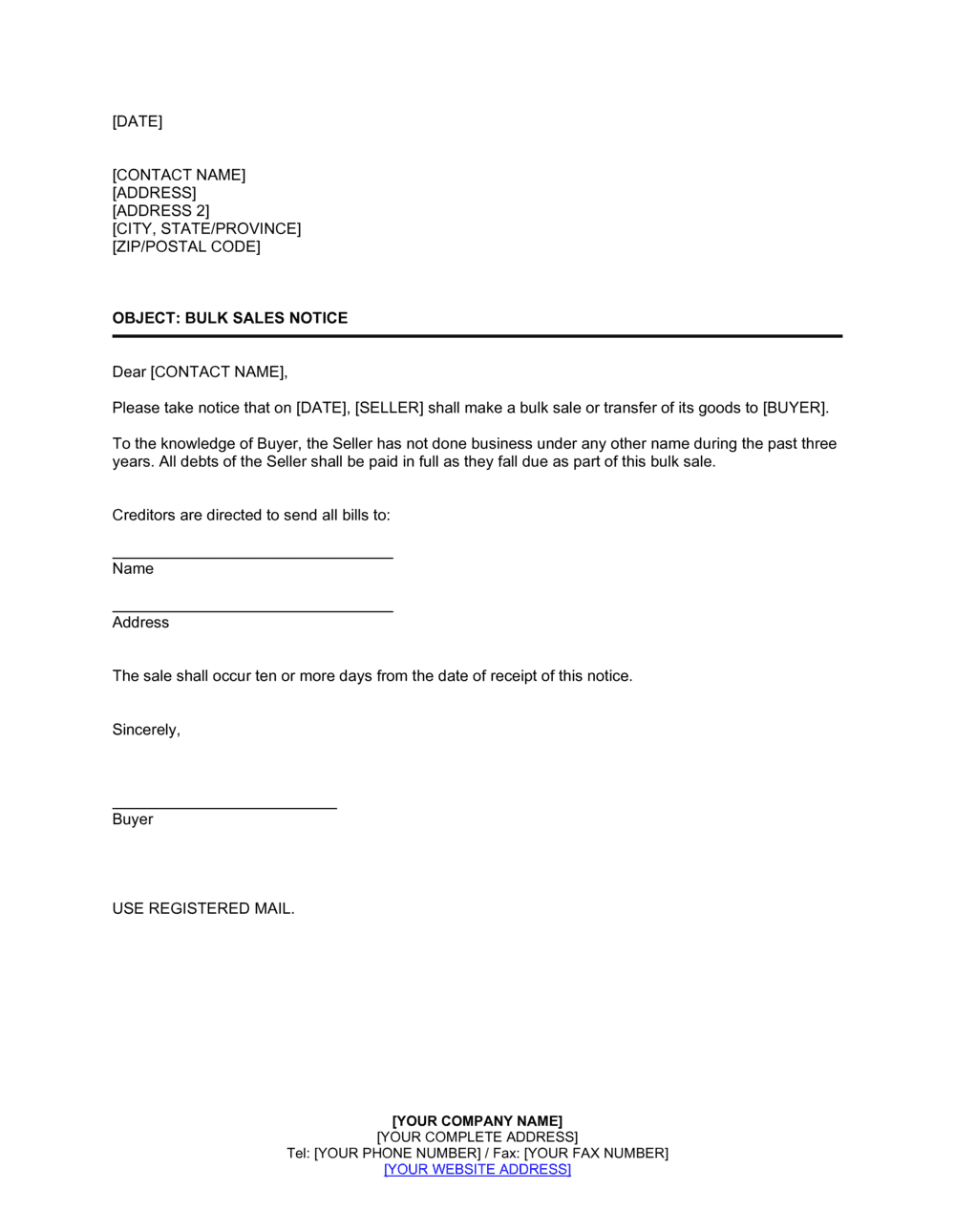
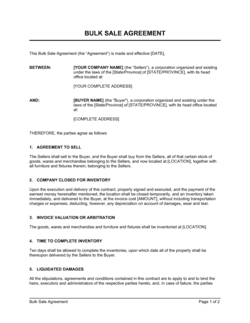
- Bulk Sale
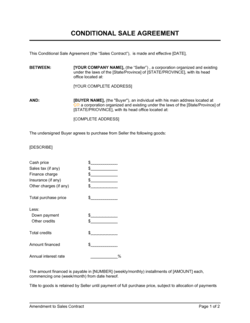
- A transfer of a major portion of a business's inventory, equipment, or assets in a single transaction outside the ordinary course of business.
- Bulk Transfer
- An older term for bulk sale, used in Article 6 of the Uniform Commercial Code, referring to the same type of large asset transfer.
- Transferor
- The seller — the business or individual transferring the assets to a buyer in a bulk sale.
- Transferee
- The buyer — the person or entity receiving the assets being sold in a bulk sale.
- Notice Period
- The minimum number of days before the sale closing that the notice must be delivered to creditors — typically 10 to 45 days depending on jurisdiction.
- Consideration
- The total price or value exchanged for the assets being transferred, stated in the notice so creditors can assess the transaction.
- Creditor
- Any individual or entity to whom the seller owes a debt at the time of the bulk sale, including suppliers, lenders, and trade creditors.
- Ordinary Course of Business
- The routine, day-to-day transactions a business normally conducts — bulk sales fall outside this definition by definition of their scale.
- UCC Article 6
- The section of the Uniform Commercial Code that historically governed bulk transfers in the United States; many states have repealed or revised it, making local law research essential.
- Escrow
- A third-party holding arrangement sometimes required to retain sale proceeds until the creditor notice period expires, protecting creditors' claims.