Company Is Closing Letter To Clients Template

Free Word download β€’ Edit online β€’ Save & share with Drive β€’ Export to PDF

2 pagesβ€’15–20 min to fillβ€’Difficulty: Standard
Learn more ↓
FreeCompany Is Closing Letter To Clients Template

At a glance

What it is
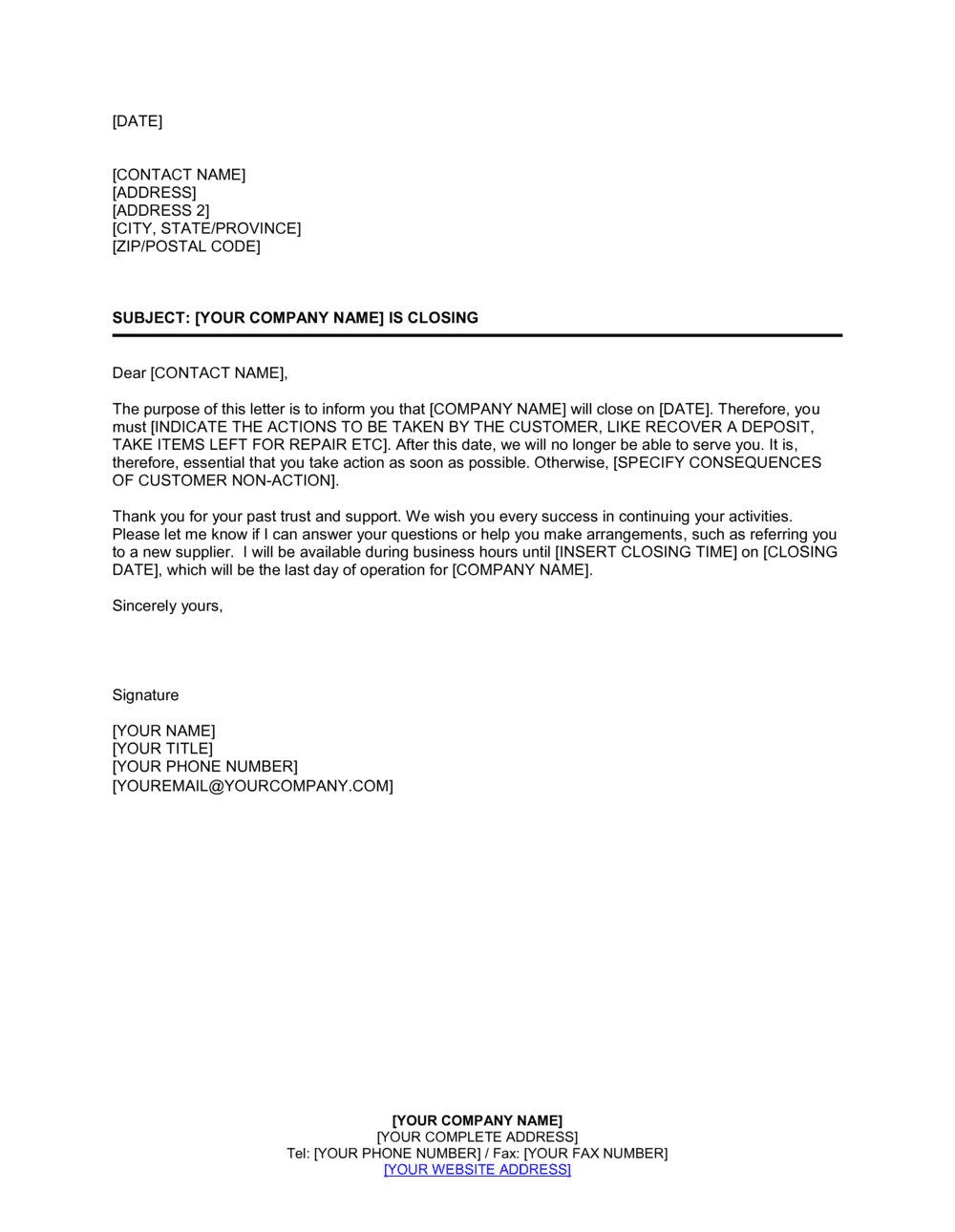
A Company Closing Letter to Clients is a formal written notice informing customers that your business is ceasing operations. This free Word download lets you fill in your closing date, outstanding contract terms, refund policy, and referrals to alternative providers β€” then export as PDF and send in under 30 minutes.
When you need it
Send it as soon as a firm closing date is set β€” typically 30 to 90 days before the last day of operations β€” so clients have time to make alternative arrangements and you can wind down commitments in an orderly way.
What's inside
Opening announcement with the closing date, explanation of the reason for closing, status of existing contracts and outstanding balances, refund or credit policy, referrals to alternative providers, contact details for final inquiries, and a personal thank-you closing.

What is a Company Closing Letter to Clients?

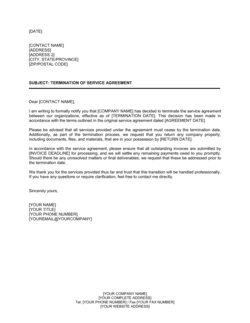
A Company Closing Letter to Clients is a formal written notice a business sends to its customers announcing that it is permanently ceasing operations. It states the closing date, explains the impact on active contracts and services, sets out the refund policy for any prepaid balances, directs clients to alternative providers, and closes with a personal acknowledgment of the relationship. Unlike a casual email announcement, a structured closing letter ensures every client receives the same core information at the same time, reducing confusion, minimising disputes over outstanding money, and protecting the business's reputation during one of its most sensitive moments.

Why You Need This Document

Closing a business without a formal client letter is one of the most common and costly oversights owners make during a wind-down. Clients left without clear notice β€” of the closing date, their outstanding balance, and what happens to their active projects β€” pursue chargebacks, file complaints, and leave negative reviews that follow the owner long after the business is gone. A dated, written letter also creates a paper trail proving clients were given adequate notice, which matters if a contract dispute or refund claim arises. This template gives you a complete, professional structure you can personalise and send in under 30 minutes, covering every key obligation from first announcement to final thank-you.

Which variant fits your situation?

If your situation is…Use this template
Closing a retail or brick-and-mortar business with a loyalty customer baseBusiness Closing Announcement Letter
Closing one branch or location while keeping others openBranch Closure Letter to Clients
Notifying employees about the company closureCompany Closing Letter to Employees
Notifying vendors and suppliers about the closureCompany Closing Letter to Vendors
Transferring client accounts to a new owner or successor companyBusiness Transfer Letter to Clients
Cancelling a specific service contract rather than closing entirelyContract Termination Letter

Common mistakes to avoid

❌ Giving less than 30 days' notice

Why it matters: Short notice leaves clients no time to find alternative providers, stranding active projects and generating complaints and potential legal claims for breach of contract.

Fix: Set the closing date at least 30 days after the letter is sent β€” and 60–90 days if any client has an active ongoing contract.
❌ Omitting the refund timeline

Why it matters: Clients with prepaid balances will contact you repeatedly if no refund date is stated, consuming time you need to manage the wind-down.

Fix: State the exact refund date and payment method in the letter and process all refunds on or before that date.

❌ Recommending alternative providers without their prior agreement

Why it matters: An unprepared referral partner may be unable or unwilling to take on your clients, leaving them without a meaningful transition path.

Fix: Contact and confirm every recommended provider before naming them in the letter, and share basic context about the clients they may receive.

❌ Sending a single generic letter to all clients regardless of contract status

Why it matters: A client mid-project needs different information than one with no active engagement. A one-size-fits-all letter creates confusion and signals a lack of care.

Fix: Segment your client list by engagement status and personalise the contracts and refund clauses for each group before sending.

The 8 key clauses, explained

Opening announcement

In plain language: States immediately and clearly that the company is closing and gives the exact closing date, so the reader understands the purpose of the letter from the first sentence.

Sample language
It is with mixed emotions that I write to inform you that [COMPANY NAME] will be permanently closing its doors on [CLOSING DATE].

Common mistake: Burying the closing date in the second or third paragraph. Clients who skim the letter may miss it entirely and fail to make alternative arrangements in time.

Reason for closing

In plain language: Briefly explains why the business is closing β€” retirement, market conditions, health, or another reason β€” without excessive detail or negativity.

Sample language
After [X] years in business, I have made the difficult decision to retire and pursue [REASON / personal endeavors].

Common mistake: Over-explaining financial distress, internal disputes, or failures. More detail than clients need creates reputational risk and rarely changes the outcome for anyone.

Impact on existing contracts and services

In plain language: Tells clients exactly what happens to active contracts, subscriptions, or ongoing projects β€” whether they will be completed, transferred, or terminated early.

Sample language
All active projects will be completed through [DATE]. Any work not concluded by that date will be [cancelled / transferred to [PROVIDER]] and you will be notified individually.

Common mistake: Saying 'we will honour all commitments' without specifying which commitments and by what date. Vague assurances lead to disputes during the wind-down period.

Outstanding balances and refund policy

In plain language: Explains how the company will handle money owed to clients β€” unused retainers, prepaid fees, or credits β€” and the timeline for issuing refunds.

Sample language
Any unused retainer or prepaid balance as of [DATE] will be refunded in full by [REFUND DATE] via [PAYMENT METHOD]. Please ensure your billing details on file are current.

Common mistake: Omitting the refund timeline altogether. Clients with credits will follow up repeatedly if no date is given, creating unnecessary administrative burden during wind-down.

Final invoices and outstanding amounts owed

In plain language: Notifies clients of any amounts they still owe to the company and sets a clear deadline for payment before the closing date.

Sample language
A final invoice for any outstanding amounts will be sent to you by [DATE]. We ask that all balances be settled no later than [PAYMENT DEADLINE].

Common mistake: Failing to issue final invoices promptly. Waiting until the last week before closing reduces the time available to follow up on non-payment.

Referral to alternative providers

In plain language: Recommends one or more alternative businesses or professionals who can continue serving the client's needs after the closure.

Sample language
We have arranged for [ALTERNATIVE PROVIDER NAME] to offer our clients a seamless transition. You may contact them at [CONTACT DETAILS] and mention [COMPANY NAME] for a [DISCOUNT / PRIORITY ONBOARDING].

Common mistake: Recommending alternatives without prior agreement from those providers. Sending unsolicited client referrals to a third party without their knowledge can damage relationships and leave clients in the lurch.

Contact details and deadline for final inquiries

In plain language: Provides a specific person, email address, and phone number clients can use for questions, and states the date after which inquiries will no longer be monitored.

Sample language
For any questions before our closing, please contact [NAME] at [EMAIL] or [PHONE NUMBER] through [FINAL CONTACT DATE].

Common mistake: Listing a general company inbox with no named contact. During a wind-down, inboxes are often unmanned β€” a named individual with a direct email ensures queries are actually answered.

Thank-you and personal close

In plain language: Expresses genuine appreciation for the client relationship and ends the letter on a warm, professional note.

Sample language
It has been a genuine privilege to serve you over the past [X] years. We are grateful for your trust and loyalty, and we wish you every success going forward.

Common mistake: Closing with only a legal or procedural statement and no personal acknowledgment. Clients who feel valued are more likely to settle outstanding balances promptly and refer the company positively even after closure.

How to fill it out

  1. 1

    Set the closing date and confirm it before sending

    Enter the specific closing date in the opening paragraph. Make sure this date is finalised and communicated internally before any letters go out β€” changing the date after clients have received notice creates confusion and damages credibility.

    πŸ’‘ Give at least 30 days' notice for service-based businesses and 60–90 days if clients have active long-term contracts.

  2. 2

    Choose how much to disclose about the reason

    Select the appropriate level of detail for the reason clause. Retirement and personal health need only a brief, dignified sentence. Financial difficulties should be acknowledged factually without blaming specific parties or oversharing internal details.

    πŸ’‘ When in doubt, less is more β€” 'due to changing business conditions' is professionally sufficient and rarely invites follow-up questions.

  3. 3

    Document the status of every active contract

    Before completing the contracts clause, list every active client engagement and decide: will it be completed, transferred, or early-terminated? Enter the relevant outcome for each client before personalising their copy of the letter.

    πŸ’‘ If outcomes differ by client, use a mail-merge or create personalised copies rather than sending a generic letter β€” contract-specific details build trust during a difficult transition.

  4. 4

    Calculate and state outstanding refunds with a firm date

    Pull your accounts to identify every client with a prepaid balance or unused credit. Enter the exact refund amount and the specific date by which it will be issued in the refund clause.

    πŸ’‘ Process refunds before or on the same day as the closing date β€” refunds outstanding at closure attract complaints and, in some jurisdictions, consumer protection scrutiny.

  5. 5

    Issue and reference final invoices separately

    Prepare final invoices before sending the closing letter. Reference the invoice date and payment deadline in the letter, and attach the invoice or send it in the same email.

    πŸ’‘ Set the payment deadline at least two weeks before your actual closing date so you have time to follow up on non-payment.

  6. 6

    Confirm referral partners before naming them

    Contact any alternative providers you plan to recommend and confirm they are willing to accept referrals and can handle your client volume. Enter their name and contact details only after you have their agreement.

    πŸ’‘ Negotiate a small introductory discount or priority onboarding for your clients β€” it makes the referral more valuable and reflects well on your professionalism at closure.

  7. 7

    Personalise the thank-you close

    Add one specific detail per major client β€” a project name, a milestone, or a year of service β€” to make the thank-you feel genuine rather than templated. For a large client base, even a first-name salutation and the tenure of the relationship goes a long way.

    πŸ’‘ Clients who feel appreciated are significantly more likely to pay outstanding invoices promptly and refer you or your successors to others.

Frequently asked questions

What should a company closing letter to clients include?

A company closing letter should include the exact closing date, a brief reason for the closure, the status of any active contracts or ongoing work, the refund policy for prepaid balances, final invoice details, referrals to alternative providers, a named contact for final inquiries, and a genuine thank-you close. Missing any of these leaves clients uncertain about what happens to their money or their projects.

How much notice should I give clients when closing my business?

A minimum of 30 days is standard for most service businesses. If clients have active long-term contracts β€” annual retainers, multi-month projects, or subscription agreements β€” 60 to 90 days is more appropriate and may be required under the contract's termination clause. Check any existing agreements before setting the notice period.

Do I need to explain why my business is closing?

No, you are not legally required to explain the reason. A brief, dignified sentence β€” retirement, personal health, or changing business conditions β€” is professionally sufficient. Over-sharing financial difficulties or internal disputes creates reputational risk without benefiting clients. Keep the reason clause short and factual.

Are clients entitled to a refund if I close my business?

Clients who have prepaid for services not yet delivered are generally entitled to a refund of the unused portion under consumer protection and contract law in most jurisdictions. Review your service agreements and any applicable regulations for your location, then calculate and issue refunds promptly. Consider processing refunds before or on the closing date to avoid complaints.

Should I send the closing letter by email or post?

Send by email for speed and to reach clients who primarily communicate digitally β€” this covers most businesses. For long-term or high-value clients, follow up with a printed letter or a personal phone call in addition to the email. Regardless of method, keep a record of when each client was notified and by what means.

What happens to client data when my business closes?

You remain responsible for client data in accordance with the privacy laws applicable to your jurisdiction β€” such as GDPR in the EU or PIPEDA in Canada β€” until data is securely deleted or the retention period expires. Inform clients of how long their data will be retained and how it will be destroyed. If you are transferring a business to a new owner, confirm that the data transfer is lawful under your privacy policy.

Should I refer clients to a competitor in my closing letter?

Yes β€” recommending a reliable alternative provider is one of the most professional things you can do in a closing letter. Confirm the referral with the provider before naming them, and try to negotiate a preferential rate or priority onboarding for your clients. Clients who are left without alternatives are far more likely to leave negative reviews or pursue refund disputes.

Can I use this template if only part of my business is closing?

This template is written for a full company closure. If you are closing one service line, location, or division rather than the entire business, adapt the opening clause to specify what is closing and make clear that other aspects of the business continue to operate. A branch or service closure letter requires a different framing to avoid alarming clients unnecessarily.

How this compares to alternatives

vs Company closing letter to employees

An employee closing letter addresses redundancy, final pay, notice periods, and reference letters β€” the internal employment obligations of a closure. A client closing letter addresses contracts, refunds, and service continuity β€” the external commercial obligations. Both are needed when closing a business, but they serve entirely different audiences and purposes.

vs Contract termination letter

A contract termination letter ends a specific agreement with one party, citing the termination clause and effective date. A company closing letter notifies all clients simultaneously that the business itself is ceasing. Use contract termination letters to formally end individual agreements during the wind-down period, alongside β€” not instead of β€” the general closing letter.

vs Business transfer letter to clients

A business transfer letter tells clients their account is being passed to a new owner who will continue providing the same or similar service. A company closing letter tells clients the business is ending entirely, with no successor service. If you are selling the business rather than simply shutting it down, use a transfer letter instead.

vs Refund letter to customers

A standalone refund letter focuses exclusively on issuing a credit or returning a payment for a specific transaction. A company closing letter covers the full scope of the closure β€” including refunds as one clause among several. If clients need individual written confirmation of their specific refund amount, issue a separate refund letter in addition to the general closing letter.

Industry-specific considerations

Professional Services

Accounting, legal, and consulting firms must address pending engagements, client file transfers, and professional confidentiality obligations in their closing letter.

Retail and E-commerce

Retail closures require clear communication about outstanding orders, gift card redemption deadlines, and return or refund windows before the last trading day.

Creative and Marketing Agencies

Agencies closing with active retainer clients must address campaign handover, asset ownership, and login credential transfers as part of the client wind-down.

Healthcare and Wellness

Healthcare providers closing a practice must notify patients of record transfer options, prescribing continuity, and any regulatory requirements for patient notification timelines.

Template vs pro β€” what fits your needs?

PathBest forCostTime
Use the templateSmall businesses, freelancers, and sole traders closing with a straightforward client base and no complex contractsFree20–30 minutes
Template + professional reviewBusinesses with active long-term contracts, significant prepaid balances, or clients in regulated industries$100–$300 (lawyer or accountant review)1–2 days
Custom draftedLarge businesses with complex contractual obligations, franchise agreements, or significant litigation risk from the closure$500–$2,000+3–7 days

Glossary

Cessation of Operations
The formal discontinuation of all business activities, after which the company no longer provides goods or services.
Closing Date
The specific calendar date on which the business will cease trading and stop accepting new or ongoing work.
Wind-Down Period
The interval between the closure announcement and the closing date, during which outstanding obligations are fulfilled and accounts are settled.
Outstanding Balance
Any amount owed by or to the client at the time of closure, including unpaid invoices, prepaid retainers, or unused service credits.
Refund Policy
The terms under which the business will return prepaid fees or unused portions of a retainer or subscription to clients upon closing.
Service Continuity
Arrangements made to ensure clients can continue receiving equivalent services after the closing, typically through referrals to alternative providers.
Force Majeure
An unforeseeable event β€” such as a natural disaster or public health crisis β€” that may be cited as a reason for business closure when external circumstances are beyond the company's control.
Notice Period
The minimum amount of advance warning a business gives clients before ceasing operations, often governed by contract terms or professional courtesy standards.

Part of your Business Operating System

This document is one of 3,000+ business & legal templates included in Business in a Box.

  • Fill-in-the-blanks β€” ready in minutes
  • 100% customizable Word document
  • Compatible with all office suites
  • Export to PDF and share electronically

Create your document in 3 simple steps.

From template to signed document β€” all inside one Business Operating System.
1
Download or open template

Access over 3,000+ business and legal templates for any business task, project or initiative.

2
Edit and fill in the blanks with AI

Customize your ready-made business document template and save it in the cloud.

3
Save, Share, Send, Sign

Share your files and folders with your team. Create a space of seamless collaboration.

Save time, save money, and create top-quality documents.

β˜…β˜…β˜…β˜…β˜…

"Fantastic value! I'm not sure how I'd do without it. It's worth its weight in gold and paid back for itself many times."

Managing Director Β· Mall Farm
Robert Whalley
Managing Director, Mall Farm Proprietary Limited
β˜…β˜…β˜…β˜…β˜…

"I have been using Business in a Box for years. It has been the most useful source of templates I have encountered. I recommend it to anyone."

Business Owner Β· 4+ years
Dr Michael John Freestone
Business Owner
β˜…β˜…β˜…β˜…β˜…

"It has been a life saver so many times I have lost count. Business in a Box has saved me so much time and as you know, time is money."

Owner Β· Upstate Web
David G. Moore Jr.
Owner, Upstate Web

Run your business with a system β€” not scattered tools

Stop downloading documents. Start operating with clarity. Business in a Box gives you the Business Operating System used by over 250,000 companies worldwide to structure, run, and grow their business.

Free Forever PlanΒ Β·Β No credit card required