Resignation of Officer Template

Free Word download • Edit online • Save & share with Drive • Export to PDF

1 page20–30 min to fillDifficulty: StandardSignature requiredLegal review recommended
Learn more ↓
FreeResignation of Officer Template

At a glance

What it is
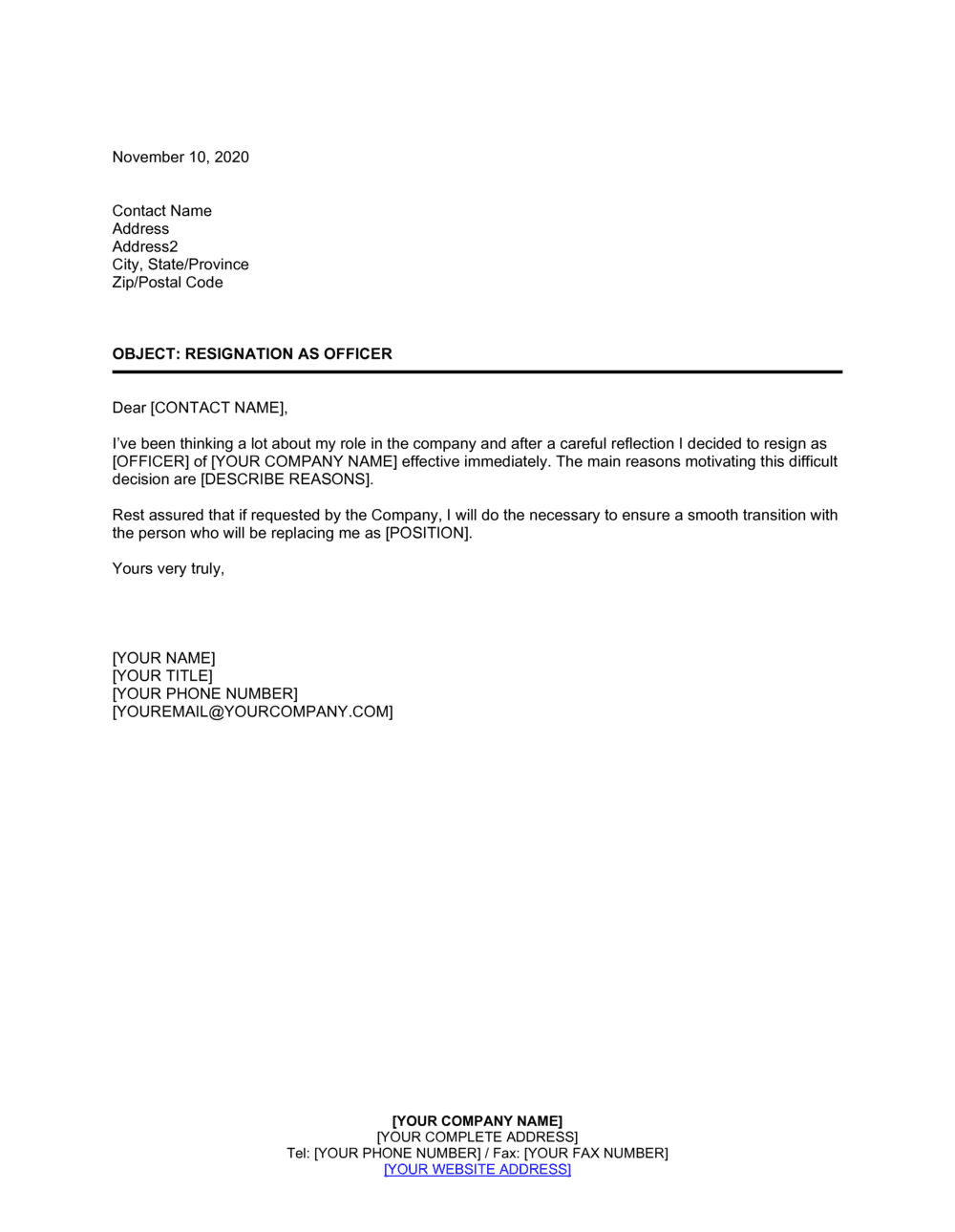
A Resignation of Officer is a formal legal document by which a corporate officer — such as a CEO, CFO, Secretary, or Director — voluntarily and permanently relinquishes their position and all associated authority. This free Word download gives you a structured, board-ready template you can edit online and export as PDF to present at a board meeting, file with a corporate secretary, or submit to a state registry.
When you need it
Use it whenever an officer or director voluntarily steps down from their corporate role, whether at the end of a term, upon a strategic transition, following a merger or acquisition, or in response to a personal decision to leave the organization. It should be executed before the intended effective date and accepted by the board on the record.
What's inside
The document covers the resigning officer's full name and title, the effective date of resignation, a formal relinquishment of all powers and signing authority, transition and handover obligations, indemnification and release provisions, and governing law. A signature block for the officer and an acknowledgment block for the accepting party complete the document.

What is a Resignation of Officer?

A Resignation of Officer is a formal legal document by which a corporate officer — such as a CEO, CFO, COO, President, or Corporate Secretary — voluntarily and permanently relinquishes their position, all associated titles, and every authority granted to them in that capacity, including signing rights, regulatory registrations, and banking authority. The document creates the definitive written record of the departure: the officer's identity and role, the precise effective date, the scope of what is being relinquished, the corporation's formal acceptance, and the ongoing obligations — indemnification, confidentiality, and transition cooperation — that survive the resignation itself. It is distinct from a standard resignation letter, which addresses an employment relationship, and from a board resolution removing an officer, which is an involuntary corporate action.

Why You Need This Document

Without a written Resignation of Officer, the corporation faces four compounding risks simultaneously. First, third parties — banks, regulatory agencies, and major counterparties — will continue to honor the departed officer's signature until formally notified in writing, potentially exposing the corporation to unauthorized financial or legal commitments. Second, the absence of a documented effective date leaves the officer's fiduciary duties and personal liability in a legal gray zone that courts and insurers are asked to resolve after the fact. Third, registry filings in every major jurisdiction require a formal officer change notification; failure to file on time leaves the former officer listed as a responsible party in the public record long after their actual departure. Fourth, without explicit indemnification survival language, a departing officer named in later litigation arising from their tenure has no contractual basis to claim D&O coverage or corporate defense. This template gives you a board-ready, registry-ready document that closes all four gaps — for a 30-minute investment on the front end that prevents years of legal exposure on the back.

Which variant fits your situation?

If your situation is…Use this template
Officer resigning from both a corporate role and a board seat simultaneouslyResignation of Officer and Director
Director stepping down from the board only, not an operational roleResignation of Director
Officer being formally removed by board vote rather than resigning voluntarilyBoard Resolution to Remove Officer
Officer resignation tied to an employment separation agreementSeparation Agreement and Release
Nonprofit board member stepping down from a trustee or officer roleNonprofit Officer Resignation Letter
Officer departure in connection with a merger or acquisition closingOfficer Resignation (M&A Closing)
Interim officer appointment following a resignationBoard Resolution to Appoint Officer

Common mistakes to avoid

❌ Failing to revoke third-party signing authorities

Why it matters: Banks, government portals, and counterparties continue to honor an officer's signature until formally notified. A resigning CFO whose bank authority is not revoked in writing can create unauthorized financial exposure for the corporation.

Fix: Send formal written notice to every third party holding the officer's authority — bank, regulatory body, and major counterparty — on or before the effective date, and request written confirmation of revocation.

❌ No board acceptance or minute record

Why it matters: A resignation signed only by the departing officer with no board acknowledgment creates ambiguity about when authority actually ceased. Auditors, insurers, and courts may treat the officer as still holding their role.

Fix: Always obtain a signed board acknowledgment block and record the acceptance in formal board minutes dated on or before the effective date.

❌ Omitting post-resignation indemnification language

Why it matters: Officers named in lawsuits for conduct during their tenure have no corporate protection unless the resignation document or bylaws expressly confirm indemnification survives. Without it, the departing officer bears personal legal costs.

Fix: Include an explicit survival clause confirming indemnification rights continue after resignation, and verify that the D&O policy covers acts taken during the officer's tenure for at least 3 years post-departure.

❌ Using an imprecise or open-ended effective date

Why it matters: Language like 'effective immediately upon acceptance' or 'as soon as practicable' creates uncertainty about exactly when fiduciary duties, signing authority, and liability exposure ended — a critical issue in any subsequent dispute.

Fix: Always state a specific calendar date as the effective date and confirm it in both the body of the document and the board acknowledgment block.

❌ Not updating state or provincial registry filings

Why it matters: The public record continues to list the resigned officer until a formal filing is made. Third parties relying on the registry — lenders, regulators, counterparties — may hold the former officer responsible for acts taken after their departure.

Fix: File the required officer change notification with the corporate registry within the applicable statutory deadline, typically 30–90 days after the effective date depending on jurisdiction.

❌ One-sided or absent non-disparagement clause

Why it matters: A clause that binds only the departing officer — or that is omitted entirely — leaves the corporation free to make public statements that could trigger defamation or wrongful termination claims, particularly in a contested departure.

Fix: Draft a mutual non-disparagement clause binding both the officer and the corporation, and have legal counsel review the language before execution if the departure is contentious.

The 10 key clauses, explained

Identification of resigning officer and role

In plain language: Names the officer by full legal name, identifies their current title and the corporation, and confirms this is a voluntary resignation.

Sample language
[OFFICER FULL NAME] hereby resigns from the position of [TITLE — e.g., Chief Financial Officer] of [CORPORATION NAME], a [STATE/PROVINCE] [ENTITY TYPE], effective [EFFECTIVE DATE].

Common mistake: Using a preferred name or nickname instead of the officer's legal name as it appears in corporate records — this creates a mismatch with filings and can delay registry updates.

Effective date and notice

In plain language: States the precise calendar date the resignation becomes effective and, where required by bylaws or an employment agreement, confirms adequate notice was given.

Sample language
This resignation shall become effective on [DATE], which constitutes [X] days' written notice in accordance with the Company's Bylaws and any applicable employment agreement.

Common mistake: Setting an effective date that falls before the board has had an opportunity to meet and accept the resignation, leaving a gap in corporate authority during the interim period.

Relinquishment of title, authority, and signing power

In plain language: Formally surrenders all titles, powers, duties, and signing authorities held by the officer in connection with the role, including authority under any banking, regulatory, or third-party agreements.

Sample language
As of the Effective Date, [OFFICER NAME] relinquishes all titles, positions, powers, authorities, and signing rights held in connection with the role of [TITLE], including authority under any banking resolutions, regulatory registrations, or third-party agreements naming [OFFICER NAME] as an authorized signatory.

Common mistake: Failing to list specific third-party authorities — banks, regulatory bodies, and government portals do not update automatically and will continue to honor the officer's signature until formally notified.

Transition and handover obligations

In plain language: Sets out the officer's obligation to assist with an orderly transition — returning company property, completing outstanding tasks, and cooperating with the successor for a defined period.

Sample language
For a period of [X] days following the Effective Date, [OFFICER NAME] agrees to cooperate reasonably with the Board and the successor officer to facilitate an orderly transition of duties, return all Company property, and complete any pending matters identified by the Board.

Common mistake: Omitting a transition clause entirely for senior roles. Without it, the corporation has no contractual basis to require cooperation, and critical institutional knowledge can walk out the door.

Representations and confirmation of compliance

In plain language: The officer confirms that, to their knowledge, they have not taken any unauthorized actions, have complied with their fiduciary duties, and are not aware of any undisclosed liabilities or claims affecting the corporation.

Sample language
[OFFICER NAME] represents that, to their knowledge as of the date of this Resignation, they have complied with all fiduciary duties owed to [CORPORATION NAME] and are not aware of any material undisclosed liabilities, pending claims, or regulatory matters directly attributable to actions taken in their capacity as [TITLE].

Common mistake: Treating this as a boilerplate clause without tailoring it to the officer's specific role. A CFO's representations about financial compliance are materially different from a Secretary's — generic language reduces its evidentiary value.

Indemnification and D&O insurance

In plain language: Confirms the corporation's obligation to continue indemnifying the departing officer for claims arising from their tenure, and addresses ongoing directors-and-officers insurance coverage.

Sample language
The Company confirms that the indemnification rights of [OFFICER NAME] under the Company's Bylaws, any indemnification agreement, and applicable law shall survive this Resignation. The Company shall maintain [OFFICER NAME] as a covered insured under its D&O policy for acts or omissions during their tenure for a minimum of [X] years following the Effective Date.

Common mistake: Omitting the survival of indemnification rights entirely. A departing officer who is later named in litigation arising from their tenure has no corporate protection unless the document or bylaws expressly confirm it survives resignation.

Return of confidential information and company property

In plain language: Requires the officer to return all confidential documents, devices, credentials, and physical property belonging to the corporation on or before the effective date.

Sample language
On or before the Effective Date, [OFFICER NAME] shall return to the Company all confidential information, documents, records, access credentials, devices, and other Company property in their possession or control, whether in physical or electronic form.

Common mistake: Not explicitly covering digital property and access credentials. Officers routinely retain access to cloud accounts, CRM systems, and shared drives unless credentials are revoked and the return obligation is stated in writing.

Non-disparagement and confidentiality

In plain language: Mutually restricts the officer and the corporation from making disparaging public statements about each other and confirms the officer's ongoing confidentiality obligations.

Sample language
Each party agrees not to make any public statement that disparages or negatively portrays the other party. [OFFICER NAME]'s confidentiality obligations under any prior agreement or the Company's policies remain in full force and effect following this Resignation.

Common mistake: Making non-disparagement one-sided — applying it only to the departing officer. Courts in several jurisdictions have treated one-sided clauses as evidence of bad faith, particularly in contested departures.

Governing law and dispute resolution

In plain language: Specifies which jurisdiction's corporate law governs the resignation and how any disputes arising from it will be resolved.

Sample language
This Resignation shall be governed by the laws of [STATE / PROVINCE / COUNTRY]. Any dispute arising from this Resignation shall be resolved by [binding arbitration / mediation / litigation] in [CITY / JURISDICTION].

Common mistake: Choosing a governing law that differs from the state of incorporation without a legitimate reason. Regulators and courts in the state of incorporation will apply that state's corporate statutes regardless of a conflicting choice-of-law clause.

Board acceptance and acknowledgment

In plain language: A separate signature block confirming that the board of directors or its authorized representative has formally accepted the resignation on the record.

Sample language
The Board of Directors of [CORPORATION NAME] hereby acknowledges receipt and accepts the resignation of [OFFICER NAME] as [TITLE], effective [EFFECTIVE DATE], as recorded in the Board minutes of [DATE].

Common mistake: Skipping board acknowledgment entirely and treating the officer's signature alone as sufficient. In most jurisdictions, a resignation not formally accepted and minuted creates ambiguity about whether the officer's authority and duties actually ceased.

How to fill it out

  1. 1

    Enter the officer's full legal name and current title

    Use the name exactly as it appears in corporate records and state filings. Confirm the precise title — Chief Financial Officer, not 'Finance Director' — against the most recent board resolution appointing them.

    💡 Cross-reference the corporate minute book and the most recent state or provincial officer filing before drafting — discrepancies between the resignation and the registry will require corrections that delay the update.

  2. 2

    Set the effective date and confirm notice compliance

    Choose an effective date that gives the board time to meet, accept the resignation, and appoint or designate an interim successor. Verify the required notice period in the corporate bylaws and any applicable employment agreement and confirm it in the document.

    💡 For publicly traded companies, confirm whether the effective date triggers an 8-K or equivalent disclosure obligation before finalizing it.

  3. 3

    List all specific authorities being relinquished

    Go beyond the job title. Identify every third-party authority the officer holds in their capacity — bank signing authority, regulatory licenses, government portal access, and any power of attorney — and name them explicitly in the relinquishment clause.

    💡 Request a full list from finance, legal, and IT before completing this clause. A single missed authority can expose the corporation to unauthorized transactions after the effective date.

  4. 4

    Define the transition period and cooperation obligations

    Agree on a specific number of days or weeks for the transition period and list the key deliverables — knowledge transfer meetings, documentation handovers, introductions to key counterparties — the officer is expected to complete.

    💡 For CFO or CEO departures, a 30–90 day transition period is standard. For board-only resignations with no operational duties, a shorter or nominal period is appropriate.

  5. 5

    Confirm indemnification and D&O coverage terms

    Review the corporation's bylaws and any separate indemnification agreement to confirm the scope of post-resignation coverage. State the minimum number of years the D&O policy will maintain the departing officer as a covered insured.

    💡 Tail coverage (also called a run-off policy) typically extends D&O protection for 3–6 years after an officer's departure at a one-time premium — confirm whether the existing policy includes it or whether a separate purchase is needed.

  6. 6

    Address return of property and access revocation

    List all categories of company property — devices, documents, access credentials, physical keys, and cloud-based systems — and set a specific return deadline. Coordinate with IT to revoke digital access on the effective date.

    💡 Build a property return checklist as an exhibit to the document so both parties sign off on receipt at handover — this eliminates later disputes about what was returned.

  7. 7

    Obtain officer signature and board acknowledgment

    Have the resigning officer sign and date the document, then present it to the board for formal acceptance. Record the acceptance in the board minutes and attach the signed resignation as an exhibit to those minutes.

    💡 Use Business in a Box eSign to timestamp both signatures and store the fully executed document in BIB Drive alongside the corresponding board minutes.

  8. 8

    Update corporate records and file with the registry

    Update the corporate minute book, officer register, and signature authority register immediately after acceptance. File the required officer change notification with the applicable state, provincial, or national corporate registry within the statutory deadline.

    💡 Most US states require filing an amended Statement of Information or equivalent within 30–90 days of an officer change. Canadian provincial registries and Companies House in the UK have similar filing windows — missing them can result in penalties.

Frequently asked questions

What is a Resignation of Officer document?

A Resignation of Officer is a formal legal document by which a corporate officer — such as a CEO, CFO, COO, or Secretary — voluntarily and permanently relinquishes their position and all associated authority, duties, and signing powers. It creates a documented record of the departure date, the scope of what was relinquished, and the corporation's acceptance, which is essential for updating corporate records, notifying third parties, and managing ongoing indemnification rights.

Is a Resignation of Officer legally required?

Most corporate bylaws and state corporation statutes do not mandate a specific resignation form, but a written resignation is strongly advisable in virtually every jurisdiction. Without a written document, there is no clear record of the effective date, the scope of relinquished authority, or the corporation's acceptance. This creates ambiguity that can affect liability exposure, D&O insurance claims, and registry filings. In publicly traded companies, a written resignation triggers mandatory SEC or equivalent disclosure obligations.

Does a board need to accept a resignation for it to be effective?

In most US states and Canadian provinces, a written resignation is effective when delivered to the corporation, even without formal board acceptance, unless the bylaws specify otherwise. However, formal board acknowledgment and minuting of the resignation is critical practice: it establishes the exact effective date in the official corporate record, triggers the obligation to update registry filings, and activates successor authority. Always obtain a signed board acceptance block and record it in the meeting minutes.

What happens to a resigning officer's fiduciary duties?

A corporate officer's fiduciary duties — including the duty of loyalty and duty of care — remain in full force until the resignation's effective date. Actions taken between signing the resignation and the effective date are still binding on the officer and subject to legal scrutiny. After the effective date, fiduciary duties cease, but obligations such as confidentiality, non-solicitation, and indemnification survival typically continue under the terms of the resignation document or prior agreements.

What is the difference between a Resignation of Officer and a Resignation of Director?

A corporate officer (CEO, CFO, COO, Secretary) holds an executive management role appointed by the board. A director holds a board seat elected by shareholders. Some individuals hold both roles simultaneously and may need to resign from both. A Resignation of Officer addresses executive authority, signing power, and operational duties. A Resignation of Director addresses board governance rights and voting authority. Where both apply, a combined document or two separate documents should be executed and minuted distinctly.

How much notice should a resigning officer give?

The required notice period is typically set by the corporate bylaws and any employment or officer agreement in place. Common ranges are 30 to 90 days for senior officers such as a CEO or CFO, reflecting the time needed to recruit or designate a successor. In the absence of a contractual requirement, many corporations accept shorter notice as a practical matter. The resignation document should state the notice period given and confirm it satisfies any applicable bylaw or contractual requirement.

Does D&O insurance cover a resigning officer for acts during their tenure?

Standard directors-and-officers (D&O) insurance policies typically cover acts taken during the policy period regardless of whether the officer has resigned by the time a claim is made. However, coverage depends on the specific policy terms. Many corporations purchase tail coverage — also called a run-off endorsement — at the time of a senior officer's departure to extend D&O protection for 3–6 years. The resignation document should expressly confirm that the corporation will maintain the departing officer as a covered insured for a minimum period, and legal counsel should review the applicable policy.

Does a resignation of officer need to be filed with the state?

Yes, in most US states the corporation must file an amended Statement of Information or equivalent form updating the officer of record within a statutory deadline — typically 30 to 90 days after the change. In Canada, each province has similar requirements under its Business Corporations Act. In the UK, Companies House requires a notification within 14 days. Failure to file on time can result in penalties and leaves the departed officer listed as a responsible party in the public record, creating ongoing liability exposure.

Can a corporate officer rescind a resignation before it takes effect?

Generally, a resignation can be withdrawn before the effective date if the board has not yet formally accepted it and both parties agree. Once the board formally accepts the resignation and records it in the minutes, it is typically irrevocable without a new board appointment process. The resignation document should include language clarifying whether rescission requires mutual written consent before the effective date to avoid ambiguity if circumstances change.

Should a Resignation of Officer be combined with a separation or severance agreement?

For officers who are also employees — particularly at the CEO, CFO, or COO level — the resignation of the officer role is often executed alongside a separate separation agreement covering severance pay, benefit continuation, equity treatment, and a mutual release of claims. These are legally distinct documents: the resignation addresses corporate governance and authority; the separation agreement addresses employment entitlements. Both should be executed simultaneously and cross-referenced to ensure consistency on effective date, indemnification, and non-disparagement terms.

How this compares to alternatives

vs Board Resolution to Remove Officer

A board resolution to remove an officer is an involuntary action initiated by the board, typically for cause, poor performance, or a governance reason. A Resignation of Officer is a voluntary act by the officer themselves. The legal consequences, indemnification posture, and severance obligations differ significantly between the two — voluntary resignations generally carry fewer dispute risks.

vs Resignation of Director

A Resignation of Director addresses a board seat and governance rights, while a Resignation of Officer addresses executive management authority, signing power, and operational duties. Many senior executives hold both roles and must execute separate documents for each. Using a single undifferentiated resignation can leave one role ambiguously intact.

vs Separation Agreement and Release

A separation agreement addresses employment entitlements — severance, benefit continuation, equity vesting, and a mutual release of claims. A Resignation of Officer addresses corporate governance — title relinquishment, signing authority, transition obligations, and D&O indemnification. Senior officer departures typically require both documents executed simultaneously and cross-referenced.

vs Officer Appointment Resolution

An Officer Appointment Resolution is the board action that creates an officer role and grants authority. A Resignation of Officer is the document that terminates it. Together, they form the bookends of an officer's corporate tenure and together must be preserved in the corporate minute book to document the complete chain of authority.

Industry-specific considerations

Technology / SaaS

Officer departures often coincide with funding rounds or acquisitions, requiring precise coordination between the resignation effective date and closing mechanics, IP ownership confirmations, and investor agreement representations.

Financial Services

Regulatory registrations with FINRA, the SEC, or equivalent bodies must be formally updated upon an officer's resignation, and the departing officer may remain personally liable for filings submitted during their tenure.

Healthcare

Licensed healthcare officers may have compliance obligations that survive resignation, and the corporation must update any regulatory licenses or DEA authorizations that named the departing officer.

Professional Services

Partner-level officer departures in law, accounting, or consulting firms require careful handling of client relationship ownership, non-solicitation obligations, and succession of signing authority on active client engagements.

Manufacturing

Plant safety certifications, EPA or OSHA regulatory registrations, and major supplier agreements frequently name the responsible officer and must be updated with the agency or counterparty upon resignation.

Nonprofit Organizations

Nonprofit officer resignations must be recorded in board minutes and may require IRS Form 990 disclosure, state charitable registration updates, and grant agreement notifications where the officer was a named contact.

Jurisdictional notes

United States

Under most state corporation statutes (including Delaware General Corporation Law §142), a written resignation is effective upon delivery to the corporation unless a future effective date is specified. The corporation must file an amended Statement of Information or equivalent form updating the officer of record, typically within 30–90 days depending on the state. Publicly traded companies must disclose a principal officer's resignation in an SEC Form 8-K within four business days of the triggering event.

Canada

Under the Canada Business Corporations Act and equivalent provincial statutes, a written resignation of an officer is effective when received by the corporation. Each province's registry requires a Notice of Change of Directors/Officers filing within the statutory period — typically 15 days under the CBCA, though provincial windows vary. Quebec corporations must ensure all corporate documents are available in French under the Charter of the French Language.

United Kingdom

Under the Companies Act 2006, a director's resignation is effective when received by the company. Companies House must be notified using Form TM01 (termination of appointment of director) within 14 days of the effective date. Officers who are also employees retain employment rights under UK law regardless of the resignation document, and any severance must comply with applicable statutory minimum redundancy pay obligations.

European Union

EU member states apply their own national corporate law to officer resignations, but most require a formal filing with the national commercial registry within a statutory period — ranging from 7 days in Germany (Handelsregister) to 30 days in France (Greffe du Tribunal de Commerce). Where the departing officer also held an employment contract, EU member states impose significant employee protections that govern severance, notice, and non-compete enforceability independently of what the resignation document states.

Template vs lawyer — what fits your deal?

PathBest forCostTime
Use the templatePrivate corporations with straightforward officer transitions, no employment dispute, and no regulatory filings beyond standard registry updatesFree30 minutes
Template + legal reviewOfficers who are also employees with severance entitlements, contentious departures, or roles involving regulatory licensing$300–$8001–3 days
Custom draftedC-suite departures at publicly traded companies, resignations tied to M&A closings, or situations involving significant D&O exposure or litigation risk$1,500–$5,000+1–2 weeks

Glossary

Officer
A person appointed by a corporation's board of directors to hold a named executive role — such as CEO, CFO, COO, or Secretary — with authority to act on behalf of the corporation.
Effective Date
The specific calendar date on which the resignation takes legal effect and the officer's authority, duties, and signing power formally cease.
Board Acknowledgment
A formal written acceptance by the board of directors confirming it has received and accepted the resignation, typically recorded in board minutes.
Signing Authority
The legal power to execute contracts, checks, and other binding documents on behalf of the corporation — which terminates upon resignation.
Fiduciary Duty
The legal obligation of a corporate officer to act in the best interests of the corporation and its shareholders, which continues until the resignation's effective date.
Indemnification
A contractual commitment by the corporation to defend and compensate a departing officer against claims arising from actions taken in good faith during their tenure.
Transition Period
An agreed interval between the resignation notice and the effective date during which the officer assists with knowledge transfer, handovers, and continuity of operations.
Corporate Records
The official books of the corporation — including the officer register, minute book, and signature authority register — that must be updated upon an officer's departure.
Release of Claims
A provision by which the resigning officer and/or the corporation waive certain claims against each other arising from the employment or officer relationship.
State / Provincial Filing
A formal notification submitted to the relevant corporate registry — such as the Secretary of State or Corporations Canada — to update the public record of corporate officers.
Constructive Resignation
A situation where circumstances — such as a demotion or stripped authority — effectively force an officer out without a formal resignation document, creating legal ambiguity about duties and liability.

Part of your Business Operating System

This document is one of 3,000+ business & legal templates included in Business in a Box.

  • Fill-in-the-blanks — ready in minutes
  • 100% customizable Word document
  • Compatible with all office suites
  • Export to PDF and share electronically

Create your document in 3 simple steps.

From template to signed document — all inside one Business Operating System.
1
Download or open template

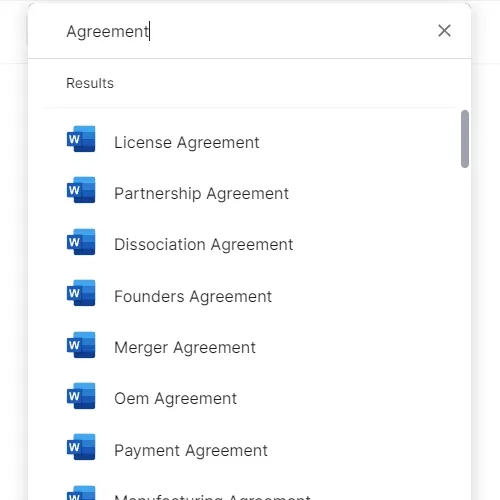
Access over 3,000+ business and legal templates for any business task, project or initiative.

2
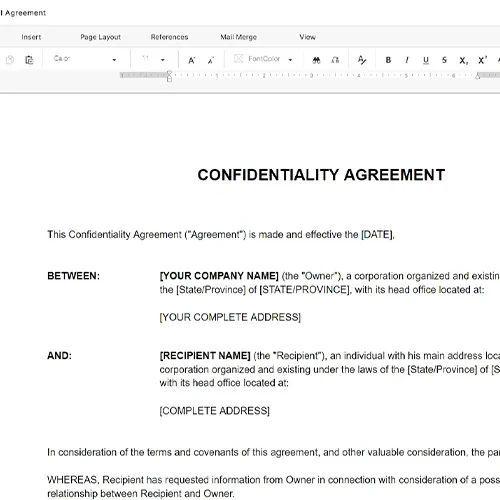
Edit and fill in the blanks with AI

Customize your ready-made business document template and save it in the cloud.

3
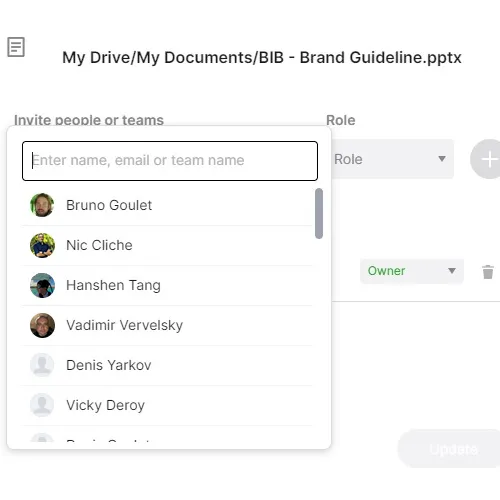
Save, Share, Send, Sign

Share your files and folders with your team. Create a space of seamless collaboration.

Save time, save money, and create top-quality documents.

★★★★★

"Fantastic value! I'm not sure how I'd do without it. It's worth its weight in gold and paid back for itself many times."

Managing Director · Mall Farm
Robert Whalley
Managing Director, Mall Farm Proprietary Limited
★★★★★

"I have been using Business in a Box for years. It has been the most useful source of templates I have encountered. I recommend it to anyone."

Business Owner · 4+ years
Dr Michael John Freestone
Business Owner
★★★★★

"It has been a life saver so many times I have lost count. Business in a Box has saved me so much time and as you know, time is money."

Owner · Upstate Web
David G. Moore Jr.
Owner, Upstate Web

Run your business with a system — not scattered tools

Stop downloading documents. Start operating with clarity. Business in a Box gives you the Business Operating System used by over 250,000 companies worldwide to structure, run, and grow their business.

Free Forever Plan · No credit card required