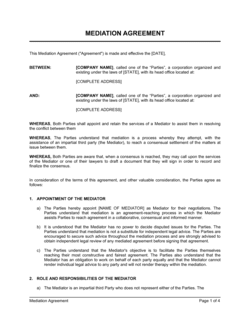
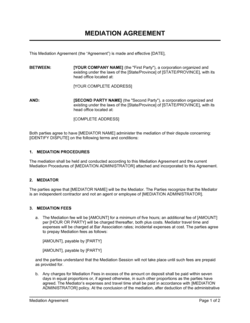
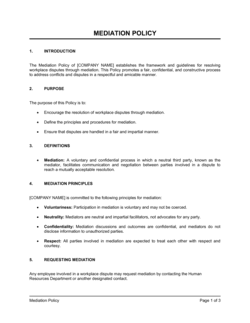
- Mediation
- A voluntary, non-binding process in which a neutral third-party mediator helps disputing parties reach a mutually acceptable settlement.
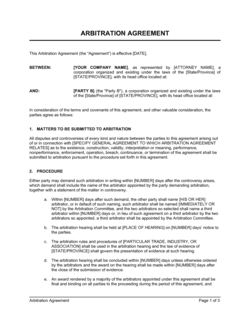
- Arbitration
- A binding private adjudication process in which a neutral arbitrator or panel hears evidence and issues a final, enforceable award.
- Binding Arbitration
- Arbitration in which both parties agree in advance to accept the arbitrator's decision as final, with limited rights to appeal in court.
- Arbitral Award
- The final written decision issued by the arbitrator, which can typically be confirmed and enforced by a court as a judgment.
- Arbitral Institution
- An organization such as the AAA, JAMS, ICC, or LCIA that administers arbitration proceedings under its own procedural rules.
- Class Action Waiver
- A clause in which each party agrees to resolve disputes only on an individual basis, forfeiting the right to participate in class or collective proceedings.
- Scope of Disputes
- The defined range of claims or controversies covered by the agreement — typically all disputes arising out of or relating to the underlying contract.
- Governing Rules
- The procedural framework — such as AAA Commercial Arbitration Rules or JAMS Comprehensive Rules — that dictates how the arbitration process is conducted.
- Seat of Arbitration
- The legal jurisdiction in which the arbitration is formally based, determining which national courts have supervisory authority over the proceedings.
- Confidentiality Obligation
- A contractual duty binding both parties and the arbitrator to keep all proceedings, submissions, and awards private and not disclose them to third parties.
- Fee-Shifting
- A provision that assigns responsibility for paying arbitration costs — administrative fees, arbitrator compensation, and legal fees — to one or both parties.
- Demand for Arbitration
- A formal written notice one party sends to the other and to the arbitral institution to initiate the arbitration process after mediation has failed or been waived.