Notice to Correct Credit Template

Free Word download β€’ Edit online β€’ Save & share with Drive β€’ Export to PDF

1 pageβ€’15–25 min to fillβ€’Difficulty: Standard
Learn more ↓
FreeNotice to Correct Credit Template

At a glance

What it is
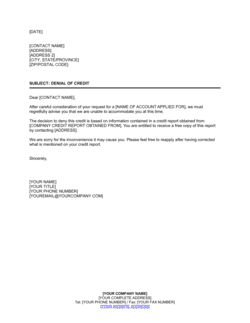
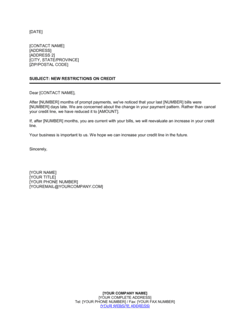
A Notice To Correct Credit is a formal business letter sent by a buyer or account holder to a vendor, supplier, or creditor requesting that an error on their account be identified and corrected. This free Word download gives you a ready-to-use letter you can edit online, fill in your specific details, and send by email or post in under 10 minutes.
When you need it
Use it when a statement, invoice, or account record contains an overcharge, a duplicate charge, a misapplied payment, or a credit that was never applied. It creates a dated, written record of the dispute that protects you if the issue escalates.
What's inside
Sender and recipient details, a clear statement of the error, the specific account or invoice reference, the requested correction, a deadline for response, and a professional closing that preserves the business relationship.

What is a Notice To Correct Credit?

A Notice To Correct Credit is a formal business letter sent by a buyer, account holder, or accounts payable team to a vendor, supplier, or creditor requesting that a specific error on their account be corrected. The error in question is typically a billing discrepancy β€” an overcharge, a duplicate invoice, a misapplied payment, or a credit for returned goods that was never posted. The letter identifies the specific account and invoice, describes the error with exact figures, cites supporting documentation, and requests a written confirmation of the correction by a defined deadline. Because it creates a dated paper record of the dispute, it also protects the sender from late-fee claims on withheld amounts and provides evidence if the matter escalates.

Why You Need This Document

Billing errors are common in any business that deals with multiple vendors or clients, but leaving them unaddressed has a compounding cost: incorrect balances carry forward from statement to statement, late fees accumulate on disputed amounts, and informal verbal corrections rarely make it into the accounting system. Without a written notice, you have no proof of when you raised the issue or what correction you requested β€” making it far harder to contest late fees, push back on collections activity, or prevail in a payment dispute. This template gives you a professional, complete letter in under 10 minutes, one that states your case clearly, references your documentation, and signals to the recipient that you expect a prompt, written response.

Which variant fits your situation?

If your situation is…Use this template
Disputing a specific line item on a vendor invoiceNotice To Correct Credit
Formally requesting a refund for an overpayment already madeRequest for Refund Letter
Notifying a supplier of goods returned and credit owedReturn of Goods Letter
Disputing a charge on a credit report with a bureauCredit Report Dispute Letter
Issuing a credit note to a customer as the billing partyCredit Note
Following up after a correction notice received no responseOverdue Account Reminder Letter

Common mistakes to avoid

❌ Omitting the account or invoice reference number

Why it matters: The recipient cannot locate the transaction without a reference number and will request it before acting, adding 3–5 business days to the resolution timeline.

Fix: Include every available identifier β€” account number, invoice number, and statement date β€” in the subject line of the letter.

❌ Using vague error descriptions

Why it matters: A letter that says 'there appears to be an error on my account' forces the recipient to investigate without direction, making a partial or incorrect adjustment more likely.

Fix: State the incorrect amount, the correct amount, the difference, and the nature of the error in one specific sentence per disputed item.

❌ Withholding payment on undisputed amounts

Why it matters: Holding the entire invoice balance β€” including charges you agree are correct β€” can trigger late fees on the undisputed portion and damage the vendor relationship.

Fix: Pay the undisputed balance on time and state explicitly in the letter that only the disputed amount is being withheld pending resolution.

❌ Sending without supporting documentation

Why it matters: An unsupported correction request is treated as an informal complaint β€” creditors have little obligation to act without evidence, and the dispute can drag on for multiple billing cycles.

Fix: Attach at minimum a copy of the disputed invoice and any contract or purchase order that establishes the correct price before sending the letter.

The 9 key clauses, explained

Sender and recipient identification

In plain language: Names and addresses of both the sender (the disputing party) and the recipient (the creditor or billing department) so the letter is routed to the right person.

Sample language
[SENDER FULL NAME / COMPANY NAME] | [ADDRESS] | [CITY, STATE, ZIP] | [DATE] | To: [RECIPIENT NAME], [TITLE] | [COMPANY NAME] | [ADDRESS]

Common mistake: Addressing the letter to a general company address instead of the accounts receivable or billing contact β€” it delays routing and can restart the response clock.

Subject line and account reference

In plain language: A clear subject line identifying the account number, invoice number, or statement date under dispute so the recipient can pull the record immediately.

Sample language
Re: Credit Correction Request β€” Account No. [ACCOUNT NUMBER] / Invoice No. [INVOICE NUMBER] / Statement Date: [DATE]

Common mistake: Omitting the account or invoice reference number. Without it, the recipient cannot locate the transaction and may request the information before acting, adding days to resolution.

Opening statement of purpose

In plain language: A direct first sentence stating that the letter is a formal notice to correct an error on the sender's account.

Sample language
I am writing to formally notify you of a billing error on Account No. [ACCOUNT NUMBER] and to request that the necessary correction be made at your earliest convenience.

Common mistake: Opening with an apology or overly soft language β€” phrases like 'I wanted to reach out' reduce the letter's authority and can be interpreted as a casual inquiry rather than a formal notice.

Description of the error

In plain language: A specific, factual description of what is wrong β€” the incorrect amount, the nature of the error (duplicate, overcharge, misapplied payment), and when it occurred.

Sample language
On [DATE], your statement reflected a charge of $[INCORRECT AMOUNT] for [DESCRIPTION]. The correct amount per the attached [PURCHASE ORDER / CONTRACT / QUOTE] is $[CORRECT AMOUNT], resulting in an overcharge of $[DIFFERENCE].

Common mistake: Describing the error vaguely ('there seems to be a mistake on my bill') without citing specific figures β€” this forces back-and-forth correspondence and delays the correction.

Supporting documentation reference

In plain language: A statement listing the supporting documents attached to the letter β€” purchase orders, contracts, prior invoices, or payment confirmations that substantiate the correction request.

Sample language
In support of this request, I have enclosed the following: (1) Copy of Invoice No. [INVOICE NUMBER]; (2) Copy of Purchase Order No. [PO NUMBER]; (3) Bank confirmation of payment dated [DATE].

Common mistake: Referencing documents as enclosed without actually attaching them. A letter that references missing attachments undermines credibility and delays resolution.

Requested correction and corrected amount

In plain language: A precise statement of what correction the sender is requesting and what the account balance should show after the correction is made.

Sample language
I respectfully request that you issue a credit of $[AMOUNT] to Account No. [ACCOUNT NUMBER] and that the corrected balance of $[CORRECTED BALANCE] be reflected on the next statement.

Common mistake: Stating a requested outcome without specifying the exact dollar amount β€” leaving the creditor to calculate the correction increases the chance of a partial or incorrect adjustment.

Response deadline

In plain language: A specific date by which the sender expects written confirmation that the correction has been processed or a response explaining why it has not been.

Sample language
Please confirm in writing that this correction has been processed by [DATE β€” typically 10–15 business days from the letter date]. If you require additional information, please contact me at [PHONE / EMAIL].

Common mistake: Omitting a deadline entirely. Without one, creditors treat correction requests as low-priority and the issue can remain unresolved through multiple billing cycles.

Payment hold or withholding statement (if applicable)

In plain language: An optional clause stating that the disputed portion of a balance will be withheld from payment pending resolution, to prevent the creditor from treating non-payment as a default.

Sample language
Please note that the disputed amount of $[AMOUNT] will be withheld from the next remittance pending resolution of this matter. Payment of the undisputed balance of $[AMOUNT] will be made by [DATE] per normal terms.

Common mistake: Withholding payment on the entire invoice, including undisputed amounts. This can trigger late fees on the undisputed portion and damage the vendor relationship unnecessarily.

Professional closing and signature block

In plain language: A courteous closing that preserves the business relationship, followed by the sender's name, title, and contact information.

Sample language
Thank you for your prompt attention to this matter. I look forward to your written confirmation. Sincerely, [SENDER NAME] | [TITLE] | [COMPANY] | [PHONE] | [EMAIL]

Common mistake: Closing with adversarial or threatening language on a first notice. Most billing errors are administrative β€” an aggressive tone escalates unnecessarily and can complicate future dealings.

How to fill it out

  1. 1

    Enter sender and recipient details

    Fill in your full name or company name, mailing address, and the date. Then enter the recipient's name, title, and company address. Address it to a specific billing or accounts receivable contact where possible.

    πŸ’‘ Call the vendor's main number to confirm the correct AP contact name and email before sending β€” this alone can cut response time by several days.

  2. 2

    Add the account and invoice reference in the subject line

    Enter the exact account number, invoice number, or statement date shown on the document you are disputing. Use all reference identifiers available β€” the more specific, the faster the recipient can locate the record.

    πŸ’‘ If you have a vendor account number and an invoice number, include both β€” many billing systems require both to pull the exact transaction.

  3. 3

    Describe the error with specific figures

    State the incorrect amount charged, the correct amount that should have been charged, and the resulting difference. Identify the nature of the error β€” duplicate charge, overcharge, or misapplied payment.

    πŸ’‘ Use a single, clear sentence per error. If there are multiple errors on the same account, list them as numbered items rather than combining them in one paragraph.

  4. 4

    List and attach all supporting documents

    Reference each document by name in the body of the letter and attach a copy. Typical documents include the original invoice, the purchase order or contract, and payment confirmation from your bank.

    πŸ’‘ Send PDF copies, not originals. Mark each attachment with a header (e.g., 'Attachment 1 β€” Invoice No. INV-2026-0047') so the recipient can match them to your references.

  5. 5

    State the exact correction requested

    Write the specific dollar amount of the credit requested and what the corrected account balance should be. Avoid general language like 'please adjust accordingly.'

    πŸ’‘ If you are also disputing a late fee triggered by the billing error, request removal of the fee in the same letter β€” handling it separately adds unnecessary back-and-forth.

  6. 6

    Set a response deadline and send

    Add a specific response deadline β€” 10 to 15 business days is standard for routine billing corrections. Send by email with read receipt, or by certified mail if the amount is significant or the relationship is contentious.

    πŸ’‘ For amounts above $1,000, send by both email and certified mail. Email creates an instant timestamp; certified mail creates a legal proof of delivery if the dispute escalates.

Frequently asked questions

What is a notice to correct credit?

A notice to correct credit is a formal written letter sent by a buyer or account holder to a vendor, supplier, or creditor requesting that a specific billing error be corrected on their account. It documents the error in writing, identifies the correct amount owed, requests a credit adjustment, and establishes a paper trail in case the dispute escalates to collections or legal proceedings.

When should I send a notice to correct credit?

Send it as soon as you identify a discrepancy on an invoice, statement, or account record β€” ideally within the same billing period the error appears. Common triggers include overcharges, duplicate invoices, payments posted to the wrong account, and credits for returned goods that were never applied. Acting quickly reduces the chance of late fees compounding on the disputed balance.

Does a notice to correct credit need to be signed?

A formal signature is not legally required for most routine billing correction requests, but including your name, title, and contact information in the closing block adds credibility and ensures the recipient knows who to contact. For high-value disputes or contentious vendor relationships, a typed name with a scanned signature signals that the letter is an official communication from your organization.

What documentation should I include with the letter?

At minimum, attach a copy of the disputed invoice and the document that establishes the correct amount β€” a purchase order, signed contract, or approved quote. If the error involves a misapplied payment, include your bank's payment confirmation or remittance advice. More documentation makes the correction easier to process and reduces back-and-forth.

What is a reasonable response deadline to set?

Ten to fifteen business days is the standard expectation for routine billing corrections. For urgent situations where a payment deadline is approaching, 5 business days is reasonable to request. State the deadline explicitly in the letter rather than using vague language like "at your earliest convenience" β€” a specific date creates accountability.

Can I withhold payment while the correction is pending?

In most cases, you can withhold the disputed portion of a balance while the correction is pending, provided you pay the undisputed portion on time. Explicitly state in your letter that you are withholding only the disputed amount and that you will remit the remainder per normal payment terms. Withholding the full invoice, including undisputed charges, can trigger late fees and damage the vendor relationship unnecessarily.

What is the difference between a notice to correct credit and a credit note?

A notice to correct credit is sent by the buyer to the seller requesting a correction β€” it is a demand or request. A credit note is issued by the seller to the buyer acknowledging that a credit is owed β€” it is a confirmation. The notice initiates the process; the credit note closes it. If your correction request is accepted, the vendor should respond with a formal credit note adjusting your account balance.

Should I send this letter by email or by mail?

Email is sufficient for most routine billing corrections and creates an instant timestamp. For disputes involving amounts above $1,000, a contentious vendor relationship, or a creditor who has already failed to respond to informal follow-ups, send by certified mail in addition to email. Certified mail provides legal proof of delivery that email cannot replicate if the matter later goes to collections or arbitration.

How this compares to alternatives

vs Credit Note

A credit note is issued by the seller to reduce the amount a buyer owes β€” it is the seller's document confirming a credit exists. A notice to correct credit is the buyer's document requesting that a credit be issued. The notice triggers the process; the credit note confirms it. Buyers send notices; sellers issue credit notes.

vs Demand Letter

A demand letter is a formal legal notice demanding payment or action under threat of legal proceedings. A notice to correct credit is a professional correction request with no legal threat β€” it is appropriate for routine billing disputes with ongoing vendor relationships. Use a demand letter only after a correction notice has been ignored or rejected.

vs Invoice Dispute Letter

An invoice dispute letter challenges whether an invoice is valid at all β€” the goods were not received, the service was not rendered, or the contract does not authorize the charge. A notice to correct credit accepts that the underlying transaction occurred but disputes the amount or the way it was recorded. The distinction affects tone, documentation, and the likely response from the creditor.

vs Complaint Letter

A complaint letter addresses service failures, quality issues, or conduct problems and seeks remedy through corrective action or goodwill gestures. A notice to correct credit is narrowly focused on a mathematical or accounting error on a specific account or invoice. Complaint letters are broader in scope and less transactional in nature.

Industry-specific considerations

Retail and wholesale

Disputing quantity discrepancies, incorrect unit pricing, or volume discount credits not applied on supplier invoices.

Construction and trades

Correcting overbillings on materials invoices, subcontractor charges, or equipment rental statements tied to project purchase orders.

Professional services

Addressing hourly billing overruns charged beyond a fixed-fee cap, or retainer credits that were not carried forward to the next billing period.

Healthcare

Requesting correction of insurance reimbursement mispostings, duplicate billing codes, or co-pay credits not applied to patient account balances.

Template vs pro β€” what fits your needs?

PathBest forCostTime
Use the templateAny business or individual disputing a routine billing error with a vendor, supplier, or service providerFree10 minutes
Template + professional reviewDisputes involving amounts above $5,000, complex contract terms, or a vendor who has already failed to respond$50–$150 (paralegal or accountant review)1–2 hours
Custom draftedHigh-value disputes that are likely to escalate to collections, arbitration, or litigation$200–$500 (attorney-drafted)1–3 days

Glossary

Credit Correction
An adjustment made by a seller or creditor to reduce or reverse an incorrect charge on a buyer's account.
Account Statement
A periodic summary issued by a creditor or vendor listing all charges, payments, credits, and the current balance owed.
Credit Note
A document issued by a seller that reduces the amount a buyer owes, typically in response to a return, error, or agreed adjustment.
Misapplied Payment
A payment made by the buyer that was posted to the wrong invoice, period, or account by the creditor.
Duplicate Charge
The same invoice or transaction billed twice on an account, resulting in an overstatement of the amount owed.
Overcharge
A charge that exceeds the agreed contract price, purchase order amount, or previously quoted rate.
Dispute Reference Number
A unique identifier assigned to a billing dispute by the creditor's accounts receivable team, used to track resolution progress.
Accounts Payable
The internal function responsible for managing and paying a company's outstanding invoices and vendor obligations.
Remittance
A payment sent by a buyer to a seller, often accompanied by a remittance advice document identifying which invoices the payment covers.
Net Balance
The amount actually owed on an account after all credits, payments, and adjustments have been applied.

Part of your Business Operating System

This document is one of 3,000+ business & legal templates included in Business in a Box.

  • Fill-in-the-blanks β€” ready in minutes
  • 100% customizable Word document
  • Compatible with all office suites
  • Export to PDF and share electronically

Create your document in 3 simple steps.

From template to signed document β€” all inside one Business Operating System.
1
Download or open template

Access over 3,000+ business and legal templates for any business task, project or initiative.

2
Edit and fill in the blanks with AI

Customize your ready-made business document template and save it in the cloud.

3
Save, Share, Send, Sign

Share your files and folders with your team. Create a space of seamless collaboration.

Save time, save money, and create top-quality documents.

β˜…β˜…β˜…β˜…β˜…

"Fantastic value! I'm not sure how I'd do without it. It's worth its weight in gold and paid back for itself many times."

Managing Director Β· Mall Farm
Robert Whalley
Managing Director, Mall Farm Proprietary Limited
β˜…β˜…β˜…β˜…β˜…

"I have been using Business in a Box for years. It has been the most useful source of templates I have encountered. I recommend it to anyone."

Business Owner Β· 4+ years
Dr Michael John Freestone
Business Owner
β˜…β˜…β˜…β˜…β˜…

"It has been a life saver so many times I have lost count. Business in a Box has saved me so much time and as you know, time is money."

Owner Β· Upstate Web
David G. Moore Jr.
Owner, Upstate Web

Run your business with a system β€” not scattered tools

Stop downloading documents. Start operating with clarity. Business in a Box gives you the Business Operating System used by over 250,000 companies worldwide to structure, run, and grow their business.

Free Forever PlanΒ Β·Β No credit card required