Apology Regarding Inability to Submit Tender Template

Free Word download β€’ Edit online β€’ Save & share with Drive β€’ Export to PDF

1 pageβ€’15–20 min to fillβ€’Difficulty: Standard
Learn more ↓
FreeApology Regarding Inability to Submit Tender Template

At a glance

What it is
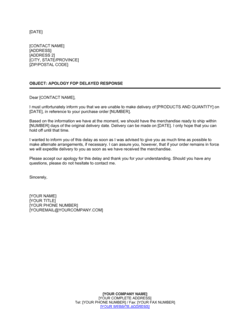
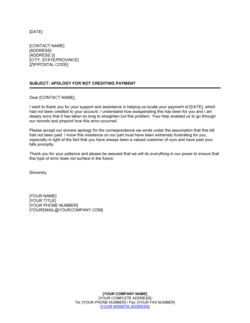
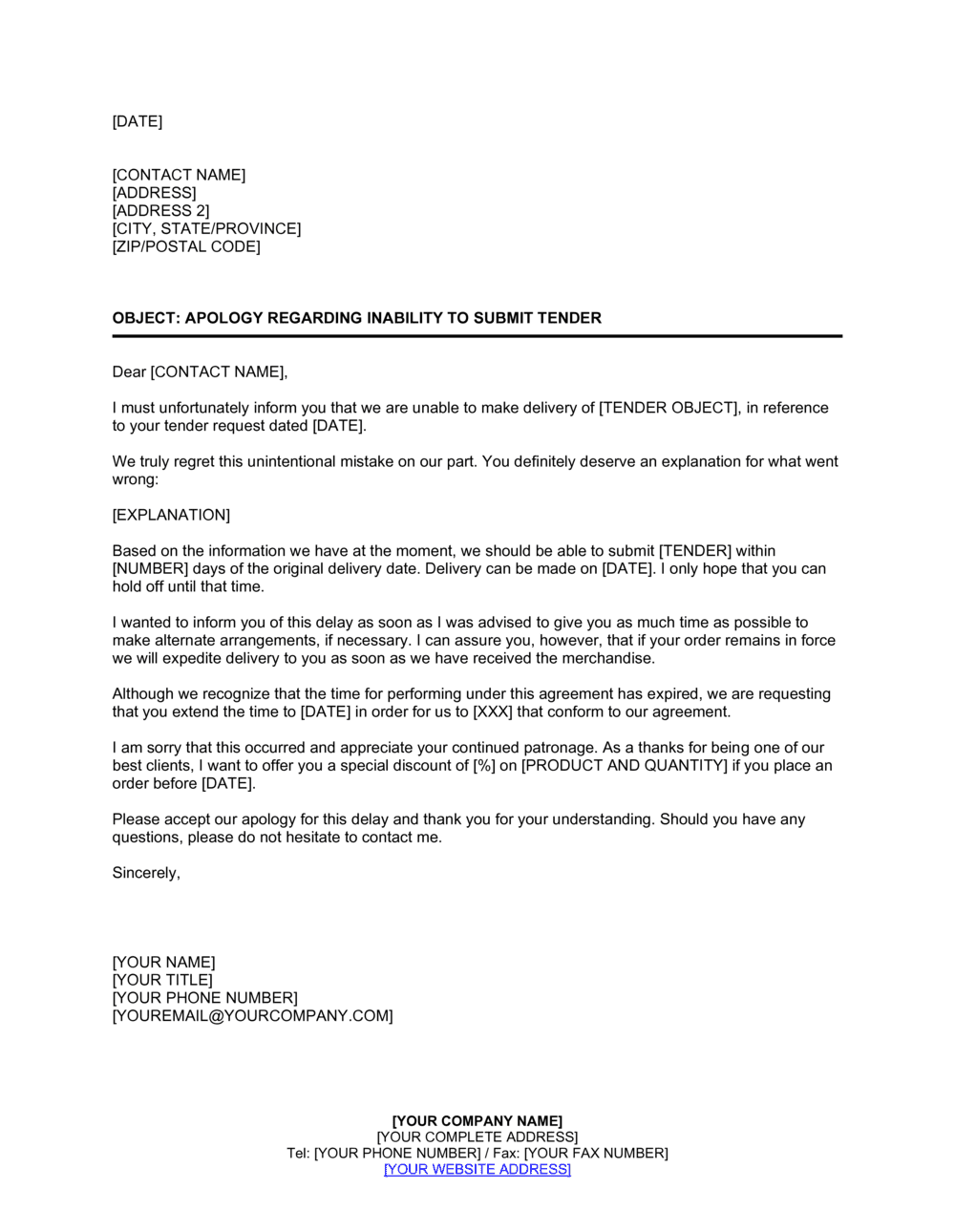
An Apology Regarding Inability To Submit Tender is a formal business letter sent to a contracting authority or client to notify them that your organization cannot participate in an open tender process. This free Word download gives you a ready-to-edit template you can personalize in minutes and export as PDF to send before the tender deadline.
When you need it
Use it when you have received a tender invitation but cannot submit a bid due to resource constraints, scheduling conflicts, scope misalignment, or internal strategic priorities. Sending this letter promptly preserves the professional relationship and keeps you on the client's approved vendor list for future opportunities.
What's inside
Sender and recipient details, reference to the original tender invitation, a clear statement of inability to bid, a brief professionally worded explanation, an expression of appreciation for being invited, and a closing that signals continued interest in future work.

What is an Apology Regarding Inability To Submit Tender?

An Apology Regarding Inability To Submit Tender is a formal business letter sent by an invited supplier to a contracting authority β€” a government body, corporation, or institution β€” to notify them that the supplier will not be submitting a bid in response to a tender invitation. It states the non-participation clearly, offers a brief and professionally worded explanation, and closes on a courteous note designed to preserve the commercial relationship and maintain the sender's standing on the contracting authority's approved vendor list. This free Word download can be edited and exported as PDF in under ten minutes.

Why You Need This Document

Ignoring a tender invitation without formal notice is one of the fastest ways to be removed from a contracting authority's approved vendor register. Procurement teams track response rates, and suppliers who repeatedly fail to respond β€” even with a decline β€” are deprioritized or delisted from future tender rounds. A concise, timely apology letter signals organizational professionalism, respects the effort the contracting authority invested in preparing the tender, and keeps the door open for future opportunities. It also creates a written record of your non-participation, which matters if the tender process is later reviewed or audited. Using this template ensures every non-submission notice your organization sends is consistent, correctly structured, and appropriately worded β€” without requiring more than a few minutes to complete.

Which variant fits your situation?

If your situation is…Use this template
Declining a government RFP due to resource constraintsApology Regarding Inability To Submit Tender
Formally withdrawing a bid already submittedBid Withdrawal Letter
Declining a private-sector RFP or proposal invitationProposal Decline Letter
Notifying a client you cannot meet a project deadlineApology Letter for Delay
Expressing interest in future tender opportunities after decliningLetter of Interest for Future Contracts

Common mistakes to avoid

❌ Sending the letter after the tender closing date

Why it matters: A post-deadline notification is useless to the procurement team and leaves a negative impression β€” they may question your responsiveness on future tenders.

Fix: Send the apology letter as soon as you decide not to bid, ideally at least 48–72 hours before the tender closing date.
❌ Leaving out the tender reference number

Why it matters: Procurement departments manage multiple simultaneous tenders. A letter without a reference number requires manual matching and may be misfiled or ignored.

Fix: Copy the exact tender reference number from the invitation documents into the subject line of every tender-related letter.

❌ Over-explaining the internal reason for non-submission

Why it matters: Detailed internal justifications can expose commercially sensitive information or create expectations that you will be available for the next tender under different circumstances.

Fix: Limit the explanation to one high-level sentence using neutral language. 'Current capacity commitments' or 'scope alignment' is sufficient.

❌ Omitting the expression of continued interest when future business is desired

Why it matters: Without a clear signal of future intent, the contracting authority may remove your organization from their approved vendor list or future invitation rounds.

Fix: Include a single sentence explicitly stating your interest in future procurement opportunities with the organization.

The 8 key clauses, explained

Sender and recipient details

In plain language: Identifies your organization and the contracting authority by full name, address, and relevant contact information.

Sample language
[YOUR COMPANY NAME] | [ADDRESS] | [CITY, STATE, ZIP] | [DATE] | Addressed to: [CONTRACTING AUTHORITY NAME] | Attn: [CONTACT NAME], [TITLE]

Common mistake: Addressing the letter to the generic organization rather than the named procurement contact β€” it slows routing and signals a form letter.

Subject line with tender reference

In plain language: States the tender name and reference number so the recipient can immediately match the letter to the correct procurement file.

Sample language
Re: Apology for Non-Submission β€” [TENDER TITLE], Tender Reference No. [REFERENCE NUMBER]

Common mistake: Omitting the tender reference number. Without it, procurement teams handling multiple active tenders cannot file or act on the letter efficiently.

Opening acknowledgment

In plain language: Thanks the contracting authority for the invitation to tender and acknowledges the opportunity by name.

Sample language
We refer to your invitation to tender dated [DATE] for [TENDER TITLE] and wish to thank [CONTRACTING AUTHORITY NAME] for considering [YOUR COMPANY NAME] as a potential supplier.

Common mistake: Skipping the acknowledgment and opening directly with the refusal. This reads as curt and damages the goodwill the letter is intended to preserve.

Clear statement of non-submission

In plain language: States plainly and without ambiguity that your organization will not be submitting a bid for this tender.

Sample language
We regret to inform you that [YOUR COMPANY NAME] is unable to submit a tender response for [TENDER TITLE] by the closing date of [CLOSING DATE].

Common mistake: Using vague language like 'we may not be in a position to respond.' Ambiguity causes the procurement team to follow up unnecessarily and may leave your bid status unclear.

Brief explanation of the reason

In plain language: Provides a concise, professional reason for non-participation without over-disclosing sensitive internal details.

Sample language
This decision is due to [REASON β€” e.g., current resource commitments / a conflict of interest / the scope not aligning with our current service offerings] and is not a reflection of the opportunity itself.

Common mistake: Providing an overly detailed internal explanation. One clear sentence is sufficient β€” lengthy justifications can inadvertently raise concerns or create future accountability issues.

Apology and expression of regret

In plain language: Offers a genuine, brief apology for any inconvenience caused by the non-submission and acknowledges the effort the contracting authority invested in the process.

Sample language
We sincerely apologize for any inconvenience this may cause and appreciate the time and effort your team has invested in preparing this tender opportunity.

Common mistake: Omitting the apology entirely and treating the letter as a purely administrative notice. The apology is the element that distinguishes this letter from a terse non-response.

Expression of continued interest

In plain language: Signals that your organization remains interested in working with the contracting authority on future opportunities, preserving the commercial relationship.

Sample language
We remain very interested in [CONTRACTING AUTHORITY NAME]'s future procurement activities and hope to have the opportunity to submit a competitive proposal at a future date.

Common mistake: Omitting this clause when your organization genuinely wants future business. Without it, the recipient has no indication whether to continue including you in future tender rounds.

Closing and signature block

In plain language: Closes the letter professionally with a courteous sign-off, the sender's name, title, and contact details.

Sample language
Yours sincerely, [SIGNATORY NAME] | [TITLE] | [YOUR COMPANY NAME] | [EMAIL] | [PHONE]

Common mistake: Signing the letter with a generic role title like 'The Management' instead of a named individual. A named signatory conveys accountability and makes follow-up straightforward for the recipient.

How to fill it out

  1. 1

    Enter your organization's details and the date

    Add your company's full legal name, mailing address, and the date you are sending the letter in the sender block at the top of the template.

    πŸ’‘ Use the same organization name that appeared on the original tender registration to avoid any confusion in the contracting authority's vendor file.

  2. 2

    Address the letter to the correct procurement contact

    Insert the contracting authority's name, the specific department, and the named procurement officer if one was identified in the tender documents.

    πŸ’‘ Check the original tender invitation for the named contact β€” addressing a procurement officer by name increases the chance the letter is filed correctly and read promptly.

  3. 3

    Add the tender title and reference number to the subject line

    Copy the exact tender title and reference number from the original invitation documents into the subject line of the letter.

    πŸ’‘ A precise subject line means the letter reaches the right file without a manual search β€” this is especially important for large contracting authorities managing dozens of active tenders.

  4. 4

    Acknowledge the invitation

    Write one sentence thanking the contracting authority for including your organization in the tender process, referencing the tender by name.

    πŸ’‘ Keep this sentence warm but brief β€” one line is enough to set a courteous tone before the substantive content.

  5. 5

    State your non-submission clearly

    Write a single direct sentence confirming that your organization will not be submitting a tender response and include the closing date for reference.

    πŸ’‘ Avoid conditional language. 'We are unable to submit' is clearer and more professional than 'We do not think we will be able to respond.'

  6. 6

    Provide a brief reason and express regret

    Add one sentence explaining the reason for non-submission at a high level, followed by a one-sentence apology for any inconvenience caused.

    πŸ’‘ If the reason is commercially sensitive β€” such as an internal restructuring or a conflict β€” use a neutral phrase like 'current operational priorities' rather than disclosing specifics.

  7. 7

    Close with a forward-looking statement and sign off

    Include a sentence expressing interest in future tender opportunities, then close with your name, title, and direct contact details.

    πŸ’‘ Providing a direct phone number or email in the closing makes it easy for the procurement officer to re-engage you for the next round without starting from scratch.

Frequently asked questions

What is an apology regarding inability to submit tender?

It is a formal business letter sent by an invited supplier to a contracting authority explaining that they will not be submitting a bid in response to a tender invitation. The letter acknowledges the invitation, states the non-submission clearly, provides a brief reason, and closes on a positive note to preserve the commercial relationship. Sending one is considered professional practice in public and private procurement.

Do I have to send an apology letter if I can't submit a tender?

There is no universal legal obligation to send one, but most procurement frameworks β€” including public sector guidelines in the UK, Australia, and Canada β€” expect invited suppliers to notify the contracting authority of non-participation. Failing to respond at all can result in removal from approved vendor lists and a reputation for poor reliability among procurement teams who manage long-term supplier relationships.

How soon should I send the apology letter?

Send it as soon as you decide not to bid β€” ideally at least 48–72 hours before the tender closing date. Early notification gives the contracting authority time to adjust their evaluation process if needed and signals that your organization is organized and considerate of their planning. A letter sent after the deadline serves no practical purpose.
How much detail should I provide about why I can't submit?

One sentence at a high level is sufficient. Use neutral phrases such as "current resource commitments," "scope alignment," or "scheduling constraints." You are not obligated to disclose internal financial difficulties, staffing issues, or strategic decisions, and doing so can create unnecessary complications or raise concerns about your organization's stability.

Will declining a tender hurt my chances of being invited again?

A professionally worded apology letter typically does not damage your standing. Procurement teams understand that suppliers have competing priorities. What does hurt future chances is providing no response at all or sending a poorly written decline that gives no indication of continued interest. The closing paragraph expressing future availability is the most important element for maintaining your position on the vendor list.

Is this letter the same as a bid withdrawal letter?

No. An apology regarding inability to submit tender is sent before the deadline when you decide not to bid at all. A bid withdrawal letter is sent after a bid has already been submitted, to formally retract it. The two letters serve different stages of the procurement process and carry different procedural implications depending on the tender rules.

Can I use this template for both government and private sector tenders?

Yes. The tone and structure are appropriate for both public procurement processes β€” including local government, federal agencies, and statutory bodies β€” and private sector RFP processes issued by corporations or institutions. You may need to adjust the formality of the salutation slightly for private clients, but the core structure works for both contexts.

Does this letter need to be signed by a senior person in the organization?

It should be signed by someone with authority to represent your organization in procurement matters β€” typically a director, general manager, or the person who was named as the tender contact. Signing with a named individual rather than a generic title or department name conveys accountability and makes it easy for the procurement officer to follow up directly if needed.

How this compares to alternatives

vs Bid Withdrawal Letter

A bid withdrawal letter is sent after a tender response has already been submitted, formally retracting that submission. An apology for inability to submit is sent before the deadline when no bid is forthcoming. The two letters address different stages of the procurement process, and many tender rules impose conditions or penalties on bid withdrawal that do not apply to pre-deadline non-submission notices.

vs Letter of Intent to Bid

A letter of intent to bid confirms to the contracting authority that you plan to submit a tender response, sometimes required under formal procurement rules. An apology for inability to submit does the opposite β€” it formally removes your organization from the active bidder pool. If you initially sent a letter of intent, this apology supersedes it.

vs Proposal Decline Letter

A proposal decline letter is typically used in private-sector sales contexts to decline an invitation to submit a commercial proposal or RFP response. It is less formal than a tender apology letter and does not carry the same procurement-process implications. Use a tender apology letter for any formal public or corporate procurement process governed by tender rules.

vs Vendor Regret Letter

A vendor regret letter is sent by the contracting authority to unsuccessful bidders after the tender has been awarded. An apology regarding inability to submit is sent by the supplier to the contracting authority before the deadline. They travel in opposite directions and serve entirely different purposes within the same procurement cycle.

Industry-specific considerations

Construction and Engineering

Project scheduling conflicts and subcontractor availability frequently prevent contractors from bidding on all invited tenders, making this letter a routine operational document.

Professional Services

Conflicts of interest arising from existing client relationships are a common reason consulting and advisory firms must formally decline tender invitations.

Government and Public Sector

Public procurement frameworks in most jurisdictions expect registered suppliers to formally notify contracting authorities of non-participation to maintain their approved vendor standing.

Information Technology

IT vendors frequently decline tenders where the technical scope, compliance requirements, or timeline fall outside their current delivery capacity or product roadmap.

Template vs pro β€” what fits your needs?

PathBest forCostTime
Use the templateAny organization needing to formally decline a tender invitation quickly and professionallyFree5–10 minutes
Template + professional reviewOrganizations declining a high-value tender where the relationship with the contracting authority is strategically important$50–$150 (senior manager or business advisor review)30–60 minutes
Custom draftedOrganizations operating under specific procurement frameworks that mandate particular wording or disclosure in non-submission notices$150–$400 (procurement consultant or legal advisor)Half a day

Glossary

Tender
A formal invitation issued by a buyer or contracting authority requesting suppliers to submit competitive bids for a contract.
RFP (Request for Proposals)
A procurement document soliciting detailed proposals from vendors, typically for complex services where methodology and price are both evaluated.
RFQ (Request for Quotations)
A simplified procurement document requesting price-only quotes for well-defined goods or services.
Contracting Authority
The organization β€” government body, corporation, or institution β€” that issues the tender and evaluates submitted bids.
Approved Vendor List
A register maintained by a buyer listing suppliers pre-qualified to receive future tender invitations.
Non-Submission
The formal decision by an invited supplier not to submit a bid in response to a tender, which should be communicated in writing.
Tender Reference Number
A unique identifier assigned by the contracting authority to a specific tender, used to track and match correspondence.
Scope of Works
The detailed description of deliverables, tasks, and outcomes the successful tenderer is required to provide.
Conflict of Interest
A situation where a supplier's existing relationships or obligations would compromise their ability to compete or perform impartially.
Regret Letter
A general term for any formal communication declining participation in a procurement process, used interchangeably with tender apology letter.

Part of your Business Operating System

This document is one of 3,000+ business & legal templates included in Business in a Box.

  • Fill-in-the-blanks β€” ready in minutes
  • 100% customizable Word document
  • Compatible with all office suites
  • Export to PDF and share electronically

Create your document in 3 simple steps.

From template to signed document β€” all inside one Business Operating System.
1
Download or open template

Access over 3,000+ business and legal templates for any business task, project or initiative.

2
Edit and fill in the blanks with AI

Customize your ready-made business document template and save it in the cloud.

3
Save, Share, Send, Sign

Share your files and folders with your team. Create a space of seamless collaboration.

Save time, save money, and create top-quality documents.

β˜…β˜…β˜…β˜…β˜…

"Fantastic value! I'm not sure how I'd do without it. It's worth its weight in gold and paid back for itself many times."

Managing Director Β· Mall Farm
Robert Whalley
Managing Director, Mall Farm Proprietary Limited
β˜…β˜…β˜…β˜…β˜…

"I have been using Business in a Box for years. It has been the most useful source of templates I have encountered. I recommend it to anyone."

Business Owner Β· 4+ years
Dr Michael John Freestone
Business Owner
β˜…β˜…β˜…β˜…β˜…

"It has been a life saver so many times I have lost count. Business in a Box has saved me so much time and as you know, time is money."

Owner Β· Upstate Web
David G. Moore Jr.
Owner, Upstate Web

Run your business with a system β€” not scattered tools

Stop downloading documents. Start operating with clarity. Business in a Box gives you the Business Operating System used by over 250,000 companies worldwide to structure, run, and grow their business.

Free Forever PlanΒ Β·Β No credit card required