1
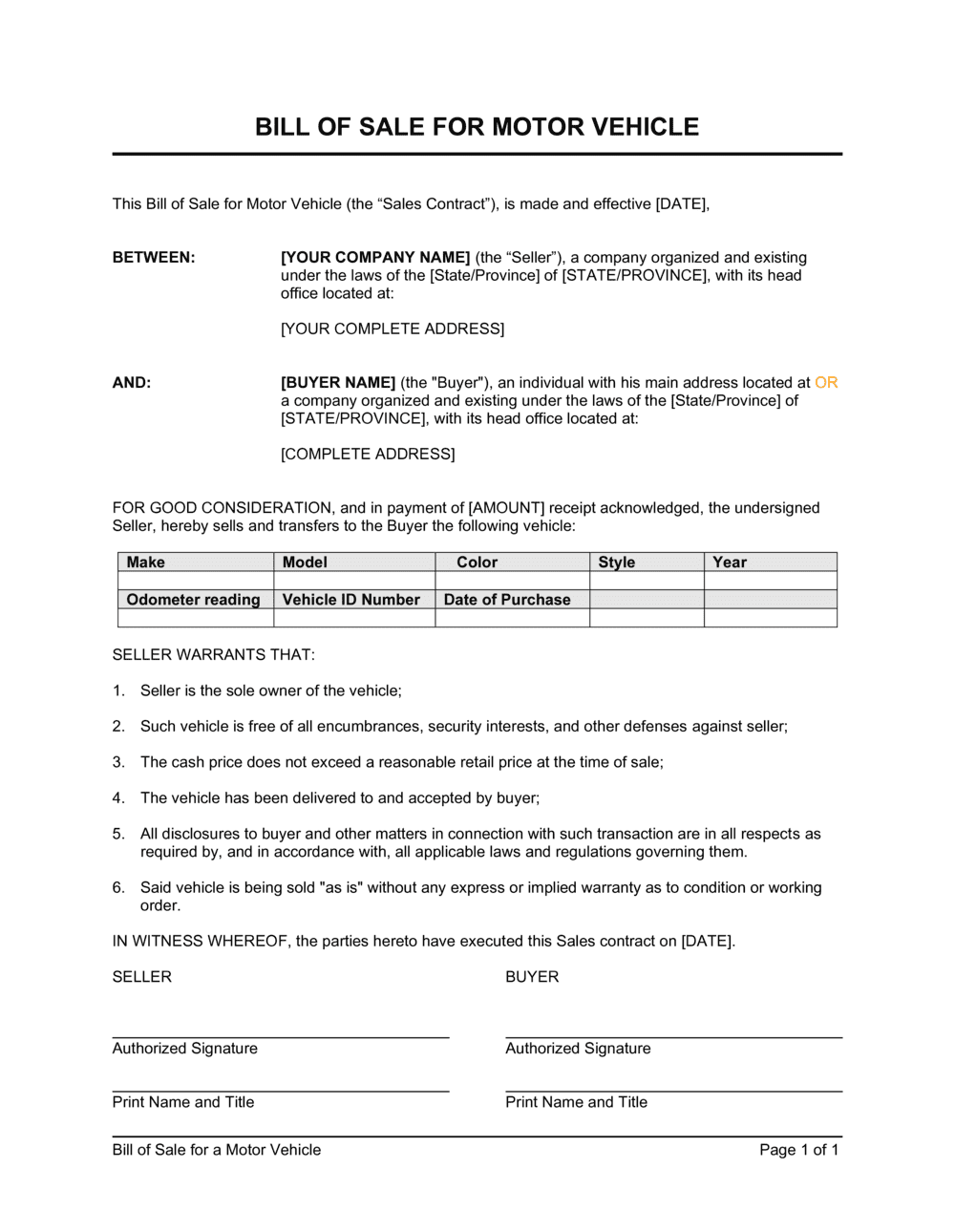
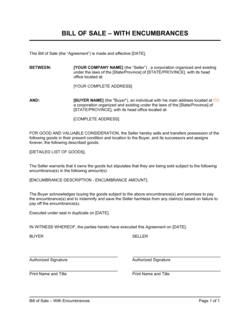
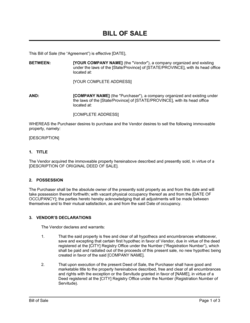
Enter the parties' legal names and addresses
Use the full legal name appearing on each party's government-issued ID and the current address of both seller and buyer. For a business seller, use the registered entity name and principal address.
💡 Cross-check the seller's name against the name printed on the existing vehicle title — any discrepancy must be resolved before the DMV will process the transfer.
2
Record the complete vehicle description and VIN
Enter the year, make, model, body style, color, and the full 17-character VIN exactly as it appears on the dashboard plate and existing title. Photograph the VIN plate before completing this field.
💡 Run a free VIN check (NHTSA or a similar service) to confirm the vehicle is not subject to an open safety recall or title branding that the seller has not disclosed.
3
Complete the odometer disclosure
Record the exact odometer reading at the time of the transaction and check the appropriate certification box. For US vehicles under 10 model years old, this disclosure is a federal legal requirement — not optional.
💡 Take a timestamped photo of the odometer at the moment of sale. If a dispute arises later, this is the single most useful piece of evidence.
4
State the sale price and payment method
Enter the full agreed purchase price in the applicable currency and select the payment method. For cash transactions, note that the amount was received in full.
💡 Never record a price lower than the actual sale price to reduce tax — most DMVs use published book values (NADA, Black Book) to flag undervalued transfers and will assess tax on fair market value regardless.
5
Select the warranty status and add any disclosures
Check 'as-is' for a private sale with no warranty, or describe any express warranty being provided. List all known material defects — accident history, prior flood damage, salvage branding — in the disclosures section.
💡 Even a brief written disclosure of a known defect protects the seller from a fraudulent concealment claim. 'Buyer is aware that the transmission slips at highway speed' is worth writing.
6
Confirm lien status and title delivery date
If the vehicle is free and clear, state 'none' in the lien field. If an auto loan is outstanding, identify the lienholder and confirm in writing when it will be paid off and when the clean title will be delivered to the buyer.
💡 For transactions involving an outstanding loan, consider closing through the lienholder's branch or a title company so the payoff and title transfer occur simultaneously.
7
Sign, date, and notarize where required
Both seller and buyer must sign and date the document. Check your state or province requirements — Louisiana, Maryland, Montana, Nebraska, New Hampshire, West Virginia, and Wyoming require notarization for motor vehicle bills of sale.
💡 Even when notarization is not legally required, having both signatures witnessed and notarized provides strong protection against forgery claims and simplifies title disputes.
8
Distribute copies and retain originals
The buyer should receive the original signed bill of sale together with the signed title. The seller should retain a fully signed copy. File both with the DMV registration paperwork and keep a digital backup.
💡 Scan the signed document immediately after execution and store it in a cloud folder — physical paperwork is frequently lost between the sale date and the DMV visit.