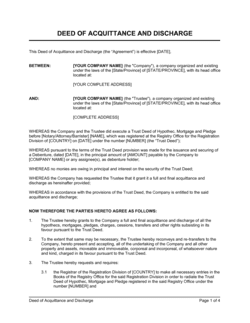
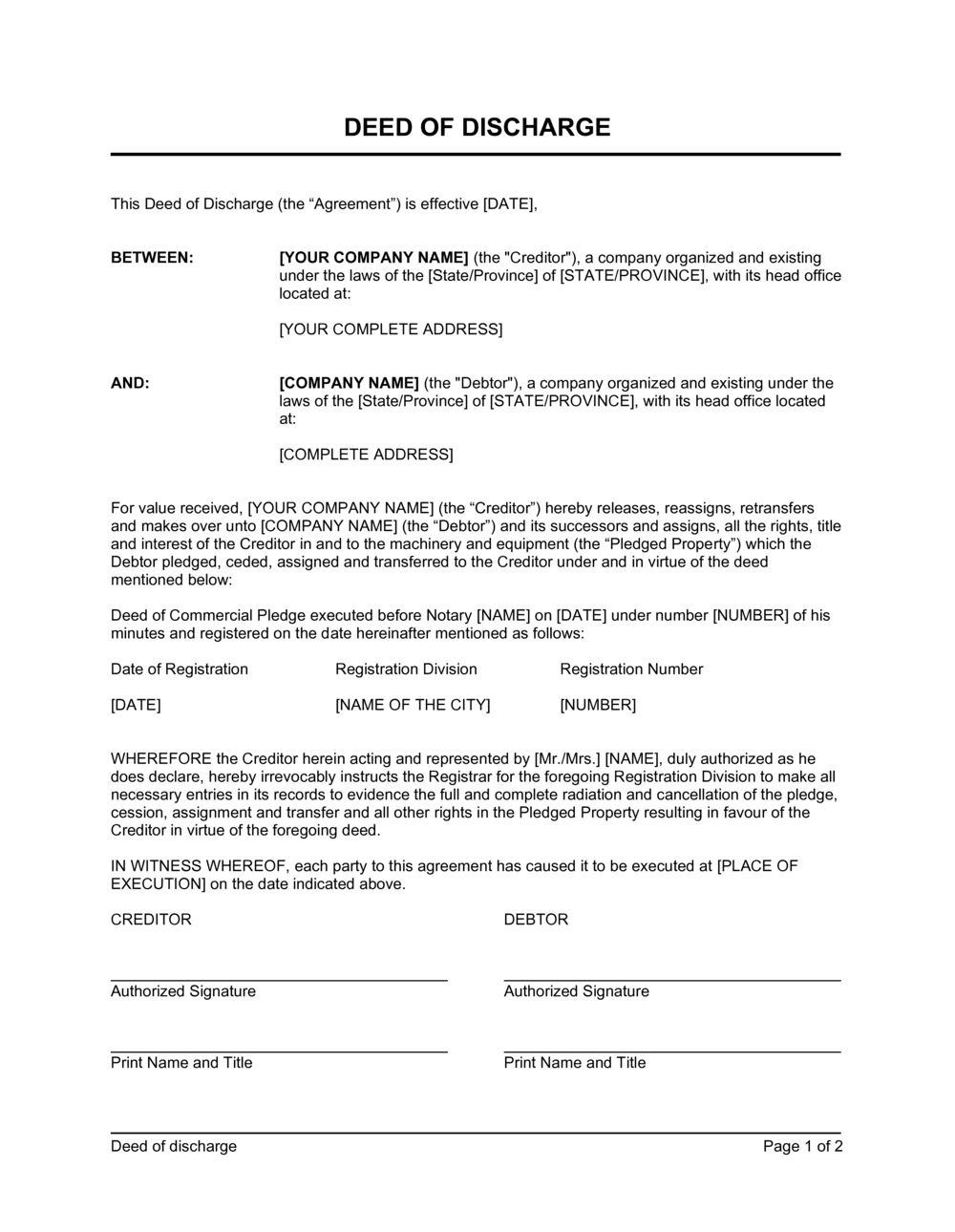
Deed of Discharge Template

Free Word download • Edit online • Save & share with Drive • Export to PDF

2 pages20–30 min to fillDifficulty: StandardSignature requiredLegal review recommended
Learn more ↓
FreeDeed of Discharge Template

At a glance

What it is
A Deed of Discharge is a formal legal instrument that permanently releases one or more parties from obligations, liabilities, or claims arising under a contract, loan, or other binding arrangement. This free Word download gives you a structured, execution-ready starting point you can edit online and export as PDF — covering the release, consideration, surviving obligations, and governing law in a single signed deed.
When you need it
Use it when a debt has been repaid in full, a contractual obligation has been satisfied, a settlement has been reached, or parties mutually agree to terminate ongoing duties under a prior agreement. It is also used when a guarantor is released following the discharge of the underlying obligation.
What's inside
Party identification and recitals, the specific obligations being discharged, consideration for the release, representations and warranties from both parties, any surviving obligations or carve-outs, execution requirements, and governing law and jurisdiction clauses.

What is a Deed of Discharge?

A Deed of Discharge is a formal legal instrument that permanently extinguishes one or more obligations, liabilities, or claims arising under a prior contract, loan, guarantee, or security arrangement. Unlike a simple release letter — which functions as an ordinary contract and requires consideration from both sides — a deed carries heightened formality under common law: it must be signed by the releasing party in the physical presence of an independent witness, and it must be delivered to take legal effect. This means a deed can operate as a binding release even where no new consideration passes from the obligor, making it the appropriate instrument when a creditor, obligee, or secured party wishes to confirm that an obligation has been satisfied and no further rights or claims remain.

In practice, a deed of discharge is used when a debt is repaid in full, when a contractor or supplier has completed all obligations under a services agreement, when a guarantor is released following discharge of the principal debt, or when parties wish to produce a clean, court-admissible record confirming that a liability no longer exists. Where the discharged obligation was secured against real property or a registered asset, the deed is typically accompanied by a separate registration filing — such as a UCC-3 termination statement, an MR04 at Companies House, or a DS1 at HM Land Registry — to remove the encumbrance from the public record.

Why You Need This Document

Without a formally executed deed of discharge, a satisfied obligation can remain legally ambiguous — and ambiguity is expensive. A creditor who sends an informal email confirming repayment has not created an irrevocable release; in a later dispute, that email can be argued away, and the obligor may face renewed demands or litigation over a debt they believed was extinguished. Registered encumbrances that are never formally discharged remain on the public record indefinitely, blocking property sales, preventing refinancing, and triggering flags in due diligence searches that delay or kill transactions. For guarantors, the absence of a written discharge means ongoing contingent liability — even after the underlying debt is gone — until a court confirms the guarantee has fallen away. A properly drafted and executed deed of discharge eliminates all of these risks in a single instrument: it creates a permanent, irrevocable, and court-admissible record that the obligation is gone, the parties are free, and no future claim can be brought on the same grounds.

Which variant fits your situation?

If your situation is…Use this template
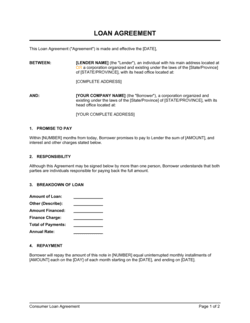
Releasing a borrower after full repayment of a loanDeed of Discharge (Loan)
Releasing a guarantor once the underlying debt is settledDeed of Release of Guarantee
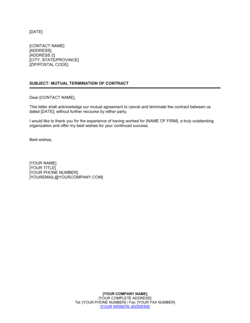
Terminating a contract by mutual agreement with no outstanding claimsMutual Termination Agreement
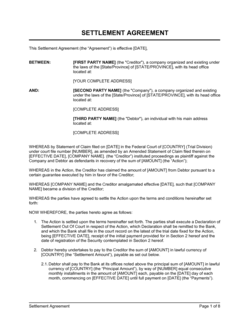
Settling a disputed claim between parties before or after litigationSettlement Agreement
Releasing a party from liability after a full and final commercial dispute resolutionDeed of Release and Indemnity
Formally closing out obligations under a construction or services contractContract Completion Certificate
Removing a charge or encumbrance registered against real propertyMortgage Discharge Form

Common mistakes to avoid

❌ Using a simple letter of release instead of a deed

Why it matters: A letter of release is a contract and requires consideration from both sides to be binding. A deed does not require mutual consideration, making it the appropriate instrument when the release is one-sided or the consideration is past.

Fix: Confirm whether the release requires the formal requirements of a deed — signature, witness, and delivery — particularly when releasing a guarantee, a mortgage, or a long-term contractual obligation.

❌ Failing to carve out surviving obligations

Why it matters: A broadly worded discharge can inadvertently release a party from confidentiality, indemnity, or non-compete obligations that were intended to survive the end of the original agreement.

Fix: Before finalising the deed, audit every agreement between the parties and list all obligations that must survive. Add each to the carve-out clause by name and agreement date.

❌ Omitting 'known or unknown' from the full and final settlement clause

Why it matters: Without this language, a party can later argue that a claim which had not yet crystallised at the date of the deed was not discharged — effectively reviving liability the obligee thought they had extinguished.

Fix: Include explicit 'whether known or unknown at the date of this Deed' language in the full and final settlement clause to close this gap.

❌ Not registering the discharge against the relevant asset or title

Why it matters: Executing the deed without registering the discharge at the applicable land registry, Companies House, UCC filing office, or securities registry leaves the encumbrance on the public record — which can block a future sale, refinancing, or asset disposal.

Fix: Identify all registrations linked to the discharged obligation before signing the deed and confirm a responsible party and deadline for each required filing in the deed itself.

❌ Witness signing after the fact or remotely

Why it matters: Witnessing requirements for deeds mandate that the witness is physically present at the moment of signing. A retroactively obtained or remote witness signature voids the deed in most common-law systems, meaning the release has no legal effect.

Fix: Arrange in-person execution with an independent adult witness — not a family member, business partner, or party to the deed — who signs immediately after watching the signatory execute.

❌ Describing the discharged obligation too broadly

Why it matters: Language like 'all obligations ever owed' can inadvertently discharge obligations under entirely separate agreements or claims the obligor had no knowledge of, creating unintended windfalls.

Fix: Limit the discharge to the specific agreement, transaction reference, and date range. If a broader release is genuinely intended, each obligation should be listed individually.

The 10 key clauses, explained

Parties and recitals

In plain language: Identifies every party to the deed by their full legal name and entity type, and sets out the background — the original obligation, how it arose, and why the discharge is being granted.

Sample language
This Deed of Discharge is made on [DATE] between [CREDITOR LEGAL NAME], a [ENTITY TYPE] registered in [JURISDICTION] ('Creditor'), and [DEBTOR LEGAL NAME], a [ENTITY TYPE] ('Debtor'). WHEREAS the Debtor entered into [AGREEMENT NAME] dated [DATE] under which the Debtor owed [OBLIGATION DESCRIPTION]; AND WHEREAS the Debtor has [fully repaid / performed] that obligation as at [DATE].

Common mistake: Using a trade name or abbreviated name instead of the full registered legal entity name. A mismatch between the deed and corporate registry records can prevent the release from being registered or relied upon in court.

Description of the discharged obligation

In plain language: Specifies precisely what obligation, debt, or liability is being extinguished — including the original agreement, the amount or scope of performance, and the date of full satisfaction.

Sample language
The Creditor hereby acknowledges that the Debtor has fully repaid the principal sum of $[AMOUNT] together with all accrued interest due under the Loan Agreement dated [DATE] (the 'Loan'), and that no further amounts are outstanding under the Loan as at [DATE].

Common mistake: Describing the obligation too broadly or too vaguely. An imprecise description can unintentionally discharge obligations the parties did not intend to extinguish — or fail to discharge the one they did.

Grant of discharge and release

In plain language: The operative clause where the obligee formally and unconditionally releases the obligor from the specified obligation, effective from a stated date.

Sample language
In consideration of the matters recited above, the Creditor hereby fully, irrevocably, and unconditionally discharges and releases the Debtor from all obligations, liabilities, and claims arising under or in connection with the Loan, with effect from [EFFECTIVE DATE].

Common mistake: Omitting the word 'irrevocably.' Without it, a court might find that the release could be withdrawn, negating the entire purpose of the deed.

Consideration

In plain language: Recites the exchange of value — typically the repayment of a debt, completion of services, or a settlement payment — that forms the basis for the grant of discharge.

Sample language
In consideration of the payment of $[AMOUNT] received by the Creditor from the Debtor (receipt of which the Creditor hereby acknowledges), and for other good and valuable consideration, the Creditor grants the discharge set out in this Deed.

Common mistake: Leaving the consideration clause blank or inserting a nominal '$1' in a commercial context. Courts in some jurisdictions scrutinize inadequate consideration and may decline to enforce the release.

Representations and warranties

In plain language: Each party confirms they have authority to enter the deed, that no third-party consents are required, and that the obligation described is accurate and complete.

Sample language
Each party represents and warrants that: (a) it has full legal authority to execute this Deed; (b) the execution does not breach any order, agreement, or law binding on it; and (c) no other person or entity has a claim over the obligation being discharged that would prevent this release taking effect.

Common mistake: Skipping representations entirely. If a third party — such as a co-creditor or floating charge holder — has an interest in the obligation, the discharge may be ineffective without their consent.

Surviving obligations and carve-outs

In plain language: Identifies any obligations that are explicitly not discharged — such as confidentiality, non-disparagement, indemnities already triggered, or separate agreements — so the parties remain bound by those terms.

Sample language
For the avoidance of doubt, this Deed does not discharge or release any obligations of the Debtor under the Confidentiality Agreement dated [DATE], which shall remain in full force and effect. All indemnity obligations that accrued prior to [EFFECTIVE DATE] are expressly preserved.

Common mistake: Forgetting to carve out live indemnities or confidentiality obligations. A blanket discharge can inadvertently release a party from obligations the obligee intended to keep — with no remedy available afterward.

Full and final settlement

In plain language: Confirms that the discharge covers all present, past, and future claims arising from the discharged obligation, preventing either party from reviving those claims in any forum.

Sample language
The parties acknowledge that this Deed constitutes full and final settlement of all claims, demands, and liabilities of whatever nature arising out of or in connection with the [OBLIGATION / AGREEMENT NAME], whether known or unknown at the date of this Deed.

Common mistake: Not including 'whether known or unknown' language. Without this phrase, a party may later argue that a claim unknown at the time of signing was not discharged.

Governing law and jurisdiction

In plain language: Specifies which jurisdiction's law governs the deed and where any disputes about the discharge must be resolved.

Sample language
This Deed shall be governed by and construed in accordance with the laws of [STATE / PROVINCE / COUNTRY]. The parties irrevocably submit to the exclusive jurisdiction of the courts of [JURISDICTION] to resolve any dispute arising out of or in connection with this Deed.

Common mistake: Copying the governing law clause from the original agreement without considering whether it remains appropriate — particularly if the parties are now in different jurisdictions or the underlying asset is located elsewhere.

Execution and witnessing

In plain language: Sets out how the deed must be signed — typically by an authorised signatory with an independent witness attesting each signature — to satisfy formal requirements for a deed in the governing jurisdiction.

Sample language
EXECUTED as a Deed by [CREDITOR LEGAL NAME] acting by [SIGNATORY NAME], [TITLE], in the presence of: Witness Name: _______________ Witness Address: _______________ Witness Signature: _______________ Date: _______________

Common mistake: Having the witness sign without being physically present at the moment of execution. A retroactively obtained witness signature invalidates the deed in most common-law jurisdictions and has been the basis for successful challenges to discharged obligations.

Registration and delivery

In plain language: Addresses whether the executed deed must be registered against an asset or title (e.g., a land charge), delivered to the obligor, or filed with a regulatory authority to take full legal effect.

Sample language
The Creditor shall, promptly following execution of this Deed, take all steps necessary to discharge any security, charge, or encumbrance registered against [PROPERTY / ASSET DESCRIPTION] at [REGISTRY NAME], including submitting the required [FORM / INSTRUMENT] within [X] business days.

Common mistake: Executing the deed but failing to register the discharge. In real property transactions, an unregistered discharge leaves the encumbrance on the title, which can block future sales or refinancing.

How to fill it out

  1. 1

    Identify all parties with their full legal names

    Enter the complete registered legal name, entity type, and jurisdiction of incorporation for every party. For individuals, use the full legal name as it appears on government-issued ID.

    💡 Cross-reference the company registry in the governing jurisdiction to confirm the exact legal name — a single word difference can complicate enforcement.

  2. 2

    Describe the original obligation in specific detail

    Name the original agreement, the date it was entered into, the precise nature of the obligation (loan amount, service scope, guarantee terms), and the date or event that triggered satisfaction.

    💡 Attach a copy of the original agreement as a schedule and reference it by date and title — this eliminates ambiguity about what is being discharged.

  3. 3

    Draft the grant of discharge with irrevocable language

    State clearly that the obligee fully, irrevocably, and unconditionally releases the obligor. Specify the effective date — either the date of signing or a specific calendar date.

    💡 Use 'effective from' rather than 'effective upon' to avoid disputes about whether a condition must occur before the release takes effect.

  4. 4

    State the consideration accurately

    Record the actual basis for the discharge — the repayment amount, the completion of services, or the settlement sum. Include an acknowledgment of receipt where money has been paid.

    💡 For a deed, consideration is not strictly required in most common-law jurisdictions, but reciting it accurately protects against challenges that the release was gratuitous.

  5. 5

    List surviving obligations and carve-outs explicitly

    Review every agreement between the parties and identify any obligation that should remain live after the discharge — confidentiality, non-disparagement, indemnities for prior acts, or separate contracts.

    💡 When in doubt, preserve an obligation in the carve-outs rather than discharging it by accident — you can always release it separately.

  6. 6

    Confirm the governing law and jurisdiction

    Select the jurisdiction whose law will govern the deed. For cross-border transactions, ensure the chosen jurisdiction has a meaningful connection to the parties or the discharged obligation.

    💡 If the original agreement specified a governing law, use the same one unless there is a specific reason to change it — consistency reduces interpretive disputes.

  7. 7

    Execute the deed with independent witnesses

    Each signatory must sign in the physical presence of an independent adult witness, who then signs and provides their name and address. Corporate signatories may require two authorised signatories or a director and a secretary, depending on the jurisdiction.

    💡 Schedule execution so all parties sign on or close to the same date — significant date gaps can raise questions about whether the deed was delivered and effective.

  8. 8

    Register the discharge where required

    If the discharged obligation was secured against real property, a registered charge, or a floating debenture, file the required discharge form with the relevant registry within the prescribed period.

    💡 Set a calendar reminder for the registration deadline the day you execute the deed — delays in registration can affect priority and expose the obligee to liability for failing to release a security interest.

Frequently asked questions

What is a deed of discharge?

A deed of discharge is a formal legal instrument that permanently extinguishes one or more obligations, liabilities, or claims arising under a prior agreement. Unlike a simple release letter, a deed carries heightened formality — it must be signed, witnessed, and delivered to be effective — and does not require mutual consideration to bind the parties. It is commonly used to release debts, discharge mortgages, and close out contractual obligations once performance is complete.

When should I use a deed of discharge instead of a release letter?

Use a deed of discharge whenever the release is one-sided (only one party is giving up rights), the underlying obligation was itself created by deed, or the value of the obligation being released is significant enough to warrant the higher evidential weight a deed provides. A deed is also required in most jurisdictions to release a registered mortgage, charge, or security interest. A release letter is typically sufficient only for minor, low-value contractual obligations between commercial parties.

Does a deed of discharge need to be witnessed?

Yes, in virtually all common-law jurisdictions. A deed must be signed by the executing party in the physical presence of an independent adult witness, who then signs the deed to attest the execution. The witness cannot be a party to the deed, a spouse or civil partner of the signatory, or — in most cases — an employee of a corporate party. Remote or retroactive witnessing generally invalidates the deed.

Does a deed of discharge need to be notarised?

Notarisation is not typically required for a deed of discharge used domestically in common-law jurisdictions such as the US, Canada, the UK, or Australia. However, if the deed is to be used or registered in a civil law jurisdiction (e.g., France, Germany, or most EU member states), or involves real property in certain states or provinces, notarisation or apostille certification may be required. Confirm local requirements before execution for any cross-border transaction.

What is the difference between a deed of discharge and a deed of release?

The terms are often used interchangeably in practice, but a deed of discharge typically refers to the formal extinguishment of a debt or loan obligation — confirming that amounts have been paid and the borrower is free. A deed of release is broader and commonly used to relinquish claims arising from a dispute, employment relationship, or settlement. Both are executed as deeds, carry the same formal requirements, and produce the same legal effect: the permanent extinguishment of the covered obligations.

Can a deed of discharge be challenged or set aside?

A deed of discharge can be challenged on grounds including fraud, misrepresentation, undue influence, mistake, or failure to comply with execution formalities (e.g., no independent witness). Courts may also set aside a discharge if it was obtained at a time when one party lacked legal capacity, or if the obligation being released was itself void. A well-drafted deed with accurate recitals, correct consideration, and proper execution significantly reduces the risk of a successful challenge.

Do I need a lawyer to prepare a deed of discharge?

For straightforward commercial discharges — where a debt has been repaid in full and there are no surviving obligations or third-party interests — a quality template is often sufficient. Legal review is strongly recommended when the discharged obligation was secured against real property, when a guarantor is being released, when the transaction involves multiple jurisdictions, or when there is any dispute about the scope of the release. An hour of legal review typically costs $200–$600 and is worthwhile relative to the risk of an ineffective release.

What happens if a deed of discharge is not registered?

If the discharged obligation was secured against a registered asset — such as a mortgage on real property or a charge registered at Companies House — failing to register the discharge leaves the encumbrance on the public record. This can prevent the property owner from selling, refinancing, or otherwise dealing with the asset, and may expose the former creditor to liability for failing to release the security interest within any prescribed statutory period.

Is a deed of discharge the same as a satisfaction of judgment?

No. A satisfaction of judgment is a court filing or registry entry confirming that a court-ordered debt has been paid and the judgment creditor's claim is extinguished. A deed of discharge is a private instrument used to release obligations under contracts, loans, or securities — it does not require court involvement. Both produce a similar practical outcome (the obligation is gone), but they operate in different legal contexts and through different procedural mechanisms.

How this compares to alternatives

vs Settlement Agreement

A settlement agreement resolves a dispute — typically with both parties making concessions — and may include a release of claims as one of its terms. A deed of discharge is used where there is no dispute: the obligation has been performed and the creditor is confirming that fact. Use a settlement agreement when there is a contested claim; use a deed of discharge when performance is complete and uncontested.

vs Mutual Termination Agreement

A mutual termination agreement ends a contract going forward — typically where performance is ongoing and both parties agree to stop. A deed of discharge is used where performance is already complete and the parties need to formally confirm that no further obligations remain. The termination agreement stops future duties; the discharge extinguishes past and present ones.

vs Waiver Agreement

A waiver is the voluntary relinquishment of a specific right or breach — often temporary or conditional and sometimes revocable. A deed of discharge is permanent, irrevocable, and covers all obligations under the specified arrangement. Use a waiver when you want to overlook a single breach without releasing the party from future obligations; use a deed of discharge when you intend a full and final release.

vs Deed of Release and Indemnity

A deed of release and indemnity combines the release of obligations with an active promise by the released party to indemnify the releasing party against future third-party claims arising from the original arrangement. A deed of discharge grants only the release without the indemnity component. Use the combined instrument when third-party exposure remains a risk after the primary obligation is extinguished.

Industry-specific considerations

Banking and Financial Services

Used to formally discharge loan facilities, overdraft arrangements, and asset-backed securities once repaid, with concurrent de-registration of registered charges or PPSR interests.

Real Estate and Property

Required to remove a mortgage, charge, or caveat from the title of a property after full repayment, enabling clean title transfer or refinancing with a new lender.

Construction and Infrastructure

Issued at practical completion or final account settlement to confirm all contractor and subcontractor obligations under a construction contract are extinguished, with retention funds released.

Professional Services

Used by law firms, accounting practices, and consultancies to close out client retainers, fee arrangements, or indemnity obligations at the conclusion of an engagement.

Jurisdictional notes

United States

Deed requirements vary by state — some states require notarisation in addition to witnessing, while others treat a signed release agreement as sufficient without deed formalities. UCC Article 9 governs the termination of registered security interests in personal property; a UCC-3 termination statement must be filed within 20 days of the secured obligation being satisfied. Real property mortgages require a separate satisfaction or discharge document recorded with the county recorder or registrar of deeds.

Canada

Deed execution requirements differ by province — in Ontario, a deed must be signed by the party in the presence of a witness; in Quebec (civil law), a notarised act before a notary is typically required for real property discharges. Personal property security interests are discharged by filing a financing change statement under the applicable provincial PPSA. Mortgage discharges on real property must be registered at the provincial land registry. French-language requirements apply in Quebec.

United Kingdom

Under the Law of Property (Miscellaneous Provisions) Act 1989, a deed must be signed by the party, witnessed by an independent adult present at signing, and delivered to be effective. Corporate deeds may be executed by two authorised signatories or by a director in the presence of a witness. Registered charges at Companies House must be satisfied by filing form MR04 within 21 days of the charge being paid off. Land Registry form DS1 is required to discharge a registered mortgage over real property in England and Wales.

European Union

Most EU member states operate under civil law systems where deeds in the common-law sense do not exist — instead, a notarised instrument (acte notarié) is often required to discharge a registered security or mortgage. GDPR considerations apply if the underlying obligation involved the processing of personal data, as the discharge should address data deletion or return obligations. Requirements vary significantly by member state: Germany requires notarial certification for real property discharges (Grundschuld-Löschung); France requires a mainlevée before a notary. Cross-border EU transactions should always be reviewed by local counsel in each affected jurisdiction.

Template vs lawyer — what fits your deal?

PathBest forCostTime
Use the templateStraightforward commercial debt discharges and contract close-outs between two parties with no registered security or third-party interestsFree30–60 minutes
Template + legal reviewDischarges involving registered property charges, guarantors, or surviving indemnity obligations in a single domestic jurisdiction$200–$6001–3 days
Custom draftedCross-border transactions, complex multi-party releases, regulated financial instruments, or disputed obligations with litigation risk$1,000–$5,000+1–3 weeks

Glossary

Deed
A formal written instrument that is signed, witnessed, and delivered — distinct from a simple contract because it requires no consideration to be binding in most common-law jurisdictions.
Discharge
The legal extinguishment of an obligation, liability, or claim, freeing the obligor from any further duty to perform.
Obligor
The party who owes an obligation — a debt, a performance duty, or a guarantee — that is being released by the deed.
Obligee
The party to whom the obligation is owed and who grants the release under the deed.
Consideration
Something of value exchanged to support a binding agreement; in a deed, consideration is typically recited but not strictly required for enforceability in common-law systems.
Recitals
Introductory narrative clauses that set out the background facts and the purpose of the deed, though they do not themselves create binding obligations.
Surviving Obligations
Duties or restrictions — such as confidentiality or non-disparagement — that remain in force after the main obligations are discharged.
Encumbrance
A charge, lien, or claim registered against an asset — typically real property — that limits the owner's ability to deal freely with it until discharged.
Release
The formal relinquishment by the obligee of their right to enforce an obligation, claim, or liability against the obligor.
Full and Final Settlement
Language confirming that the discharge extinguishes all present and future claims arising from the underlying obligation, leaving no residual right of action.
Witness
An independent adult who observes the signing of a deed and signs to attest that the execution was genuine — required in most jurisdictions for a deed to be valid.
Estoppel
A legal principle preventing a party from asserting a position inconsistent with a prior statement or agreement, used here to stop the obligee from later reviving a discharged claim.

Part of your Business Operating System

This document is one of 3,000+ business & legal templates included in Business in a Box.

  • Fill-in-the-blanks — ready in minutes
  • 100% customizable Word document
  • Compatible with all office suites
  • Export to PDF and share electronically

Create your document in 3 simple steps.

From template to signed document — all inside one Business Operating System.
1
Download or open template

Access over 3,000+ business and legal templates for any business task, project or initiative.

2
Edit and fill in the blanks with AI

Customize your ready-made business document template and save it in the cloud.

3
Save, Share, Send, Sign

Share your files and folders with your team. Create a space of seamless collaboration.

Save time, save money, and create top-quality documents.

★★★★★

"Fantastic value! I'm not sure how I'd do without it. It's worth its weight in gold and paid back for itself many times."

Managing Director · Mall Farm
Robert Whalley
Managing Director, Mall Farm Proprietary Limited
★★★★★

"I have been using Business in a Box for years. It has been the most useful source of templates I have encountered. I recommend it to anyone."

Business Owner · 4+ years
Dr Michael John Freestone
Business Owner
★★★★★

"It has been a life saver so many times I have lost count. Business in a Box has saved me so much time and as you know, time is money."

Owner · Upstate Web
David G. Moore Jr.
Owner, Upstate Web

Run your business with a system — not scattered tools

Stop downloading documents. Start operating with clarity. Business in a Box gives you the Business Operating System used by over 250,000 companies worldwide to structure, run, and grow their business.

Start free · No credit card required