- Mediation
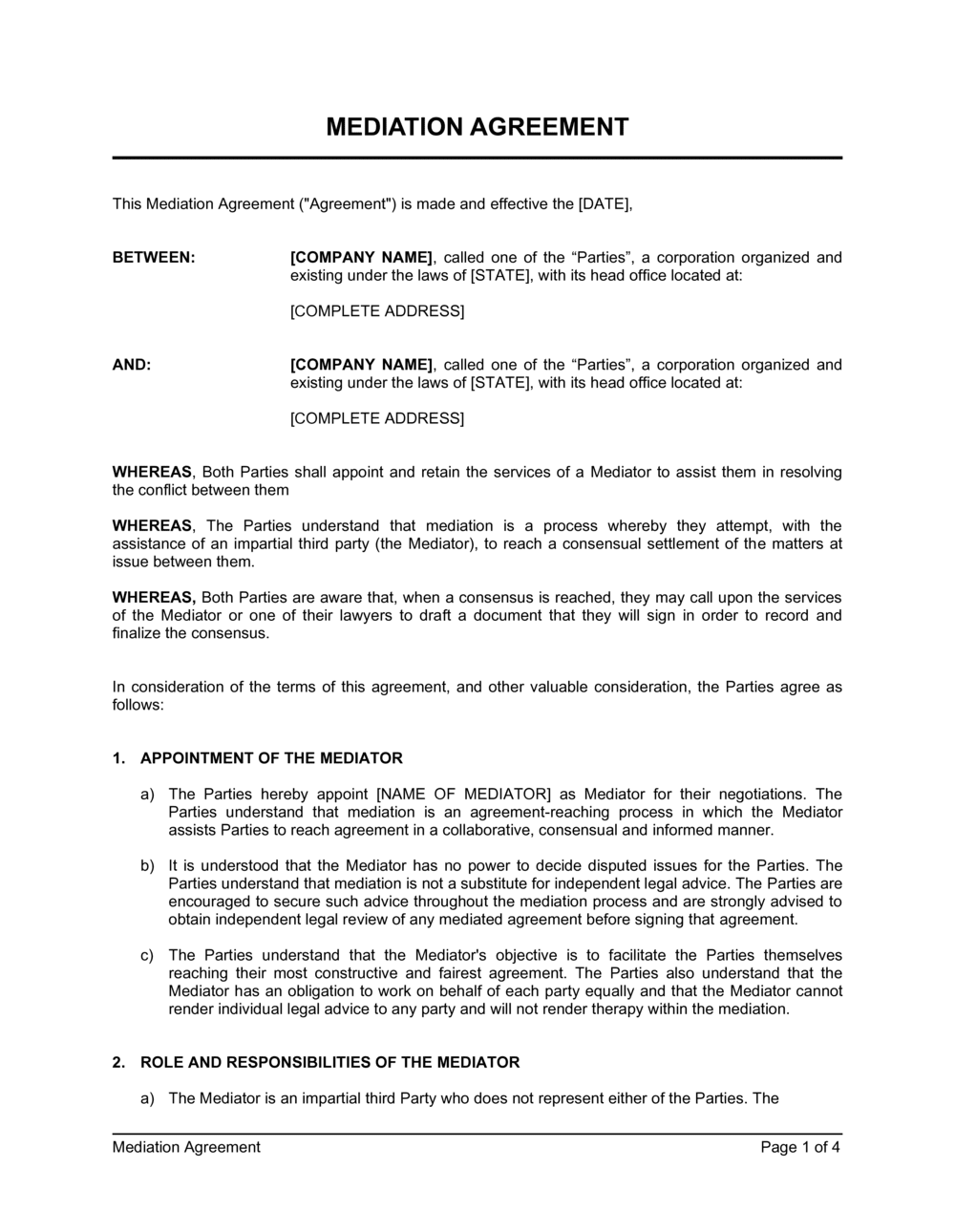
- A voluntary, confidential process in which a neutral third party helps disputing parties negotiate a mutually acceptable resolution — without imposing a decision.
- Mediator
- The neutral facilitator who guides the parties through structured discussion, identifies common ground, and assists in drafting settlement terms if agreement is reached.
- Caucus
- A private session between the mediator and one party, held separately from joint sessions, to explore positions or concerns confidentially.
- Without Prejudice
- A designation protecting statements made during mediation from being used as evidence in subsequent litigation or arbitration.
- Settlement Agreement
- A separate, signed written document that records the binding terms the parties agreed to during mediation — required to make any mediated outcome legally enforceable.
- Non-Binding Mediation
- A mediation process in which the mediator has no authority to impose a decision; parties are free to walk away without reaching a settlement.
- Binding Mediation
- A less common variant in which parties pre-agree that the mediator's proposed resolution will be binding if they cannot settle voluntarily — functionally similar to arbitration.
- Impasse
- The point in mediation where the parties cannot reach agreement despite the mediator's facilitation efforts, typically resulting in termination of the process.
- Good Faith Participation
- An obligation — usually stated in the mediation agreement — requiring each party to engage honestly and constructively throughout the process.
- Confidentiality Clause
- A provision in the mediation agreement that prohibits parties and the mediator from disclosing communications, documents, or proposals exchanged during mediation.
- BATNA
- Best Alternative to a Negotiated Agreement — the outcome a party would pursue if mediation fails, used internally to evaluate whether a proposed settlement is acceptable.