1
Collect the witness's identity and contact details
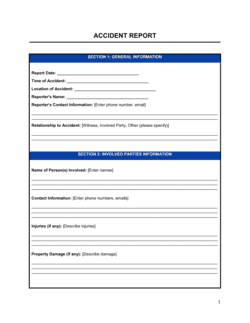
Enter the witness's full legal name, address, phone, and email at the top of the form. Ask for the same name that appears on their government ID.
💡 Collect contact details immediately — witnesses become harder to reach within days of an incident, especially in high-turnover workplaces.
2
Record the relationship to the incident and parties
Note whether the witness is an employee, bystander, contractor, or customer, and describe any relationship they have to the people directly involved.
💡 Document any potential bias upfront — it is better to note a close relationship than to have it surface later and undermine the statement's credibility.
3
Enter the exact date, time, and location
Record the specific date and time the witness observed the incident, and be as precise as possible about the physical location — room number, floor, or address.
💡 Cross-reference the witness's stated time against any surveillance footage or system logs before finalizing — discrepancies are easier to resolve early.
4
Capture the narrative in the witness's own words
Ask the witness to describe what they observed in chronological order. Write down or type their account verbatim without paraphrasing or leading them with specific language.
💡 Avoid yes/no questions during collection — open prompts like 'What did you see next?' produce richer, more defensible accounts.
5
Identify all persons observed
List the names or physical descriptions of everyone the witness saw involved in the incident, with a brief note on what each person was doing.
💡 If the witness does not know a person's name, capture a physical description specific enough to identify them from a roster or photo — height, clothing, and role are helpful.
6
Note physical evidence and conditions
Ask the witness to describe any relevant objects, environmental conditions, or signage they noticed. Record whether they took any photos at the scene.
💡 Prompt specifically for negative observations too — 'Was there a warning sign?' often surfaces important detail the witness would not have volunteered.
7
Have the witness sign and date the declaration
Ask the witness to read the completed statement, make any corrections, and then sign and date the declaration of accuracy at the bottom of the form.
💡 If corrections are made, have the witness initial each change rather than rewriting the whole section — this preserves a clear audit trail.