Notice of Withholding Future Deliveries Template

Free Word download β€’ Edit online β€’ Save & share with Drive β€’ Export to PDF

1 pageβ€’15–25 min to fillβ€’Difficulty: Standard
Learn more ↓
FreeNotice of Withholding Future Deliveries Template

At a glance

What it is
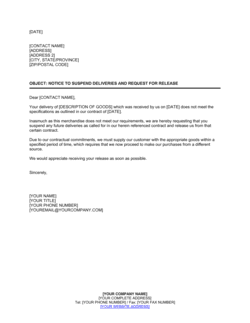
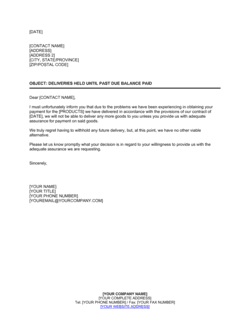
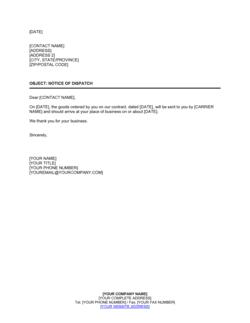
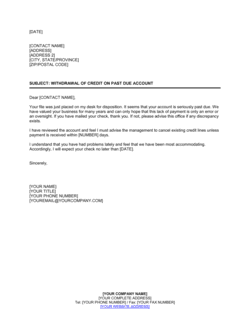
A Notice of Withholding Future Deliveries is a formal business letter a supplier or vendor sends to a customer to suspend all future shipments until outstanding invoices are settled or an agreed payment arrangement is reached. This free Word download gives you a ready-to-edit template you can personalize in minutes and send as a PDF or printed letter.
When you need it
Use it when a customer has one or more overdue invoices and informal reminders have not produced payment. It is the formal escalation step between a payment reminder and a collections referral or legal action.
What's inside
Sender and recipient details, a clear statement of the delivery suspension, a summary of the outstanding amounts and invoice references, the conditions required to lift the hold, and a professional closing that preserves the business relationship where possible.

What is a Notice of Withholding Future Deliveries?

A Notice of Withholding Future Deliveries is a formal business letter a supplier sends to a customer to suspend all upcoming shipments until outstanding invoices are paid or an acceptable payment arrangement is confirmed in writing. It sits between informal payment reminders and formal collections or legal proceedings β€” imposing a concrete operational consequence (no more goods) that a courtesy email cannot. The letter itemizes every overdue invoice by number, date, and amount, states the specific conditions required to lift the hold, and documents the supplier's good-faith escalation process in a way that supports any subsequent collections or legal claim.

Why You Need This Document

Continuing to ship goods to a customer who is not paying creates compounding exposure: every new delivery increases the outstanding balance while the existing debt goes unresolved. Without a formal written notice, customers have no documented deadline to act against, and suppliers have no paper trail to present to a collections agency or court. A Notice of Withholding Future Deliveries stops the bleed immediately, puts the customer on notice that the relationship is at risk, and creates the evidentiary record that makes collections referrals and legal claims straightforward to pursue. This template lets you issue that notice in under 15 minutes β€” consistently, professionally, and with every legally relevant detail in the right place.

Which variant fits your situation?

If your situation is…Use this template
First formal notice after multiple informal reminders go unansweredNotice of Withholding Future Deliveries
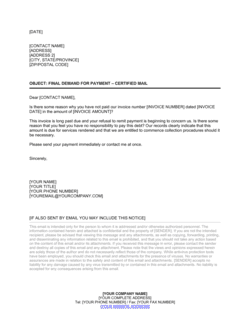
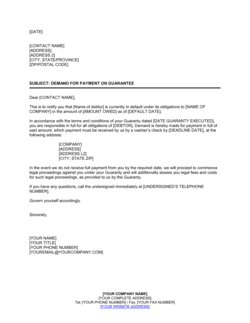
Demanding full payment before any further action is takenDemand for Payment Letter
Suspending an entire service contract, not just physical deliveriesNotice of Suspension of Services
Terminating the supply relationship entirely after failed resolutionTermination of Supply Agreement Letter
Notifying the customer that their account is on credit holdCredit Hold Notification Letter
Referring the overdue balance to a collections agencyNotice of Referral to Collections

Common mistakes to avoid

❌ Listing only a total balance without itemizing invoices

Why it matters: Customers β€” especially larger companies with multiple departments β€” cannot reconcile a lump sum against their own records, which creates disputes and delays payment.

Fix: List every overdue invoice by number, date, due date, and amount. Attach a formal statement of account if the list is long.

❌ Omitting a specific reinstatement deadline

Why it matters: An open-ended condition gives the customer no urgency to act and makes it nearly impossible to enforce follow-through in a predictable timeframe.

Fix: State an exact calendar date by which payment or a confirmed plan must be received, and tie the next escalation step to that date explicitly.

❌ Sending the letter to the wrong contact

Why it matters: A letter sent to the sales manager or project contact instead of accounts payable can sit unread while the due date passes, giving the customer a plausible excuse for non-response.

Fix: Address the letter to the accounts-payable department and copy the primary business contact. Confirm the correct AP email before sending.

❌ Using hostile or threatening language

Why it matters: Aggressive tone increases the risk of the customer disputing the balance, damaging the relationship beyond repair, or claiming harassment β€” none of which speeds up payment.

Fix: Keep the letter factual and professional throughout. State consequences plainly without editorializing about the customer's conduct.

The 9 key clauses, explained

Sender and recipient header

In plain language: Identifies both parties β€” supplier's full business name and address, and the customer's legal name, address, and accounts-payable contact.

Sample language
[SENDER COMPANY NAME] | [ADDRESS] | [CITY, STATE, ZIP] | [DATE] | To: [CUSTOMER LEGAL NAME] | Attn: [AP CONTACT NAME] | [CUSTOMER ADDRESS]

Common mistake: Addressing the letter to a sales or operations contact rather than accounts payable β€” the wrong recipient delays escalation and gives the debtor grounds to claim they never received formal notice.

Subject line

In plain language: A one-line header that identifies the letter as a delivery suspension notice and references the customer account number or primary invoice.

Sample language
Re: Notice of Withholding Future Deliveries β€” Account [ACCOUNT NUMBER] / Invoice(s) [INVOICE NUMBERS]

Common mistake: Omitting the subject line or using a vague heading like 'Important Notice' β€” a specific subject line ensures the letter is routed correctly and creates an unambiguous paper trail.

Opening statement of suspension

In plain language: The first paragraph clearly states that all future deliveries are suspended as of a specific date, leaving no room for misinterpretation.

Sample language
We write to inform you that [SENDER COMPANY NAME] is withholding all future deliveries to your account effective [DATE], due to outstanding unpaid invoices totaling $[AMOUNT].

Common mistake: Softening the opening with excessive diplomatic language to the point where the suspension is buried β€” recipients must understand the action being taken in the first sentence.

Summary of outstanding amounts

In plain language: Lists each overdue invoice by number, issue date, due date, and amount so the customer can cross-reference their own records without ambiguity.

Sample language
Invoice [INV-XXXX] dated [DATE], due [DATE]: $[AMOUNT] β€” [X] days overdue. Invoice [INV-XXXX] dated [DATE], due [DATE]: $[AMOUNT] β€” [X] days overdue. Total outstanding: $[TOTAL].

Common mistake: Stating only a total without itemizing individual invoices β€” the customer (or their AP team) cannot reconcile a lump sum, which delays payment and invites disputes.

Prior collection attempts

In plain language: Briefly notes the previous reminders or contact attempts made, establishing that the supplier acted in good faith before resorting to formal notice.

Sample language
Despite reminder notices sent on [DATE] and [DATE], and a phone call on [DATE] with [CONTACT NAME], the above invoices remain unpaid.

Common mistake: Skipping this clause β€” without documenting prior attempts, the letter reads as an abrupt first escalation rather than a measured response, weakening your position if the matter proceeds to collections or litigation.

Conditions for lifting the hold

In plain language: Specifies exactly what the customer must do β€” pay in full, confirm a payment plan, or provide a deposit β€” and by what date, to have deliveries reinstated.

Sample language
Future deliveries will resume upon receipt of full payment of $[TOTAL] by [DATE], or upon written agreement to a payment schedule acceptable to [SENDER COMPANY NAME] by [DATE].

Common mistake: Omitting a specific deadline or dollar threshold for reinstatement β€” an open-ended condition gives the customer no urgency to act and makes follow-up harder to enforce.

Reservation of rights

In plain language: States that issuing this notice does not waive any rights the supplier has under the original contract, applicable law, or prior agreements.

Sample language
This notice is issued without prejudice to any other rights or remedies available to [SENDER COMPANY NAME] under the supply agreement dated [DATE] or applicable law.

Common mistake: Omitting this clause entirely β€” without it, a customer could later argue that accepting a partial payment or extending a deadline constituted a waiver of the full amount owed.

Contact and escalation information

In plain language: Provides the specific person, phone number, and email address the customer should contact to resolve the matter and avoid further escalation.

Sample language
Please contact [NAME], [TITLE], at [PHONE] or [EMAIL] by [DATE] to arrange payment or discuss a settlement. Failure to respond by this date may result in referral to our collections department.

Common mistake: Listing only a general company phone number β€” giving a named contact with direct details removes friction and increases the likelihood of a prompt response.

Professional closing

In plain language: Ends on a factual, non-hostile note that acknowledges the prior relationship and expresses willingness to resume normal business once the balance is cleared.

Sample language
We value our business relationship with [CUSTOMER NAME] and look forward to resuming deliveries once this matter is resolved. Yours sincerely, [SIGNATORY NAME], [TITLE], [SENDER COMPANY NAME].

Common mistake: Closing with threatening or adversarial language β€” a professional tone keeps the door open for payment and reduces the risk of the customer becoming defensive or disputing the balance.

How to fill it out

  1. 1

    Enter both parties' details in the header

    Add your company's full legal name, address, and the date at the top. Below, enter the customer's legal entity name, billing address, and the name of their accounts-payable contact if known.

    πŸ’‘ Confirm the customer's legal entity name against the original supply agreement β€” using a trade name instead of the registered name can complicate enforcement.

  2. 2

    Complete the subject line with account and invoice references

    Fill in the account number (if your system assigns one) and list all relevant invoice numbers in the subject line so the letter can be matched to open items immediately.

    πŸ’‘ If there are more than five invoices, list the oldest three and write 'and [X] additional invoices β€” see attached schedule' rather than cluttering the subject line.

  3. 3

    State the suspension date clearly in the opening paragraph

    Enter the effective date of the delivery hold β€” typically the date the letter is sent β€” and the total outstanding amount. Keep the opening to two sentences maximum.

    πŸ’‘ Use the same date format throughout the entire letter to avoid any confusion about timelines.

  4. 4

    List each overdue invoice with dates and amounts

    Enter every overdue invoice number, its issue date, its original due date, the amount, and how many days past due it is. Add a clear total at the bottom of the list.

    πŸ’‘ Pull this data directly from your accounts-receivable system and double-check every figure β€” a single arithmetic error gives the customer grounds to dispute the whole notice.

  5. 5

    Document prior contact attempts

    Note the dates and methods of previous reminders β€” email, phone, or written notice β€” and the name of any contact at the customer who was reached.

    πŸ’‘ Keep copies of all prior reminders in a single file so they can be produced immediately if the matter escalates to collections or legal proceedings.

  6. 6

    Set a firm reinstatement deadline and conditions

    Specify the exact date by which full payment or a confirmed payment plan is required, and state clearly what qualifies as acceptable β€” wire transfer, cheque, or a signed installment agreement.

    πŸ’‘ A 7–10 business day deadline is standard; shorter deadlines signal urgency without appearing unreasonable to a court or mediator.

  7. 7

    Add the named contact and escalation consequence

    Enter the name, direct phone, and email of the person the customer should contact, and state the consequence of non-response β€” typically referral to a collections agency or legal counsel.

    πŸ’‘ The threat of collections referral prompts faster response than a vague mention of 'further action' β€” be specific.

  8. 8

    Review, sign, and send via tracked method

    Have the letter reviewed by the accounts-receivable manager or owner before sending. Send by email with read receipt and, for large balances, by registered mail as well.

    πŸ’‘ Bcc your own file address and save the email send confirmation β€” delivery proof is critical if the customer later claims they never received the notice.

Frequently asked questions

What is a Notice of Withholding Future Deliveries?

A Notice of Withholding Future Deliveries is a formal letter a supplier sends to a customer to suspend all upcoming shipments due to unpaid invoices. It documents the suspension in writing, itemizes the overdue amounts, and states the conditions the customer must meet to have deliveries reinstated. It is a standard escalation step between informal payment reminders and formal collections or legal proceedings.

When should I send a Notice of Withholding Future Deliveries?

Send it after at least two informal payment reminders have gone unanswered and the oldest invoice is 30 or more days past its due date. Earlier escalation is appropriate when the outstanding balance is large relative to the customer's credit limit, when the customer has a history of late payment, or when they have stopped responding to contact attempts entirely.

Does withholding deliveries breach my supply contract?

In most supply contracts, a buyer's failure to pay on time gives the seller the right to suspend performance. Review your contract for a specific suspension or credit-hold clause β€” most standard supply agreements include one. If no clause exists, the general principle that a party in breach cannot demand continued performance from the other applies in most jurisdictions, but consider consulting a lawyer before withholding on a high-value contract.

Should the notice be sent by email or registered mail?

For most commercial situations, email with a read receipt is sufficient and creates an immediate, timestamped record. For large outstanding balances or when the matter is likely to escalate to collections or litigation, send by both email and registered mail β€” the latter provides proof of delivery that is difficult to challenge in court.

What happens if the customer ignores the notice?

If the customer does not pay or contact you by the stated deadline, proceed to the next escalation step you specified in the letter β€” typically referral to a commercial collections agency or issuance of a formal demand letter through legal counsel. Document every step. The written notice you issued is the foundation of any subsequent collections or legal claim.

Can I resume deliveries after issuing this notice?

Yes β€” the notice creates a condition, not a permanent termination. Once the customer pays in full or confirms a payment arrangement you have agreed to in writing, you can lift the hold and resume shipments. Confirm reinstatement in writing so both parties have a clear record that the hold has been lifted and on what terms.

Do I need a lawyer to send this letter?

No. A Notice of Withholding Future Deliveries is a standard commercial letter that does not require legal drafting for most routine situations. Involve a lawyer if the outstanding balance is significant (typically above $25,000), if the customer has already threatened legal action, or if the supply agreement contains unusual terms around suspension rights.

How is this notice different from a demand letter?

A Notice of Withholding Future Deliveries suspends ongoing performance and gives the customer a chance to remedy the situation. A demand letter makes a formal legal claim for the outstanding amount and typically signals that litigation or arbitration is imminent. The withholding notice is the earlier, more commercially focused step; a demand letter follows if the notice produces no result.

How this compares to alternatives

vs Payment reminder letter

A payment reminder is a courteous nudge sent when an invoice first becomes overdue β€” it assumes the delay is an oversight and requests payment without consequence. A Notice of Withholding Future Deliveries is a formal escalation that imposes a tangible business consequence. Use reminders first; issue the withholding notice when reminders have failed.

vs Demand for payment letter

A demand letter makes a formal legal claim for the outstanding amount and typically signals imminent legal action. A withholding notice suspends deliveries while leaving room for the customer to resolve the matter and resume normal business. The withholding notice is the commercially focused middle step; the demand letter follows only if it produces no result.

vs Notice of termination of supply agreement

A termination notice ends the supply relationship permanently. A withholding notice is a reversible suspension β€” deliveries resume once the balance is cleared. Use the withholding notice to preserve the relationship and create an incentive to pay; issue a termination notice only when the relationship is no longer viable.

vs Credit hold notification letter

A credit hold notification informs the customer that their credit facility has been reduced or frozen, often as a precaution rather than in response to a specific overdue amount. A withholding notice is a direct operational action tied to specific unpaid invoices. The two are related but distinct β€” a credit hold is an internal account decision; a withholding notice is an operational enforcement action.

Industry-specific considerations

Manufacturing and industrial supply

High-volume, high-value orders make overdue balances significant quickly β€” suspension notices protect cash flow and reinforce credit terms enforced across a large buyer base.

Wholesale and distribution

Distributors operate on thin margins with high receivables turnover β€” a formal delivery hold is a standard credit-management tool applied when a retailer or reseller breaches Net 30 or Net 60 terms.

Food and beverage supply

Perishable goods mean suppliers cannot afford extended payment cycles β€” withholding future deliveries is often the fastest lever available before goods already in transit are at risk.

Professional services with physical deliverables

Agencies or studios delivering printed materials, merchandise, or physical kits use this notice to halt production runs or shipments when a client account falls overdue.

Template vs pro β€” what fits your needs?

PathBest forCostTime
Use the templateSuppliers and small business owners managing routine overdue accounts below $25,000Free10–15 minutes per notice
Template + professional reviewBusinesses with high-value accounts or customers who have already disputed the balance$100–$300 for a brief review by an accounts-receivable specialist or commercial solicitor1–2 business days
Custom draftedComplex supply contracts, cross-border disputes, or situations where litigation is already anticipated$500–$2,000+ through commercial legal counsel3–7 business days

Glossary

Delivery hold
A temporary suspension of all outbound shipments to a specific customer, typically triggered by non-payment or a credit limit breach.
Outstanding balance
The total unpaid amount owed by a customer across all overdue invoices at the time the notice is issued.
Credit terms
The agreed payment conditions between supplier and buyer, such as Net 30 or Net 60, that determine when invoices become overdue.
Accounts receivable
Money owed to a business by its customers for goods or services already delivered but not yet paid for.
Escalation
The process of moving an unresolved payment dispute to a more formal or consequential stage, such as a written notice, collections, or legal action.
Invoice reference number
A unique identifier assigned to each invoice, used in the notice to precisely identify which amounts are overdue.
Cure period
A defined window of time β€” stated in the notice β€” within which the customer must resolve the outstanding balance to avoid further action.
Without prejudice
A statement indicating that communication does not waive any legal rights or remedies the sender retains against the recipient.
Pro forma
In an accounts-receivable context, a projected or conditional invoice issued before payment is received, sometimes used to confirm terms before resuming deliveries.
Settlement arrangement
A mutually agreed payment plan that allows a customer to clear an overdue balance in installments while the supplier conditionally resumes deliveries.

Part of your Business Operating System

This document is one of 3,000+ business & legal templates included in Business in a Box.

  • Fill-in-the-blanks β€” ready in minutes
  • 100% customizable Word document
  • Compatible with all office suites
  • Export to PDF and share electronically

Create your document in 3 simple steps.

From template to signed document β€” all inside one Business Operating System.
1
Download or open template

Access over 3,000+ business and legal templates for any business task, project or initiative.

2
Edit and fill in the blanks with AI

Customize your ready-made business document template and save it in the cloud.

3
Save, Share, Send, Sign

Share your files and folders with your team. Create a space of seamless collaboration.

Save time, save money, and create top-quality documents.

β˜…β˜…β˜…β˜…β˜…

"Fantastic value! I'm not sure how I'd do without it. It's worth its weight in gold and paid back for itself many times."

Managing Director Β· Mall Farm
Robert Whalley
Managing Director, Mall Farm Proprietary Limited
β˜…β˜…β˜…β˜…β˜…

"I have been using Business in a Box for years. It has been the most useful source of templates I have encountered. I recommend it to anyone."

Business Owner Β· 4+ years
Dr Michael John Freestone
Business Owner
β˜…β˜…β˜…β˜…β˜…

"It has been a life saver so many times I have lost count. Business in a Box has saved me so much time and as you know, time is money."

Owner Β· Upstate Web
David G. Moore Jr.
Owner, Upstate Web

Run your business with a system β€” not scattered tools

Stop downloading documents. Start operating with clarity. Business in a Box gives you the Business Operating System used by over 250,000 companies worldwide to structure, run, and grow their business.

Start freeΒ Β·Β No credit card required