1
Identify the erroneous invoice and gather the facts
Locate the original invoice by number and date. Write down exactly what is wrong — incorrect unit price, wrong quantity, misapplied discount, duplicate charge, or wrong tax rate — and confirm the correct figures from your contract, purchase order, or agreed price list.
💡 Compare the original invoice line by line against the signed contract or PO before drafting. Sending a correction with a second error is far more damaging to client trust than the original mistake.
2
Enter the legal entity names and original invoice reference
Fill in the full registered legal names of both the sender and the recipient, their billing addresses, and the exact invoice number and date from the erroneous document.
💡 Cross-check the recipient's legal name against the original invoice — using a trading name instead of the registered entity name can cause the correction to be mismatched in the recipient's system.
3
Write the acknowledgment and cause of error
State clearly and specifically what the error was and provide a brief factual explanation of the cause. Keep the cause description factual — one or two sentences is sufficient — without excessive self-criticism or language that implies broader negligence.
💡 Avoid the word 'negligence' in the cause description. 'Data entry error' and 'system misconfiguration' are factual and accurate; 'negligent billing' creates unnecessary legal exposure.
4
Insert the corrected figures in a line-by-line comparison
Show the original amount, the corrected amount, and the difference for each affected line item. Then state the revised subtotal, revised tax, and revised total due. This three-column format — original, correction, difference — allows both accounting teams to reconcile without additional back-and-forth.
💡 Have someone who did not make the original error check your corrected figures before sending. A second error in the correction letter significantly damages your credibility.
5
Adjust the tax figures if affected
If the billing error changed the taxable amount, recalculate the applicable tax (VAT, GST, or sales tax) on the corrected base and state both the voided tax amount and the revised tax amount explicitly.
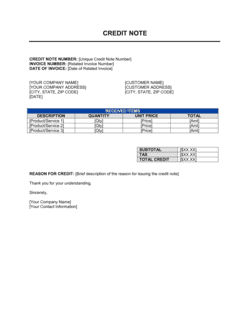
💡 In jurisdictions where VAT or GST invoices must be formally adjusted through a credit note rather than a correction letter, issue a credit note for the original invoice and attach it alongside the correction letter.
6
State the revised payment terms and address prior payments
Specify the new amount due and the revised due date. If the original invoice has already been fully or partially paid, state explicitly whether the overpayment will be refunded within a set number of business days or credited against the next invoice.
💡 Always set a specific calendar date for any refund or credit — 'we will handle it' is not an actionable commitment and will generate a follow-up from the recipient's finance team.
7
Add the supersession clause and have an authorized person sign
Include explicit language voiding the original invoice and confirming that the corrected invoice supersedes it. Have the letter signed by a manager, controller, or director with authority to bind the company.
💡 Keep a signed copy in your accounts-receivable file alongside the original invoice and the corrected invoice — this three-document set is what an auditor will look for.
8
Attach the revised invoice and send via traceable method
Attach the corrected invoice as a separate document, clearly numbered as a replacement. Send by email with read receipt or tracked delivery so you have proof the recipient received the correction before the revised due date.
💡 Send to both the primary contact and the accounts-payable department directly. Corrections routed only through the project contact often stall in inboxes while the due date passes.