1
Choose the correct variant for your situation
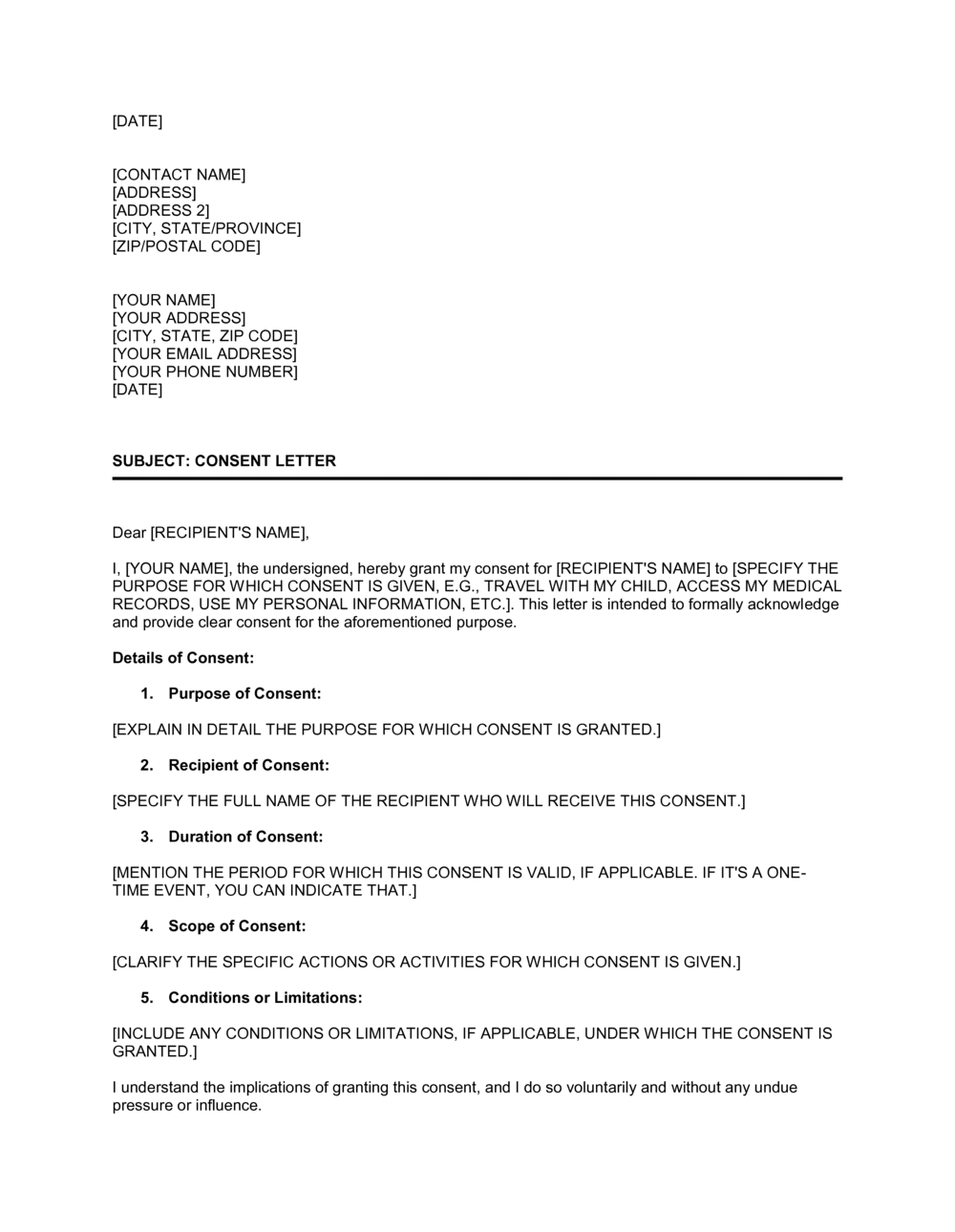
Identify whether you need parental travel, medical, data-use, or property-access consent. The core structure is the same, but the scope clause and any emergency-authority language differ significantly by use case.
💡 Read the requirements of the receiving authority first — a school, border agency, or healthcare provider may have a specific format or additional fields they require.
2
Enter the consenting party's full legal details
Use the name exactly as it appears on a government-issued ID. Include your relationship to the subject (parent, property owner, data subject) and your full contact details.
💡 For parental consent letters, include your passport number alongside your name — some border agencies require it to cross-reference against the child's travel documents.
3
Name the recipient specifically
Write the full legal name of the person or organization receiving permission. For institutional recipients, include the organization name, department, and address.
💡 Never use 'to whom it may concern' as the recipient — if the named recipient changes, issue a new letter rather than leaving it open.
4
Describe the permitted action precisely
Write a single clear sentence describing exactly what the recipient may do, where, and in relation to whom or what. Avoid shorthand like 'all necessary actions' — list the specific activities.
💡 If the action involves a minor, include the child's full name, date of birth, and passport or ID number in this clause.
5
Set specific start and end dates
Enter the exact calendar dates the consent covers. For a single event, you may write the event date and note it expires at the conclusion of that event.
💡 For travel consent, match the dates exactly to the travel itinerary — a one-day mismatch has caused families to be turned away at borders.
6
Add conditions, limitations, and emergency contacts
State any restrictions on the permission and, for medical or childcare consent, include an emergency phone number and the specific treatments the caregiver may or may not authorize.
💡 If you are granting property access, specify the hours of access and list any areas that are off-limits to avoid disputes after the fact.
7
Sign, date, and notarize if required
Sign the letter by hand or with a compliant electronic signature and print your full name beneath the signature. Check in advance whether the receiving authority requires a witness signature or notary stamp.
💡 Notarization typically takes 15–30 minutes at a bank, post office, or mobile notary service and costs $5–$25 — confirm requirements before the day you need the letter.