Texas Liability Waiver Form Template

Free Word download • Edit online • Save & share with Drive • Export to PDF

3 pages20–30 min to fillDifficulty: StandardSignature requiredLegal review recommended
Learn more ↓
FreeTexas Liability Waiver Form Template

At a glance

What it is
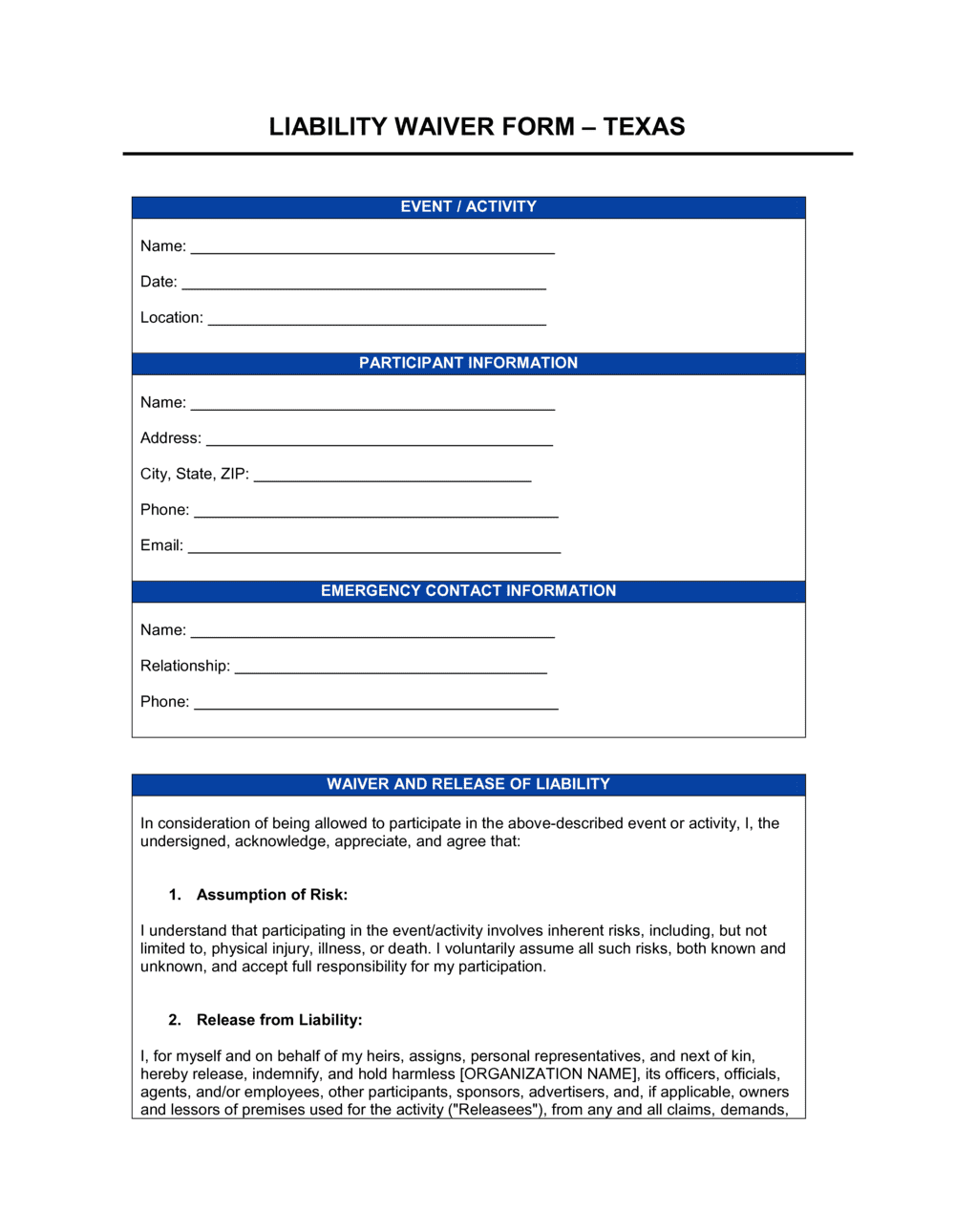
A Texas Liability Waiver Form is a legally binding document in which a participant voluntarily releases an organizer, business, or individual from claims arising from negligence in connection with an activity, event, or service. This free Word download is tailored to Texas law — incorporating the express-negligence doctrine and conspicuousness requirements — and can be edited online and exported as PDF in minutes.
When you need it
Use it before a participant engages in any activity, event, or service that carries physical, financial, or other risk — from fitness classes and adventure sports to corporate events and equipment rentals. It should be signed before participation begins, never after an incident occurs.
What's inside
Identification of the parties and activity, an express-negligence release clause, assumption-of-risk acknowledgment, indemnification obligation, medical authorization, severability, and a conspicuous acknowledgment block meeting Texas enforceability standards.

What is a Texas Liability Waiver Form?

A Texas Liability Waiver Form is a legally binding document in which a participant voluntarily releases an organizer, business, or individual from claims arising from negligence in connection with a specific activity, event, or service. Unlike a generic release, a Texas waiver must satisfy two requirements that Texas courts apply strictly: the express-negligence doctrine, which demands that intent to release negligence claims be stated explicitly using the word "negligence," and the conspicuousness requirement under the Texas Business and Commerce Code, which mandates that the release language be visually prominent enough that a reasonable person would notice it. Texas courts will not enforce waivers that attempt to release gross negligence or intentional misconduct, so a properly drafted form includes an explicit carve-out for those claims.

Why You Need This Document

Operating an activity, event, or service in Texas without a signed, Texas-compliant liability waiver exposes you to personal injury claims that a generic or out-of-state form will not defeat. A Texas court that finds your release failed the express-negligence or conspicuousness test will treat you as though no waiver existed at all — leaving you to defend a negligence claim on the merits. Beyond direct litigation risk, many commercial insurers require documented waivers as a condition of coverage for high-risk activities, and a gap in your waiver program can trigger coverage disputes when a claim arises. This template incorporates the specific language and formatting that Texas case law requires, giving you a defensible, enforceable starting point that a generic national template cannot provide.

Which variant fits your situation?

If your situation is…Use this template
General activity or event in Texas with adult participantsTexas Liability Waiver Form
Minor participant requiring parental or guardian signatureMinor Liability Waiver and Parental Consent Form
Liability release needed across multiple US statesGeneral Release of Liability Form
Contractor or vendor performing work on private propertyHold Harmless Agreement
Participant in a volunteer program releasing the nonprofitVolunteer Liability Waiver
Equipment loan or rental with assumption-of-risk focusEquipment Rental Agreement
Medical or cosmetic procedure with informed-consent requirementsMedical Consent and Release Form

Common mistakes to avoid

❌ Failing to state 'negligence' expressly

Why it matters: Texas's express-negligence doctrine voids releases that use only broad language like 'any and all claims' without explicitly naming negligence. Courts have struck down waivers on this basis alone, leaving organizers fully exposed.

Fix: Use the word 'negligence' explicitly and prominently in the release clause — do not rely on catch-all language as a substitute.

❌ Burying release language in uniform small print

Why it matters: Texas law requires that a waiver clause be conspicuous under the Business and Commerce Code. A court that finds the release was not visually prominent will disregard it entirely, regardless of whether the participant signed.

Fix: Format the release and acknowledgment block in bold, all-capitals, or a larger font size, and keep it visually separate from surrounding paragraphs.

❌ Attempting to waive gross negligence

Why it matters: Texas courts consistently refuse to enforce waivers that purport to release claims for gross negligence or intentional misconduct — and overbroad language can taint the enforceability of the negligence release as well.

Fix: Include an explicit gross-negligence carve-out and do not modify or delete it. Accept that gross negligence remains a live risk and manage it operationally, not contractually.

❌ Collecting signatures after the activity has begun or following an incident

Why it matters: A waiver signed after participation has started — or after an injury has occurred — lacks valid consideration because the participant gave up nothing in exchange for the release. Courts routinely void post-incident waivers.

Fix: Build the signature step into your check-in process so it is completed before the participant accesses the activity area. Use timestamped digital signatures to document the sequence.

❌ Using a generic multi-state waiver without Texas-specific language

Why it matters: Texas imposes unique requirements — express negligence and conspicuousness — that generic national templates do not address. A waiver that works in other states may be unenforceable in a Texas court.

Fix: Use a waiver drafted specifically for Texas law, or have a Texas-licensed attorney review any out-of-state template before use.

❌ Omitting severability and governing law clauses

Why it matters: Without severability, a court that strikes one provision — such as an overbroad indemnity — may void the entire document. Without a governing law clause, disputes could be litigated under another state's less favorable standards.

Fix: Include both clauses in every Texas waiver. Specify Texas as the governing law and name a specific Texas county as the exclusive venue.

The 10 key clauses, explained

Parties and activity identification

In plain language: Names the participant (releasor) and the organization or individual being released (releasee), and describes the specific activity, event, or service covered.

Sample language
This Release of Liability ('Agreement') is entered into by [PARTICIPANT FULL NAME] ('Releasor') and [ORGANIZATION LEGAL NAME], a [ENTITY TYPE] located at [ADDRESS] ('Releasee'), in connection with Releasor's voluntary participation in [ACTIVITY / EVENT NAME] on [DATE(S)] at [LOCATION].

Common mistake: Describing the activity in vague terms like 'sports activities.' Texas courts require the specific activity to be identifiable; vague descriptions weaken enforceability and fail the express-negligence requirement.

Express negligence release

In plain language: States explicitly — using the word 'negligence' — that the participant releases the organizer from claims arising from the organizer's own negligent acts. This is the single most critical clause under Texas law.

Sample language
RELEASOR HEREBY RELEASES, WAIVES, DISCHARGES, AND COVENANTS NOT TO SUE RELEASEE FROM ANY AND ALL LIABILITY, CLAIMS, OR DEMANDS ARISING FROM THE NEGLIGENCE OF RELEASEE, INCLUDING NEGLIGENCE RESULTING IN PERSONAL INJURY, DEATH, OR PROPERTY DAMAGE.

Common mistake: Using generic release language like 'any and all claims' without expressly stating the word 'negligence.' Texas courts applying the express-negligence doctrine have voided such clauses, leaving the organizer unprotected.

Assumption of risk

In plain language: The participant acknowledges they understand the specific inherent risks of the activity and voluntarily accept those risks.

Sample language
Releasor acknowledges that [ACTIVITY NAME] involves inherent risks including but not limited to [LIST SPECIFIC RISKS — e.g., falls, equipment failure, physical exertion], and voluntarily assumes all such risks whether known or unknown.

Common mistake: Using a generic list of risks copied from an unrelated waiver. Courts consider whether the specific risks disclosed match the actual activity — a mismatch undermines the assumption-of-risk defense entirely.

Indemnification and hold harmless

In plain language: The participant agrees to reimburse the organizer for any costs, legal fees, or damages that arise from the participant's own conduct during the activity.

Sample language
Releasor agrees to indemnify, defend, and hold harmless Releasee and its officers, agents, and employees from any claims, damages, or expenses, including reasonable attorneys' fees, arising out of Releasor's participation in [ACTIVITY NAME] or Releasor's breach of this Agreement.

Common mistake: Drafting indemnification that could be read to require the participant to indemnify the organizer for the organizer's own gross negligence. Texas courts reject such overbroad indemnity provisions, and including them risks invalidating the entire indemnification clause.

Gross negligence carve-out

In plain language: Explicitly states that the waiver does not purport to release claims for gross negligence, willful misconduct, or intentional acts — because Texas courts will not enforce such releases.

Sample language
Notwithstanding the foregoing, nothing in this Agreement shall be construed to release Releasee from liability arising from gross negligence, willful misconduct, or intentional acts as defined under Texas law.

Common mistake: Omitting this carve-out entirely in an attempt to obtain maximum protection. Including language that tries to waive gross negligence can cause a Texas court to find the entire release suspect and strike broader negligence protections along with it.

Conspicuous acknowledgment block

In plain language: A separately formatted, visually prominent section — in bold or all-capitals — where the participant confirms they have read and understood the waiver, satisfying Texas's conspicuousness requirement.

Sample language
BY SIGNING BELOW, RELEASOR ACKNOWLEDGES THAT THEY HAVE READ THIS AGREEMENT IN ITS ENTIRETY, UNDERSTAND ITS TERMS, AND SIGN IT VOLUNTARILY. RELEASOR UNDERSTANDS THIS IS A RELEASE OF LIABILITY AND A CONTRACT.

Common mistake: Burying the release language in a block of uniform small print. Under Texas Business and Commerce Code §1.201(b)(10), a term is conspicuous only if it would be noticed by a reasonable person — uniform small text fails this standard.

Medical authorization

In plain language: Authorizes the organizer to obtain emergency medical treatment for the participant if they are incapacitated, and allocates the cost to the participant.

Sample language
In the event of an emergency in which Releasor is unable to communicate, Releasor authorizes Releasee to seek and consent to emergency medical treatment on Releasor's behalf. Releasor agrees to bear all costs of such treatment.

Common mistake: Including medical authorization language that implies the organizer is responsible for providing medical care. This can create an unintended duty-of-care obligation; limit the clause to authorizing treatment, not providing it.

Severability

In plain language: Provides that if any individual provision of the waiver is held unenforceable, the rest of the document remains in effect.

Sample language
If any provision of this Agreement is held invalid or unenforceable by a court of competent jurisdiction, the remaining provisions shall continue in full force and effect without modification.

Common mistake: Omitting severability entirely. Without it, a Texas court that strikes one clause — such as an overbroad gross-negligence release — could void the entire document rather than just the offending provision.

Governing law and venue

In plain language: Confirms Texas law governs the agreement and designates a specific Texas county as the venue for any dispute.

Sample language
This Agreement shall be governed by the laws of the State of Texas. Any disputes arising hereunder shall be resolved exclusively in the courts of [COUNTY] County, Texas.

Common mistake: Omitting a specific venue clause. Without one, the participant could argue for a distant or inconvenient forum — adding cost and uncertainty to any litigation.

Signature and date

In plain language: Captures the participant's wet or electronic signature and the date of signing, confirming voluntary execution before participation began.

Sample language
Releasor Signature: ___________________________ Date: [DATE] | Printed Name: [PARTICIPANT FULL NAME] | If Minor: Parent/Guardian Signature: ___________________________ Printed Name: [GUARDIAN FULL NAME]

Common mistake: Collecting signatures after the activity has already begun or concluded. A waiver signed post-incident provides minimal protection because the participant gave up nothing of value in exchange — undermining the consideration requirement.

How to fill it out

  1. 1

    Identify the releasee using the full legal entity name

    Enter the exact registered name of the business or individual being released — not a trade name or abbreviation. Include the entity type (LLC, Inc., sole proprietor) and address.

    💡 Cross-reference your Texas Secretary of State filing to confirm the precise legal name; a mismatch can create an argument that the wrong entity was released.

  2. 2

    Describe the specific activity, date, and location

    Name the activity explicitly — 'rock climbing on the outdoor wall at [FACILITY NAME]' rather than 'outdoor activities.' Include the date or date range and the physical location.

    💡 The more specific the activity description, the harder it is for a claimant to argue the waiver didn't cover what actually occurred.

  3. 3

    List the inherent risks of the activity in the assumption-of-risk clause

    Replace the bracketed placeholder with a specific list of the actual risks of your activity — equipment malfunction, physical contact, weather exposure, falls, and any other hazard a participant could reasonably encounter.

    💡 Review past incident reports from your activity type to build a risk list that reflects real-world hazards, not just generic ones.

  4. 4

    Confirm the express-negligence and conspicuousness formatting

    Ensure the release clause uses the word 'negligence' explicitly and that the acknowledgment block appears in bold or all-capitals, separate from surrounding body text.

    💡 Print a draft and check whether the conspicuous section would catch your eye at a glance — if it doesn't stand out visually, a Texas court may find it fails the conspicuousness test.

  5. 5

    Verify the gross-negligence carve-out is present and unmodified

    Do not delete or soften the gross-negligence carve-out clause. Confirm it explicitly excludes gross negligence, willful misconduct, and intentional acts from the release.

    💡 Attempting to waive gross negligence in Texas does not add protection — it creates risk that the entire release will be invalidated. Leave the carve-out intact.

  6. 6

    Add the governing law and venue clause with a specific Texas county

    Insert the name of the Texas county where your business operates or where the activity takes place as the exclusive venue for disputes.

    💡 Choose the county where your business is located rather than where the participant lives — this gives you home-court advantage in any dispute.

  7. 7

    Collect signatures before participation begins

    Have participants sign and date the waiver before the activity starts. For minors, a parent or legal guardian must sign. Retain a signed copy for your records.

    💡 Use a digital signature tool to timestamp execution automatically — this creates an audit trail proving the waiver was signed before the activity, not after an incident.

  8. 8

    Store executed waivers securely and accessibly

    Save signed waivers in a cloud folder organized by event date and participant name. Retain them for at least four years — the Texas statute of limitations for personal injury is generally two years, but claims can arise later.

    💡 A waiver you cannot locate when litigation begins is effectively no waiver at all. Organize your files immediately after each event.

Frequently asked questions

Are liability waivers enforceable in Texas?

Yes, liability waivers are generally enforceable in Texas when they satisfy two specific requirements: the express-negligence doctrine and the conspicuousness requirement. The express-negligence doctrine requires that intent to release a party from its own negligence be stated explicitly using the word 'negligence.' The conspicuousness requirement under the Texas Business and Commerce Code mandates that the release language be visually prominent. Waivers that meet both standards are routinely upheld by Texas courts for ordinary negligence claims.

Can a Texas liability waiver cover gross negligence?

No. Texas courts consistently refuse to enforce waivers that attempt to release claims for gross negligence, which involves an extreme degree of risk and conscious indifference to others' safety. Trying to waive gross negligence does not add protection — it can actually undermine the enforceability of the ordinary-negligence release by suggesting the document overreaches. Always include an explicit gross-negligence carve-out.

What is the express-negligence doctrine in Texas?

The express-negligence doctrine is a Texas rule requiring that any intent to release a party from liability for its own negligence must be stated in specific, unambiguous terms within the document itself. Generic language like 'any and all claims' or 'all liability of any kind' is not sufficient — the word 'negligence' must appear expressly. This doctrine was established by the Texas Supreme Court in Ethyl Corporation v. Daniel Construction Co. and applies to both commercial contracts and participant waivers.

Do Texas liability waivers need to be notarized?

No, notarization is not required for a Texas liability waiver to be enforceable. The document requires a voluntary signature from the participant before the activity begins and must meet the express-negligence and conspicuousness standards. However, a notarized signature can strengthen evidence that the participant signed knowingly and voluntarily, which may be useful if enforceability is later challenged.

Can a parent sign a liability waiver for a minor in Texas?

Yes, a parent or legal guardian can sign a liability waiver on behalf of a minor in Texas, and such waivers are generally enforceable. However, the enforceability of pre-injury parental waivers for minors has been challenged in some contexts, particularly for school or government-sponsored activities. For commercial operators, parental waivers with proper express-negligence and conspicuousness language provide meaningful — though not absolute — protection. Legal review is advisable for high-risk activities involving minors.

What activities in Texas most commonly require a liability waiver?

Liability waivers are routinely used in Texas for fitness classes, gym memberships, rock climbing, zip-lining, ATV and horseback riding tours, sports leagues, summer camps, escape rooms, axe-throwing venues, water parks, equipment rentals, corporate team-building events, and medical or cosmetic wellness services. Any activity with a meaningful risk of personal injury or property damage benefits from a signed waiver meeting Texas-specific standards.

How long should I retain signed Texas liability waivers?

Texas's statute of limitations for personal injury claims is generally two years from the date of the incident. However, claims involving minors do not begin running until the minor turns 18, which can extend the exposure window significantly. Retaining signed waivers for a minimum of four years is common practice, and retaining minors' waivers until the individual turns 20 is a conservative and advisable approach. Waivers that cannot be produced in litigation provide no protection.

Does a digital or electronic signature satisfy Texas waiver requirements?

Yes. Under the Texas Uniform Electronic Transactions Act, electronic signatures are legally equivalent to handwritten signatures on contracts and releases. A timestamped digital signature is often preferable to a wet signature because it creates an audit trail documenting exactly when the participant signed — which is critical evidence in any dispute about whether the waiver was executed before the activity began.

What is the difference between a liability waiver and a hold harmless agreement?

A liability waiver is a document in which a participant releases an organizer from claims arising from the organizer's negligence. A hold harmless agreement typically goes further, obligating one party to indemnify the other for losses arising from the first party's own conduct. Many Texas waivers combine both: the participant releases the organizer from negligence claims and separately agrees to indemnify the organizer for damages caused by the participant's own actions. The two clauses serve distinct legal functions and should both appear in a well-drafted document.

How this compares to alternatives

vs General Release of Liability Form

A general release of liability is a multi-state template that lacks Texas-specific express-negligence and conspicuousness language. It may be enforceable in other jurisdictions but is vulnerable in a Texas court because it does not meet the standards established by Texas case law. Use the Texas-specific form for any activity held in Texas.

vs Hold Harmless Agreement

A hold harmless agreement focuses on indemnification — one party agrees to compensate the other for losses caused by the first party's conduct. A liability waiver releases the organizer from claims for its own negligence. For most Texas activity operators, a comprehensive waiver that includes both a release clause and an indemnification clause provides stronger protection than either document alone.

vs Assumption of Risk Form

An assumption of risk form documents the participant's acknowledgment of inherent activity dangers but does not release the organizer from liability for negligence. Under Texas comparative fault rules, assumption of risk reduces a claimant's recovery but does not bar it. A full liability waiver with an express-negligence release provides broader protection than a standalone assumption-of-risk acknowledgment.

vs Indemnification Agreement

An indemnification agreement obligates one party to cover the other's losses and legal costs but does not release claims the way a waiver does. The two documents serve complementary purposes — a Texas liability waiver ideally incorporates both a release of the organizer's negligence claims and an indemnification obligation from the participant. Using only an indemnification agreement without a release clause leaves the underlying negligence claim intact.

Industry-specific considerations

Fitness and wellness

Gym memberships, personal training sessions, yoga and group fitness classes, and equipment use all require express-negligence language specific to the physical activity type and facility.

Adventure and recreation

High-risk activities like zip-lining, ATV tours, and rock climbing face heightened scrutiny, requiring detailed risk enumeration and mandatory gross-negligence carve-outs to preserve enforceability.

Events and hospitality

Race organizers, festival operators, and corporate event planners use waivers for participant activities, with digital check-in workflows that timestamp each signature before entry.

Youth sports and camps

Parental consent combined with a liability waiver is standard, and organizers should retain waivers until each minor turns 20 given Texas's tolling rules for minors' claims.

Jurisdictional notes

United States

Liability waiver enforceability varies sharply by state. Texas enforces waivers for ordinary negligence when the express-negligence and conspicuousness requirements are met, but will not enforce releases of gross negligence or intentional acts. States like California, Louisiana, and Virginia impose different or more restrictive standards. A Texas waiver should not be used as a substitute for a properly drafted waiver in another state.

Canada

Canadian provinces generally permit liability waivers for recreational and commercial activities, but enforceability depends on whether the participant had adequate notice and opportunity to review the document. British Columbia and Ontario courts apply a 'reasonable notice' standard. Quebec's Civil Code imposes additional restrictions, and waivers excluding liability for bodily injury are unenforceable in Quebec under certain conditions.

United Kingdom

The UK Unfair Contract Terms Act 1977 prohibits businesses from excluding or restricting liability for death or personal injury caused by negligence in consumer contracts. Waivers can limit liability for property damage or economic loss if reasonable. The Consumer Rights Act 2015 imposes additional fairness requirements for terms in consumer contracts, meaning liability releases in participant waivers face significant scrutiny.

European Union

EU consumer protection law broadly restricts the use of unfair contract terms, including liability waivers, in business-to-consumer contexts. Releases of liability for personal injury caused by negligence are generally unenforceable in most member states under the EU Unfair Contract Terms Directive. Activity operators in EU jurisdictions should rely on insurance coverage rather than contractual waivers for personal injury risk.

Template vs lawyer — what fits your deal?

PathBest forCostTime
Use the templateStandard adult-participant activities in Texas with clear, well-defined risks and no involvement of minorsFree20–30 minutes
Template + legal reviewHigh-risk activities, waivers covering minors, or businesses with significant participant volume and insurance requirements$300–$700 for a Texas-licensed attorney review2–5 business days
Custom draftedCommercial operators with complex liability exposure, regulated industries, or franchise systems requiring standardized Texas-compliant waivers$1,000–$3,500+1–3 weeks

Glossary

Express Negligence Doctrine
A Texas rule requiring that a party's intent to release claims for its own negligence must be stated explicitly and in clear, unambiguous language within the document itself.
Conspicuousness Requirement
Under the Texas Business and Commerce Code, a waiver clause must be visually prominent — typically in bold, larger type, or all-capitals — so a reasonable person would notice it.
Assumption of Risk
The participant's voluntary acknowledgment that they understand the inherent dangers of an activity and agree to accept those risks as their own.
Gross Negligence
Conduct that involves an extreme degree of risk and a conscious indifference to the rights, safety, or welfare of others — Texas courts generally will not enforce waivers that attempt to release gross negligence claims.
Indemnification
A contractual obligation by the participant to reimburse the organizer for losses, legal fees, or damages arising from the participant's own actions during the activity.
Hold Harmless Clause
Language in which one party agrees not to hold the other legally responsible for any losses or damages resulting from specified risks.
Severability Clause
A provision stating that if any part of the waiver is found unenforceable, the remainder of the document continues in full effect.
Consideration
Something of value exchanged between the parties — typically the right to participate in the activity — that makes the waiver a binding contract rather than a one-sided promise.
Releasee
The party being released from liability — the organizer, business owner, or event operator who benefits from the waiver.
Releasor
The participant who voluntarily gives up their right to bring a claim against the releasee in exchange for permission to participate.

Part of your Business Operating System

This document is one of 3,000+ business & legal templates included in Business in a Box.

  • Fill-in-the-blanks — ready in minutes
  • 100% customizable Word document
  • Compatible with all office suites
  • Export to PDF and share electronically

Create your document in 3 simple steps.

From template to signed document — all inside one Business Operating System.
1
Download or open template

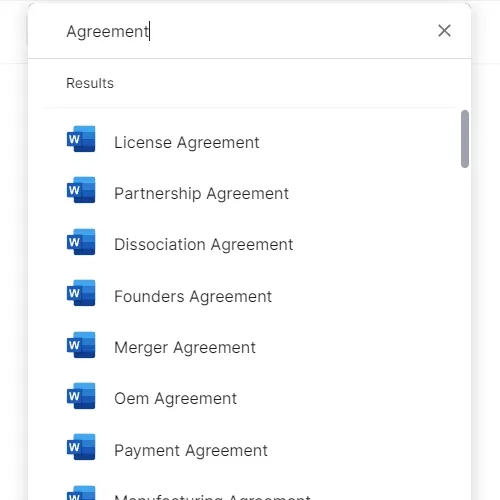
Access over 3,000+ business and legal templates for any business task, project or initiative.

2
Edit and fill in the blanks with AI

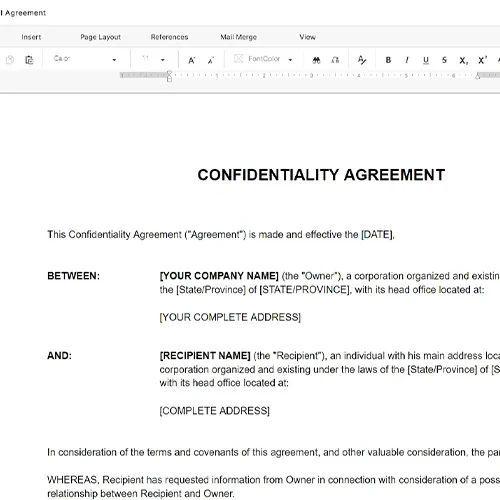
Customize your ready-made business document template and save it in the cloud.

3
Save, Share, Send, Sign

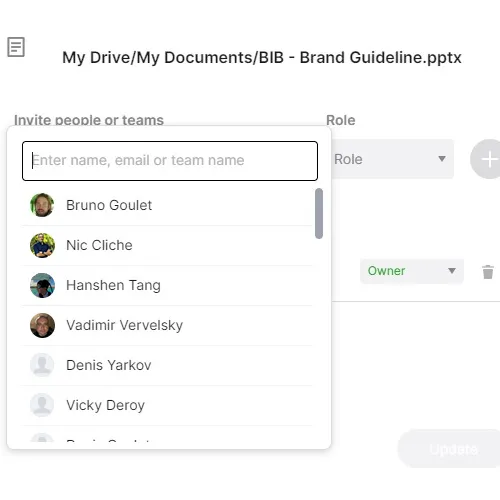
Share your files and folders with your team. Create a space of seamless collaboration.

Save time, save money, and create top-quality documents.

★★★★★

"Fantastic value! I'm not sure how I'd do without it. It's worth its weight in gold and paid back for itself many times."

Managing Director · Mall Farm
Robert Whalley
Managing Director, Mall Farm Proprietary Limited
★★★★★

"I have been using Business in a Box for years. It has been the most useful source of templates I have encountered. I recommend it to anyone."

Business Owner · 4+ years
Dr Michael John Freestone
Business Owner
★★★★★

"It has been a life saver so many times I have lost count. Business in a Box has saved me so much time and as you know, time is money."

Owner · Upstate Web
David G. Moore Jr.
Owner, Upstate Web

Run your business with a system — not scattered tools

Stop downloading documents. Start operating with clarity. Business in a Box gives you the Business Operating System used by over 250,000 companies worldwide to structure, run, and grow their business.

Free Forever Plan · No credit card required