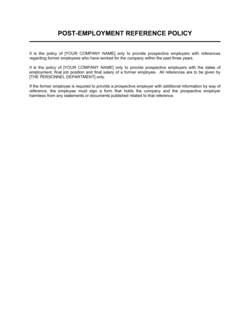
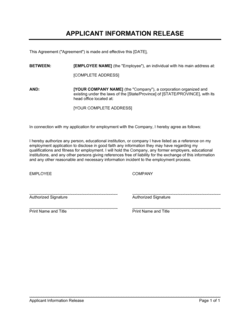
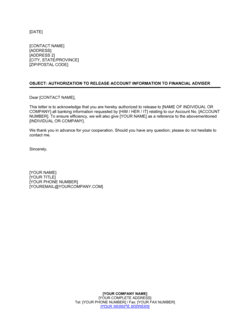
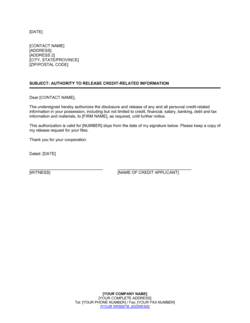
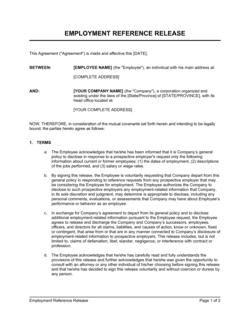
Post-Employment Information Release Agreement Template

Free Word download • Edit online • Save & share with Drive • Export to PDF

1 page20–30 min to fillDifficulty: StandardSignature requiredLegal review recommended
Learn more ↓
FreePost-Employment Information Release Agreement Template

At a glance

What it is
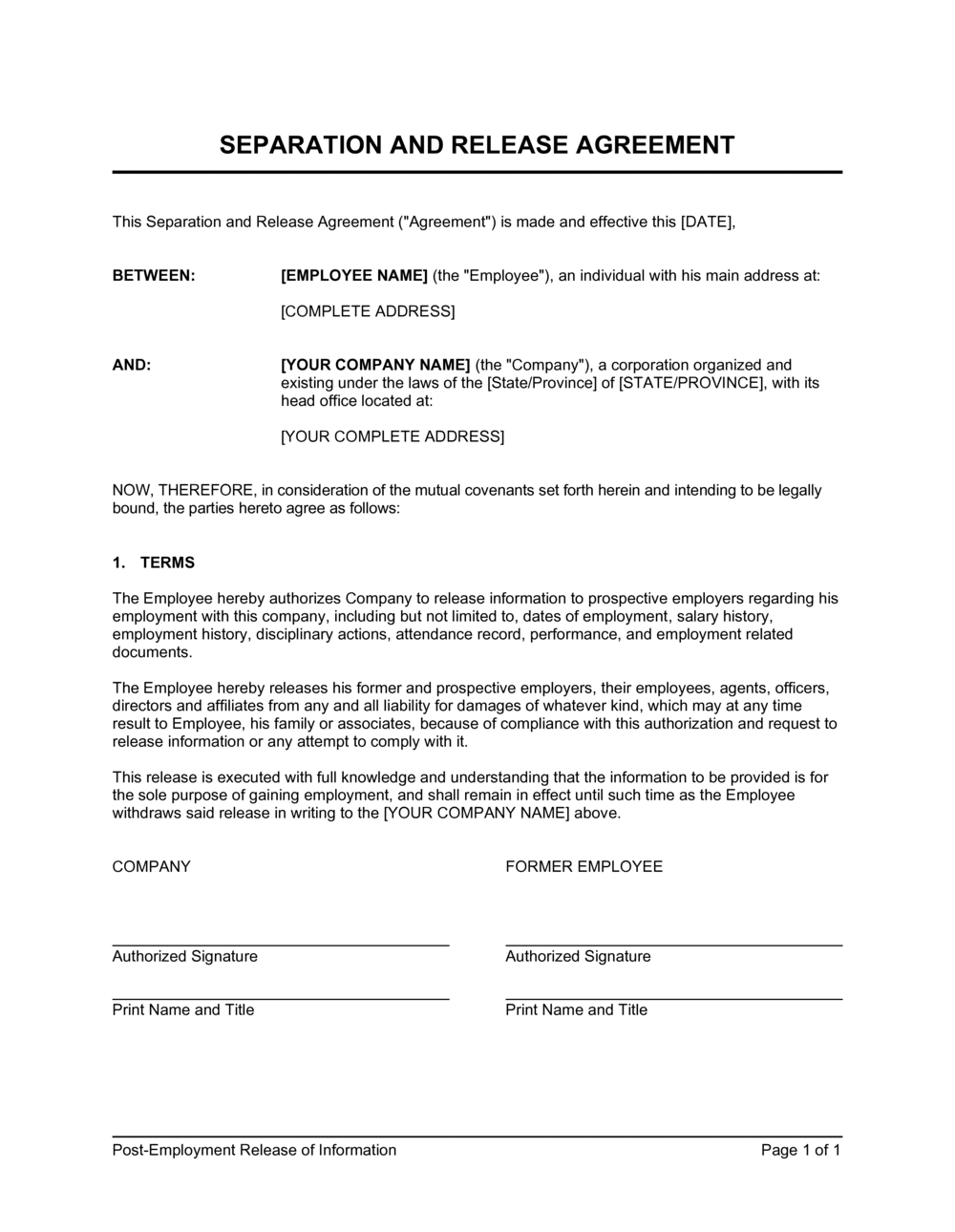
A Post Employment Information Release Agreement is a legally binding document that authorizes a former employer to disclose specific employment-related information — such as job titles, dates of service, performance evaluations, and disciplinary records — to named third parties like prospective employers, background check agencies, or licensing bodies. This free Word download gives you a structured, attorney-informed starting point you can edit online and export as PDF for execution at or after the time of an employee's departure.
When you need it
Use it when a departing or former employee requests that their employer share employment records with a background screener, a new employer, a professional licensing authority, or a financial institution. It is also used proactively during offboarding to document the scope of information the employer may release on the employee's behalf in future reference checks.
What's inside
Identification of the authorizing employee and the releasing employer, a defined scope of releasable information, named or categorically described recipients, a duration of authorization, liability protections for the employer, confidentiality obligations, and the employee's signature of informed consent.

What is a Post Employment Information Release Agreement?

A Post Employment Information Release Agreement is a legally binding document signed by a former employee that authorizes their previous employer to disclose specific employment-related information to identified third parties. The document defines the exact categories of information the employer may share — such as job titles held, dates of service, performance review ratings, reason for separation, and rehire eligibility — along with who may receive that information, under what standard of care, and for how long the authorization remains valid. By establishing documented informed consent, the agreement gives the releasing employer a clear legal basis for disclosure and substantially reduces exposure to defamation, privacy, and data protection claims that can arise from unsanctioned reference-check responses.

Why You Need This Document

Without a signed post employment information release agreement, every reference call and background check response carries legal risk. Disclosing performance details, disciplinary history, or a reason for termination without documented consent can expose the employer to defamation claims in the US, privacy complaints under GDPR in the EU, and regulatory penalties under PIPEDA in Canada — even when every statement made is factually accurate. Conversely, a blanket policy of confirming only dates and title to avoid liability leaves prospective employers without the information they need and can harm a well-performing former employee's job prospects. This template gives HR teams a defensible, consistently applied process: the employee defines what gets shared, with whom, and for how long; the employer discloses within that scope; and both parties are protected. For regulated industries where licensing bodies or securities regulators require verified employment records, a signed release is not optional — it is the documented authorization that allows the employer to cooperate with the inquiry without breaching its own privacy obligations.

Which variant fits your situation?

If your situation is…Use this template
Authorizing a background check agency to access employment recordsPost Employment Information Release Agreement
Departing employee releasing a full employment file to a prospective employerEmployee Records Release Authorization
Employer providing a structured written reference to a third partyEmployment Reference Letter
Separating employee releasing all claims in exchange for severanceSeparation Agreement and Release
Restricting a former employee from sharing confidential business informationPost-Employment Confidentiality Agreement
Confirming dates of service and title only, without performance detailsEmployment Verification Letter
Professional licensing body requesting a detailed conduct and performance recordProfessional Reference Release Form

Common mistakes to avoid

❌ Using a blanket 'all records' authorization

Why it matters: An unrestricted scope can inadvertently authorize disclosure of medical records, FMLA leave history, or workers' compensation claims — each of which is governed by separate privacy statutes that a general release cannot override.

Fix: Enumerate specific information categories in a numbered list and explicitly exclude medical, disability, and protected-leave records unless separate, statute-compliant authorizations are obtained.

❌ Omitting an expiration date

Why it matters: An open-ended release creates an indefinite obligation and may be unenforceable in jurisdictions requiring time-limited consent. It also exposes the employer to disclosures made years after the employment relationship ended.

Fix: Set a specific expiration date — typically 12 to 24 months from execution — and note that any disclosure after that date requires fresh written authorization from the former employee.

❌ Failing to include revocation rights

Why it matters: In GDPR-governed jurisdictions and California, the right to withdraw consent is a legally protected right. A release that purports to be irrevocable may void the entire agreement in those jurisdictions.

Fix: Add a clear revocation clause stating the employee may withdraw consent in writing at any time before disclosure, and define the employer's obligation upon receipt of a revocation notice.

❌ Disclosing information outside the authorized scope

Why it matters: A manager who volunteers subjective performance commentary or mentions a disciplinary matter not listed in the scope has exceeded the release — exposing the employer to defamation claims the indemnity clause does not cover.

Fix: Train every person who may receive a reference call on the exact scope of each signed release agreement, and route all reference inquiries through a single HR contact who has access to the executed document.

❌ Signing the agreement after the employee has already departed

Why it matters: A post-departure signature, obtained without the employee's presence and without documentation of voluntary consent, can be challenged as coerced or uninformed — particularly if the employee needed the release to secure new employment.

Fix: Incorporate this agreement into standard offboarding paperwork so it is reviewed, negotiated if needed, and signed on or before the final day of employment.

❌ No integration clause

Why it matters: Without an entire-agreement clause, verbal statements made by HR during offboarding — such as 'we only confirm title and dates' — can be introduced as contractual limitations or expansions of the written scope.

Fix: Include a standard integration clause confirming the written document supersedes all prior oral and written understandings regarding information release.

The 10 key clauses, explained

Parties and Recitals

In plain language: Identifies the former employer (releasing party), the former employee (authorizing party), and the employment relationship that creates the context for this agreement.

Sample language
This Post Employment Information Release Agreement is entered into as of [DATE] between [EMPLOYER LEGAL NAME], a [STATE] [ENTITY TYPE] ('Employer'), and [EMPLOYEE FULL NAME], formerly employed as [JOB TITLE] from [START DATE] to [END DATE] ('Former Employee').

Common mistake: Using a trade name instead of the employer's registered legal entity. If the named employer doesn't match payroll or corporate records, the release may be challenged as authorizing the wrong party to disclose.

Scope of Authorized Information

In plain language: Defines precisely what categories of information the employer may share — limiting disclosure to what the employee has actually consented to.

Sample language
Former Employee authorizes Employer to disclose the following information: (a) dates of employment; (b) position(s) held; (c) final base compensation; (d) performance review ratings for the period [DATE] to [DATE]; (e) reason for separation; and (f) eligibility for rehire.

Common mistake: Using a blanket 'all employment records' authorization without specifying categories. Overly broad language can include medical records, workers' compensation history, or leave records — disclosing these may violate separate privacy statutes even with a general release.

Designated Recipients

In plain language: Names or categorically describes the third parties to whom information may be released, preventing the employer from disclosing to anyone beyond those the employee has authorized.

Sample language
Employer is authorized to release information solely to: (a) [SPECIFIC COMPANY NAME], located at [ADDRESS]; (b) any accredited background screening agency engaged by a prospective employer; and/or (c) any state or federal licensing authority requiring employment verification.

Common mistake: Leaving recipients undefined or writing 'any requesting party.' Without defined recipients, the authorization is functionally open-ended and may expose the employer to liability for disclosures the employee did not anticipate.

Duration and Expiration

In plain language: States the period during which this authorization is valid, after which no further disclosures may be made under this agreement without fresh written consent.

Sample language
This authorization shall remain in effect for [24] months from the date of execution, unless revoked in writing by Former Employee prior to disclosure. Employer shall not rely on this authorization after [EXPIRATION DATE].

Common mistake: Omitting an expiration date entirely. An undated or perpetual release creates an indefinite obligation on both sides and may be unenforceable in jurisdictions that require a reasonable time limit on consent.

Good-Faith Disclosure Standard

In plain language: Commits the employer to disclose only accurate, factual information within the authorized scope and in good faith — protecting both parties from defamation risk.

Sample language
Employer agrees to disclose only information that is accurate and based on documented employment records, and to make all disclosures in good faith. Employer shall not include personal opinions, speculation, or information outside the scope defined in Section 2.

Common mistake: Omitting any standard for how information is disclosed. Without a good-faith clause, the employer has no contractual basis for limiting subjective commentary, increasing both defamation exposure and the risk of a discrimination claim.

Liability Release and Indemnification

In plain language: Releases the employer from liability for disclosures made in good faith within the agreed scope, and may include a reciprocal indemnity from the employee for claims arising from the release.

Sample language
Former Employee releases and discharges Employer and its officers, directors, and employees from any and all claims arising from disclosures made in good faith within the scope of this Agreement. Former Employee agrees to indemnify and hold harmless Employer from any third-party claims resulting from such disclosure.

Common mistake: Writing the indemnity clause to cover disclosures made outside the agreed scope. An employer that discloses more than authorized cannot rely on this clause — the indemnity only applies to in-scope, good-faith disclosures.

Confidentiality of the Agreement Itself

In plain language: Restricts both parties from disclosing the existence or terms of this release agreement to third parties other than those with a need to know.

Sample language
Both parties agree to keep the terms of this Agreement confidential and shall not disclose its existence or contents to any third party except as required by law, or as necessary to carry out the purposes of this Agreement.

Common mistake: Applying confidentiality to the former employee only. If the employer discloses the existence of a signed release to a third party without authorization, it can undermine the employee's expectation of privacy and create additional liability.

Governing Law and Dispute Resolution

In plain language: Specifies which jurisdiction's law governs the agreement and how disputes between the parties will be resolved — through arbitration, mediation, or court.

Sample language
This Agreement shall be governed by and construed in accordance with the laws of [STATE / PROVINCE / COUNTRY]. Any dispute arising under this Agreement shall be resolved by [binding arbitration in [CITY] / litigation in the courts of [JURISDICTION]].

Common mistake: Selecting a governing law that has no connection to where the employee worked. Several jurisdictions apply local privacy and employment law regardless of a contractual choice-of-law clause — particularly in California, Quebec, and across the EU.

Revocation Rights

In plain language: Describes the employee's right to withdraw consent before the employer acts on the release, and the procedure for doing so.

Sample language
Former Employee may revoke this authorization at any time prior to disclosure by delivering written notice to [EMPLOYER CONTACT] at [ADDRESS / EMAIL]. Revocation shall be effective upon Employer's receipt and shall not affect disclosures already made in reliance on this Agreement.

Common mistake: Omitting revocation rights entirely. In jurisdictions with strong privacy statutes — including GDPR-governed countries and California under the CCPA — the right to withdraw consent is legally required and cannot be waived by contract.

Entire Agreement and Amendment

In plain language: Confirms that this document is the complete agreement on the subject of information release and can only be amended in a signed writing.

Sample language
This Agreement constitutes the entire agreement between the parties with respect to the release of post-employment information and supersedes all prior representations and understandings. This Agreement may only be modified by a written amendment signed by both parties.

Common mistake: No integration clause. Without one, prior verbal assurances — such as 'we will only confirm your title' — can be introduced to contradict the written scope, expanding or limiting what the employer is allowed to share.

How to fill it out

  1. 1

    Identify the parties using legal entity names

    Enter the employer's full registered legal name — not a trade name — and the former employee's legal name as it appears on their personnel file. Include the employee's former job title and exact dates of employment.

    💡 Cross-check the employer entity name against your state or provincial corporate registry to ensure it matches payroll records exactly.

  2. 2

    Define the scope of authorized information

    List specific categories of information the employer may disclose — for example, dates of employment, job titles held, final salary, performance rating bands, and reason for separation. Avoid catchall language like 'all records.'

    💡 Exclude medical, disability, and leave records from the scope unless the employee has specifically requested their inclusion and applicable privacy law permits it.

  3. 3

    Name or categorize the authorized recipients

    Identify who may receive the information — a specific company by legal name, a category such as 'accredited background screening agencies,' or a licensing authority. More specific is always safer for the employer.

    💡 If the employee wants information released to a specific new employer, get that employer's legal name and address in writing before execution.

  4. 4

    Set the duration of the authorization

    Enter a specific expiration date or a defined period — 12 to 24 months is standard for most reference-check purposes. State that the authorization does not cover disclosures after the expiration date without a new signed agreement.

    💡 For licensing board verifications that may take years to process, consider a 36-month term with a renewal option rather than an open-ended release.

  5. 5

    Confirm the good-faith disclosure standard

    Review the good-faith clause to ensure it limits the employer to factual, documented information only. If your organization has a specific reference-check policy, reference it in this clause by document title.

    💡 Train HR and managers on the scope of this agreement before any reference calls — verbal disclosures beyond the authorized scope are not protected by this document.

  6. 6

    Complete the governing law and dispute resolution fields

    Select the jurisdiction where the employee worked — not simply where the employer is incorporated — as the governing law. Choose between arbitration and litigation based on your organization's standard policy.

    💡 If the employee worked in California, Quebec, or an EU member state, have legal counsel review the governing law clause before execution.

  7. 7

    Obtain dated signatures from both parties

    Both the authorized employee and a named representative of the employer must sign and date the agreement. The employee's signature confirms informed consent; the employer's confirms acceptance of the disclosure obligation.

    💡 Execute before the employee's last day where possible — securing a signature after departure requires additional follow-up and may raise questions about voluntariness of consent.

  8. 8

    Retain the signed original in the personnel file

    Store the executed agreement in the former employee's personnel file alongside the records it authorizes disclosure of. Note the expiration date in your HR calendar to prevent inadvertent use after the authorization lapses.

    💡 If using Business in a Box eSign, the timestamped execution record and PDF are automatically archived and retrievable for audit or litigation purposes.

Frequently asked questions

What is a post employment information release agreement?

A post employment information release agreement is a signed authorization from a former employee that permits their previous employer to disclose specific employment-related information to named third parties — such as background check agencies, prospective employers, or licensing bodies. It defines what information may be shared, with whom, and for how long, while protecting the employer from defamation and privacy liability when acting within the authorized scope.

Is a post employment information release agreement legally required?

No single law universally mandates this agreement, but privacy statutes in many jurisdictions — including GDPR in the EU, PIPEDA in Canada, the CCPA in California, and various US state employment laws — require a documented lawful basis before an employer may share personal data about a former employee. In practice, a signed release is the most straightforward way to establish that basis and protect the employer from defamation or privacy claims when responding to reference inquiries.

Who signs a post employment information release agreement?

Both the former employee and an authorized representative of the former employer sign the agreement. The employee's signature documents informed consent to the specific disclosure. The employer's signature confirms acceptance of the obligation to disclose only within the agreed scope and in good faith. Both signatures should be dated, and the agreement should be executed before or on the employee's final day wherever possible.

What information can be released under this agreement?

The scope is defined by the agreement itself and should be tailored to the employee's request. Common categories include dates of employment, positions held, final compensation, performance review ratings, reason for separation, and eligibility for rehire. Medical records, disability status, workers' compensation history, and FMLA leave records are typically excluded — disclosing these requires separate authorization and compliance with distinct privacy statutes even with a general release in place.

How long should the authorization remain valid?

A term of 12 to 24 months is standard for most reference-check and background-screening purposes. For professional licensing verifications that may take longer to process, a 36-month term is reasonable. The agreement should state a specific expiration date and confirm that disclosures after that date require a new signed authorization. Perpetual releases are generally disfavored and may be unenforceable in privacy- protective jurisdictions.

Can a former employee revoke this agreement after signing?

In most jurisdictions, a former employee can revoke consent at any time before the employer has made a disclosure in reliance on the release. Once the employer has already disclosed information in good faith within the authorized scope, revocation does not undo that disclosure. GDPR and California law treat withdrawal of consent as a fundamental right, so any clause purporting to make consent irrevocable is likely void in those jurisdictions.

Does this agreement protect the employer from defamation claims?

Yes, when disclosures are made in good faith, within the authorized scope, and based on documented factual records, this agreement substantially reduces defamation exposure. Many jurisdictions also recognize a qualified privilege for employer references provided in good faith to a party with a legitimate interest. However, a release does not immunize an employer from disclosures that are false, malicious, or outside the agreed scope — those situations remain legally risky regardless of the agreement.

What is the difference between this agreement and a separation agreement?

A separation agreement is a comprehensive document covering termination terms, severance, mutual releases of legal claims, and potentially non-disparagement obligations. A post employment information release agreement has a narrower, specific purpose: authorizing the disclosure of employment records to third parties. The two are often executed together during offboarding but address entirely different legal obligations. Including both ensures that neither document is overburdened with provisions it was not designed to govern.

Do I need a lawyer to use this template?

For straightforward domestic reference-check authorizations involving standard information categories, a well-drafted template is typically sufficient. Consider engaging a lawyer when the former employee worked in a privacy-intensive jurisdiction such as California, Quebec, or an EU member state; when the disclosure involves sensitive information categories such as performance investigations or disciplinary records; or when the release is part of a broader separation or litigation settlement. A one-hour template review typically costs $200 to $400 and is worthwhile for higher-risk disclosures.

How this compares to alternatives

vs Separation Agreement

A separation agreement covers the full scope of employment termination — severance, mutual releases of legal claims, non-disparagement, and benefits continuation. A post employment information release agreement has a single, narrow purpose: authorizing third-party disclosure of employment records. The two documents address different legal obligations and are typically executed together during offboarding rather than substituted for one another.

vs Non-Disclosure Agreement

An NDA restricts the flow of information outward from a party who possesses it — typically protecting trade secrets or confidential business data. A post employment information release agreement moves in the opposite direction, authorizing the employer to release the employee's personal employment data to third parties. The two are often needed simultaneously: an NDA governs company confidential information; this release governs personal employment records.

vs Employment Reference Letter

A reference letter is a narrative document written by the employer recommending the employee to prospective employers — it does not require the employee's signed consent. A post employment information release agreement is the legal authorization that governs what information the employer may include in a reference letter or communicate in a reference call, and to whom. Both are often created together, with the release defining the boundaries of the letter.

vs Employment Verification Letter

An employment verification letter confirms narrow, objective facts — dates of employment, job title, and sometimes salary — typically without performance commentary. A post employment information release agreement can authorize disclosure of that same information but also extends to performance data, disciplinary records, and reasons for separation. Use the verification letter when only factual confirmation is needed; use this release when the authorized scope extends beyond basic employment confirmation.

Industry-specific considerations

Financial Services

Regulatory bodies such as FINRA require detailed employment history and conduct records — signed releases are essential before disclosing U-5 filings or internal investigation outcomes to prospective registered firms.

Healthcare

Credentialing organizations and hospital privilege committees require verified employment history and performance records; this agreement governs what a former employer may disclose during the credentialing verification process.

Technology / SaaS

High employee mobility and background-check-intensive hiring make standardized release agreements critical for responding quickly to reference requests without creating inconsistent disclosure practices.

Professional Services

Law firms, accounting firms, and consulting practices face heightened client-confidentiality obligations — the authorized scope must explicitly exclude any client-identifying information even when disclosing performance details.

Government and Public Sector

Security clearance applications require detailed employer verification; public-sector employers must balance disclosure obligations under freedom-of-information laws against privacy rights, making a signed release the authoritative basis for disclosure.

Retail / Hospitality

High turnover and frequent cross-company hiring mean bulk reference requests are common; standardized release forms collected during offboarding allow HR teams to respond consistently at scale without case-by-case legal review.

Jurisdictional notes

United States

No single federal law mandates a signed release for employer references, but the Fair Credit Reporting Act (FCRA) requires written authorization before a consumer reporting agency compiles a background check. Many states — including California, New York, and Massachusetts — have enacted additional privacy and reference-check statutes. California's CCPA grants former employees rights over their personal data, and California Labor Code §1053 restricts what employers may disclose without consent. Qualified privilege protects good-faith employer references in most states, but the scope varies.

Canada

PIPEDA (federally) and provincial privacy laws such as Quebec's Law 25 (Bill 64) require a documented lawful basis — typically informed consent — before an employer may disclose personal employee information to third parties. Quebec requires the consent document to be in French for provincially regulated employers. Alberta and British Columbia have their own private-sector privacy legislation with similar consent requirements. Employers should confirm that the authorization scope aligns with the applicable provincial statute in addition to PIPEDA.

United Kingdom

Post-Brexit, the UK retains a domestic version of GDPR (UK GDPR) alongside the Data Protection Act 2018, which classifies employment records as personal data requiring a lawful basis for processing. A signed release establishes consent as the lawful basis, but employers relying on legitimate interests as an alternative basis should conduct a legitimate interests assessment. The Information Commissioner's Office (ICO) provides guidance on employee reference disclosures. Factual references given in good faith benefit from qualified privilege under UK defamation law.

European Union

GDPR requires that consent be freely given, specific, informed, and unambiguous — and expressly provides the right to withdraw consent at any time. Any clause purporting to make consent irrevocable is void under GDPR. Employment data is treated with heightened sensitivity in Germany, France, and the Netherlands, where works council consultation may be required before standardizing a release process. Cross-border transfers of employee data (e.g., from an EU subsidiary to a US parent) require an additional transfer mechanism such as Standard Contractual Clauses.

Template vs lawyer — what fits your deal?

PathBest forCostTime
Use the templateStandard domestic offboarding where the employee requests reference checks or background screening authorization for routine job applicationsFree15–20 minutes
Template + legal reviewEmployees who worked in California, Quebec, or EU member states; disclosures involving disciplinary records or performance investigations; releases prepared as part of a broader separation$200–$5001–2 days
Custom draftedRegulated industries (financial services, healthcare), security clearance disclosures, high-profile departures with litigation risk, or multi-jurisdiction employment records$800–$2,500+3–7 days

Glossary

Releasing Party
The former employer who holds the employment records and is authorized by this agreement to share them with named recipients.
Authorizing Party
The former employee who signs the agreement and consents to the release of their employment information.
Scope of Release
The specific categories of information the employer is permitted to disclose — for example, job title, dates of employment, performance ratings, disciplinary records, or compensation history.
Designated Recipient
The specific person, company, or type of organization to whom the employer is authorized to release information under this agreement.
Defamation Liability
Legal exposure an employer faces when making false statements of fact about a former employee that damage that employee's reputation — a key risk this agreement is designed to manage.
Qualified Privilege
A legal protection available in many jurisdictions that shields an employer from defamation claims when providing an honest employment reference in good faith, within the scope of an authorized release.
Informed Consent
The former employee's voluntary agreement to the release, made with full knowledge of what information will be shared, with whom, and for how long.
Duration of Authorization
The defined period during which the release remains valid — after which the employer should not disclose information under this agreement without a new signed authorization.
Indemnification
A clause under which the authorizing employee agrees to hold the employer harmless from claims arising from disclosures made in good faith within the agreed scope.
Right of Revocation
The employee's ability to withdraw their consent before the employer has acted on it — typically honored in writing, but limited once disclosure has already occurred.
Background Check Authorization
A related consent form, often required by FCRA in the US, that allows a consumer reporting agency to compile and share employment-related data; this agreement governs the employer side of the same information flow.

Part of your Business Operating System

This document is one of 3,000+ business & legal templates included in Business in a Box.

  • Fill-in-the-blanks — ready in minutes
  • 100% customizable Word document
  • Compatible with all office suites
  • Export to PDF and share electronically

Create your document in 3 simple steps.

From template to signed document — all inside one Business Operating System.
1
Download or open template

Access over 3,000+ business and legal templates for any business task, project or initiative.

2
Edit and fill in the blanks with AI

Customize your ready-made business document template and save it in the cloud.

3
Save, Share, Send, Sign

Share your files and folders with your team. Create a space of seamless collaboration.

Save time, save money, and create top-quality documents.

★★★★★

"Fantastic value! I'm not sure how I'd do without it. It's worth its weight in gold and paid back for itself many times."

Managing Director · Mall Farm
Robert Whalley
Managing Director, Mall Farm Proprietary Limited
★★★★★

"I have been using Business in a Box for years. It has been the most useful source of templates I have encountered. I recommend it to anyone."

Business Owner · 4+ years
Dr Michael John Freestone
Business Owner
★★★★★

"It has been a life saver so many times I have lost count. Business in a Box has saved me so much time and as you know, time is money."

Owner · Upstate Web
David G. Moore Jr.
Owner, Upstate Web

Run your business with a system — not scattered tools

Stop downloading documents. Start operating with clarity. Business in a Box gives you the Business Operating System used by over 250,000 companies worldwide to structure, run, and grow their business.

Free Forever Plan · No credit card required