- Assuming Party
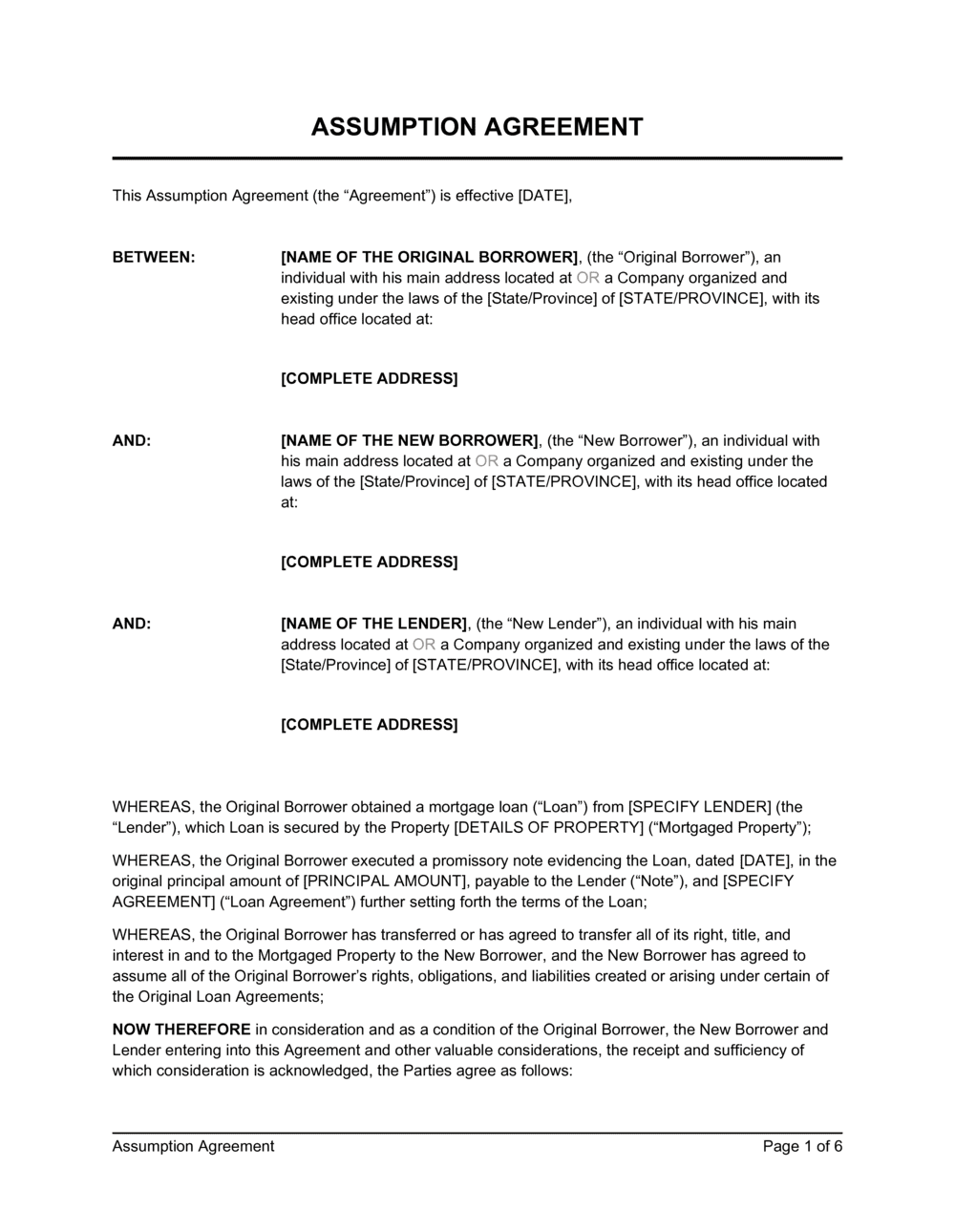
- The new party who agrees to take over and fulfill the obligations under an existing contract or debt in place of the original obligor.
- Assignor
- The original party to the underlying contract who is transferring their obligations and, in some cases, their rights to the Assuming Party.
- Obligee
- The counterparty to the original contract whose consent is required for the assumption to be valid — often a landlord, lender, or service provider.
- Assumption of Obligations
- The contractual act by which the Assuming Party agrees to be bound by and perform all duties and liabilities of the Assignor under the original agreement.
- Release of Liability
- A provision that discharges the Assignor from further responsibility under the original contract once the Assuming Party has taken over the obligations.
- Novation
- A similar but distinct concept where all three parties agree to replace the original contract entirely with a new one — extinguishing the old agreement, not merely transferring it.
- Indemnification
- A contractual obligation by which one party agrees to compensate another for losses, damages, or legal costs arising from a specified event or breach.
- Consent to Assignment
- The written approval of the Obligee authorizing the transfer of the original party's contractual position to the Assuming Party.
- Underlying Agreement
- The original contract, lease, or debt instrument whose obligations are being transferred through the assumption agreement.
- Due-on-Sale Clause
- A lender provision in a mortgage or loan that requires full repayment of the debt if the property or business is sold — triggered when an assumption is attempted without lender consent.
- Representations and Warranties
- Factual statements made by each party at the time of signing that confirm key conditions — such as authority to enter the agreement and the absence of prior defaults — are true.