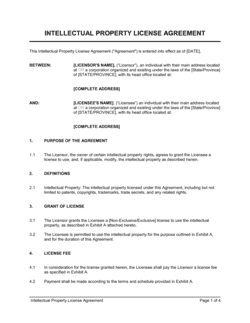
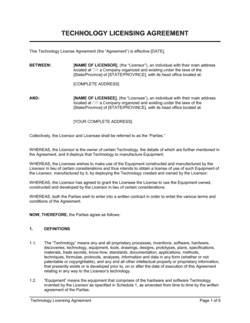
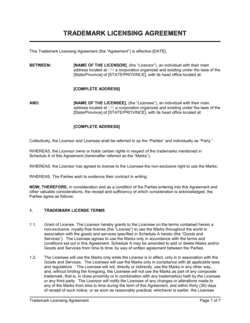
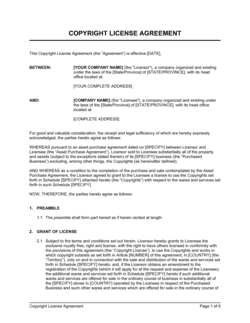
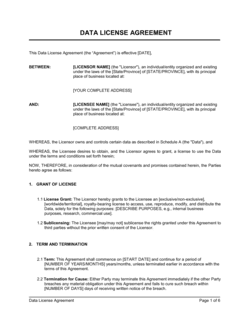
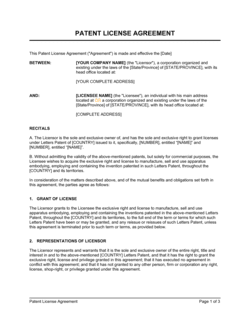
- Licensor
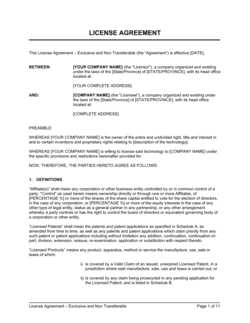
- The party that owns the intellectual property and grants rights to use it.
- Licensee
- The party receiving the right to use the IP under the terms of the license agreement.
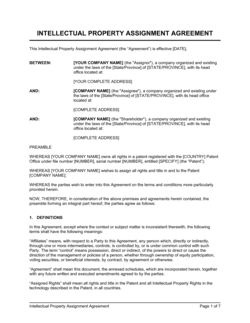
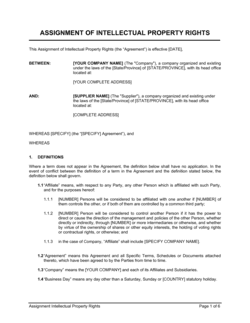
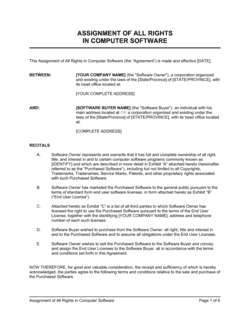
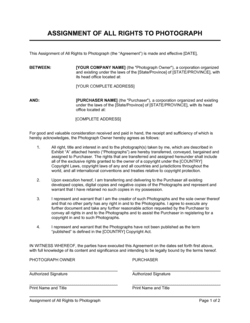
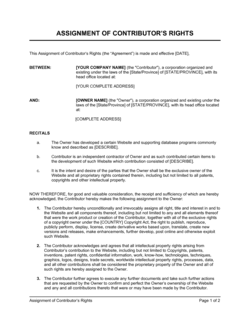
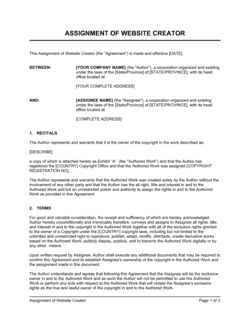
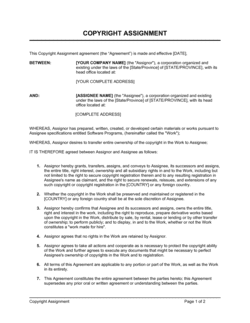
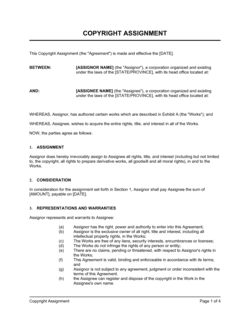
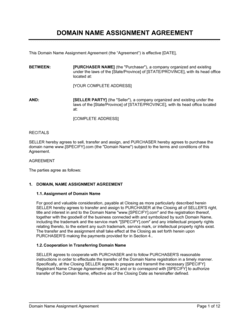
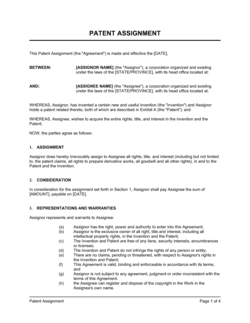
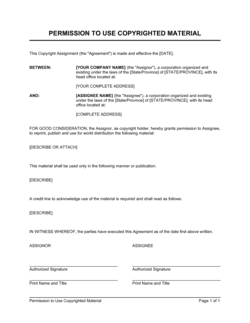
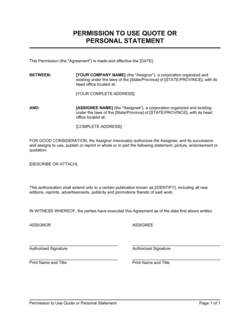
- Assignor
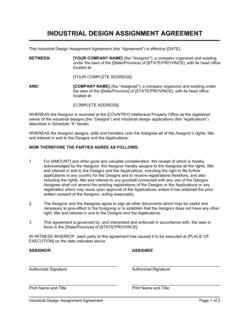
- The party transferring ownership of IP rights to another party.
- Assignee
- The party receiving full ownership of IP rights through an assignment.
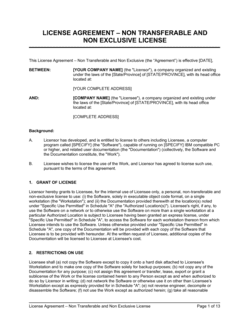
- Exclusive license
- A license in which the licensee is the only party permitted to use the IP in the defined scope, sometimes excluding even the licensor.
- Non-exclusive license
- A license that allows the licensor to grant the same rights to multiple licensees simultaneously.
- Royalty
- A recurring payment made by the licensee to the licensor, typically calculated as a percentage of revenue or a fixed amount per unit sold.
- Field of use
- The specific industry, application, or purpose for which the licensee is permitted to use the IP.
- Sublicense
- A secondary license granted by a licensee to a third party, permitting that third party to use the IP — only allowed if the original license expressly permits it.
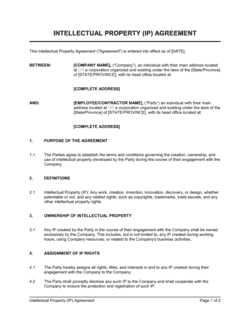
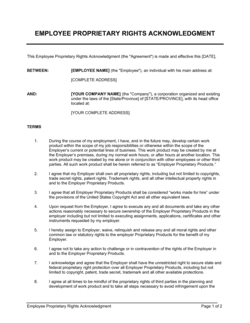
- Work for hire
- A legal doctrine under which creative or inventive work produced by an employee or contractor within the scope of their engagement belongs to the hiring party, not the creator.
- Trade secret
- Confidential business information that provides a competitive advantage and is protected by law without registration, as long as reasonable steps are taken to keep it secret.
- IP infringement
- The unauthorized use, reproduction, or commercialization of intellectual property protected by patent, trademark, copyright, or trade secret law.