- Licensor
- The party that owns the intellectual property and grants the right to use it under the terms of the agreement.
- Licensee
- The party that receives permission to use the licensor's intellectual property, typically to manufacture and sell merchandise.
- Licensed Property
- The specific trademark, character, logo, design, or other IP that the licensee is authorized to reproduce on merchandise.
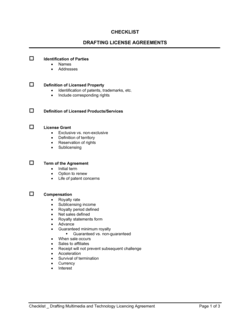
- Royalty Rate
- The percentage of net sales or a fixed fee per unit that the licensee pays the licensor in exchange for the right to use the licensed property.
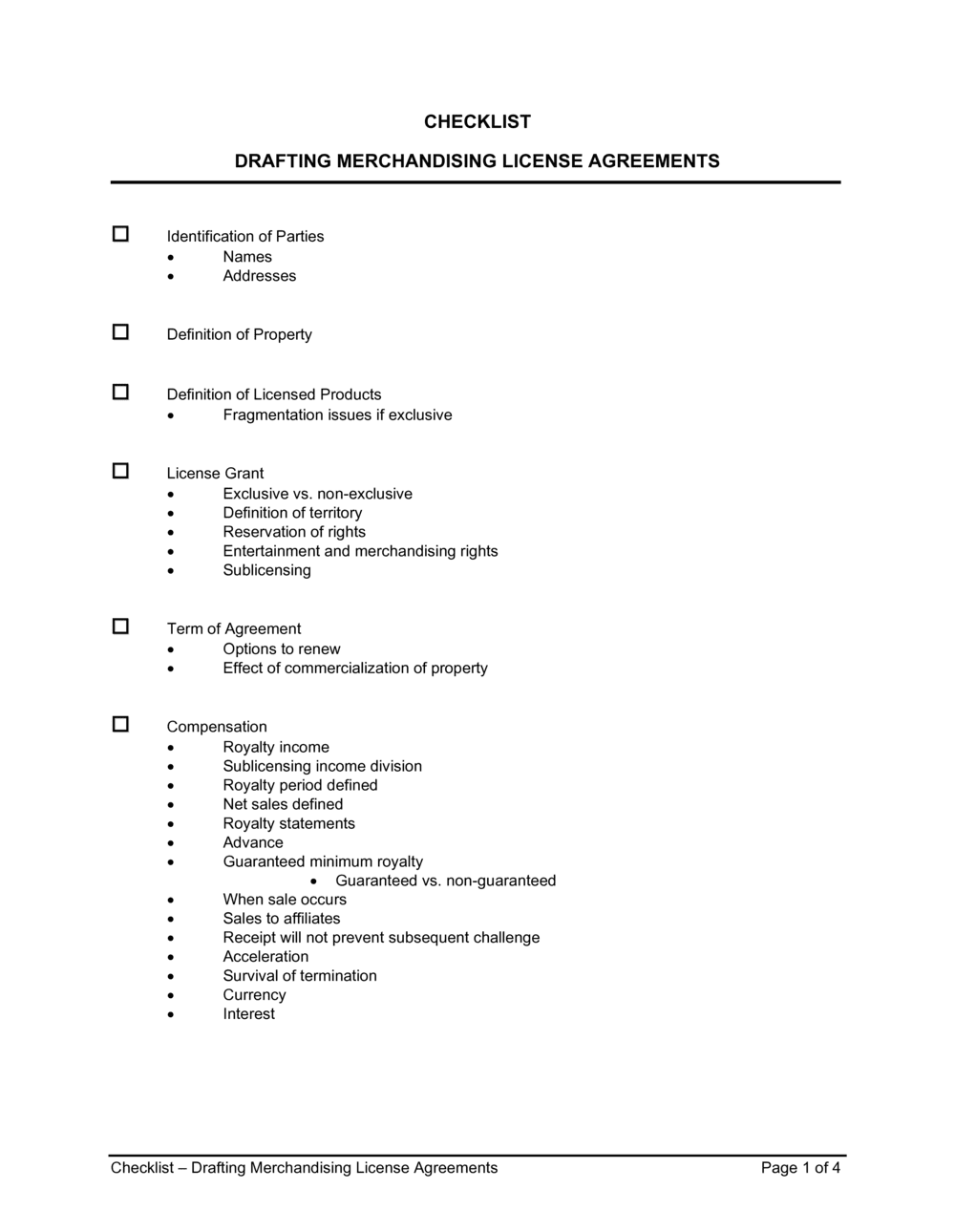
- Advance
- An upfront payment made by the licensee at signing, typically recoupable against future royalty earnings but non-refundable if sales fall short.
- Guaranteed Minimum Royalty
- A floor amount the licensee must pay regardless of actual sales performance, ensuring the licensor receives baseline compensation.
- Grant of Rights
- The clause defining exactly what the licensee may do with the licensed property — manufacture, distribute, sublicense — and what is explicitly excluded.
- Quality Control Approval
- The process by which the licensor reviews and approves product samples, packaging, and marketing materials before the licensee may sell them.
- Territory
- The geographic area — country, region, or worldwide — within which the licensee may manufacture, distribute, and sell licensed merchandise.
- Sell-Off Period
- A defined window after agreement termination during which the licensee may sell existing inventory before all rights revert to the licensor.
- Net Sales
- Gross sales revenue minus returns, allowances, and agreed deductions — the royalty base most licensing agreements use to calculate payments.