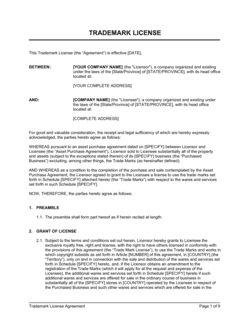
- Trademark
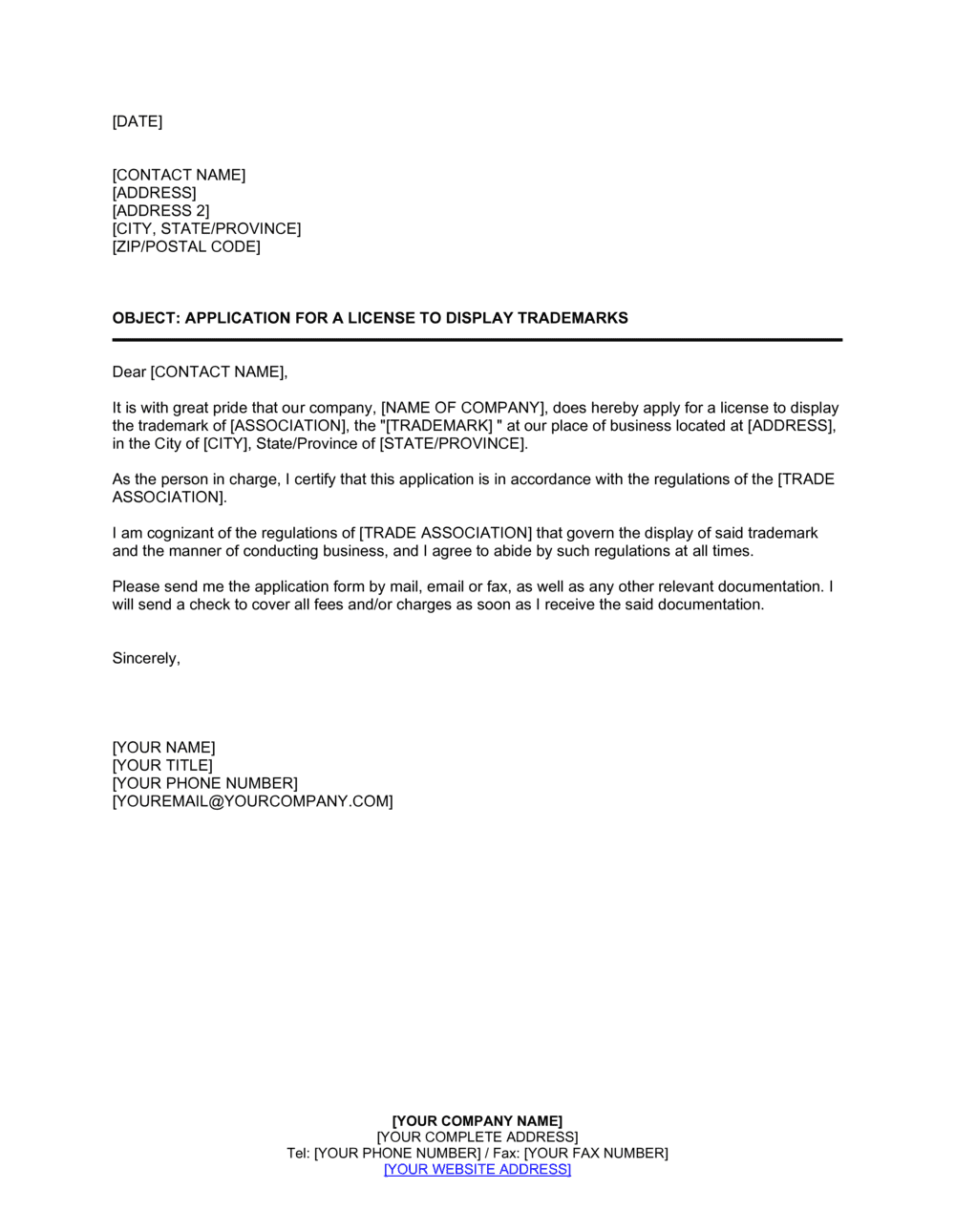
- A word, name, logo, symbol, or trade dress that identifies and distinguishes the source of goods or services from those of others.
- Licensor
- The trademark owner who grants permission for another party to display or use their registered mark.
- Licensee
- The business or individual applying to receive permission to display the trademark owner's marks.
- Registered Mark
- A trademark that has been officially registered with a government trademark office, such as the USPTO, and carries the ® symbol.
- Display License
- A limited grant of permission allowing the licensee to show a trademark in specific contexts without transferring ownership of the mark.
- Territory
- The geographic region within which the licensee is authorized to display the trademark — for example, the United States, or a specific state or country.
- Term
- The defined time period during which the display license is valid, after which the licensee must reapply or cease use.
- Permitted Use
- The specific channels, materials, and formats in which the trademark may be displayed — such as a website, product packaging, or event signage.
- Trade Dress
- The visual appearance of a product or its packaging — including color schemes, shapes, and design — that functions as a source identifier and may be trademarked.
- Sublicense
- An arrangement where the original licensee grants a third party the right to use the trademark — typically prohibited without express written consent from the trademark owner.