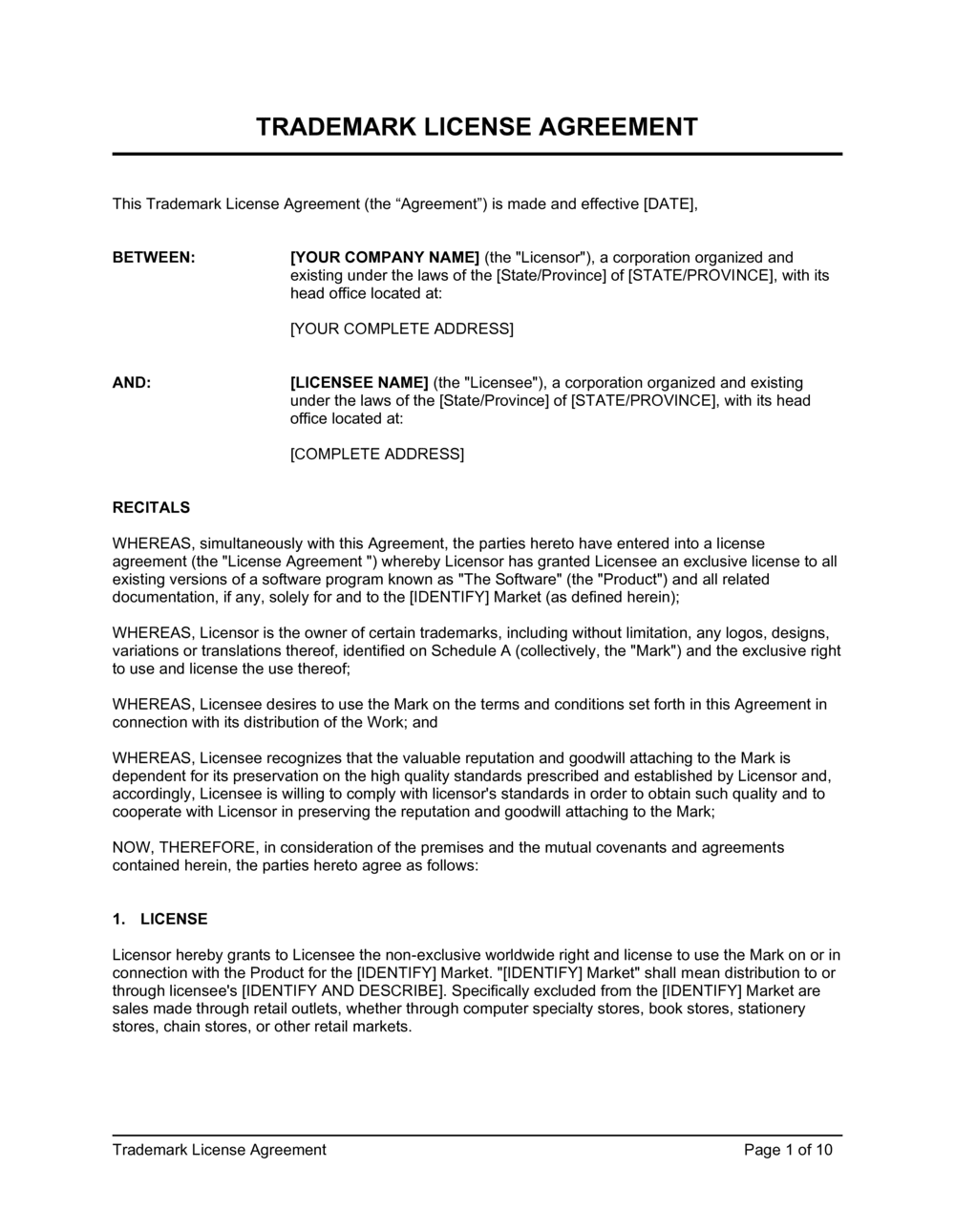
Trademark License Agreement For Software Template

Free Word download • Edit online • Save & share with Drive • Export to PDF

10 pages30–40 min to fillDifficulty: ComplexSignature requiredLegal review recommended
Learn more ↓
FreeTrademark License Agreement For Software Template

At a glance

What it is
A Trademark License Agreement for Software is a legally binding contract in which a trademark owner (licensor) grants a software company or developer (licensee) the right to use a registered or common-law trademark — such as a brand name, logo, or product name — in connection with specific software products or services. This free Word download lets you define usage scope, quality standards, royalty terms, and termination conditions in a single enforceable document you can edit online and export as PDF.
When you need it
Use it when a software developer or distributor wants to market, rebrand, or white-label a product under another party's trademark, when a licensor wants to grant controlled brand rights to a software reseller or OEM partner, or when any software-related co-branding arrangement requires formal authorization and quality oversight.
What's inside
Grant of license with defined scope and territory, quality control and approval requirements, royalty and payment terms, ownership and registration provisions, representations and warranties, termination rights, indemnification, and governing law.

What is a Trademark License Agreement for Software?

A Trademark License Agreement for Software is a legally binding contract in which a trademark owner (the licensor) grants a software company, developer, or distributor (the licensee) the right to use a specific trademark — a brand name, logo, or product identifier — in connection with defined software products or services. The agreement authorizes the use while preserving the licensor's ownership of the mark, imposing quality control standards the licensee must meet, and establishing royalty or fee arrangements. Unlike a software license, which governs rights to use underlying code, this agreement governs brand identity rights — controlling how the mark is displayed, in which products, and in which markets.

Why You Need This Document

Permitting any party to use your trademark on software without a written agreement exposes you to a loss of the trademark itself. Courts in the United States, Canada, and other common-law jurisdictions have consistently found that a licensor who fails to document quality control obligations — and enforce them — has granted a "naked license," which can result in the trademark being declared abandoned and the registration cancelled. Beyond protecting the mark, a signed trademark license agreement defines who owes royalties, on what revenue base, and when disputes escalate to arbitration rather than litigation. For the licensee, it provides documented authorization that defends against infringement claims from the licensor or third parties and gives the business the legal certainty needed to invest in building a product under the licensed brand. This template provides the full contractual architecture — grant, quality controls, royalties, indemnification, and termination — in a single enforceable Word document.

Which variant fits your situation?

If your situation is…Use this template
Granting broad rights to use a trademark on any software productTrademark License Agreement for Software (Non-Exclusive)
Granting one licensee exclusive rights in a defined territory or product categoryExclusive Trademark License Agreement
Licensing both the trademark and the underlying software code togetherSoftware License Agreement with Trademark Provisions
Permitting a third-party developer to build and sell software using your brandTechnology License Agreement
Authorizing an affiliate to use a trademark for marketing purposes onlyTrademark Assignment Agreement
Co-branding arrangement between two software companiesCo-Branding Agreement
Franchising software along with brand rights to multiple operatorsFranchise Agreement

Common mistakes to avoid

❌ Granting a naked license with no quality control

Why it matters: A trademark license without genuine quality control gives courts grounds to declare the mark abandoned, potentially canceling the licensor's registration entirely and destroying the brand's legal protection.

Fix: Draft specific quality standards, attach them as a schedule, and implement a documented review process — at least annual audits and pre-release approvals — and keep records of every review.

❌ Leaving 'net revenue' undefined in the royalty clause

Why it matters: Without a precise definition, each party applies different deductions, leading to consistent payment shortfalls and disputes that are expensive to arbitrate.

Fix: Define net revenue explicitly: list every permitted deduction (returns, taxes, processing fees) and cap them. Provide a worked numerical example in a schedule if the calculation is complex.

❌ No post-termination wind-down period

Why it matters: Immediate cessation on termination can leave the licensee in breach of its own downstream software distribution contracts, creating third-party liability and turning a clean termination into contentious litigation.

Fix: Include a 30–90 day sell-off or transition period in which the licensee may fulfill existing customer commitments, with clear obligations to stop new sales and begin brand removal.

❌ Failing to address sublicensing rights explicitly

Why it matters: If the agreement is silent on sublicensing, the licensee may argue an implied right to sublicense the mark to its own distributors or white-label partners, creating unauthorized downstream brand usage the licensor cannot easily stop.

Fix: Include a clause that expressly prohibits sublicensing without the licensor's prior written consent, or defines the specific conditions under which sublicensing is permitted.

❌ Omitting audit rights for royalty verification

Why it matters: Without the right to audit the licensee's revenue records, the licensor has no way to verify that royalty reports are accurate, and underreporting may go undetected for years.

Fix: Include a clause granting the licensor the right to audit the licensee's relevant financial records at the licensor's expense, with the licensee bearing audit costs if a discrepancy exceeding 5% is found.

❌ No clause addressing trademark registration maintenance

Why it matters: If the licensor fails to renew the trademark registration during the license term, the licensee's rights may become legally uncertain mid-contract, creating disputes over whether royalties are still owed.

Fix: Add a covenant requiring the licensor to maintain the trademark registration in good standing during the term and notify the licensee promptly of any cancellation proceeding or renewal failure.

The 10 key clauses, explained

Grant of license

In plain language: Defines what trademark rights are being granted, whether the license is exclusive or non-exclusive, and the field of use and territory covered.

Sample language
[LICENSOR NAME] hereby grants to [LICENSEE NAME] a [non-exclusive / exclusive], non-transferable license to use the Licensed Mark solely in connection with [SOFTWARE PRODUCT NAME] within [TERRITORY] for the Term of this Agreement.

Common mistake: Omitting the field of use entirely, which can expose the licensor to claims that the licensee has unlimited rights across all software products and markets.

Quality control and approval

In plain language: Sets the brand standards the licensee must meet and gives the licensor the right to review and approve software builds, marketing materials, and any other use of the mark before release.

Sample language
Licensee shall ensure that all software products, packaging, and promotional materials bearing the Licensed Mark conform to the Quality Standards set out in Schedule A. Licensor reserves the right to inspect and approve all uses prior to commercial release.

Common mistake: Including a quality control clause without actually exercising oversight. Courts have found that a licensor who never enforces quality standards has effectively granted a naked license, putting the trademark registration at risk of cancellation.

Royalties and payment terms

In plain language: States the royalty rate, the calculation base (e.g., net software revenue), payment frequency, and audit rights.

Sample language
Licensee shall pay Licensor a royalty of [X]% of Net Software Revenue attributable to products bearing the Licensed Mark, payable within [30] days following the end of each calendar quarter, accompanied by a written royalty report.

Common mistake: Failing to define 'Net Revenue' precisely, leaving deductions for chargebacks, returns, and taxes ambiguous and leading to recurring payment disputes.

Ownership of the mark and goodwill

In plain language: Confirms that the licensor retains full ownership of the trademark and that all goodwill generated by the licensee's use accrues to the licensor.

Sample language
Licensee acknowledges that the Licensed Mark is the exclusive property of Licensor. All goodwill arising from Licensee's use of the Licensed Mark shall inure solely to the benefit of Licensor.

Common mistake: Omitting this clause entirely, which can create a basis for the licensee to later claim a proprietary interest in the mark based on the goodwill it helped build.

Permitted use and restrictions

In plain language: Specifies exactly how the licensee may display the trademark — format, placement, sizing — and expressly prohibits unauthorized modifications or uses outside the defined scope.

Sample language
Licensee shall use the Licensed Mark only in the form and manner specified in the Brand Guidelines attached as Schedule B. Licensee shall not alter, modify, or combine the Licensed Mark with any other mark without prior written consent of Licensor.

Common mistake: Referencing brand guidelines that don't yet exist or haven't been attached to the agreement, making the permitted-use clause unenforceable in practice.

Representations and warranties

In plain language: Each party confirms key facts: the licensor warrants it owns the mark and has the right to license it; the licensee warrants its software will not infringe third-party rights.

Sample language
Licensor represents and warrants that it owns the Licensed Mark and has the right to grant the license herein. Licensee represents and warrants that the Licensed Software does not infringe any third-party intellectual property rights.

Common mistake: Having the licensor warrant that the mark is registered everywhere the licensee operates — a guarantee that may be factually impossible and exposes the licensor to liability in jurisdictions where no registration exists.

Indemnification

In plain language: Allocates risk between the parties: the licensor typically indemnifies the licensee against third-party trademark ownership challenges; the licensee indemnifies the licensor against claims arising from the licensee's software or conduct.

Sample language
Each party ('Indemnifying Party') shall defend, indemnify, and hold harmless the other party from and against any third-party claims arising out of the Indemnifying Party's breach of this Agreement or infringement of any third-party intellectual property right.

Common mistake: Using mutual indemnification language without caps on liability, leaving both parties exposed to unlimited damages from downstream infringement claims.

Term and termination

In plain language: Sets the initial duration of the license, renewal conditions, notice periods for termination without cause, and grounds for immediate termination for cause.

Sample language
This Agreement commences on [START DATE] and continues for [X] years unless earlier terminated. Either party may terminate without cause on [90] days' written notice. Licensor may terminate immediately upon written notice if Licensee materially breaches any quality control obligation.

Common mistake: No post-termination wind-down period for the licensee, which can leave the licensee unable to fulfill existing customer contracts and creates breach-of-contract exposure toward its own downstream customers.

Effect of termination

In plain language: Governs what happens after the agreement ends — the licensee must stop using the mark, destroy or return branded materials, and confirm compliance in writing within a defined period.

Sample language
Upon termination or expiration, Licensee shall immediately cease all use of the Licensed Mark, destroy or return all branded materials within [30] days, and provide Licensor with written certification of such destruction.

Common mistake: No certification or verification requirement, meaning the licensor has no way to confirm the licensee has actually stopped using the mark after the agreement ends.

Governing law and dispute resolution

In plain language: Specifies which jurisdiction's law governs the agreement and how disputes are resolved — arbitration, mediation, or litigation — and where.

Sample language
This Agreement is governed by the laws of [STATE / PROVINCE / COUNTRY]. Any dispute shall be resolved by binding arbitration before [AAA / JAMS / ICC] in [CITY], except that either party may seek injunctive relief in any court of competent jurisdiction.

Common mistake: Choosing a governing law jurisdiction with no connection to either party's operations, which can create enforcement difficulties and may be disregarded by a court applying local mandatory law.

How to fill it out

  1. 1

    Identify both parties with their full legal names

    Enter the licensor's registered legal entity name and the licensee's registered legal entity name. Include state or country of incorporation for each party.

    💡 Verify the licensor's entity name against the trademark registration record — the name on the agreement must match the name on file with the trademark office.

  2. 2

    Define the licensed mark precisely

    List the exact trademark — the word mark, logo, or both — and include the trademark registration number and jurisdiction if registered. Attach a specimen image of the mark as an exhibit.

    💡 If the mark is pending registration rather than registered, note the application serial number and include a clause addressing what happens if registration is refused.

  3. 3

    Specify the field of use and territory

    State exactly which software product or product category the licensee may brand with the mark, and the geographic territory covered. Narrower is safer for the licensor.

    💡 For SaaS products, consider defining territory by where end-user customers are located rather than where the licensee is incorporated.

  4. 4

    Set royalty rates and payment mechanics

    Enter the royalty percentage, the exact revenue base it applies to, payment frequency, and the due date for quarterly or monthly reports. Attach an audit-rights clause allowing the licensor to verify licensee revenue records.

    💡 Define all permitted deductions from gross revenue (returns, sales taxes, gateway fees) to avoid disputes over what 'net revenue' means.

  5. 5

    Attach quality standards as Schedule A

    Draft specific, measurable quality standards covering software performance, support response times, security certifications, and brand compliance. Reference these standards in the body clause and attach them as Schedule A.

    💡 Vague quality standards — such as 'professional quality' — are unenforceable. Include at least three objective, measurable criteria such as uptime percentage, support SLA, and security compliance standard.

  6. 6

    Attach brand usage guidelines as Schedule B

    Provide exact specifications for how the Licensed Mark may be displayed: minimum sizes, color codes, clear-space requirements, prohibited modifications, and approved co-branding pairings.

    💡 Send the licensee the brand guidelines file separately and reference a specific version date in Schedule B so updates require a formal amendment.

  7. 7

    Set the term, renewal, and termination provisions

    State the initial license term (typically 1–3 years), auto-renewal conditions if any, notice period for termination without cause (typically 60–90 days), and the grounds for immediate termination for cause.

    💡 Include a cure period (typically 30 days) for non-material breaches before triggering termination — courts expect it and its absence can make termination look punitive.

  8. 8

    Execute before the licensee uses the mark

    Both parties must sign — and the licensor must have a documented quality oversight process in place — before the licensee begins using the mark commercially.

    💡 A licensor who allows use of the mark before the agreement is signed and a quality control system is active risks a naked-license finding that could invalidate the trademark registration.

Frequently asked questions

What is a trademark license agreement for software?

A trademark license agreement for software is a legally binding contract in which the owner of a trademark authorizes a software developer, publisher, or distributor to use that trademark in connection with specific software products. It defines the scope of permitted use, quality standards the licensee must meet, any royalties payable, and the conditions under which either party can end the arrangement. Without it, any use of another party's trademark in software products constitutes infringement.

Why is quality control so important in a trademark license agreement?

Quality control is legally essential, not just commercially desirable. A trademark license that lacks genuine quality control can be declared a naked license by a court, which can invalidate the licensor's trademark registration entirely. This is because trademark law requires the owner to maintain control over the goods and services associated with the mark. Licensor should document every quality review, approval, and audit interaction with the licensee to demonstrate active oversight.

Does a trademark license agreement need to address software-specific issues?

Yes. Generic trademark licenses do not address the realities of software distribution — version updates, cloud deployments, API integrations, and app store branding all create trademark usage scenarios that a standard agreement may not cover. A software-specific agreement should address how the mark appears in user interfaces, release notes, app store listings, API documentation, and co-branded integrations with third-party platforms.

What is the difference between an exclusive and a non-exclusive trademark license?

An exclusive license grants the licensee the sole right to use the trademark in the defined field of use and territory — even the licensor may be restricted from using it in that scope. A non-exclusive license allows the licensor to grant the same rights to multiple licensees simultaneously. Exclusive licenses typically command higher royalties and carry greater risk for the licensor if the licensee underperforms.

Are royalties required in a trademark license agreement?

Royalties are not legally required, but they are standard in most commercial trademark licenses. A license with no royalty — sometimes called a free or courtesy license — is permissible, though it should still include full quality control provisions to avoid a naked-license finding. Some co-branding arrangements operate on a revenue-share or flat-fee basis rather than a percentage royalty.

What happens to the trademark license if the licensor's registration lapses?

If the licensor's trademark registration lapses during the license term, the licensee's contractual right to use the mark continues based on the agreement, but the licensor loses the statutory protections of registration — including the right to use registration symbols, the presumption of validity, and priority against later filers. The agreement should include a covenant requiring the licensor to maintain registration and a cure or termination mechanism if they fail to do so.

Can the licensee sublicense the trademark to its own partners or distributors?

Only if the agreement expressly permits it. In most jurisdictions, sublicensing rights are not implied — they must be granted in writing. Licensor should be cautious about permitting sublicensing because each sublicensee must also be subject to quality control obligations, and the licensor is responsible for enforcing those standards across the entire chain. Consider requiring written consent for each sublicense and making the licensee contractually liable for its sublicensees' compliance.

What governing law should I choose for a trademark license agreement?

Choose the jurisdiction where the licensor is incorporated or where the trademark is principally registered, particularly if you anticipate needing to enforce the agreement. In the US, Delaware is common for entities incorporated there; in the EU, English or German law is often selected for cross-border arrangements. Avoid choosing a jurisdiction with no connection to either party — courts may disregard an unconnected choice of law when applying mandatory local statutes.

Do I need a lawyer to prepare a trademark license agreement for software?

For straightforward domestic licenses involving a single, registered trademark and a well-defined software product, a high-quality template is a reasonable starting point. Legal review is advisable when the license is exclusive, involves multiple territories, includes significant royalty flows, or covers a trademark central to the licensor's brand value. Cross- border agreements should always be reviewed by counsel familiar with trademark law in each relevant jurisdiction.

How this compares to alternatives

vs Software License Agreement

A software license agreement grants rights to use the underlying code or application, not the brand. A trademark license agreement grants rights to the name and logo associated with the software. When both are needed — such as in a white-label arrangement — they should be executed as separate documents with cross-references, or combined into a single agreement with clearly distinguished IP provisions.

vs Technology License Agreement

A technology license agreement grants rights to use proprietary technology — algorithms, processes, or technical IP — which may or may not carry a trademark. A trademark license agreement is limited to brand identity rights. When a partner needs both the technology and the brand, use a technology license with a dedicated trademark addendum rather than stretching either template beyond its scope.

vs Trademark Assignment Agreement

A trademark assignment permanently transfers ownership of the mark to the assignee — the original owner gives up all rights. A trademark license grants temporary, conditional usage rights while the licensor retains ownership. Use an assignment only when you intend to permanently transfer the brand; use a license when you want to retain ownership and control over how the mark is used.

vs Non-Disclosure Agreement

An NDA protects confidential information exchanged during negotiations and is typically signed before any trademark or IP license is granted. It does not create or govern trademark usage rights. Both documents are often needed together — the NDA covers pre-deal disclosures while the trademark license governs the ongoing commercial relationship.

Industry-specific considerations

SaaS and cloud software

Trademark provisions must address in-app branding, API documentation, app store listings, and update-by-update quality review cadences tied to release schedules.

Enterprise software and ERP

OEM and reseller channel arrangements commonly require trademark licenses so VARs can co-brand customized builds; field-of-use restrictions by vertical or module are standard.

Gaming and interactive media

Licensed marks appear in splash screens, in-game UI, and promotional trailers; quality control must cover visual fidelity standards and age-rating compliance across distribution platforms.

Fintech and payments

Regulatory approval requirements and PCI DSS compliance standards must be incorporated into quality control schedules; sublicensing restrictions are critical given the sensitivity of co-branded financial products.

Healthcare technology

Quality control standards must align with HIPAA, FDA software guidance, and CE marking requirements; trademark usage in regulated medical software carries heightened liability if quality provisions are inadequate.

Professional services and consulting technology

White-label software arrangements for consulting firms commonly involve trademark licenses allowing the firm to resell the platform under its own brand alongside the original mark.

Jurisdictional notes

United States

US trademark law under the Lanham Act requires genuine quality control to prevent a naked-license finding that could cancel the registration. Trademark rights are state-common-law in addition to federal registration, so field-of-use and territory clauses interact with both layers. Several states have mandatory provisions affecting franchise-like licensing arrangements; check whether state franchise disclosure laws apply if the license includes a business format component.

Canada

Under the Canadian Trademarks Act, licenses must be recorded with the Canadian Intellectual Property Office if the licensor wishes to maintain registration validity and preserve priority against third parties. Quality control obligations are similarly required to avoid naked-license invalidity. Quebec's Charter of the French Language requires French-language versions of consumer-facing software; ensure brand materials comply if the territory includes Quebec.

United Kingdom

UK trademark law permits both registered and unregistered trademark licenses; however, only licenses of registered marks benefit from statutory protections under the Trade Marks Act 1994. Licensees of registered marks should be recorded with the UKIPO to gain rights against third-party infringers. Post-Brexit, UK and EU trademark registrations are separate — a license covering the EU does not automatically extend to the UK.

European Union

EU trademark licenses covering an EUTM (European Union Trade Mark) may be recorded with the EUIPO and can be exclusive or non-exclusive across all or part of the EU. GDPR compliance obligations apply where software collects personal data of EU users — the trademark license should not be the vehicle for data processing arrangements; use a separate data processing agreement. Member states retain national trademark systems alongside EUTM, so consider whether national marks also need to be licensed in key jurisdictions such as Germany or France.

Template vs lawyer — what fits your deal?

PathBest forCostTime
Use the templateNon-exclusive domestic licenses for a single registered trademark used on a defined software productFree30–60 minutes
Template + legal reviewLicenses involving significant royalty flows, multiple territories, or a trademark central to the licensor's brand$500–$1,500 for a trademark attorney review3–7 days
Custom draftedExclusive licenses, cross-border arrangements, complex royalty structures, or high-value software brands with enforcement history$2,000–$8,000+2–4 weeks

Glossary

Licensor
The trademark owner who grants permission to another party to use the mark under agreed conditions.
Licensee
The party receiving the right to use the licensor's trademark, subject to the terms and restrictions in the agreement.
Licensed Mark
The specific trademark — name, logo, or stylized identifier — that the agreement authorizes the licensee to use.
Quality Control
Contractual standards the licensor imposes on the licensee's software and marketing materials to maintain consistent brand integrity.
Naked License
A trademark license that lacks quality control provisions — courts can use this to invalidate the licensor's trademark registration entirely.
Royalty
Periodic compensation paid by the licensee to the licensor, typically calculated as a percentage of net revenue attributable to the licensed mark.
Field of Use
The specific software product category, platform, or application type within which the licensee is authorized to use the trademark.
Territory
The geographic region or jurisdictions in which the licensee may exercise the trademark rights granted under the agreement.
Sublicense
A right the licensee may or may not hold to grant further trademark usage rights to third parties, depending on what the agreement expressly permits.
Goodwill
The commercial reputation and consumer recognition associated with a trademark; all goodwill generated by the licensee's use of the mark typically inures to the licensor.
Inurement
The legal principle that any brand goodwill built by the licensee's use of the mark accrues to the trademark owner, not the licensee.
Termination for Cause
The licensor's right to end the agreement immediately upon a material breach — such as unauthorized sublicensing, quality failures, or non-payment — without a notice period.

Part of your Business Operating System

This document is one of 3,000+ business & legal templates included in Business in a Box.

  • Fill-in-the-blanks — ready in minutes
  • 100% customizable Word document
  • Compatible with all office suites
  • Export to PDF and share electronically

Create your document in 3 simple steps.

From template to signed document — all inside one Business Operating System.
1
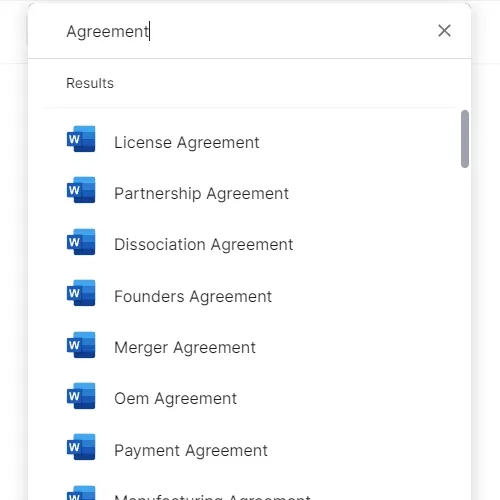
Download or open template

Access over 3,000+ business and legal templates for any business task, project or initiative.

2
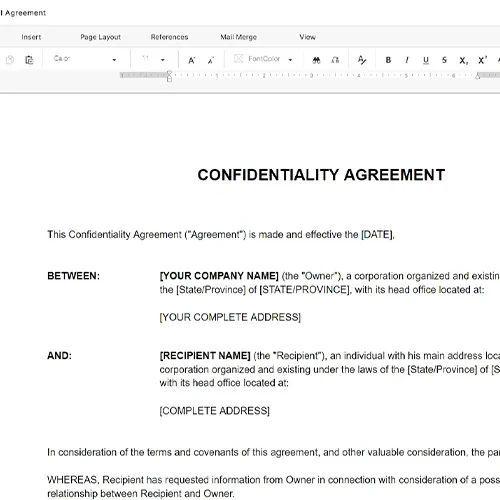
Edit and fill in the blanks with AI

Customize your ready-made business document template and save it in the cloud.

3
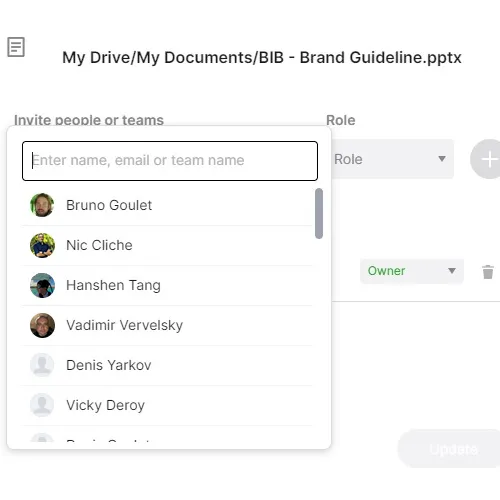
Save, Share, Send, Sign

Share your files and folders with your team. Create a space of seamless collaboration.

Save time, save money, and create top-quality documents.

★★★★★

"Fantastic value! I'm not sure how I'd do without it. It's worth its weight in gold and paid back for itself many times."

Managing Director · Mall Farm
Robert Whalley
Managing Director, Mall Farm Proprietary Limited
★★★★★

"I have been using Business in a Box for years. It has been the most useful source of templates I have encountered. I recommend it to anyone."

Business Owner · 4+ years
Dr Michael John Freestone
Business Owner
★★★★★

"It has been a life saver so many times I have lost count. Business in a Box has saved me so much time and as you know, time is money."

Owner · Upstate Web
David G. Moore Jr.
Owner, Upstate Web

Run your business with a system — not scattered tools

Stop downloading documents. Start operating with clarity. Business in a Box gives you the Business Operating System used by over 250,000 companies worldwide to structure, run, and grow their business.

Start free · No credit card required