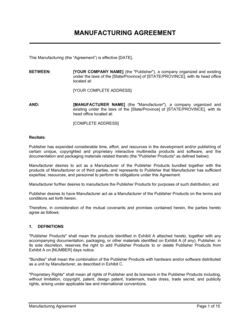
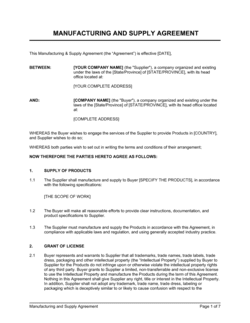
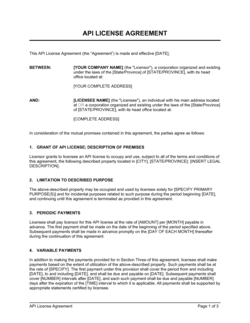
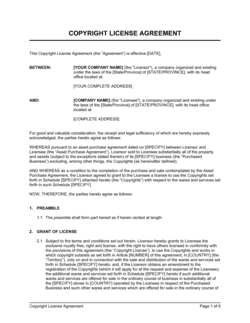
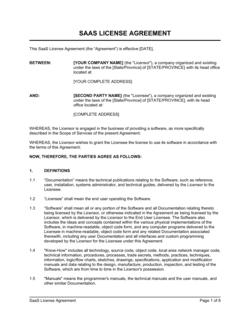
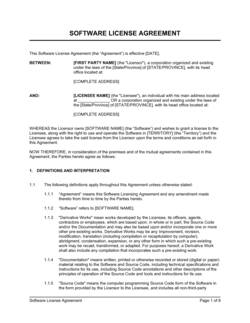
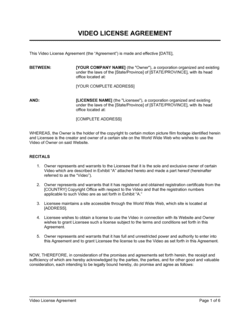
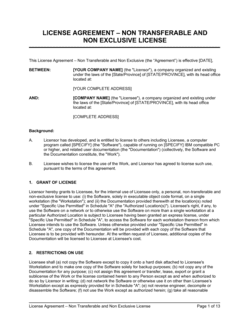
Manufacturing License Agreement Template

Free Word download • Edit online • Save & share with Drive • Export to PDF

3 pages25–30 min to fillDifficulty: StandardSignature requiredLegal review recommended
Learn more ↓
FreeManufacturing License Agreement Template

At a glance

What it is
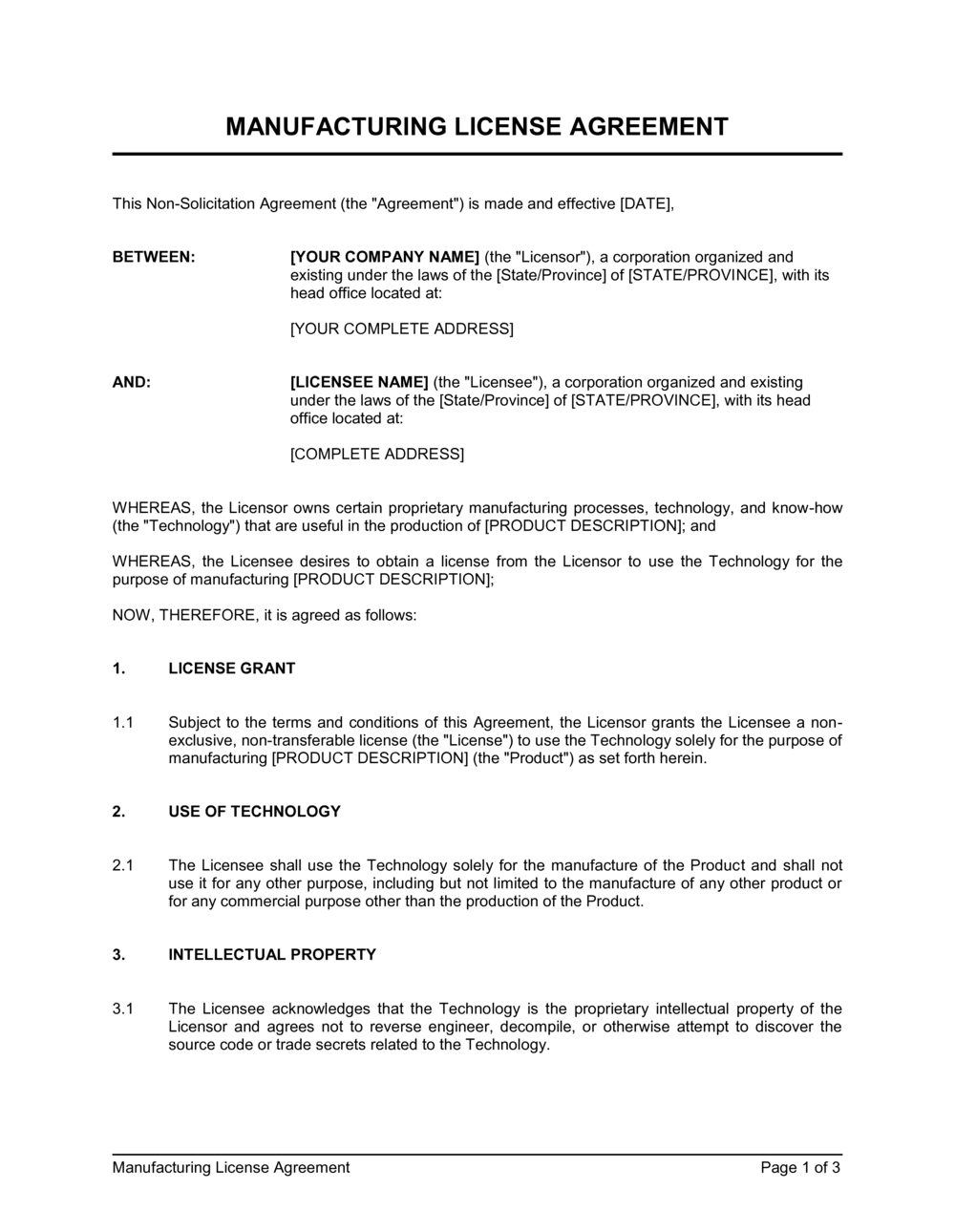
A Manufacturing License Agreement is a legally binding contract in which an intellectual property owner (the licensor) grants a manufacturer (the licensee) the right to produce goods using the licensor's patents, trade secrets, designs, or trademarks. This free Word download covers the full scope of a standard manufacturing license — territory, royalties, quality standards, audit rights, and termination — in a single document you can edit online and export as PDF.
When you need it
Use it when you own a product design, patent, or trade secret and want a third-party manufacturer to produce goods on your behalf, or when you are a manufacturer being granted rights to produce another party's proprietary product. It is also the appropriate document when expanding production into a new geography through a local manufacturing partner.
What's inside
Grant of license and scope, territory and exclusivity, royalty rates and payment schedule, quality control and inspection rights, IP ownership and protection, sublicensing restrictions, confidentiality, representations and warranties, indemnification, term, and termination conditions.

What is a Manufacturing License Agreement?

A Manufacturing License Agreement is a legally binding contract in which an intellectual property owner — the licensor — grants a manufacturer — the licensee — the right to produce goods using the licensor's patents, trade secrets, proprietary designs, or trademarks. Unlike a simple production contract where a manufacturer is paid a fee to make goods on behalf of an IP owner, a manufacturing license grants the licensee an independent legal right to use the licensed IP, typically in exchange for ongoing royalty payments. The agreement defines the territory where manufacturing is permitted, the exclusivity of the grant, the quality standards the licensee must meet, the licensor's audit rights over production records, and the conditions under which the arrangement can be terminated.

Why You Need This Document

Without a manufacturing license agreement, allowing a third party to produce goods using your intellectual property is legally equivalent to surrendering control of it. A manufacturer without a formal license has no defined obligation to maintain quality standards, no accountability for royalty reporting, and no restriction on sublicensing your IP to additional manufacturers. The consequences range from brand damage caused by off-spec products to complete loss of trade secret protection if a court finds that confidential manufacturing know-how was shared without adequate protective measures. For manufacturers, operating without a signed agreement means producing goods with no documented legal right to use the underlying IP — exposure that becomes critical if the licensor is acquired, enters insolvency, or disputes the scope of the arrangement. This template gives both parties a clear, enforceable framework that protects the licensor's IP, ensures the licensee's production rights are documented, and establishes the royalty, quality, and termination mechanics needed to manage the relationship for its full term.

Which variant fits your situation?

If your situation is…Use this template
Granting manufacturing rights in a single country onlyManufacturing License Agreement (Single Territory)
Allowing the manufacturer to sell directly as well as produceManufacturing and Distribution License Agreement
Licensing software or firmware embedded in manufactured goodsTechnology License Agreement
Licensing a brand name rather than a production process or patentTrademark License Agreement
Engaging a manufacturer for a single production run with no ongoing royaltiesContract Manufacturing Agreement
Cross-licensing manufacturing IP between two companies mutuallyCross-License Agreement
Granting exclusive worldwide manufacturing rights with minimum royalty guaranteesExclusive License Agreement

Common mistakes to avoid

❌ Vague description of licensed IP

Why it matters: If the licensed IP is not precisely identified by patent number, trade secret category, or trademark registration, the scope of the license is disputed the moment a new product variation or process improvement emerges.

Fix: Attach a Schedule A listing every IP asset by its formal identifier. Update the schedule by written amendment whenever new IP is added to or removed from the license.

❌ Exclusive license with no minimum royalty

Why it matters: An exclusive license without a minimum royalty allows the licensee to block all other manufacturers in the territory while producing nothing — costing the licensor both income and market development.

Fix: Pair every exclusive grant with an annual minimum royalty and a right to convert to non-exclusive or terminate if minimums are not met within a cure period.

❌ No quality control or sample approval process

Why it matters: Without the right to approve pre-production samples and conduct ongoing inspections, the licensor cannot protect the reputation of its brand or the safety profile of its patented design.

Fix: Include a production sample approval process in the quality control clause and require written licensor sign-off before the first production run commences.

❌ Undefined or uncapped net sales deductions

Why it matters: Royalties calculated on 'Net Sales' without a defined deduction list can legally be reduced by freight, discounts, returns, taxes, and rebates — cutting the effective royalty base by 20–40%.

Fix: Define every permitted deduction explicitly and cap total deductions at a fixed percentage of gross sales, typically 8–12%.

❌ No post-termination confidentiality obligation

Why it matters: Trade secrets and manufacturing know-how disclosed during the agreement become freely usable by the licensee the day a confidentiality clause without a survival provision expires.

Fix: Include a survival clause specifying that confidentiality obligations continue for at least 5 years after termination — or indefinitely for trade secrets.

❌ Omitting an improvements clause

Why it matters: Licensees often develop valuable process improvements during production. Without an improvements clause, ownership defaults to the licensee under patent law in most jurisdictions, leaving the licensor unable to use enhancements to its own technology.

Fix: Specify improvements ownership and include a license-back provision requiring the licensee to grant the licensor a non-exclusive, royalty-free right to use any improvements developed under the agreement.

The 10 key clauses, explained

Grant of license

In plain language: Defines exactly what rights are being granted — to manufacture, have manufactured, use, and sell — and specifies whether the license is exclusive or non-exclusive.

Sample language
Licensor hereby grants to Licensee a [exclusive / non-exclusive], non-transferable license under the Licensed IP to manufacture, have manufactured, use, and sell the Licensed Products solely within the Territory during the Term.

Common mistake: Using 'make and sell' without specifying 'have manufactured' — omitting this means the licensee cannot legally engage subcontractors to assist in production.

Territory and field of use

In plain language: Limits where and in what application the licensee may use the licensed rights, preventing unauthorized geographic or market expansion.

Sample language
The license granted herein is limited to the Territory of [COUNTRY / REGION] and the Field of Use of [PRODUCT CATEGORY / APPLICATION]. Any manufacture or sale outside the Territory or Field of Use requires the prior written consent of Licensor.

Common mistake: Leaving territory undefined or writing 'worldwide' without a corresponding minimum royalty. An uncapped worldwide exclusive with no minimum gives the licensee the right to sit on the IP indefinitely.

Royalties, minimum royalties, and reporting

In plain language: Sets the royalty rate or per-unit fee, establishes a minimum periodic payment, and requires the licensee to submit periodic royalty reports with supporting sales or production data.

Sample language
Licensee shall pay Licensor a royalty of [X]% of Net Sales of Licensed Products, with a minimum annual royalty of $[AMOUNT] payable within [30] days of each calendar year-end. Licensee shall submit quarterly royalty reports detailing units produced, units sold, Net Sales, and royalties due.

Common mistake: Failing to define 'Net Sales' — deductions for freight, returns, and discounts can differ by 15–30% depending on how the term is constructed, directly affecting royalty income.

Quality control and standards

In plain language: Requires the licensee to manufacture products according to the licensor's specifications, grants the licensor the right to approve product samples, and establishes a corrective action process for non-conforming goods.

Sample language
Licensee shall manufacture Licensed Products in strict conformance with the Specifications set out in Schedule B. Licensor shall have the right to inspect a representative sample of each production run. Non-conforming products must be remediated or destroyed within [30] days of notice.

Common mistake: Omitting a sample approval process before full production runs. Without pre-production approval rights, the licensor has no practical leverage to enforce quality standards until substandard goods are already in the market.

Audit rights

In plain language: Gives the licensor the right to audit the licensee's production and financial records to verify royalty calculations, with rules on frequency, notice, and cost-sharing.

Sample language
Licensor shall have the right, upon [15] days' written notice, to audit Licensee's books and records relating to the manufacture and sale of Licensed Products no more than once per calendar year. If an audit reveals an underpayment exceeding [5]%, the cost of the audit shall be borne by Licensee.

Common mistake: No audit right at all, or a provision requiring 90 days' advance notice. Without meaningful audit rights, royalty underpayment goes unchecked — and underpayment of 10–20% is common in manufacturing arrangements without regular audits.

Intellectual property ownership and protection

In plain language: Confirms that the licensor retains ownership of all licensed IP, requires the licensee to mark products with appropriate patent or trademark notices, and obligates the licensee to notify the licensor of known infringement by third parties.

Sample language
Licensee acknowledges that all Licensed IP is and shall remain the exclusive property of Licensor. Licensee shall mark all Licensed Products with the patent numbers or trademark registrations specified by Licensor. Licensee shall promptly notify Licensor of any suspected infringement of Licensed IP by third parties.

Common mistake: No product marking requirement. Unmarked products may weaken the licensor's patent enforcement position and, in the US, can limit recovery of damages for patent infringement.

Improvements and feedback

In plain language: Addresses who owns modifications or enhancements developed by the licensee during the agreement, and whether those improvements are licensed back to the licensor.

Sample language
Any Improvements to the Licensed IP developed by Licensee during the Term shall be promptly disclosed to Licensor. Licensee hereby grants Licensor a non-exclusive, royalty-free, perpetual license to use such Improvements. Ownership of Improvements shall vest in [LICENSOR / LICENSEE / jointly] as specified in Schedule C.

Common mistake: Granting the licensor ownership of all improvements without compensation. Licensees who invest in product development and are required to assign improvements without consideration have little incentive to innovate — and may challenge the clause.

Confidentiality

In plain language: Prevents the licensee from disclosing the licensor's trade secrets, formulas, technical know-how, and proprietary manufacturing processes to third parties.

Sample language
Licensee shall hold in strict confidence all Confidential Information of Licensor and shall not disclose it to any third party without Licensor's prior written consent. Licensee shall restrict access to Confidential Information to employees with a need to know and shall require those employees to be bound by equivalent confidentiality obligations.

Common mistake: No post-termination confidentiality tail. Without a survival clause, confidentiality obligations expire with the agreement — leaving trade secrets unprotected the day the contract ends.

Term and termination

In plain language: Sets the initial term, renewal conditions, and the events that allow either party to terminate early — including material breach, insolvency, or failure to meet minimum royalties.

Sample language
This Agreement shall have an initial Term of [X] years commencing on the Effective Date, and shall renew automatically for successive [1]-year periods unless either party provides [90] days' written notice of non-renewal. Either party may terminate for material breach upon [30] days' written notice if the breach is not cured within the notice period. Licensor may terminate immediately upon Licensee's insolvency or failure to pay minimum royalties.

Common mistake: Automatic renewal with no notice period. A licensee that misses a notice deadline can be locked into another full term with unfavorable economics.

Representations, warranties, and indemnification

In plain language: Each party warrants its authority to enter the agreement; the licensor warrants ownership of the licensed IP; and each party agrees to indemnify the other for breaches caused by its own conduct.

Sample language
Licensor represents and warrants that it has full right and authority to grant the license herein and that, to Licensor's knowledge, the Licensed IP does not infringe any third-party intellectual property rights. Each party shall indemnify, defend, and hold harmless the other from and against any claims arising from the indemnifying party's breach of this Agreement or its own negligence.

Common mistake: Licensor giving a blanket warranty of non-infringement without a knowledge qualifier. An unqualified IP warranty exposes the licensor to liability for third-party patent claims it had no way to anticipate.

How to fill it out

  1. 1

    Identify the parties and licensed IP precisely

    Enter the full legal entity names of the licensor and licensee, their registered addresses, and a precise description of the licensed IP — patent numbers, trade secret categories, or trademark registrations as applicable.

    💡 Attach a Schedule A listing every patent number, trade secret category, and trademark registration covered. Vague IP descriptions are the most common source of post-signature disputes.

  2. 2

    Define the territory and field of use

    Specify the exact countries or regions where manufacturing and, if applicable, sales are permitted. If the license is field-limited, define the product categories or applications with enough precision to exclude adjacent uses.

    💡 Use ISO country codes for multi-country territories to avoid ambiguity between common and legal names — 'Korea' vs. 'Republic of Korea' has caused real disputes.

  3. 3

    Set the exclusivity terms and minimum royalties

    Decide whether the license is exclusive or non-exclusive. If exclusive, set a minimum annual royalty that compensates the licensor for giving up the right to license others in the same territory.

    💡 A minimum royalty equal to 50–70% of projected Year 1 royalties is a common starting point for exclusive manufacturing licenses — enough to protect the licensor without making the deal unworkable for the licensee.

  4. 4

    Draft the royalty rate, definition of net sales, and reporting schedule

    Enter the royalty percentage or per-unit fee, define Net Sales explicitly (listing each permitted deduction), and set the quarterly or monthly reporting and payment deadlines.

    💡 Cap combined deductions from Net Sales at a percentage — e.g., no more than 10% total — to prevent the royalty base from being engineered down to near zero.

  5. 5

    Attach detailed quality specifications as a schedule

    Move all technical specifications, testing protocols, approved materials, and manufacturing process requirements into Schedule B. Cross-reference that schedule in the quality control clause.

    💡 Include a sample approval process requiring written licensor sign-off before the first production run and before any material change to materials or processes.

  6. 6

    Set the audit rights parameters

    Define notice period, frequency, scope, and cost allocation for audits. Specify what records must be kept and for how long — typically 3–5 years after the relevant royalty period.

    💡 15 days' notice and once-per-year frequency is the standard market position; requiring 90 days makes audits practically impossible.

  7. 7

    Define the term, renewal, and termination triggers

    Set the initial term length, automatic renewal provisions, notice period for non-renewal, and the specific events that trigger early termination — including breach cure periods, insolvency, and minimum royalty failure.

    💡 Include a post-termination wind-down period of 60–90 days allowing the licensee to sell existing finished inventory, with royalties payable on those final sales.

  8. 8

    Execute before production begins and register where required

    Both parties must sign before the licensee begins any manufacturing activity. In some jurisdictions, recording the license against the underlying patent or trademark registration is required for it to be enforceable against third parties.

    💡 In the US, recording a patent license with the USPTO is optional but recommended for exclusive licenses — it provides constructive notice against subsequent licensees.

Frequently asked questions

What is a manufacturing license agreement?

A manufacturing license agreement is a legally binding contract in which an intellectual property owner (the licensor) grants a manufacturer (the licensee) the right to produce goods using the licensor's patents, trade secrets, designs, or trademarks. It defines the territory, exclusivity, royalty structure, quality standards, and termination conditions — giving the licensor ongoing control over how its IP is used in production while allowing the licensee to manufacture and sell the licensed products.

What is the difference between a manufacturing license agreement and a contract manufacturing agreement?

A contract manufacturing agreement engages a third-party manufacturer to produce goods on behalf of the IP owner, typically as a work-for-hire arrangement — the manufacturer charges a production fee and has no independent right to use the IP. A manufacturing license agreement grants the manufacturer independent rights to produce and often to sell the licensed product, with royalties flowing back to the IP owner. Use a contract manufacturing agreement when you want full control and ownership of output; use a manufacturing license when you want to grant the manufacturer a degree of commercial independence.

Does a manufacturing license agreement need to be registered?

In the US, recording a patent license with the USPTO is not mandatory but is strongly recommended for exclusive licenses — it provides constructive notice that protects the licensee against a subsequent conflicting license. In some countries, including Germany, China, and several other jurisdictions, recording a patent or trademark license is required for the license to be enforceable against third parties. Consider consulting local counsel in each jurisdiction where the licensed manufacturing will occur.

What royalty rate is standard for a manufacturing license?

Manufacturing license royalty rates vary widely by industry, IP type, and exclusivity. Consumer goods patents typically attract royalties of 2–8% of net sales. Pharmaceutical and chemical patents can run 5–15%. Technology and software-embedded manufacturing licenses often use a per-unit fee rather than a percentage. The exclusive premium — the additional rate charged for granting sole manufacturing rights — is commonly 1.5–2× the non-exclusive rate. Minimum royalties should be negotiated alongside the rate.

Can a manufacturing licensee sublicense the rights to another manufacturer?

Not without explicit permission. A standard manufacturing license agreement prohibits sublicensing without the licensor's prior written consent. Allowing sublicensing without controls creates a chain of manufacturers the licensor cannot audit or hold accountable for quality. If the licensee needs to engage subcontractors, include a specific "have manufactured" right in the grant clause rather than a general sublicensing permission.

How should quality control be handled in a manufacturing license agreement?

Quality control should cover three stages: pre-production approval of specifications and materials, production sample approval before each new run, and post-production inspection and audit rights. Specifications should be attached as a schedule rather than embedded in the body of the agreement so they can be updated without amending the main contract. Non-conforming goods should require remediation or destruction within a defined period, and the licensor should retain the right to terminate for persistent quality failures.

What happens to licensed products when a manufacturing license agreement terminates?

On termination, the licensee's right to manufacture ends immediately unless the agreement includes a wind-down period. A 60–90 day sell-off period for finished goods inventory is common, with royalties payable on those final sales. The licensee is typically required to destroy or return any remaining work-in-progress and all confidential materials. Tooling and molds paid for by the licensor should revert to the licensor; those paid for by the licensee are a negotiated point.

Who owns improvements the manufacturer makes to the licensed product?

Ownership of improvements developed by the licensee defaults to the licensee under patent law in most jurisdictions unless the agreement provides otherwise. A well-drafted improvements clause typically specifies that the licensor owns improvements to the core licensed IP, that the licensee owns process improvements unrelated to the core IP, and that each party grants the other a non-exclusive, royalty-free license-back to improvements it does not own. This balance protects the licensor's foundational IP while giving the licensee incentive to invest in production efficiency.

What terms should be in a manufacturing license agreement's termination clause?

A complete termination clause addresses: the initial term and auto-renewal notice period; termination for material breach with a 30-day cure period; immediate termination triggers such as insolvency, change of control, or failure to meet minimum royalties; post-termination wind-down provisions for existing inventory; and survival of confidentiality, audit, and IP ownership clauses after expiration. Missing any of these leaves gaps that can result in a licensee continuing to manufacture after termination or a licensor losing access to royalty records the moment the agreement ends.

Do I need a lawyer to create a manufacturing license agreement?

For straightforward domestic manufacturing licenses involving modest royalty volumes and a trusted counterparty, a high-quality template is a reasonable starting point. Legal review is strongly recommended when the deal is exclusive, the territory spans multiple countries, annual royalties exceed $50,000, the licensed IP includes trade secrets, or enforceability in a specific jurisdiction is critical. A 2–4 hour attorney review typically costs $600–$1,500 and is worthwhile given the long-term financial and IP protection stakes of most manufacturing license arrangements.

How this compares to alternatives

vs Contract Manufacturing Agreement

A contract manufacturing agreement is a work-for-hire arrangement — the manufacturer produces goods to the IP owner's specification for a fee, with no independent right to use the IP. A manufacturing license agreement grants the manufacturer an independent right to produce and often sell the licensed product, with royalties flowing to the IP owner. Choose a contract manufacturing agreement when you want full ownership and control of all output; choose a manufacturing license when you want to grant the manufacturer commercial rights to the technology.

vs Technology License Agreement

A technology license agreement covers the right to use software, algorithms, or technical know-how — typically for internal use or integration into a third party's product. A manufacturing license agreement specifically authorizes production of physical goods using licensed IP, and adds quality control, production audit rights, and per-unit royalty mechanisms that a standard technology license does not include. Use a technology license for software and digital IP; use a manufacturing license when physical production is the core purpose.

vs Exclusive License Agreement

An exclusive license agreement can cover any IP right — distribution, sales, or use — granted on an exclusive basis. A manufacturing license agreement is specifically structured around production, with quality control schedules, inspection rights, and per-unit royalty reporting. An exclusive manufacturing license combines both: it grants exclusive production rights within the manufacturing license framework and is the appropriate document when a single licensee will be the sole authorized producer.

vs Trademark License Agreement

A trademark license agreement grants the right to use a brand name or logo on products — it does not convey rights to any production process, patent, or trade secret. A manufacturing license agreement grants the right to produce goods using the licensor's IP, which may or may not include a trademark. Where manufacturing rights include the right to apply a brand name to the product, both documents are typically needed, or the trademark license provisions are incorporated as a schedule within the manufacturing license.

Industry-specific considerations

Consumer Goods and Retail

Brand owners license product designs and trademarks to overseas factories with strict quality control schedules and per-unit royalty structures tied to seasonal production volumes.

Industrial Manufacturing

Patent holders license proprietary processes, tooling designs, or material formulations to component manufacturers, with audit rights covering both financial records and production facility access.

Technology Hardware

Technology companies license embedded firmware, chipset designs, or proprietary interfaces to hardware manufacturers, combining a manufacturing license with a technology license and strict field-of-use restrictions.

Pharmaceutical and Life Sciences

Drug patent holders license manufacturing rights to generic producers under highly regulated quality frameworks, with royalty rates negotiated against regulatory approval milestones and minimum batch commitments.

Jurisdictional notes

United States

US patent licenses are governed primarily by federal patent law, with contract interpretation falling to state law as specified in the governing law clause. Exclusive patent licenses should be recorded with the USPTO to provide constructive notice against subsequent licensees. Non-compete and field-of-use restrictions are generally enforceable. California's strict trade secret protections under the DTSA apply even without a specific choice of California law.

Canada

Canadian patent licenses are governed by the Patent Act and general contract law, which varies by province. Exclusive licenses should be recorded with the Canadian Intellectual Property Office to be enforceable against third-party assignees. Quebec-based manufacturing partners require that the agreement be available in French for provincially regulated enterprises. Technology transfer agreements may require review under the Investment Canada Act if the licensor is a foreign entity.

United Kingdom

UK patent licenses should be recorded at the UK Intellectual Property Office — registration reduces the stamp duty on royalty payments and protects the licensee against subsequent conflicting licenses. Post-Brexit, separate recording with the UKIPO and EUIPO is required for coverage in both territories. The UK's Trade Secrets (Enforcement, etc.) Regulations 2018 provide statutory protection for manufacturing know-how disclosed under the agreement.

European Union

EU manufacturing licenses must comply with the EU Technology Transfer Block Exemption Regulation (TTBER), which sets safe-harbor rules for IP licensing between competitors and non-competitors. Exclusive manufacturing licenses that restrict passive sales within the EU may violate Article 101 TFEU competition rules. GDPR applies if the agreement involves any exchange of personal data in connection with royalty reporting or quality audits. Recording requirements vary by member state.

Template vs lawyer — what fits your deal?

PathBest forCostTime
Use the templateDomestic non-exclusive manufacturing licenses with royalties under $25,000 per year and a known, trusted manufacturing partnerFree1–2 hours
Template + legal reviewExclusive licenses, multi-country territories, annual royalties of $25,000–$250,000, or agreements involving trade secrets$600–$1,5003–5 days
Custom draftedHigh-value or cross-border exclusive licenses, pharmaceutical or regulated industry manufacturing, or complex improvements and sublicensing structures$3,000–$10,000+2–6 weeks

Glossary

Licensor
The party that owns the intellectual property and grants permission for a third party to use it under defined conditions.
Licensee
The party receiving the right to manufacture goods using the licensor's intellectual property, subject to the agreement's terms.
Licensed IP
The specific patents, trade secrets, designs, trademarks, or technical know-how that the licensor permits the licensee to use in manufacturing.
Royalty Rate
The percentage of net sales — or a fixed amount per unit produced — that the licensee pays the licensor in exchange for the manufacturing right.
Minimum Royalty
A floor payment the licensee must make each period regardless of actual production or sales volume, ensuring the licensor receives baseline compensation.
Exclusivity
A provision granting the licensee the sole right to manufacture the licensed product within a defined territory, preventing the licensor from authorizing competing manufacturers in the same area.
Territory
The geographic region in which the licensee is authorized to manufacture and, if applicable, sell the licensed products.
Quality Standards
Specifications, materials, processes, and testing requirements the licensed products must meet, as defined and enforced by the licensor.
Audit Right
The licensor's contractual right to inspect the licensee's production records and financial books to verify accurate royalty reporting.
Sublicense
A secondary license granted by the licensee to a third party to use the licensed IP — typically prohibited without the licensor's prior written consent.
Field of Use
A restriction limiting the licensee's rights to a specific application, product category, or industry, even where the underlying IP could be used more broadly.
Improvements
Modifications or enhancements to the licensed IP developed during the agreement — the ownership and licensing-back of improvements is a common negotiating point.

Part of your Business Operating System

This document is one of 3,000+ business & legal templates included in Business in a Box.

  • Fill-in-the-blanks — ready in minutes
  • 100% customizable Word document
  • Compatible with all office suites
  • Export to PDF and share electronically

Create your document in 3 simple steps.

From template to signed document — all inside one Business Operating System.
1
Download or open template

Access over 3,000+ business and legal templates for any business task, project or initiative.

2
Edit and fill in the blanks with AI

Customize your ready-made business document template and save it in the cloud.

3
Save, Share, Send, Sign

Share your files and folders with your team. Create a space of seamless collaboration.

Save time, save money, and create top-quality documents.

★★★★★

"Fantastic value! I'm not sure how I'd do without it. It's worth its weight in gold and paid back for itself many times."

Managing Director · Mall Farm
Robert Whalley
Managing Director, Mall Farm Proprietary Limited
★★★★★

"I have been using Business in a Box for years. It has been the most useful source of templates I have encountered. I recommend it to anyone."

Business Owner · 4+ years
Dr Michael John Freestone
Business Owner
★★★★★

"It has been a life saver so many times I have lost count. Business in a Box has saved me so much time and as you know, time is money."

Owner · Upstate Web
David G. Moore Jr.
Owner, Upstate Web

Run your business with a system — not scattered tools

Stop downloading documents. Start operating with clarity. Business in a Box gives you the Business Operating System used by over 250,000 companies worldwide to structure, run, and grow their business.

Start free · No credit card required