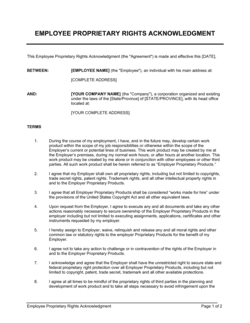
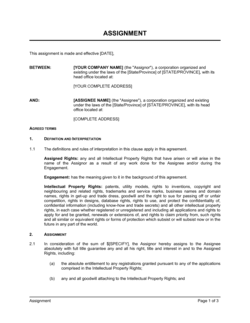
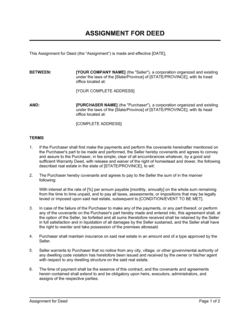
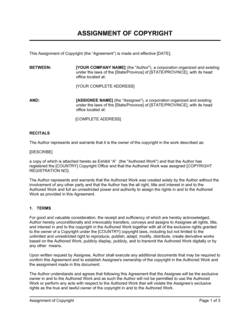
- Assignment
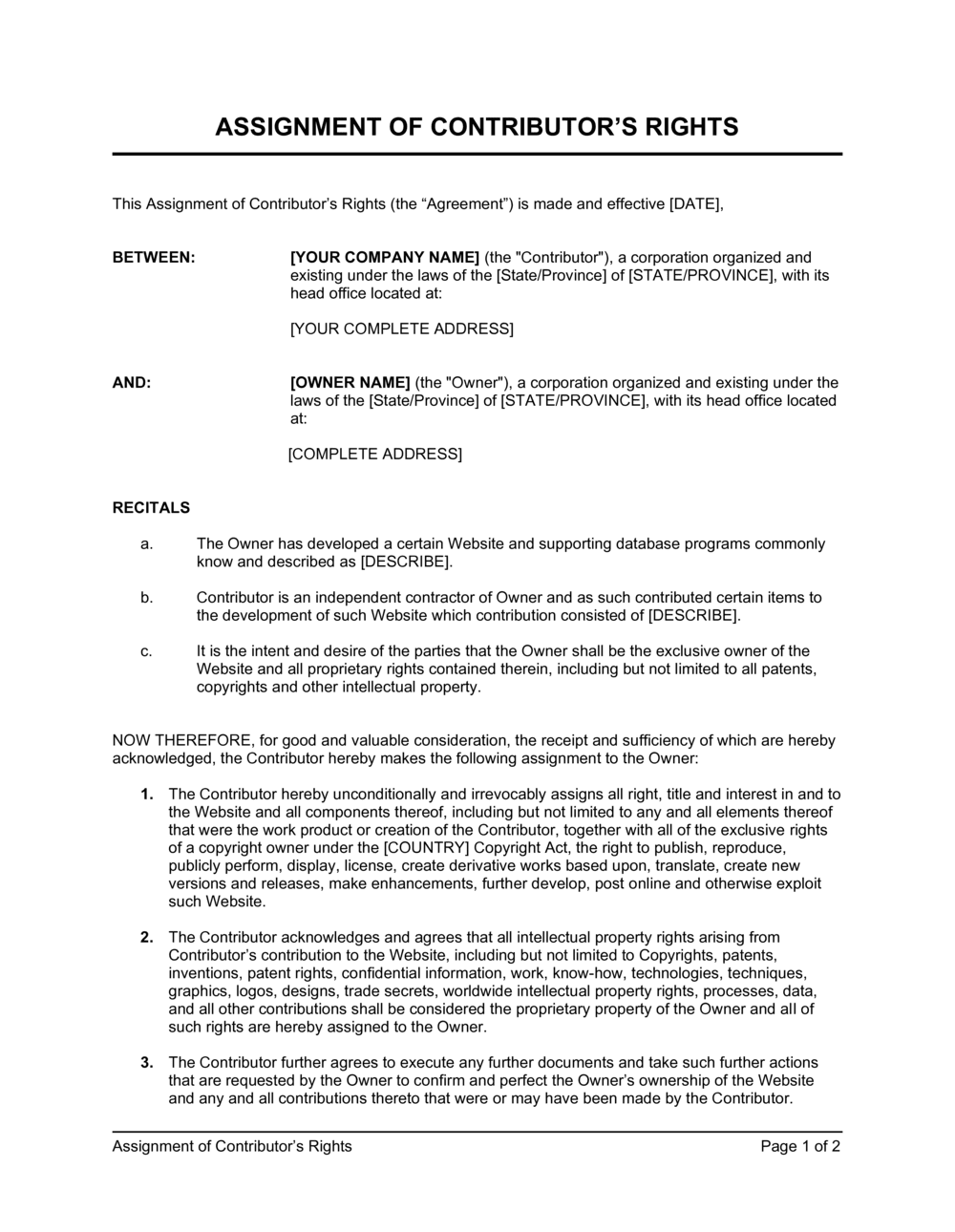
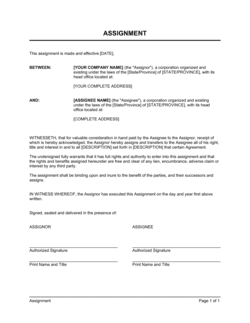
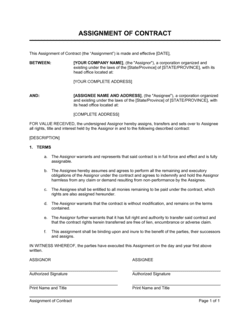
- A complete, permanent transfer of ownership of intellectual property rights from the assignor to the assignee — distinct from a license, which is a permission to use without transferring ownership.
- Assignor
- The contributor or creator who transfers their intellectual property rights under the agreement.
- Assignee
- The company or individual receiving ownership of the intellectual property rights being transferred.
- Work Product
- All materials, inventions, code, designs, writings, and other output created by the contributor in the scope of their engagement.
- Moral Rights
- Rights that protect the personal and reputational connection between a creator and their work — including the right of attribution and the right of integrity — recognized in Canada, the EU, and the UK but not in the US.
- Consideration
- Something of value exchanged between parties that makes a contract legally enforceable — in an IP assignment, this is typically the payment already made or a nominal additional sum.
- Power of Attorney
- A clause authorizing the assignee to execute registration documents (patent filings, copyright registrations) on the assignor's behalf if the assignor is unavailable or unwilling to cooperate.
- Representations and Warranties
- Factual statements made by the assignor confirming they created the work independently, that it does not infringe third-party rights, and that no conflicting encumbrances exist.
- Indemnification
- A clause obligating one party to cover the other's losses, costs, and legal fees if a representation or warranty proves false — here, if the assigned work infringes a third-party IP right.
- Effective Date
- The specific date on which the rights transfer takes effect, which may differ from the date the agreement is signed.
- Prior Inventions
- IP the contributor created before the engagement began, which they expressly exclude from the assignment — listed in a schedule to the agreement.
- Moral Rights Waiver
- A contractual provision in which the creator agrees not to exercise their moral rights against the assignee — required in Canada and the UK where moral rights cannot be fully assigned, only waived.