- Licensed Mark
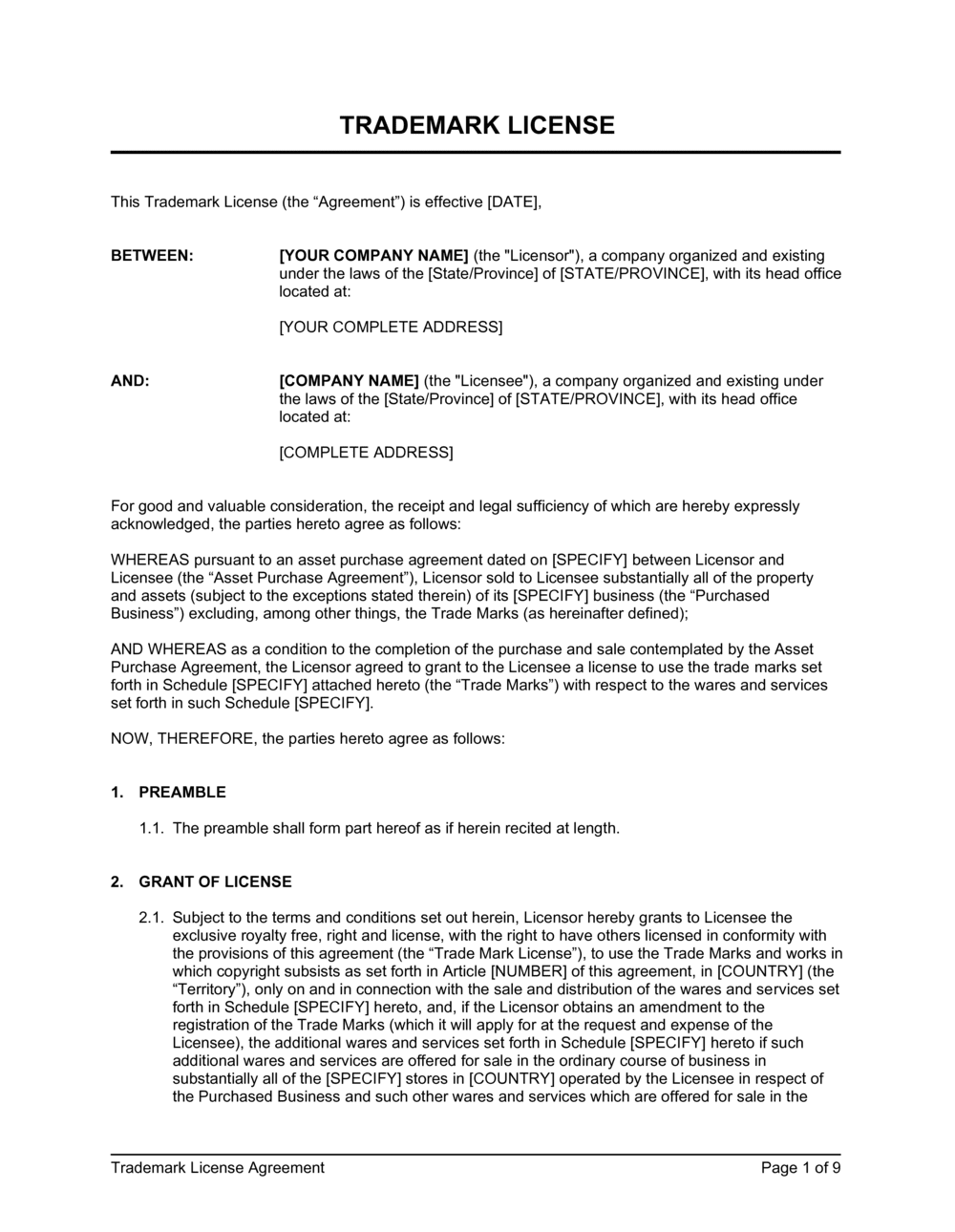
- The specific registered trade mark — including any logo, word, or device — that the licensor permits the licensee to use under the agreement.
- Licensor
- The owner of the trade mark who grants permission for another party to use it under agreed conditions.
- Licensee
- The business or individual receiving the right to use the licensor's trade mark within the scope defined in the agreement.
- Territory
- The geographic area — a country, region, or group of countries — within which the licensee is authorized to use the mark.
- Exclusivity
- A term indicating whether the licensee is the sole authorized user in the territory (exclusive) or whether the licensor may grant the same rights to others (non-exclusive).
- Royalty Rate
- The fee paid by the licensee to the licensor for use of the mark, typically expressed as a percentage of net sales or a fixed fee per unit.
- Quality Control
- Contractual standards and approval processes the licensor imposes on the licensee to ensure goods or services bearing the mark meet defined quality benchmarks.
- Naked License
- A trade mark license that lacks adequate quality control provisions — which can result in the licensor losing rights to the mark in many jurisdictions.
- Sublicensing
- The licensee's right to grant a further license of the mark to a third party, which typically requires the licensor's prior written consent.
- Post-Termination Obligations
- Requirements that apply after the agreement ends, such as ceasing all use of the mark, destroying marked inventory, and returning brand assets.