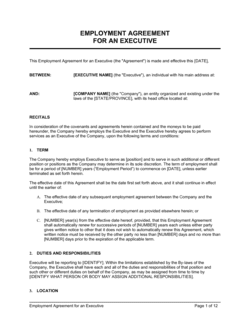
Invention Agreement Template

Free Word download β€’ Edit online β€’ Save & share with Drive β€’ Export to PDF

7 pagesβ€’25–35 min to fillβ€’Difficulty: Complexβ€’Signature requiredβ€’Legal review recommended
Learn more ↓
FreeInvention Agreement Template

At a glance

What it is
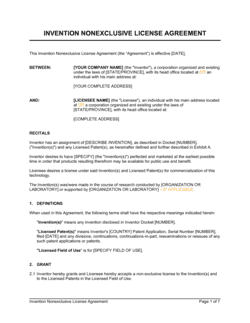
An Invention Agreement is a legally binding contract between an employer or company and an employee, founder, or contractor that transfers ownership of any inventions, discoveries, and related intellectual property created during the working relationship to the company. This free Word download gives you a structured, attorney-reviewed starting point you can edit online and export as PDF to sign before a new hire's first day or at the start of any engagement involving creative or technical work.
When you need it
Use it before onboarding any employee, co-founder, or contractor who will perform research, engineering, software development, product design, or any other work where patentable or protectable inventions may result. It is especially critical before a company raises outside investment, files a patent, or pursues an acquisition β€” due diligence in all three scenarios will surface any gap in IP ownership.
What's inside
The agreement covers the scope of assigned inventions, a disclosure and cooperation obligation, a carve-out schedule for prior inventions, moral rights waivers, confidentiality of invention-related information, and the governing law that determines enforceability. It also includes a work-made-for-hire clause and a power of attorney to execute patent filings on the company's behalf.

What is an Invention Agreement?

An Invention Agreement is a legally binding contract between a company and an employee, contractor, or co-founder that transfers ownership of inventions, discoveries, and related intellectual property created during the working relationship to the company. Unlike a general IP clause buried in an employment contract, a standalone invention agreement goes into precise detail: it defines exactly which inventions are covered, carves out the inventor's pre-existing work, imposes a mandatory disclosure duty, and includes a power of attorney so the company can file patents even after the relationship ends. The agreement operates prospectively β€” capturing rights in inventions that do not yet exist at the time of signing β€” and is typically executed before day one of any technical engagement.

Why You Need This Document

Without a signed invention agreement, your company may not own the technology it paid to develop. Under US law, independent contractors own their inventions by default, and employees retain rights to inventions made outside the narrow scope of their duties β€” meaning a developer who builds your core algorithm at home, on a weekend, using personal hardware, may hold a legally defensible ownership claim. That gap surfaces at the worst possible moment: during investor due diligence before a funding round, in a patent filing that requires a clean chain of title, or in an acquisition where a single unsigned agreement can reduce the deal price or kill the transaction entirely. A properly executed invention agreement β€” signed before the first line of code is written or the first experiment is run β€” closes all four exposure points for the cost of 30 minutes and, where stakes are high, a focused attorney review.

Which variant fits your situation?

If your situation is…Use this template
Onboarding a full-time employee who will work on product or engineeringEmployee Invention Agreement
Engaging an independent contractor on a technical projectContractor IP Assignment Agreement
Assigning a specific existing patent from an individual to a companyPatent Assignment Agreement
Protecting confidential business information alongside IP assignmentNon-Disclosure and IP Assignment Agreement
Bringing on a co-founder with technical responsibilitiesCo-Founder IP Assignment Agreement
Covering IP created during a research collaboration with a universityResearch Collaboration Agreement
Assigning all IP as part of a company acquisitionIP Purchase and Assignment Agreement

Common mistakes to avoid

❌ Using 'agrees to assign' instead of 'hereby assigns'

Why it matters: A future-tense assignment clause requires a separate, subsequent act of transfer β€” which the inventor may refuse to perform after leaving the company. Federal courts have voided patent assignments on this basis, leaving companies without ownership of their own technology.

Fix: Confirm the operative assignment clause uses present-tense language: 'Inventor hereby irrevocably assigns to Company all right, title, and interest.' Review this clause by name before every execution.

❌ Omitting the statutory carve-out in regulated states

Why it matters: California, Illinois, Minnesota, North Carolina, Washington, and Delaware each have statutes that limit employer invention assignments. An agreement that omits the required carve-out is voidable by the employee and exposes the company to liability for overreaching.

Fix: Include jurisdiction-specific carve-out language for every state where employees or contractors will physically perform work. For multi-state teams, addenda by state are cleaner than a single omnibus clause.

❌ Leaving the prior inventions schedule blank without a representation

Why it matters: A blank Schedule A creates ambiguity: it is unclear whether the inventor had no prior inventions or simply failed to list them. Acquirers and patent counsel will flag this gap in due diligence, sometimes blocking a deal.

Fix: Require the inventor to affirmatively represent in writing β€” either by listing prior inventions or by signing a statement that no prior inventions exist β€” before the agreement is executed.

❌ Signing after the employee's start date without fresh consideration

Why it matters: In common-law jurisdictions, an employee already working has provided no new consideration for post-start restrictions. Courts have voided IP assignment, non-compete, and confidentiality clauses signed on day two or later without a documented new benefit.

Fix: Execute the agreement before the first day of work. If circumstances require a later signature, document a concurrent benefit β€” a signing bonus, salary increase, or additional equity β€” as the fresh consideration.

❌ No post-termination cooperation or power-of-attorney clause

Why it matters: Without these provisions, a departing inventor can refuse to sign patent assignment documents, stalling prosecution for years and preventing the company from enforcing its IP against infringers.

Fix: Include both a post-termination cooperation obligation (with the company covering reasonable costs) and an irrevocable power of attorney triggered by the inventor's failure to respond within a fixed window.

❌ Applying a governing-law clause that conflicts with the inventor's work state

Why it matters: Choosing Delaware or New York law to govern an agreement with a California-based inventor does not override California Labor Code Β§2870. California courts apply local law regardless of the contract's choice-of-law clause, potentially voiding the entire assignment.

Fix: Select the governing law based on where the inventor performs work. If the team is distributed, consult counsel to determine which jurisdiction's carve-out statute is most restrictive and draft accordingly.

The 10 key clauses, explained

Parties and recitals

In plain language: Identifies the company and the inventor (employee, contractor, or founder) as legal parties and states the purpose of the agreement β€” obtaining assignment of IP as a condition of the working relationship.

Sample language
This Invention and Assignment Agreement ('Agreement') is entered into as of [DATE] between [COMPANY LEGAL NAME], a [STATE] [ENTITY TYPE] ('Company'), and [INVENTOR FULL NAME] ('Inventor'), in connection with Inventor's [employment / engagement] commencing [START DATE].

Common mistake: Using a trade name instead of the company's full registered legal name. A chain-of-title break at the parties clause can invalidate a patent assignment during due diligence.

Definition of covered inventions

In plain language: Specifies which inventions, discoveries, improvements, and developments fall within the scope of the assignment β€” typically those related to company business, made using company resources, or developed during working hours.

Sample language
Covered Inventions means all inventions, discoveries, developments, and improvements that Inventor makes, conceives, or reduces to practice (a) during the term of Inventor's relationship with Company, (b) using Company resources, equipment, or Confidential Information, or (c) relating to the Company's current or reasonably anticipated business.

Common mistake: Defining covered inventions so broadly that they extend to unrelated personal projects. Courts in California, Delaware, and several other states will void or limit overbroad definitions under statutory carve-out rules.

Assignment of inventions

In plain language: The operative clause transferring present and future ownership of all covered inventions from the inventor to the company at the moment of creation.

Sample language
Inventor hereby irrevocably assigns, and agrees to assign, to Company all right, title, and interest in and to all Covered Inventions, including all patent rights, trade secret rights, and other intellectual property rights therein, worldwide and in perpetuity.

Common mistake: Using 'agrees to assign' instead of 'hereby assigns.' 'Agrees to assign' creates a future obligation that requires a further act β€” 'hereby assigns' operates as a present automatic transfer effective at the moment of creation, which is critical for patent priority.

Work made for hire

In plain language: Establishes that all works created by the inventor within the scope of employment are works made for hire under applicable copyright law, with the company as the statutory author.

Sample language
To the fullest extent permitted by applicable law, all works of authorship created by Inventor within the scope of Inventor's [employment / engagement] with Company shall be deemed works made for hire, with Company as the author and owner of all copyright therein.

Common mistake: Omitting the work-made-for-hire clause and relying solely on the assignment clause. For contractors, copyright does not automatically vest in the company under US law without both a written agreement and a qualifying category β€” the WMFH clause closes this gap.

Prior inventions schedule

In plain language: Creates a schedule where the inventor lists inventions they own or co-own that predate the engagement and are excluded from the assignment β€” protecting the inventor's pre-existing IP from inadvertent transfer.

Sample language
Schedule A sets forth a complete list of all inventions that Inventor has made or conceived prior to the date of this Agreement that Inventor wishes to exclude from the assignment. If Schedule A is blank, Inventor represents that there are no such prior inventions.

Common mistake: Leaving Schedule A blank without requiring the inventor to affirmatively represent there are no prior inventions. A blank schedule creates ambiguity β€” a competitor or acquirer may dispute whether a pre-existing invention was intentionally excluded or simply forgotten.

Disclosure obligation

In plain language: Requires the inventor to promptly notify the company of any invention that may fall within the scope of the agreement, enabling the company to evaluate patent filings and assert its rights.

Sample language
During the term of this Agreement, Inventor shall promptly disclose in writing to Company's [Chief Technology Officer / Legal Department] any Covered Invention, including work-in-progress that may give rise to a Covered Invention, within [30] days of conception or reduction to practice.

Common mistake: Setting no disclosure deadline or making disclosure discretionary. Without a mandatory timeline, inventors may delay or omit disclosures, causing the company to miss patent filing windows or lose prior-art priority.

Cooperation and further assurances

In plain language: Obligates the inventor to sign patent applications, assignments, and other documents needed to perfect the company's title, both during and after the employment relationship.

Sample language
Inventor agrees to execute, at Company's request and expense, all applications, assignments, and other documents necessary to perfect, maintain, or enforce Company's rights in the Covered Inventions, whether during or after the term of Inventor's relationship with Company.

Common mistake: No post-termination cooperation clause. If the inventor leaves before a patent application is filed and refuses to sign documents, the company has no mechanism to proceed β€” leading directly to the need for the power-of-attorney clause.

Power of attorney

In plain language: Grants the company a limited, irrevocable power of attorney to execute IP documents on the inventor's behalf if the inventor is unable or unwilling to do so after the relationship ends.

Sample language
Inventor hereby appoints Company as Inventor's attorney-in-fact, with full power to execute and file any and all patent applications, assignments, or other instruments necessary to convey to Company all rights in the Covered Inventions, effective upon Inventor's failure to execute such documents within [15] business days of request.

Common mistake: Making the power of attorney revocable or conditional on the inventor's consent. An irrevocable power coupled with an interest β€” the company's ownership right in the invention β€” is enforceable in most jurisdictions and prevents a departing inventor from holding patent filings hostage.

Statutory carve-outs and prior employment obligations

In plain language: Acknowledges jurisdiction-specific limits on the scope of the assignment β€” particularly state statutes that exempt inventions developed entirely on the inventor's own time, without company resources, and unrelated to company business.

Sample language
Notwithstanding the foregoing, the assignment in Section [X] does not apply to any invention that Inventor developed entirely on Inventor's own time, without using Company resources or Confidential Information, and which does not relate to Company's current or reasonably anticipated business or research, as required by [APPLICABLE STATE STATUTE].

Common mistake: Omitting the statutory carve-out entirely in jurisdictions that require it. In California, Delaware, Illinois, Minnesota, North Carolina, and Washington, contracts that fail to include the statutory limitation are voidable and expose the employer to employee claims.

Governing law and dispute resolution

In plain language: Specifies the jurisdiction whose law governs the agreement and how disputes over ownership, scope, or breach are resolved β€” typically arbitration or courts in the company's home state.

Sample language
This Agreement is governed by the laws of [STATE / COUNTRY], without regard to conflict-of-law principles. Any dispute arising under this Agreement shall be resolved by [binding arbitration administered by [AAA] in [CITY] / the courts of [JURISDICTION]], except that Company may seek injunctive relief in any court of competent jurisdiction.

Common mistake: Selecting a governing law with no connection to where the inventor works. Several states β€” most notably California β€” apply their own IP statutes regardless of the contract's choice-of-law clause, meaning a Delaware governing-law clause will not override California Labor Code Β§2870.

How to fill it out

  1. 1

    Enter the parties' full legal names and effective date

    Use the company's full registered legal entity name β€” not a brand name β€” and the inventor's legal name as it appears on government-issued ID. Set the effective date to the day before or the day of the working relationship's start.

    πŸ’‘ Cross-check the company name against your certificate of incorporation or articles of organization. A name mismatch creates a chain-of-title defect that is expensive to correct after a patent is filed.

  2. 2

    Define the scope of covered inventions precisely

    Draft the definition of Covered Inventions to capture inventions related to company business, made using company resources, or developed during working hours β€” then confirm it includes the statutory carve-out language required by the inventor's work jurisdiction.

    πŸ’‘ For employees in California, Illinois, Minnesota, North Carolina, Washington, or Delaware, the carve-out is mandatory by statute. Omitting it voids the clause β€” not just the carve-out.

  3. 3

    Use 'hereby assigns' β€” not 'agrees to assign'

    Confirm the assignment clause uses present-tense operative language ('hereby irrevocably assigns') so that ownership transfers automatically at the moment of creation without any further act.

    πŸ’‘ The difference between 'hereby assigns' and 'agrees to assign' has determined patent ownership in federal court disputes. Review this clause word-for-word before execution.

  4. 4

    Complete the prior inventions schedule

    Have the inventor list all inventions, code bases, designs, or discoveries they own or co-own that predate the agreement. If there are none, require the inventor to affirmatively represent that fact in the schedule.

    πŸ’‘ Prompt engineers and scientists to list GitHub repos, personal projects, and any side-business technology β€” not just formal patents. Undisclosed prior inventions are the most common dispute trigger after an acquisition.

  5. 5

    Set the disclosure timeline and reporting contact

    Specify a mandatory disclosure window β€” 30 days from conception or reduction to practice is standard β€” and name the exact reporting contact (CTO, General Counsel, or IP Committee) by title rather than by name.

    πŸ’‘ Using a title rather than a person's name means the clause survives personnel changes without requiring a contract amendment.

  6. 6

    Confirm the power-of-attorney clause is irrevocable

    Review the power-of-attorney provision to ensure it is designated irrevocable and coupled with the company's interest in the assigned invention β€” the two conditions required for enforceability in most US jurisdictions.

    πŸ’‘ In some states, a notarized power of attorney is required for patent assignment filings. Check USPTO requirements and the inventor's home state before execution.

  7. 7

    Select the governing law with the inventor's work location in mind

    Choose the governing jurisdiction based on where the inventor physically performs work, not just where the company is incorporated. Confirm that the carve-out language tracks the statute of that jurisdiction.

    πŸ’‘ If the inventor will work in multiple states or countries, name the jurisdiction with the most protective employee IP statute β€” and draft the carve-out accordingly β€” to maximize enforceability across locations.

  8. 8

    Execute before the first day of work

    Both parties must sign before the inventor's start date. In common-law jurisdictions, post-start-date signatures require fresh consideration β€” a salary increase, bonus, or additional benefit β€” to be enforceable.

    πŸ’‘ Use a timestamped e-signature service and retain the fully executed copy with the inventor's personnel file and your IP records, not just your contracts folder.

Frequently asked questions

What is an invention agreement?

An invention agreement is a legally binding contract between a company and an employee, contractor, or co-founder that transfers ownership of any inventions, discoveries, and related intellectual property created during the working relationship to the company. It typically covers patentable inventions, trade secrets, software, and other technical work product. Without one, the individual creator may retain significant rights to technology the company paid to develop.

Is an invention agreement the same as an IP assignment agreement?

The terms are closely related but not identical. An invention agreement specifically covers inventions and discoveries β€” including patentable processes, machines, and compositions β€” and includes forward-looking obligations like disclosure duties and cooperation on patent filings. An IP assignment agreement is broader and may cover copyrights, trademarks, and trade secrets in addition to inventions. Many companies use a single document that combines both, often called an Employee Proprietary Information and Inventions Agreement (PIIA).

Do I need an invention agreement for contractors as well as employees?

Yes β€” and contractors arguably require it more urgently. Under US copyright law, works created by independent contractors do not automatically become works made for hire unless the work falls into one of nine statutory categories and there is a written agreement to that effect. For inventions, there is no automatic transfer at all β€” an explicit written assignment is always required. Engaging a contractor without a signed invention agreement means the contractor likely owns any IP they create, regardless of what you paid them.

What inventions can an employer legally claim ownership of?

In most US jurisdictions, an employer can claim inventions that relate to the company's current or reasonably anticipated business, were developed using company resources or confidential information, or were created during working hours. However, California, Illinois, Minnesota, North Carolina, Washington, and Delaware prohibit employers from claiming inventions developed entirely on the employee's own time, without company resources, and unrelated to company business. These statutory carve-outs cannot be waived by contract.

What is the difference between 'agrees to assign' and 'hereby assigns' in an invention agreement?

'Hereby assigns' is a present-tense operative transfer β€” ownership moves to the company automatically at the moment of creation, with no further act required. 'Agrees to assign' creates a future contractual obligation that the inventor must honor through a separate act of transfer. Federal courts have ruled that 'agrees to assign' language does not by itself transfer patent ownership, leaving companies dependent on a departing inventor's cooperation. Always use 'hereby assigns' in invention agreements.

When should an invention agreement be signed?

The agreement should be signed before the employee's or contractor's first day of work. In common-law jurisdictions β€” including all US states, Canada, the UK, and Australia β€” contracts signed after work begins require fresh consideration (a new benefit, pay increase, or bonus) to be enforceable. Signing on or after day one without fresh consideration can void the IP assignment and any restrictive covenants included in the same document.

Does an invention agreement need to be notarized?

For most standard employment-related invention agreements, notarization is not required for the contract to be binding between the parties. However, the USPTO requires notarized or witnessed patent assignment recordation for certain filings, and some states require notarization for a power-of-attorney clause to be enforceable. Check USPTO requirements and applicable state law before execution if the agreement includes a power-of-attorney provision.

How does an invention agreement interact with a non-disclosure agreement?

An NDA and an invention agreement address overlapping but distinct risks. An NDA restricts the use and disclosure of confidential information. An invention agreement transfers ownership of IP created using that information. Many companies combine both into a single Proprietary Information and Inventions Agreement (PIIA), but they can be executed as separate documents. Both are typically required β€” an NDA alone does not give the company ownership of inventions derived from confidential data.

Can a co-founder challenge an invention assignment after the company raises funding?

Yes β€” and it happens frequently. If a co-founder contributed technology before signing an invention agreement, or if the agreement was signed after work began without fresh consideration, the co-founder may retain a partial ownership interest in the underlying IP. Investors conduct IP chain-of-title reviews as part of standard due diligence and will condition funding on clean assignment from all founders. Resolving a co-founder IP dispute after a term sheet is signed is significantly more expensive than executing a proper agreement at formation.

How this compares to alternatives

vs Non-Disclosure Agreement (NDA)

An NDA restricts the use and disclosure of confidential information but does not transfer ownership of any IP created from that information. An invention agreement transfers ownership of inventions outright. Companies working with technical staff typically need both β€” the NDA protects information flow while the invention agreement secures the resulting IP.

vs Employment Contract

An employment contract governs the overall working relationship β€” compensation, duties, termination, and general IP assignment language. An invention agreement goes much deeper on IP: it defines covered inventions precisely, includes a prior inventions schedule, imposes disclosure duties, and provides a power of attorney. Many companies use both, with the employment contract referencing the invention agreement as a governing exhibit.

vs Independent Contractor Agreement

A contractor agreement structures the engagement terms β€” deliverables, payment, timeline β€” but a standard contractor agreement's IP clause is often too thin to establish clean patent ownership. A standalone invention agreement executed alongside the contractor agreement provides the explicit present-tense assignment, work-made-for-hire clause, and cooperation obligations needed for enforceable IP title.

vs Patent Assignment Agreement

A patent assignment agreement transfers ownership of a specific, existing patent or patent application from one party to another β€” it is retrospective. An invention agreement is prospective, covering all future inventions created during the relationship. Use a patent assignment to record a completed transfer with the USPTO; use an invention agreement to capture rights before any invention exists.

Industry-specific considerations

Technology / SaaS

Software algorithms, AI models, and proprietary data pipelines require airtight assignment language; the statutory carve-out and 'hereby assigns' clause are especially critical for distributed engineering teams.

Pharmaceuticals and Biotech

Lab discoveries, drug formulations, and research data are often patentable β€” detailed disclosure obligations and post-termination cooperation clauses are essential given multi-year patent prosecution timelines.

Manufacturing and Hardware

Mechanical designs, process improvements, and prototype specifications require assignment of both patent and trade-secret rights, along with a clear prior-inventions schedule for engineers who move between employers.

Defense and Aerospace

Government contract requirements β€” including DFARS and FAR IP clauses β€” may override private invention assignments; agreements must account for government license rights and security classification obligations.

Jurisdictional notes

United States

Federal patent law requires a written assignment for ownership to transfer, and courts distinguish between 'hereby assigns' (automatic) and 'agrees to assign' (requiring further action). Six states β€” California, Illinois, Minnesota, North Carolina, Washington, and Delaware β€” impose statutory carve-outs that void assignment clauses covering inventions developed entirely on the employee's own time without company resources. California Labor Code Β§2870 is the most heavily litigated and cannot be waived by contract or choice-of-law clause.

Canada

Canada has no federal equivalent of the US statutory carve-out statutes, but common law implies that employers own inventions created within the scope of employment. For inventions created outside scope β€” on personal time, with personal resources β€” the employee typically retains rights unless an explicit written assignment exists. Quebec employers must ensure the agreement is available in French for provincially regulated workplaces under the Charter of the French Language.

United Kingdom

Under the Patents Act 1977, inventions made by an employee in the normal course of their duties automatically belong to the employer without a written assignment, but the scope of 'normal duties' is interpreted narrowly by courts. Inventions made outside normal duties belong to the employee even if company resources were used. Employees whose inventions generate 'outstanding benefit' to the employer may claim statutory compensation β€” a risk for companies with commercially valuable patents.

European Union

EU member states handle employee invention ownership differently β€” Germany, the Netherlands, and Sweden require compensation to the employee for assigned inventions beyond their normal duties, with compensation formulas set by statute or collective agreement. France and Spain have similar rules for inventions outside the normal scope of employment. GDPR considerations apply when processing personal data in connection with invention disclosure records. A single invention agreement cannot cover all EU jurisdictions without country-specific addenda.

Template vs lawyer β€” what fits your deal?

PathBest forCostTime
Use the templateStartups and small businesses onboarding standard technical employees or contractors in straightforward domestic arrangementsFree20–30 minutes per hire
Template + legal reviewCompanies with employees in California or other states with restrictive IP statutes, multi-state teams, or pre-funding IP cleanup$300–$800 for a one-time attorney review and state-specific addenda2–5 business days
Custom draftedLife sciences, defense contractors, university spinouts, or any situation involving government contract IP rights, international inventors, or material patent portfolios$1,500–$5,000+1–3 weeks

Glossary

Invention Assignment
The contractual transfer of ownership of an invention from the creator to another party β€” typically the employer β€” effective at the moment of creation.
Work Made for Hire
A US copyright doctrine under which works created by an employee within the scope of employment automatically belong to the employer; contractors require an explicit written agreement to achieve the same result.
Prior Inventions
Inventions the employee or contractor developed before the start of the engagement, listed in a schedule and excluded from the company's assignment clause.
Moral Rights
Non-economic rights creators hold in some jurisdictions β€” such as the right of attribution or integrity β€” that must be expressly waived for the company to exercise full control over the assigned invention.
Power of Attorney
A clause authorizing the company to execute patent applications and IP transfer documents on the inventor's behalf if the inventor is unavailable or refuses to cooperate after termination.
Disclosure Obligation
The inventor's duty to promptly notify the company of any invention or discovery made during the employment period, even if the inventor believes it falls outside the assignment scope.
Patentable Invention
A novel, non-obvious, and useful process, machine, article of manufacture, or composition of matter that meets the legal threshold for a patent application in the relevant jurisdiction.
Residuals
Knowledge, skills, or general know-how retained in an employee's memory after working on a project β€” typically excluded from invention assignment clauses but important to carve out clearly.
Shop Right
A non-exclusive, royalty-free license an employer may hold by operation of law to use an employee's invention when the employee used company resources to develop it, even without a written assignment.
Statutory Carve-Out
A jurisdiction-specific legal limit β€” such as California Labor Code Β§2870 β€” that prohibits employers from claiming inventions developed entirely on the employee's own time without company resources or relation to company business.
Chain of Title
The documented sequence of transfers establishing that the company holds clear, unencumbered ownership of a patent or invention from the original creator to the present owner.

Part of your Business Operating System

This document is one of 3,000+ business & legal templates included in Business in a Box.

  • Fill-in-the-blanks β€” ready in minutes
  • 100% customizable Word document
  • Compatible with all office suites
  • Export to PDF and share electronically

Create your document in 3 simple steps.

From template to signed document β€” all inside one Business Operating System.
1
Download or open template

Access over 3,000+ business and legal templates for any business task, project or initiative.

2
Edit and fill in the blanks with AI

Customize your ready-made business document template and save it in the cloud.

3
Save, Share, Send, Sign

Share your files and folders with your team. Create a space of seamless collaboration.

Save time, save money, and create top-quality documents.

β˜…β˜…β˜…β˜…β˜…

"Fantastic value! I'm not sure how I'd do without it. It's worth its weight in gold and paid back for itself many times."

Managing Director Β· Mall Farm
Robert Whalley
Managing Director, Mall Farm Proprietary Limited
β˜…β˜…β˜…β˜…β˜…

"I have been using Business in a Box for years. It has been the most useful source of templates I have encountered. I recommend it to anyone."

Business Owner Β· 4+ years
Dr Michael John Freestone
Business Owner
β˜…β˜…β˜…β˜…β˜…

"It has been a life saver so many times I have lost count. Business in a Box has saved me so much time and as you know, time is money."

Owner Β· Upstate Web
David G. Moore Jr.
Owner, Upstate Web

Run your business with a system β€” not scattered tools

Stop downloading documents. Start operating with clarity. Business in a Box gives you the Business Operating System used by over 250,000 companies worldwide to structure, run, and grow their business.

Start freeΒ Β·Β No credit card required