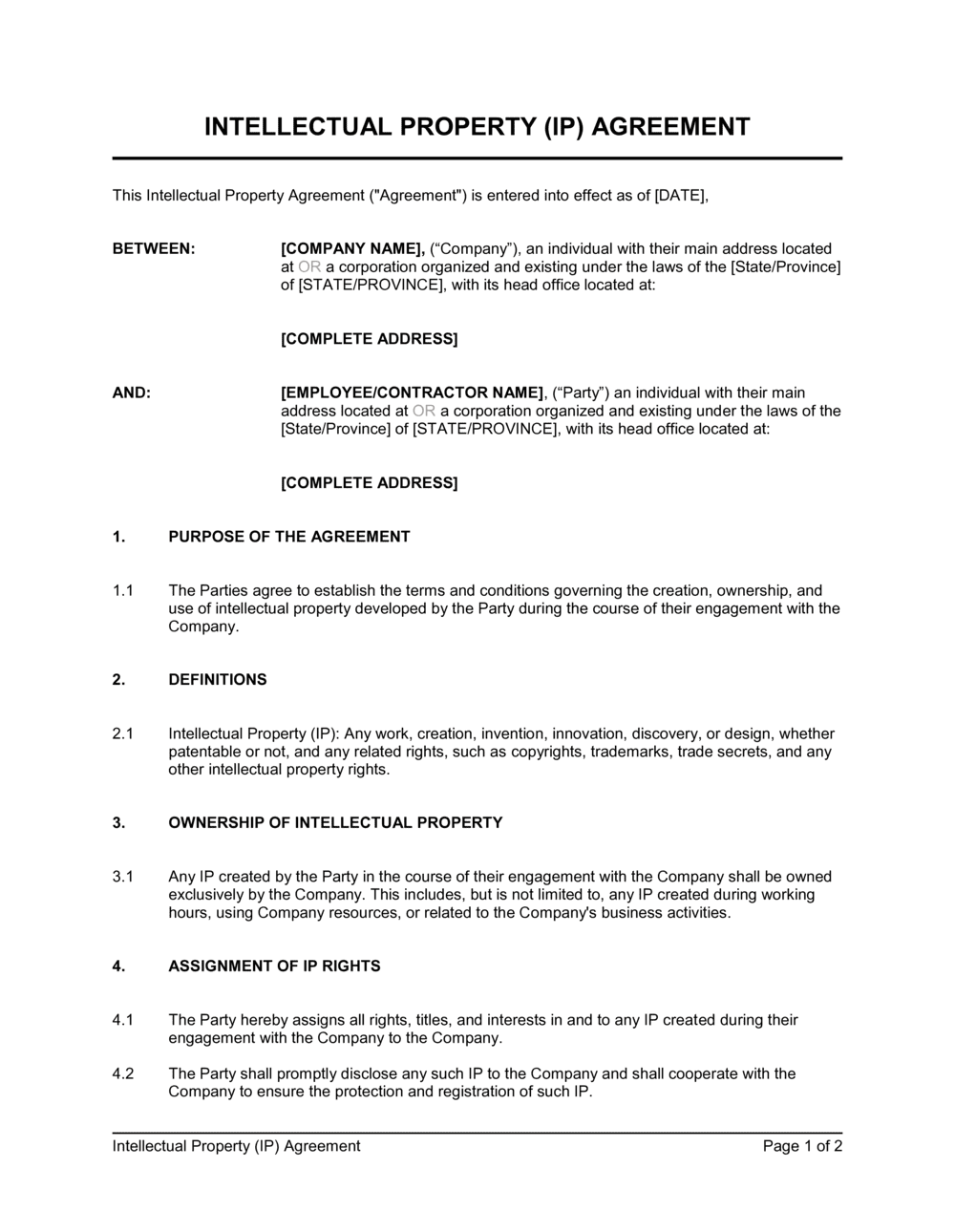
- Intellectual Property (IP)
- Creations of the mind — inventions, literary or artistic works, designs, symbols, and software — protected by law through patents, copyrights, trademarks, or trade secret status.
- IP Assignment
- A full and permanent transfer of ownership of intellectual property from one party (the assignor) to another (the assignee), typically in exchange for compensation or as a condition of employment.
- IP License
- A grant of permission for a licensee to use intellectual property owned by the licensor under defined conditions, without transferring ownership.
- Work for Hire
- Under US copyright law, work created by an employee within the scope of employment, or by a contractor under a written work-for-hire agreement in certain categories, belongs to the hiring party from creation.
- Background IP
- Intellectual property that a party brings into a project or relationship and owns before collaboration begins — typically excluded from the assignment clause.
- Foreground IP
- Intellectual property created during the course of a specific project or engagement, which the agreement specifies should be assigned to one or both parties.
- Moral Rights
- Rights in several jurisdictions (notably the EU and Canada) allowing creators to claim authorship and object to derogatory treatment of their work, even after assignment of economic rights.
- Trade Secret
- Confidential business information that provides a competitive advantage and is subject to reasonable protective measures — protected by law without requiring registration.
- Chain of Title
- The documented sequence of IP ownership transfers from the original creator to the current owner, required to prove clear title in licensing, financing, or M&A transactions.
- Warranty of Non-Infringement
- A contractual promise by the assignor or licensor that the IP does not infringe any third party's existing rights — backing the transaction with liability if that promise proves false.
- Indemnification
- A contractual obligation requiring one party to compensate the other for losses, damages, or legal costs arising from a specified breach or third-party claim.