1
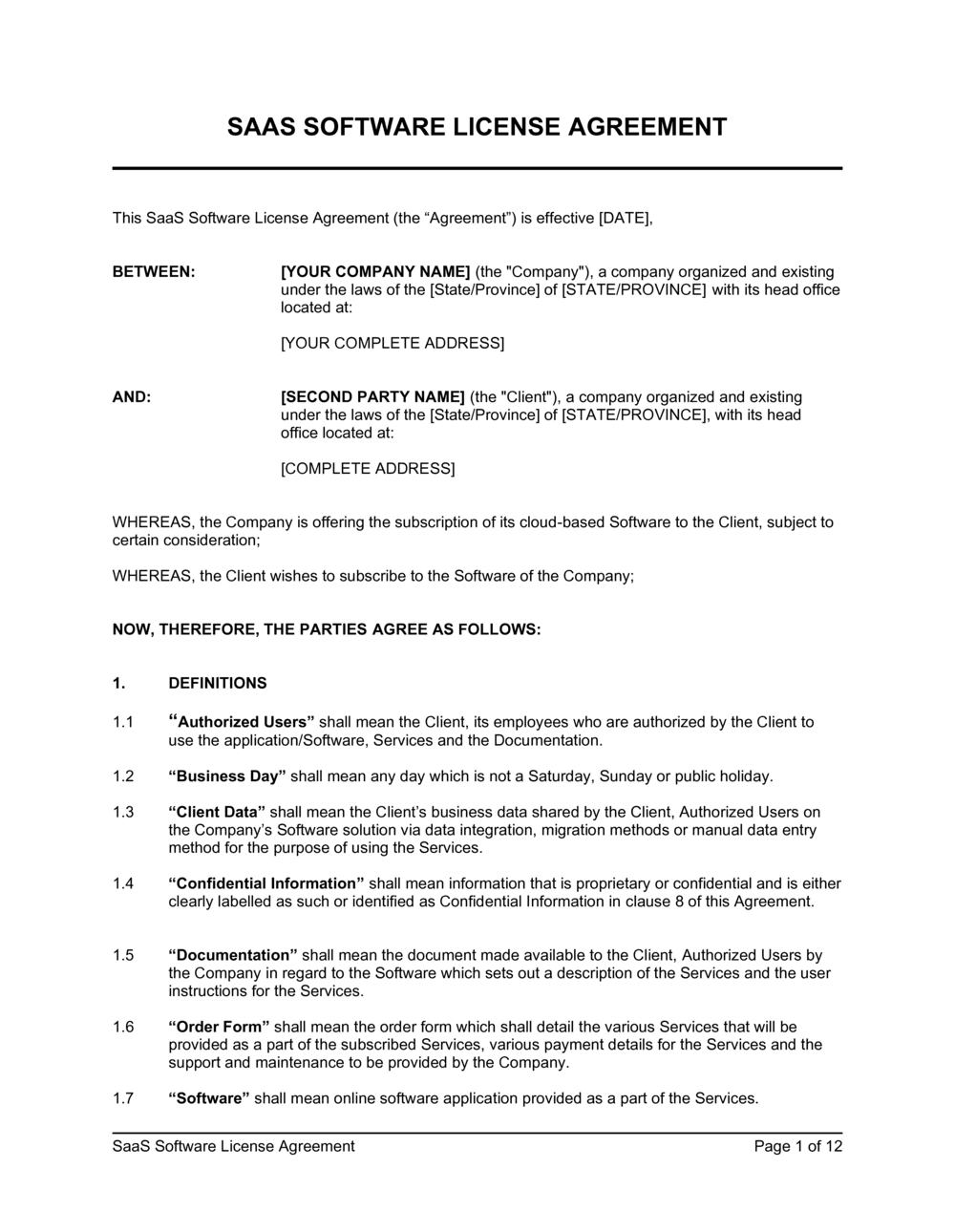
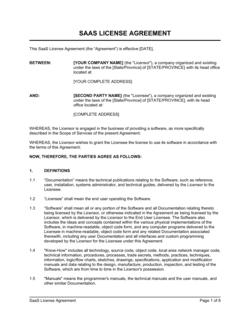
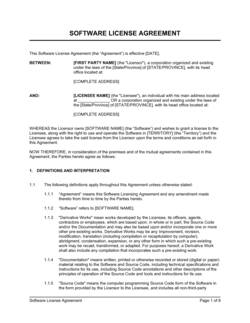
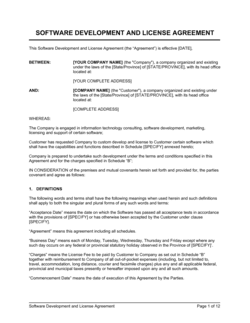
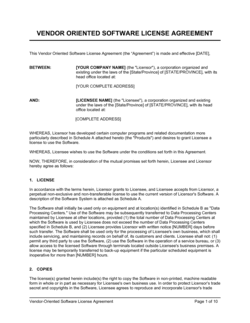
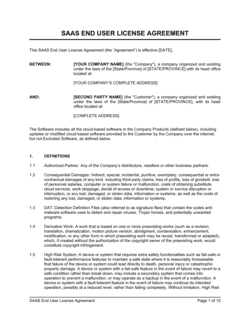
Identify the parties and define the product
Enter the vendor's and customer's full legal entity names, registered addresses, and entity types. Name the specific SaaS product being licensed, including any module or tier restrictions, so the scope of the license is unambiguous.
💡 Use the registered corporate name — not a brand or trade name — to ensure the agreement binds the correct legal entity.
2
Set subscription term, fees, and renewal mechanics
Specify the start date, initial term length (typically 12 months), subscription fee, billing frequency, and the auto-renewal notice deadline. Include the late-payment interest rate and any price-increase cap for renewals.
💡 A 60-day auto-renewal cancellation window — rather than 30 days — reduces customer disputes by giving both sides more time to renegotiate before the term rolls.
3
Define permitted users and usage limits
State whether the license is seat-based, usage-based, or enterprise-wide. Specify the maximum number of permitted users, any API call limits, and data storage thresholds. Reference a Schedule A if tiers are complex.
💡 Include an overage rate for exceeding usage limits rather than making excess use a material breach — this protects revenue without triggering termination disputes.
4
Complete the SLA and uptime commitment
Set the uptime target (e.g., 99.9%), define how downtime is measured, list scheduled-maintenance exclusions, and specify the credit formula. Attach the SLA as a schedule so it can be updated without amending the main agreement.
💡 A tiered credit schedule — 5% credit for 99.5–99.9% uptime, 10% for 99.0–99.5%, up to 30% for below 99.0% — is more enforceable than a flat credit that may feel arbitrary.
5
Address data privacy and security obligations
Identify whether the vendor processes personal data on the customer's behalf. If so, attach a Data Processing Addendum covering GDPR and CCPA obligations, specify security certification standards, and define the data breach notification timeline (typically 72 hours).
💡 If your customers are in the EU, the DPA is not optional — executing the main agreement without one exposes both parties to regulatory penalties.
6
Tailor the limitation of liability and indemnification
Set the liability cap (typically 12 months of fees), decide which claims are excluded from the cap (IP indemnity, gross negligence, fraud), and confirm the mutual indemnification obligations for IP infringement and data misuse.
💡 Enterprise customers routinely push to increase the cap for IP indemnity claims — consider a separate higher cap (e.g., 24 months of fees) just for third-party IP infringement to facilitate negotiation.
7
Set termination rights and data-return obligations
Define the cure period for material breach (typically 30 days), the vendor's suspension rights for non-payment, and the customer's data-export window post-termination. Specify the deletion certification requirement.
💡 State the data export format explicitly — 'machine-readable CSV or JSON' beats 'standard format,' which vendors have interpreted as proprietary exports that require additional tools to use.
8
Sign before granting platform access
Obtain signatures from authorized signatories at both companies before provisioning any user accounts. For electronic signature, ensure the signing workflow timestamps execution and stores the fully executed copy.
💡 For enterprise deals, confirm the customer signatory has actual authority — check board resolutions or signing authority thresholds if the contract value exceeds the individual's standard approval limit.