- Patent
- A government-granted right that gives an inventor exclusive authority to make, use, or sell an invention for a defined period — typically 20 years from the filing date.
- Trademark
- A symbol, word, phrase, or design that identifies and distinguishes the source of goods or services and can be registered for exclusive commercial use.
- Copyright
- Automatic legal protection for original creative works — including software, writing, and design — that arises at the moment of creation without registration.
- Trade Secret
- Confidential business information — formulas, processes, customer lists, or algorithms — that derives economic value from not being publicly known.
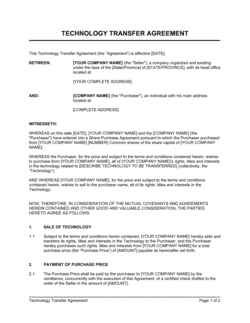
- IP Assignment
- A written transfer of ownership of intellectual property from one party (typically an employee or contractor) to another (typically the company).
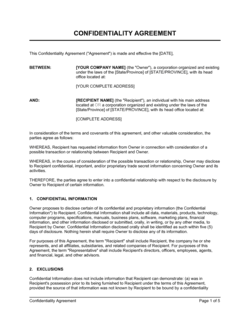
- Non-Disclosure Agreement (NDA)
- A contract requiring one or both parties to keep specific information confidential and not disclose it to third parties.
- Provisional Patent Application
- A lower-cost, preliminary US patent filing that establishes a priority date for an invention and gives the filer 12 months to file a full utility patent.
- Prior Art
- Any publicly available evidence — published patents, academic papers, or products — that predates a patent application and can be used to challenge its novelty.
- Work for Hire
- A legal doctrine under which original work created by an employee within the scope of employment is automatically owned by the employer, not the creator.
- IP Portfolio
- The complete collection of intellectual property assets owned or controlled by a business, including patents, trademarks, copyrights, and trade secrets.
- Cease-and-Desist Letter
- A formal written demand that an infringing party stop a specific activity — using a trademark, copying code, or disclosing trade secrets — under threat of legal action.