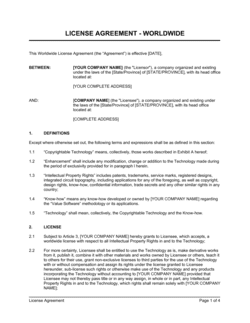
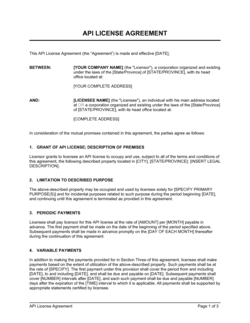
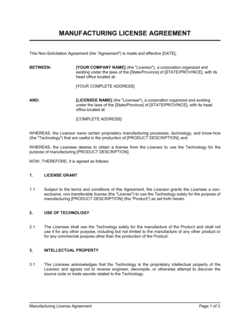
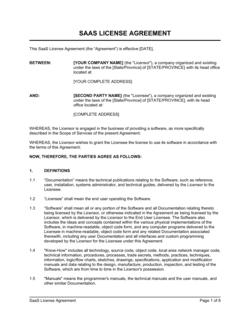
Copyright License Agreement Template

Free Word download • Edit online • Save & share with Drive • Export to PDF

9 pages30–40 min to fillDifficulty: ComplexSignature requiredLegal review recommended
Learn more ↓
FreeCopyright License Agreement Template

At a glance

What it is
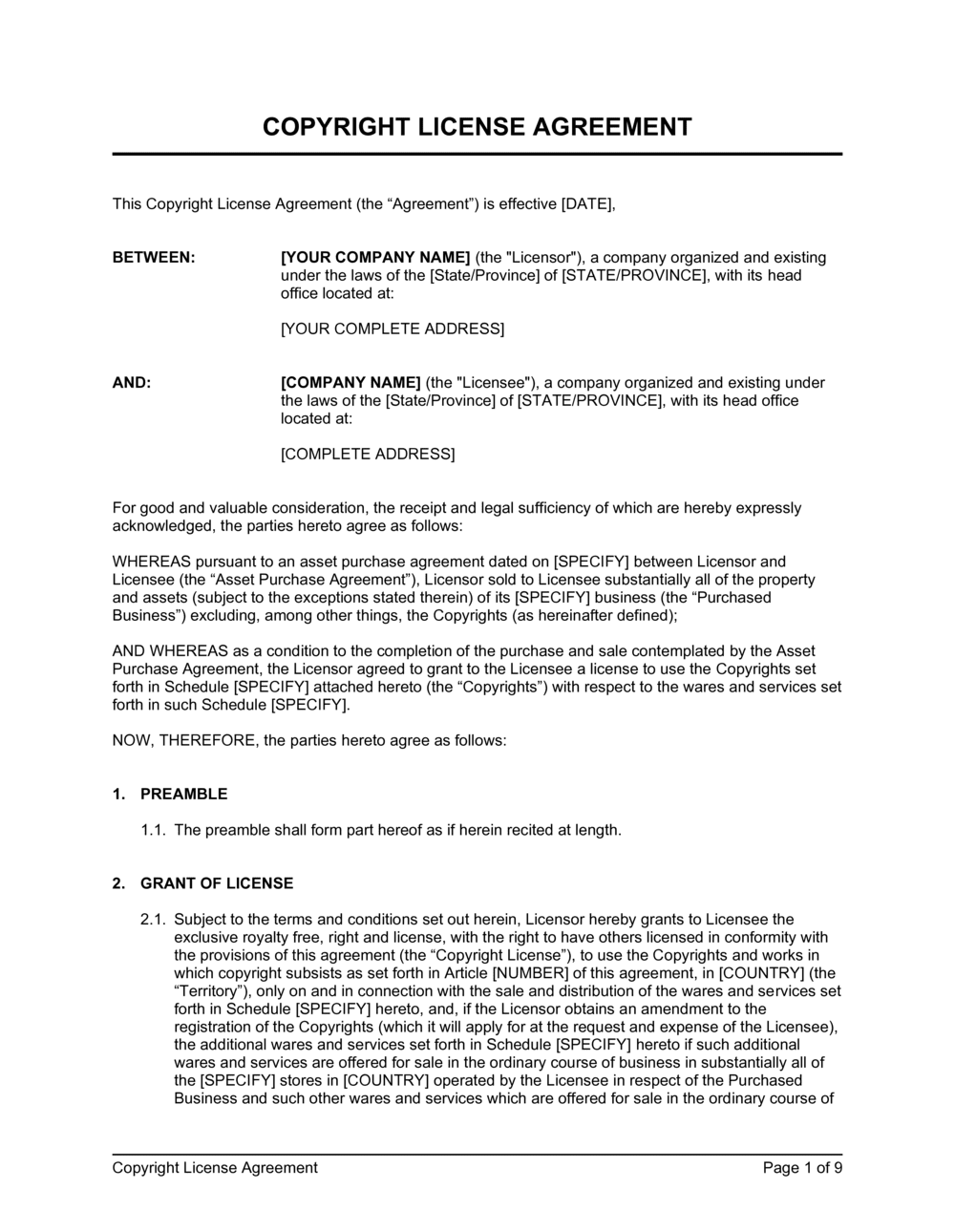
A Copyright License Agreement is a legally binding contract in which a copyright owner (the licensor) grants another party (the licensee) the right to use, reproduce, distribute, or adapt a protected work under defined conditions. This free Word download covers scope of use, exclusivity, royalties, attribution, sublicensing, and termination in a single document you can edit online and export as PDF.
When you need it
Use it when a business or individual wants to commercially exploit a creative work they do not own — such as republishing an article, using stock photography, distributing software, or releasing a song — or when a creator wants to monetize their work while retaining ownership. It is also required when granting a publishing house, platform, or brand the right to reproduce your original content in exchange for royalties or a flat fee.
What's inside
The agreement identifies both parties and the licensed work, defines the scope of the license (exclusive or non-exclusive, territory, permitted uses), sets out royalty or fee structures, establishes attribution requirements, addresses sublicensing rights, and specifies termination conditions and remedies for infringement.

What is a Copyright License Agreement?

A Copyright License Agreement is a legally binding contract in which the owner of a copyright (the licensor) grants another party (the licensee) defined rights to use, reproduce, distribute, display, or adapt a protected creative work — without transferring ownership of the copyright itself. The agreement specifies whether the license is exclusive or non-exclusive, the geographic territory and duration of the rights, the permitted uses, and the fees or royalties the licensee must pay in return. It applies to any original work protected by copyright: written content, photographs, illustrations, music, software, video, architectural drawings, and more.

Why You Need This Document

Without a written copyright license agreement, any use of a third party's protected work is potential infringement — and any creator who allows another party to use their work without a contract risks losing control of how it is used, where it appears, and whether they get paid. Copyright infringement claims in the US can result in statutory damages of up to $150,000 per work for willful infringement, plus attorney fees. On the licensor's side, an informal handshake deal gives you no enforceable basis to collect royalties, demand attribution, prevent sublicensing, or terminate the arrangement if the licensee misuses the work. A properly executed copyright license agreement eliminates these risks by defining every material dimension of the relationship in advance — scope, payment, attribution, sublicensing, and what happens at the end — and giving both parties a concrete document to enforce if the relationship breaks down. This template provides a professionally structured starting point that works for most standard commercial licensing arrangements, with a clear path to legal review for higher-stakes deals.

Which variant fits your situation?

If your situation is…Use this template
Granting one licensee sole rights — no other party may use the workExclusive Copyright License Agreement
Licensing the same work to multiple parties simultaneouslyNon-Exclusive Copyright License Agreement
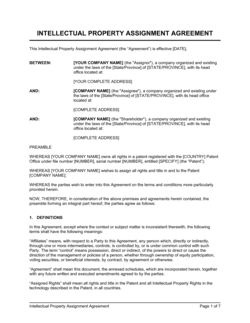
Transferring all ownership rights permanently, not just usage rightsCopyright Assignment Agreement
Licensing software source code with specific open-source or commercial termsSoftware License Agreement
Licensing a brand name and associated IP alongside copyrighted materialsTrademark License Agreement
Licensing music for use in film, TV, or advertisingMusic Synchronization License Agreement
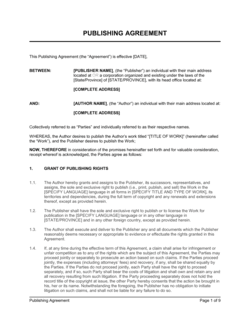
Granting rights to a publisher to print and distribute a written workPublishing Agreement

Common mistakes to avoid

❌ Exclusive license granted without a registration or recordation

Why it matters: In the US, an exclusive licensee who does not record the license with the Copyright Office within one month of execution loses priority against a subsequent innocent purchaser of rights in the same work.

Fix: File a recordation of the exclusive license with the US Copyright Office promptly after execution. In other jurisdictions, confirm whether similar recording or registration mechanisms exist.

❌ Undefined or ambiguous revenue base for royalties

Why it matters: If 'Net Revenue' is not defined, parties calculate it differently — licensees deduct every possible cost while licensors expect a much higher base — producing years of underpayment and litigation.

Fix: Define 'Net Revenue' or 'Gross Revenue' precisely in the definitions clause, listing permitted deductions line by line, before referencing it anywhere in the payment section.

❌ Silent on territory — no geographic scope stated

Why it matters: Courts in most jurisdictions interpret a copyright license that is silent on territory as a worldwide grant, potentially far exceeding what the licensor intended and foreclosing future regional licensing deals.

Fix: Always state the territory explicitly — either 'worldwide' or a named list of countries or regions — in the grant-of-license clause.

❌ No wind-down or sell-off provision on termination

Why it matters: A licensee who has manufactured inventory, distributed apps, or published content faces immediate infringement liability if the contract requires instant cessation with no transition period.

Fix: Include a 60–90 day sell-off window for physical inventory and a reasonable transition period for digital products, with the licensee reporting on remaining copies and paying royalties through the wind-down period.

❌ Omitting the 'all rights not granted are reserved' reservation clause

Why it matters: Without an express reservation, some courts have found implied licenses covering uses the licensor never intended — particularly for derivative works and new formats not contemplated at the time of signing.

Fix: Add a clear reservation clause immediately after the grant: 'All rights in the Work not expressly granted herein are reserved exclusively to Licensor.'

❌ Using a trade name instead of the licensor's registered legal entity name

Why it matters: Copyright ownership vests in a legal person or entity. If the agreement names a brand name that is not a registered entity, the licensor may lack standing to sue for infringement under the contract.

Fix: Verify the licensor's registered legal entity name against corporate registry and copyright registration records before executing. Add a 'also known as [TRADE NAME]' parenthetical if the trade name is important to identify.

The 10 key clauses, explained

Parties and recitals

In plain language: Identifies the licensor and licensee by legal name and entity type, and establishes the background — what work is being licensed and why the parties are entering the agreement.

Sample language
This Copyright License Agreement ('Agreement') is entered into as of [DATE] between [LICENSOR LEGAL NAME], a [STATE/COUNTRY] [ENTITY TYPE] ('Licensor'), and [LICENSEE LEGAL NAME], a [STATE/COUNTRY] [ENTITY TYPE] ('Licensee'). Licensor owns the copyright in the work described in Schedule A ('the Work') and wishes to license certain rights to Licensee on the terms set out below.

Common mistake: Using a trade name or DBA instead of the registered legal entity name. If the licensor entity name does not match copyright registration records, enforcing the agreement against an infringer becomes significantly more difficult.

Description and identification of the licensed work

In plain language: Precisely identifies the copyrighted work being licensed — title, registration number if applicable, format, and any version or edition — to prevent disputes about what is and is not covered.

Sample language
The Work licensed under this Agreement is: [TITLE OF WORK], [DESCRIPTION OF MEDIUM — e.g., a photographic image / software application / musical composition], copyright registration number [NUMBER] (if registered), as further described in Schedule A attached hereto.

Common mistake: Describing the work too broadly or vaguely — for example, 'all photographs by [NAME]' without listing them. Overbroad descriptions create unintended obligations and make scope disputes almost impossible to resolve.

Grant of license and scope

In plain language: States whether the license is exclusive or non-exclusive, the permitted uses (reproduce, distribute, adapt, publicly display), the territory, the duration, and any channel or format restrictions.

Sample language
Licensor hereby grants to Licensee a [non-exclusive / exclusive], [worldwide / limited to: TERRITORY], [royalty-bearing / royalty-free] license to [reproduce / distribute / publicly display / create derivative works of] the Work solely for [PERMITTED PURPOSE] during the Term. All rights not expressly granted herein are reserved to Licensor.

Common mistake: Omitting 'all rights not expressly granted are reserved.' Without this reservation, courts in some jurisdictions imply broader rights than the parties intended.

License fees and royalties

In plain language: Sets out the payment structure — flat fee, per-unit royalty, revenue percentage, or milestone payments — as well as the payment schedule, currency, and audit rights.

Sample language
In consideration for the rights granted, Licensee shall pay Licensor: (a) an upfront license fee of $[AMOUNT] due on [DATE]; and (b) a royalty of [X]% of Net Revenue from exploitation of the Work, payable within [30] days after the end of each calendar quarter, accompanied by a royalty statement.

Common mistake: Failing to define 'Net Revenue' or 'Gross Revenue' precisely. Ambiguous revenue definitions are the single most litigated clause in copyright license agreements — deductions for returns, distribution costs, and taxes can dramatically reduce what the licensor actually receives.

Attribution and credit

In plain language: Specifies how the licensor must be credited when the work is used — the exact form of attribution, placement requirements, and any credit obligations that survive termination.

Sample language
Licensee shall include the following attribution in all reproductions or distributions of the Work: '[LICENSOR NAME] / [WORK TITLE] / © [YEAR]. All rights reserved. Used with permission.' Attribution shall appear in a size and placement no less prominent than credits given to other contributors.

Common mistake: Omitting attribution requirements entirely. Failure to credit the creator can constitute a violation of moral rights in Canada, the UK, and the EU — and in all jurisdictions it exposes the licensee to reputational and contractual claims.

Sublicensing rights

In plain language: States whether the licensee may grant sub-licenses to third parties, and if so, under what conditions — licensor consent, flow-down obligations, and liability for sublicensee conduct.

Sample language
Licensee shall not sublicense, assign, or transfer any rights granted herein without the prior written consent of Licensor. Any sublicense granted with Licensor's consent must contain terms no less protective of Licensor's rights than those in this Agreement, and Licensee shall remain liable for any sublicensee's breach.

Common mistake: Granting sublicensing rights without requiring the licensee to remain liable for sublicensee breaches. If a sublicensee infringes and the licensee is not on the hook, the licensor's only recourse is suing an unknown third party.

Representations and warranties

In plain language: The licensor warrants they own the copyright and have the right to grant the license; the licensee warrants their use will comply with all applicable laws. Both parties disclaim warranties beyond what is expressly stated.

Sample language
Licensor represents and warrants that: (a) Licensor is the sole owner of the copyright in the Work; (b) the Work does not infringe any third-party intellectual property rights; and (c) Licensor has full authority to enter into this Agreement. EXCEPT AS EXPRESSLY STATED, THE WORK IS PROVIDED 'AS IS' WITHOUT WARRANTY OF ANY KIND.

Common mistake: Licensor failing to warrant that the work does not infringe third-party rights. If a third party later claims the licensed work incorporates their protected material, the licensee faces infringement liability with no contractual recourse against the licensor.

Term and termination

In plain language: Defines the duration of the license, conditions allowing either party to terminate early (breach, insolvency, convenience), the cure period, and what happens to existing uses upon termination.

Sample language
This Agreement commences on [START DATE] and continues until [END DATE / indefinitely] unless earlier terminated. Either party may terminate upon [30] days' written notice of a material breach that remains uncured. Upon termination, Licensee shall cease all use of the Work and destroy or return all copies within [14] days, except that Licensee may sell off existing inventory for [90] days post-termination.

Common mistake: No sell-off or wind-down provision for physical or distributed inventory. Without it, a licensee who manufactured 50,000 units or distributed a digital product across thousands of users faces immediate infringement liability the day after termination.

Infringement remedies and indemnification

In plain language: Addresses what happens if the licensed work is infringed by a third party, who bears the cost of enforcement, and how each party indemnifies the other against claims arising from their own acts or breaches.

Sample language
Each party ('Indemnitor') shall defend, indemnify, and hold harmless the other party from and against any third-party claims arising from Indemnitor's breach of this Agreement or infringement of third-party intellectual property rights. Licensor shall have the primary right, but not the obligation, to enforce the copyright in the Work against third-party infringers at Licensor's cost.

Common mistake: Granting the licensee the exclusive right to enforce the copyright. If the licensee goes bankrupt or loses interest, the licensor may be barred from protecting their own work for the duration of the license term.

Governing law and dispute resolution

In plain language: Specifies which jurisdiction's law governs the agreement and how disputes are resolved — litigation, arbitration, or mediation — including venue and language.

Sample language
This Agreement is governed by the laws of [STATE / PROVINCE / COUNTRY], without regard to its conflict of law provisions. Any dispute arising under this Agreement shall be resolved by binding arbitration administered by [AAA / JAMS / ICC] in [CITY], conducted in [LANGUAGE], except that either party may seek injunctive relief in any court of competent jurisdiction to prevent irreparable harm.

Common mistake: Choosing a governing law with no meaningful connection to where either party operates or where the work will be used. Courts may decline to apply a chosen law if it has no reasonable relationship to the transaction, particularly in EU member states.

How to fill it out

  1. 1

    Identify both parties with their legal entity names

    Enter the licensor's and licensee's full legal names, entity types, and principal addresses. Confirm the licensor's name matches any existing copyright registration for the work.

    💡 If the licensor is an individual creator rather than a company, state whether the copyright is registered in their personal name or a business name — mismatches create enforcement gaps.

  2. 2

    Describe the licensed work precisely in Schedule A

    List the work's title, medium, format, creation date, and copyright registration number if applicable. For collections or series, list each work individually rather than using a blanket description.

    💡 Attach a physical or digital copy of the work as an exhibit where practical — courts treat this as the definitive reference if a scope dispute arises.

  3. 3

    Define the scope of the license clearly

    Choose exclusive or non-exclusive, specify the permitted uses (reproduce, distribute, publicly display, adapt), set the territory (worldwide or named countries), and state the duration. Address each dimension — a license that is silent on territory is generally interpreted as worldwide.

    💡 List the specific formats and channels the licensee may use — print, digital, broadcast, social media — to prevent scope creep into channels you did not intend to license.

  4. 4

    Set the fee and royalty structure with defined terms

    Enter the upfront fee amount and due date, the royalty rate and the revenue base it applies to, the payment frequency, and the currency. Define 'Net Revenue' or 'Gross Revenue' in the definitions section before referencing it in the payment clause.

    💡 Include an audit right allowing the licensor to inspect the licensee's sales records once per year with 30 days' notice — this is standard in music and publishing and prevents under-reporting disputes.

  5. 5

    Specify attribution and credit requirements

    Write out the exact credit line the licensee must use, the placement requirements (e.g., directly adjacent to the work, in the copyright notice, or in closing credits), and whether digital works require a hyperlink back to the licensor.

    💡 Require that attribution survive any permitted sublicenses — without this, sublicensees may strip the credit when they further distribute the work.

  6. 6

    Address sublicensing and assignment rights

    State explicitly whether the licensee may sublicense or assign the rights, and if so, under what conditions. If sublicensing is permitted, require the licensee to flow down all material obligations and remain jointly liable for sublicensee breaches.

    💡 If the licensee is a platform or distributor, anticipate that they will need to sublicense to end users — draft the sublicensing clause to permit this specific use without opening up broader rights.

  7. 7

    Define the term and termination triggers

    Set a specific start and end date, or state that the agreement runs until terminated. Specify the cure period for a material breach (typically 30 days), and include a wind-down provision allowing the licensee to sell off or transition existing inventory or distributed copies.

    💡 For digital products, define 'cease use' precisely — does it mean deleting all hosted copies, removing app store listings, or disabling active user accounts? Ambiguity here causes post-termination disputes.

  8. 8

    Sign before any use of the licensed work begins

    Both parties must sign the agreement — and the licensor must countersign — before the licensee uses the work in any way. Using the work before signing creates an implied license that may be broader than the written terms.

    💡 For exclusive licenses, consider recording the agreement with the relevant copyright office (US Copyright Office, for example) — this provides constructive notice to third parties and strengthens enforcement.

Frequently asked questions

What is the difference between an exclusive and non-exclusive copyright license?

An exclusive license means only the named licensee may exercise the granted rights — the licensor cannot license the same rights to anyone else for the duration of the term. A non-exclusive license allows the licensor to grant identical rights to multiple parties simultaneously. Exclusive licenses typically command higher fees and are recorded with copyright offices to protect the licensee's priority. Non-exclusive licenses are common for stock photography, music libraries, and syndicated content.

Can a licensee sublicense the work to third parties?

Only if the copyright license agreement expressly permits it. Without explicit sublicensing rights, the licensee generally cannot grant further rights to third parties. When sublicensing is permitted, the original agreement should require the licensee to flow down all protective obligations to sublicensees and remain liable to the licensor for any sublicensee breach. Platforms and distributors typically require sublicensing rights to pass usage rights to end users.

What happens if the licensed work is infringed by a third party?

The licensor generally retains the primary right to enforce the copyright against third-party infringers, since they remain the copyright owner. An exclusive licensee typically has standing to sue for infringement within the scope of their exclusive rights, either alongside the licensor or independently in some jurisdictions. The agreement should address who bears enforcement costs, how infringement proceeds are shared, and what obligations each party has to notify the other of discovered infringement.

How this compares to alternatives

vs Copyright Assignment Agreement

A copyright assignment permanently transfers ownership of the copyright to the buyer — the original creator relinquishes all rights. A copyright license allows the creator to retain ownership while granting defined usage rights, often in exchange for ongoing royalties. Creators who want long-term control over their work should license rather than assign; buyers who need full ownership — such as employers acquiring work-for-hire output or companies purchasing a brand asset — need an assignment.

vs Software License Agreement

A software license agreement is a specialized copyright license designed for software products, covering end-user restrictions, installation rights, updates, support obligations, and liability limitations specific to software deployment. A general copyright license agreement is better suited to creative works — text, images, music, video — where software-specific provisions would be inappropriate or confusing.

vs Publishing Agreement

A publishing agreement is a comprehensive contract between an author and a publisher covering editorial control, production, marketing, territory rights, advances, and royalties for a book or similar work. A copyright license agreement is more narrowly focused on the grant of specific rights and payment terms, without the full operational scope of a publishing relationship. Authors dealing with a commercial publisher need the fuller publishing agreement.

vs Non-Disclosure Agreement

An NDA protects confidential information shared during negotiations or a business relationship — it does not grant any usage rights in copyrighted works. A copyright license agreement grants specific exploitation rights in a protected work. In practice, parties often sign an NDA before negotiating a copyright license, but the two documents serve entirely different legal functions.

Industry-specific considerations

Media and publishing

Book, article, and image rights licensed by territory and language, with royalty escalators tied to sales thresholds and reversion clauses if the work goes out of print.

Music and entertainment

Synchronization, master, and mechanical licenses each covering distinct rights; flat-fee or per-stream royalty models; and performance rights organization (PRO) obligations running in parallel.

Software and technology

End-user license agreements (EULAs) embedded in software distribution; source-code licenses with strict sublicensing and modification restrictions; and open-source license compatibility requirements.

Marketing and advertising

Campaign-specific licenses tied to defined media channels, geographic markets, and flight dates; usage fees that scale with audience size or media spend; and rights for derivative adaptations.

Education and e-learning

Institutional licenses covering course materials, textbooks, and digital content for defined student populations, with restrictions on redistribution beyond enrolled learners.

Healthcare and life sciences

Licensing of clinical protocols, diagnostic algorithms, and medical imagery where regulatory compliance obligations and liability indemnification terms are especially material.

Jurisdictional notes

United States

Under the US Copyright Act (17 U.S.C. § 204), exclusive licenses must be in writing and signed by the copyright owner to be enforceable. Exclusive licensees should record the license with the US Copyright Office to establish priority over subsequent transfers. Moral rights protection is narrow in the US — limited to works of visual art under the Visual Artists Rights Act — so attribution obligations must be contractually specified. Copyright terms generally run 70 years after the author's death for works created after 1978.

Canada

Canada's Copyright Act grants both economic rights and moral rights; moral rights — including the right to attribution and integrity — cannot be assigned but can be waived in writing. Exclusive licenses should be in writing; non-exclusive licenses may be implied but a written agreement is strongly advised. Copyright term in Canada is life of the author plus 70 years as of 2022, aligning with the US and EU following the Canada-United States-Mexico Agreement (CUSMA). Quebec civil law may affect contract interpretation for agreements governed by Quebec law.

United Kingdom

Under the Copyright, Designs and Patents Act 1988, exclusive licenses must be in writing and signed by or on behalf of the copyright owner. UK law recognizes moral rights including the right to be identified as author and the right to object to derogatory treatment, but these rights must be asserted in writing and do not apply to all works. Post-Brexit, UK copyright operates independently from EU frameworks, though substantive protection levels remain broadly aligned. Copyright term is generally life plus 70 years.

European Union

EU copyright is primarily harmonized by directives including the 2019 Copyright in the Digital Single Market Directive, though implementation varies by member state. Moral rights are recognized and generally stronger than in the US — in France they are perpetual and inalienable. Post-employment non-compete clauses in license agreements may require financial compensation to the other party in some member states. Platform liability and upload-filter obligations introduced by the 2019 Directive affect licensing terms for content platforms operating in the EU.

Template vs lawyer — what fits your deal?

PathBest forCostTime
Use the templateNon-exclusive licenses for standard creative works where both parties are small businesses or independent creatorsFree30–60 minutes
Template + legal reviewExclusive licenses, works with registered copyright, multi-territory deals, or complex royalty structures$300–$7002–5 days
Custom draftedHigh-value IP portfolios, publishing or entertainment deals, cross-border corporate licensing, or commercially sensitive technology$1,500–$5,000+1–3 weeks

Glossary

Licensor
The copyright owner who grants permission to another party to use the protected work under specified conditions.
Licensee
The party who receives the right to use the copyrighted work within the boundaries defined by the agreement.
Exclusive License
A license that grants the licensee sole rights to use the work in a defined way — the licensor cannot grant the same rights to anyone else during the license term.
Non-Exclusive License
A license that allows the licensor to grant the same or similar rights to multiple parties at the same time.
Scope of License
The precise boundaries of permitted use — including format, medium, territory, duration, and purpose — that define exactly what the licensee may and may not do with the work.
Royalty
A recurring payment made by the licensee to the licensor, typically calculated as a percentage of revenue or sales generated through use of the licensed work.
Sublicense
A right granted by the licensee to a third party to use the copyrighted work; sublicensing typically requires explicit written permission from the licensor.
Moral Rights
Rights that protect the personal and reputational connection between a creator and their work — including the right to attribution and the right to object to derogatory treatment — recognized in many jurisdictions outside the US.
Work for Hire
A work created by an employee within the scope of employment or under a written agreement designating it as such, in which case the employer — not the individual creator — is the copyright owner.
Derivative Work
A new work based on or incorporating elements of an existing copyrighted work, such as a translation, adaptation, remix, or edited compilation.
Infringement
Unauthorized use of a copyrighted work in a way that violates the exclusive rights of the copyright holder, exposing the infringer to civil liability and, in some cases, criminal penalties.

Part of your Business Operating System

This document is one of 3,000+ business & legal templates included in Business in a Box.

  • Fill-in-the-blanks — ready in minutes
  • 100% customizable Word document
  • Compatible with all office suites
  • Export to PDF and share electronically

Create your document in 3 simple steps.

From template to signed document — all inside one Business Operating System.
1
Download or open template

Access over 3,000+ business and legal templates for any business task, project or initiative.

2
Edit and fill in the blanks with AI

Customize your ready-made business document template and save it in the cloud.

3
Save, Share, Send, Sign

Share your files and folders with your team. Create a space of seamless collaboration.

Save time, save money, and create top-quality documents.

★★★★★

"Fantastic value! I'm not sure how I'd do without it. It's worth its weight in gold and paid back for itself many times."

Managing Director · Mall Farm
Robert Whalley
Managing Director, Mall Farm Proprietary Limited
★★★★★

"I have been using Business in a Box for years. It has been the most useful source of templates I have encountered. I recommend it to anyone."

Business Owner · 4+ years
Dr Michael John Freestone
Business Owner
★★★★★

"It has been a life saver so many times I have lost count. Business in a Box has saved me so much time and as you know, time is money."

Owner · Upstate Web
David G. Moore Jr.
Owner, Upstate Web

Run your business with a system — not scattered tools

Stop downloading documents. Start operating with clarity. Business in a Box gives you the Business Operating System used by over 250,000 companies worldwide to structure, run, and grow their business.

Start free · No credit card required