- Intellectual Property (IP)
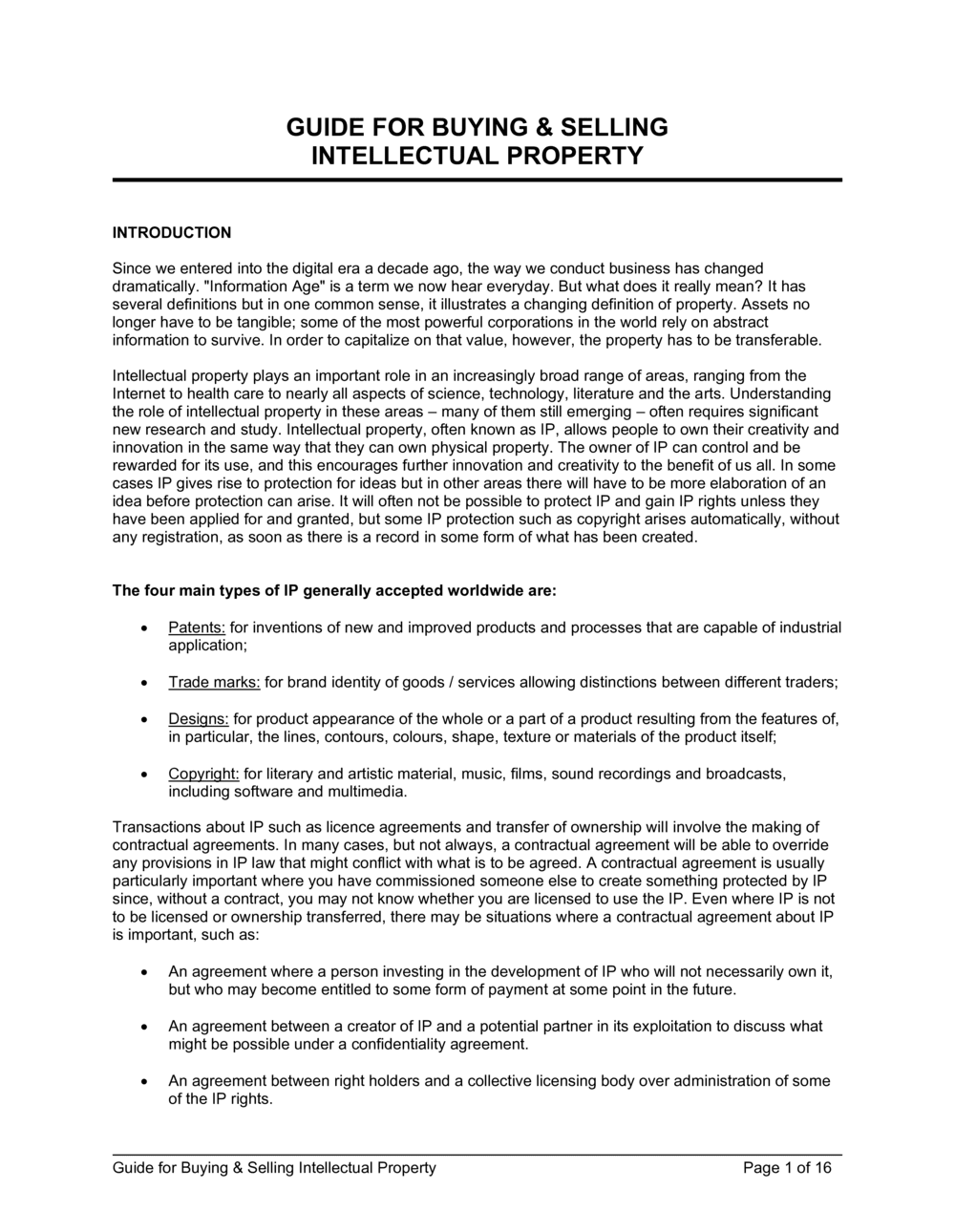
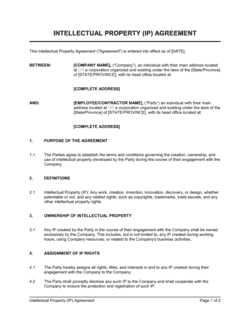
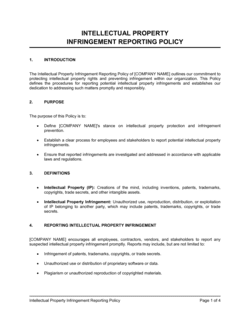
- Creations of the mind — inventions, brand names, written works, software, and trade secrets — that are legally protectable as property.
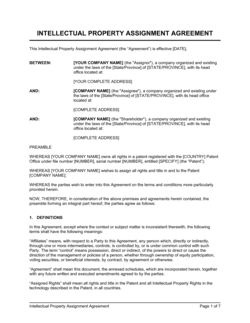
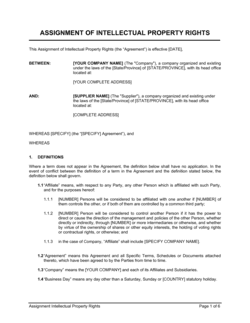
- IP Assignment
- The permanent transfer of full ownership of an IP asset from one party (assignor) to another (assignee).
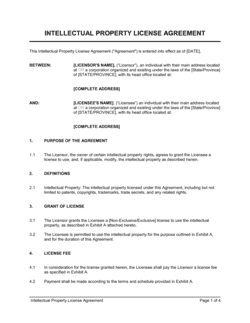
- IP License
- A grant of permission to use an IP asset under defined conditions, without transferring underlying ownership.
- Due Diligence
- The structured investigation of an IP asset's ownership, validity, scope, encumbrances, and commercial value before a transaction closes.
- Chain of Title
- The documented history of IP ownership transfers establishing that the current owner has clear, unencumbered title to the asset.
- Encumbrance
- A claim, lien, license, or other restriction on an IP asset that limits what the owner can do with it or transfer to a buyer.
- Royalty Rate
- The percentage of revenue or a fixed fee per unit that a licensee pays to an IP owner in exchange for the right to use the asset.
- Work for Hire
- A legal doctrine under which IP created by an employee within the scope of employment, or by a contractor under a written agreement, is owned by the hiring party from the moment of creation.
- Freedom to Operate (FTO)
- An analysis confirming that a product or service can be commercialized without infringing on a third party's IP rights.
- Representations and Warranties
- Contractual statements of fact made by the seller about the IP asset — such as ownership, validity, and absence of infringement claims — on which the buyer relies in completing the transaction.
- Escrow
- A neutral holding arrangement in which payment, source code, or other IP materials are held by a third party until defined transaction conditions are met.