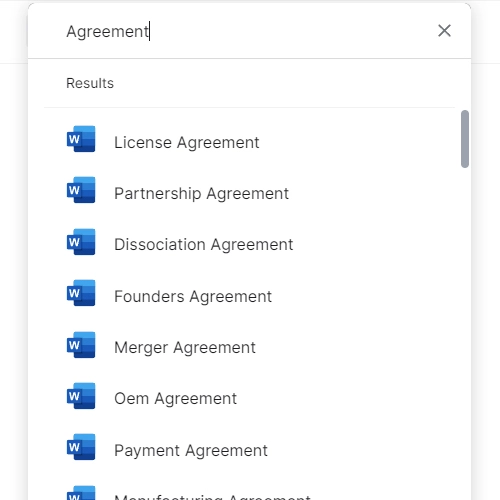
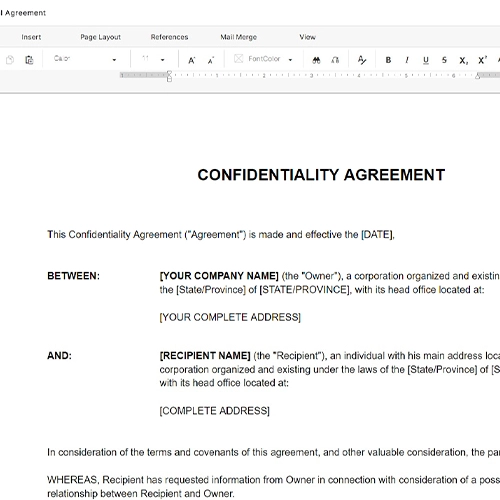
Agreement Templates
Binding legal contracts — NDAs, employment, partnership, services, etc.
Instant downloads • Fully editable • Export to Word, Excel or PDF
946 templates
Includes Confidentiality Agreement, Arbitration Agreement, Non-Disclosure Agreement (NDA) and 943 more.
At a glance
What it is
Business agreement templates are pre-structured documents that capture the binding commitments between two or more parties — covering relationships ranging from co-founders and employees to distributors, franchisees, and financiers. This filter surfaces every template in the catalog where the output is a signed, enforceable contract rather than a plan, report, or policy.
When you need one
Reach for these templates whenever a business relationship involves obligations, money, intellectual property, or shared risk — and a handshake or email thread isn't enough. A written agreement sets expectations, allocates liability, and gives both parties a reference point if disputes arise.
Popular Agreement Templates
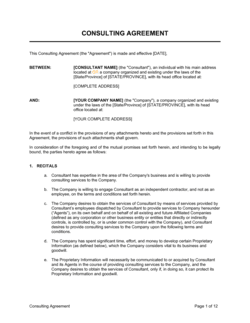
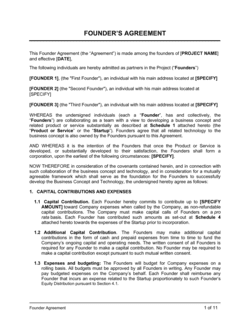
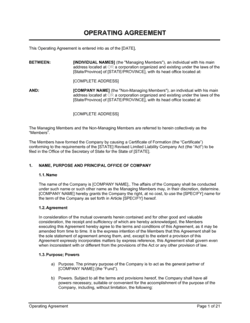
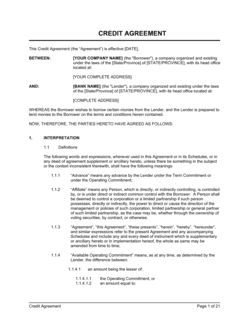
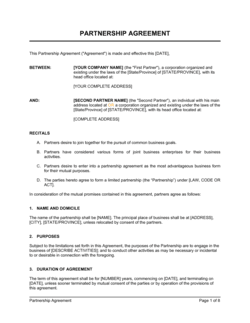
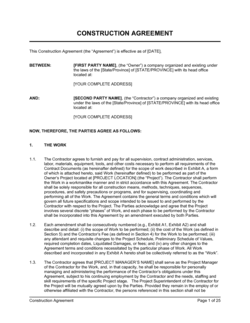
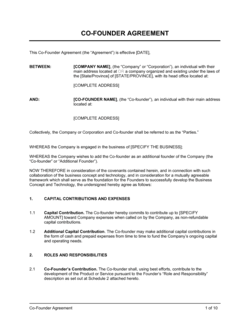
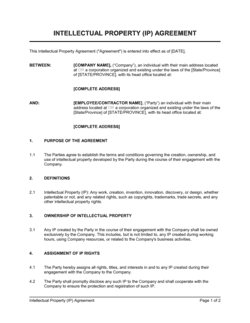
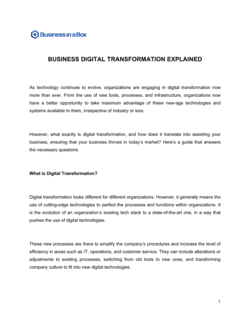
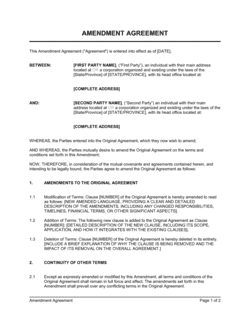
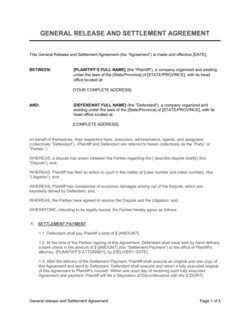
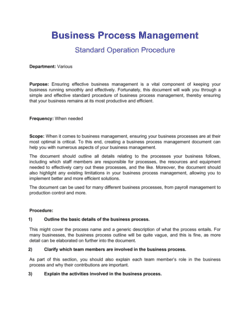

 XLS
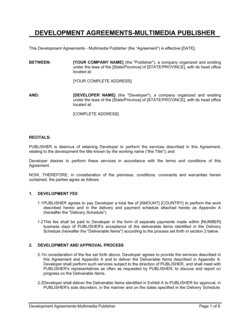
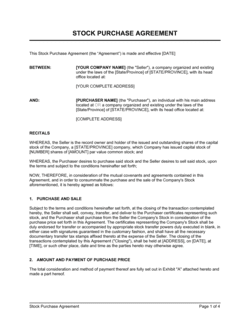
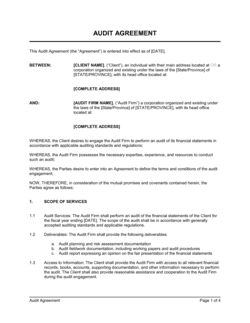
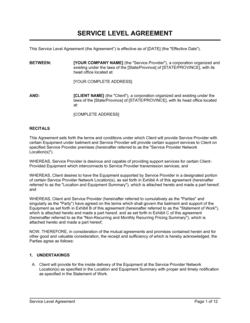
Showing 60 of 946 templates
Looking for something else?
Search all 946 templates in this category by name or keyword.
Business-in-a-Box has all 946 in this category, plus the rest of the library, ready to edit. See what's inside
Which template fits your situation?
The right agreement depends on who the other party is and what obligation you're documenting. Use the scenarios below to find the closest match in the catalog.
How to write a business agreement
A well-drafted agreement starts with a clear picture of the relationship, then works through obligations, risk, and exit before either party signs.
Identify every party by legal name
Use registered business names or full legal names — not trading names — to ensure the contract is enforceable against the right entity.
Define the scope in plain terms
Write out exactly what each side will do, deliver, or pay, leaving no room for 'I assumed you would handle that' disputes later.
Set the term and key dates
Specify when the agreement starts, when it ends, and any milestone dates — delivery deadlines, payment schedules, review windows.
Address intellectual property up front
Decide and document who owns any work product, data, or inventions created during the engagement before work begins.
Allocate risk with indemnity and liability caps
Limit each party's exposure to foreseeable damages and agree on who indemnifies whom for third-party claims.
Choose your governing law and dispute mechanism
Pick a jurisdiction and decide whether disputes go to arbitration, mediation, or the courts — a choice that significantly affects cost and speed of resolution.
Include a clear termination clause
State the notice period required, the grounds for immediate termination, and what happens to obligations that survive the agreement's end.
Obtain signatures from authorized representatives
Ensure the person signing has authority to bind the organization — an officer or director, not just a department head, in most cases.
Glossary
- consideration
- Something of value — money, services, or a promise — that each party gives in exchange for the other's commitment, making the agreement legally binding.
- indemnity
- A contractual promise by one party to compensate the other for specified losses or third-party claims, regardless of who was at fault.
- governing law
- The jurisdiction whose laws will be used to interpret and enforce the agreement if a dispute arises.
- arbitration clause
- A provision requiring parties to resolve disputes through a private arbitrator rather than through the court system.
- novation
- The substitution of a new party or obligation for an existing one, effectively replacing the original contract with the consent of all parties.
- exclusivity
- A contractual restriction preventing one or both parties from entering into similar agreements with third parties during the term.
- dissociation
- The formal withdrawal of a member or partner from a business entity, typically governed by an operating agreement or state law.
- OEM agreement
- An original equipment manufacturer agreement under which one company produces goods that another company sells under its own brand.
- consortium
- A temporary alliance of independent businesses formed to pursue a specific project or contract together.
- memorandum of agreement
- A written document recording a mutual understanding between parties, less formal than a full contract but more binding than a letter of intent.
- amalgamation
- The legal process by which two or more companies combine to form a single new entity, distinct from an acquisition where one company absorbs another.
- cure period
- The window of time a breaching party is given to remedy a contract violation before the other party may terminate the agreement.
Agreement Templates by department
Browse other document types
Frequently asked questions
What agreement templates are available?
946 agreement templates, including Confidentiality Agreement, Arbitration Agreement, Non-Disclosure Agreement (NDA), Acquisition Agreement, Asset Purchase Agreement.
What is a business agreement template?
A business agreement template is a pre-drafted, editable contract document that captures the binding commitments between two parties. Templates include standard clauses for obligations, payment, confidentiality, and termination, with blanks or variables you fill in for the specific names, dates, and terms of your deal. Using a template reduces drafting time and helps ensure you don't omit a legally important clause.
Are these agreement templates legally binding?
A completed and signed agreement template is generally enforceable in the same way as a custom-drafted contract, provided both parties have capacity, the agreement is supported by consideration, and it doesn't violate applicable law. The templates are drafted to reflect common legal standards, but they are not a substitute for legal advice. For high-value or complex transactions, consider having a qualified attorney review the final document before signing.
What's the difference between an agreement and a contract?
In everyday business usage the terms are interchangeable — both describe a binding commitment between parties supported by consideration. Technically, a contract is an agreement that meets all legal requirements for enforceability: offer, acceptance, consideration, and capacity. All contracts are agreements, but not all agreements rise to the level of an enforceable contract. The templates in this filter are designed to meet those requirements.
Do I need a lawyer to use these agreement templates?
You can fill in, edit, and sign many of these templates without legal assistance, particularly for straightforward arrangements with clear terms. For agreements involving significant money, intellectual property transfers, mergers, or unusual risk allocations, legal review is worth the cost. The templates give you a sound starting point that reduces the time — and therefore the fee — a lawyer needs to spend on your document.
Can I modify a template to suit my specific situation?
Yes. Every template is fully editable in Microsoft Word or through the online editor. You can add, remove, or reword clauses to reflect your deal. Be careful when deleting standard clauses — many exist to protect you — and ensure that any changes you make are consistent with the governing law you've chosen and any industry-specific regulations that apply.
What agreement do I need for a new business partner?
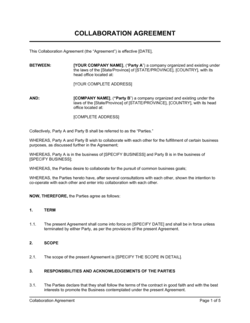
The right template depends on the nature of the partnership. For a formal equity partnership, start with the Founders Agreement (D12653) or Operating Agreement (D12798). For a project-based collaboration without shared ownership, the Collaboration Agreement (D13222) or Cooperation Agreement (D13003) is typically the right fit. For a joint bid or consortium arrangement, use the Consortium Agreement (D12866).
How do I extend or renew an existing agreement?
Use the Extension of Agreement template (D875), which documents that both parties have agreed to continue the original contract's terms for an additional period. This is simpler than drafting a new agreement and creates a clean paper trail showing the original document remains in effect. Attach the extension to the original agreement and have both authorized signatories sign it.
What is a memorandum of agreement and when do I use it?
A Memorandum of Agreement (D13427) is a formal but often less detailed document that records the understanding between parties before a full contract is drafted, or for arrangements where a complete contract would be disproportionate to the relationship's scale. It is more binding than a letter of intent but typically less detailed than a full service or partnership agreement. Use it when both parties need something in writing quickly and will negotiate a full agreement later.
What is the difference between a guarantee and an indemnity?
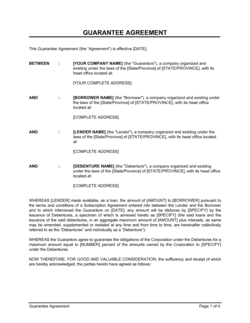
A guarantee is a secondary obligation — the guarantor steps in only if the primary party fails to perform. An indemnity is a primary obligation — the indemnifying party agrees to cover specific losses regardless of whether someone else was supposed to perform first. The Guarantee Agreement (D5194) and Guaranty Agreement (D13699) cover guarantee structures; the Indemnity Agreement (D885) covers indemnity arrangements. In practice many contracts include both mechanisms.
One document. A more organized business.
Your documents are part of how your business operates. Business in a Box brings the work, people and information around them into one workspace.
Start with the template you need. Bring the rest of your business together when you're ready.
How our templates are made
Every template is written by the Business in a Box editorial team and published by Bruno Goulet, CEO & Editor-in-Chief. Business in a Box has published business and legal templates for more than 20 years. Each document page explains what the template covers and how to fill it in; for legal documents, have a qualified professional review the final version when the stakes warrant it.