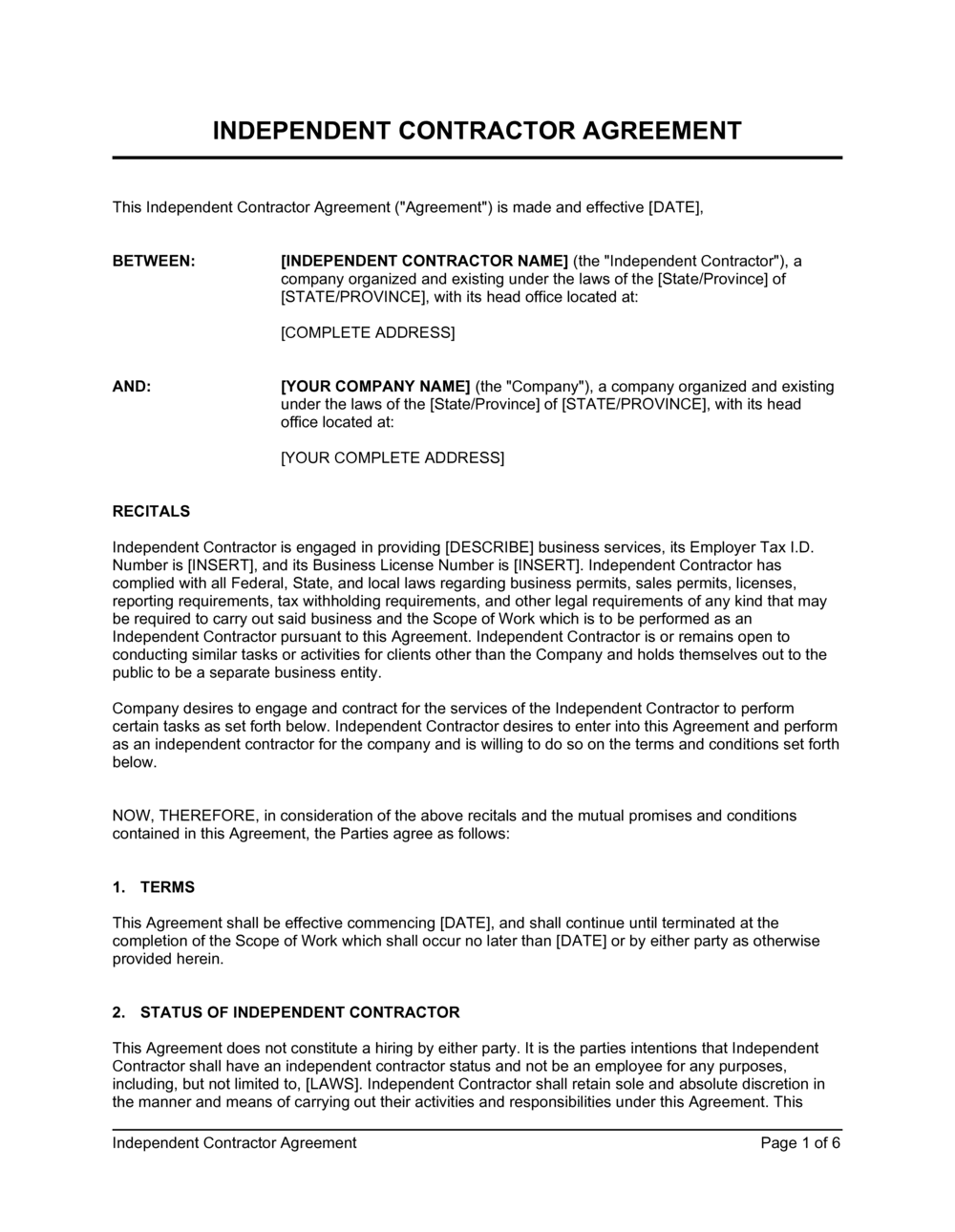
Independent Contractor Agreement Template

Free Word download • Edit online • Save & share with Drive • Export to PDF

6 pages25–35 min to fillDifficulty: ComplexSignature requiredLegal review recommended
Learn more ↓
FreeIndependent Contractor Agreement Template

At a glance

What it is
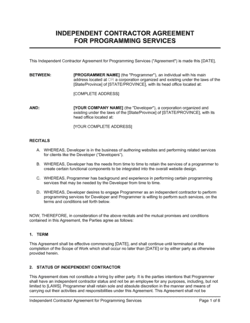
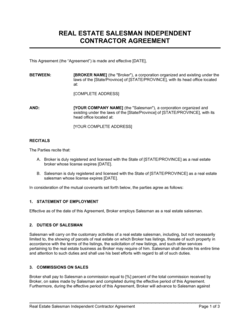
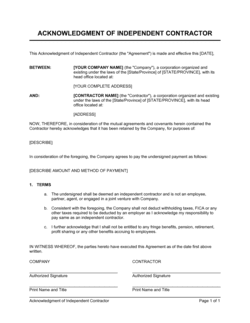
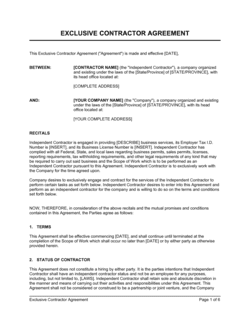
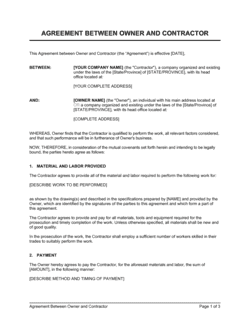
An Independent Contractor Agreement is a legally binding contract between a hiring party (company or individual) and a self-employed worker that defines the terms of a project-based or ongoing engagement. This free Word download covers scope of work, payment, IP assignment, confidentiality, and termination in a single document you can edit online and export as PDF before a contractor's first day of work.
When you need it
Use it whenever you engage a freelancer, consultant, or independent professional for work outside a standard employment relationship — before any work begins and before any confidential information is shared. It is especially critical when the contractor will create deliverables you need to own, access proprietary systems, or work alongside employees.
What's inside
Contractor and client identification, scope of work and deliverables, compensation and payment schedule, independent contractor status and tax responsibility, intellectual property assignment, confidentiality obligations, non-solicitation, termination rights, and governing law.

What is an Independent Contractor Agreement?

An Independent Contractor Agreement is a legally binding contract between a hiring party — a company, startup, or individual — and a self-employed worker that defines the terms of a project-based or ongoing services engagement. It establishes the contractor's non-employee status, specifies the scope of work and deliverables, sets compensation and payment terms, transfers intellectual property ownership to the client, and imposes confidentiality and non-solicitation obligations. Unlike an offer letter or handshake arrangement, a properly drafted contractor agreement creates enforceable obligations on both sides and builds the factual record that supports legitimate independent contractor classification under IRS, CRA, and HMRC standards.

Why You Need This Document

Operating without a signed contractor agreement exposes you on every front simultaneously. Without IP assignment language, the contractor legally owns everything they create — software, designs, content — even after you have paid for it. Without a defined scope of work, clients and contractors dispute what was promised, and payment is routinely withheld as leverage. Without a status clause supported by actual working practices, a misclassification finding triggers back payroll taxes, statutory benefits liability, and penalties that can dwarf the original project cost. In California alone, AB5 has resulted in six-figure reclassification settlements for companies that relied on informal arrangements or generic agreements. This template closes all four gaps in a single document, giving you enforceable protections from the moment work begins.

Which variant fits your situation?

If your situation is…Use this template
Engaging a software developer or technical contractorSoftware Development Agreement
Hiring a business or management consultantConsulting Agreement
Engaging a freelance creative — writer, designer, or photographerFreelance Services Agreement
Bringing on a part-time or hourly worker as an employee insteadPart-Time Employment Contract
Engaging a staffing or placement agency to supply contractorsStaffing Agency Agreement
Formalizing a long-term strategic partnership between two businessesJoint Venture Agreement
Protecting confidential information before any work or negotiations beginNon-Disclosure Agreement

Common mistakes to avoid

❌ Misclassifying an employee as a contractor

Why it matters: Tax authorities in the US, Canada, and the UK apply a right-to-control test. If the worker uses company equipment, works set hours, and does not offer services to other clients, the contract label does not override the employment reality — back taxes, penalties, and benefit liability follow.

Fix: Audit the actual working relationship against IRS Publication 15-A (US) or CRA RC4110 (Canada) before signing. If the arrangement looks like employment, use an employment contract instead.

❌ No IP assignment clause — or only a work-for-hire designation

Why it matters: The work-for-hire doctrine is narrow in the US and largely unavailable in Canada and the UK. Without an explicit assignment clause, the contractor may legally own the software, designs, or content they created for you.

Fix: Include both a work-for-hire designation and a fallback irrevocable IP assignment clause. Add a contractor obligation to sign further instruments to perfect the transfer.

❌ Vague or missing scope of work

Why it matters: Without a defined deliverables list, clients withhold payment claiming work is incomplete, and contractors invoice for work the client says was never requested. Disputes over undefined scope are the leading cause of contractor payment disputes.

Fix: Attach a signed Statement of Work as Exhibit A, listing every deliverable with a description, format, and deadline. Require written change orders for any scope additions.

❌ No kill fee or termination payment provision

Why it matters: A client who cancels mid-project with no kill fee owes the contractor nothing for time and resources already invested. A contractor who abandons mid-project with no obligation leaves the client without recourse for the cost of re-engagement.

Fix: Include a kill fee clause — typically 25–50% of remaining fees — payable by the client on early termination for convenience, and a reciprocal contractor obligation to deliver all in-progress work upon exit.

❌ Signing after work has already started

Why it matters: Without a signed agreement, IP ownership defaults to the creator, confidentiality obligations are unenforceable, and payment terms are legally ambiguous. Courts apply common-law defaults — which rarely favor the client.

Fix: Make signature a precondition to any kickoff call, system access, or disclosure of confidential information. Use a digital signature tool to eliminate the excuse that signing takes too long.

❌ No limitation of liability clause

Why it matters: Without a liability cap, a contractor faces potentially unlimited exposure for a data breach or IP dispute that dwarfs the project fee — and a client has no ceiling on a contractor's claims for unpaid work.

Fix: Set a mutual liability cap — typically fees paid in the prior three to six months — with explicit carve-outs for willful misconduct, fraud, and IP indemnification obligations.

The 10 key clauses, explained

Parties and relationship designation

In plain language: Identifies the client and contractor as legal entities and explicitly states that the contractor is an independent contractor — not an employee, agent, or partner.

Sample language
This Independent Contractor Agreement ('Agreement') is entered into as of [DATE] between [CLIENT LEGAL NAME], a [STATE] [ENTITY TYPE] ('Client'), and [CONTRACTOR LEGAL NAME / FULL NAME] ('Contractor'). Contractor is engaged as an independent contractor and is not an employee, agent, partner, or joint venturer of Client.

Common mistake: Using a trade name instead of the registered legal entity for either party. If the client entity name doesn't match the one that actually pays invoices, enforcing IP assignment or indemnification claims against the correct entity becomes difficult.

Scope of work and deliverables

In plain language: Defines precisely what the contractor will deliver, the timeline, and any acceptance criteria — typically via a Statement of Work attached as an exhibit.

Sample language
Contractor shall perform the services described in Exhibit A ('Statement of Work'), including [DELIVERABLE 1], [DELIVERABLE 2], and [DELIVERABLE 3], by [DEADLINE DATE]. Client may request changes to the scope in writing; additional fees for out-of-scope work will be agreed in a written change order.

Common mistake: Leaving scope vague — 'marketing support' or 'development work' — with no attached deliverables list. Disputes about what was promised are the single most common cause of contractor payment withheld or litigation.

Compensation and payment terms

In plain language: States the fee structure (fixed project fee, hourly rate, or milestone payments), the payment schedule, invoicing process, and any late-payment consequences.

Sample language
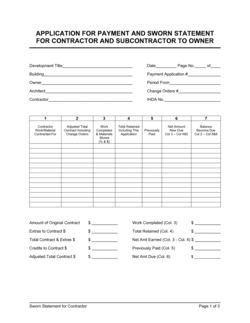
Client shall pay Contractor a fixed fee of $[AMOUNT] per the milestone schedule in Exhibit A. Invoices submitted by the [X]th of the month are due within [NET 30] days. Overdue balances accrue interest at [1.5]% per month.

Common mistake: No late-payment clause and no milestone schedule. Without both, clients delay payment indefinitely and contractors have no contractual lever to enforce timely payment.

Independent contractor status and tax responsibility

In plain language: Confirms that the contractor is responsible for all self-employment taxes, is not entitled to employee benefits, provides their own equipment, and sets their own hours — the factual record that supports non-employee classification.

Sample language
Contractor is solely responsible for all federal, state, and local taxes on amounts paid under this Agreement, including self-employment tax. Contractor is not entitled to any employee benefits, workers' compensation, or unemployment insurance. Contractor shall use their own equipment and tools unless otherwise agreed in writing.

Common mistake: Including this clause while simultaneously giving the contractor a company email address, set working hours, and a desk at the office. Tax authorities look at conduct, not contract language — behavioral controls override written status designations.

Intellectual property assignment

In plain language: Assigns all work product, deliverables, inventions, and IP created during the engagement to the client, and requires the contractor to execute any additional documents needed to perfect that transfer.

Sample language
All work product, deliverables, and inventions developed by Contractor in connection with this Agreement are works made for hire owned exclusively by Client. To the extent any such work is not legally a work made for hire, Contractor hereby irrevocably assigns all right, title, and interest — including all intellectual property rights — to Client.

Common mistake: Omitting a dual mechanism — both 'work for hire' designation and an assignment clause. In jurisdictions where the work-for-hire doctrine is narrow or unavailable (e.g., the UK, Canada, the EU), the assignment clause is the only reliable transfer mechanism.

Confidentiality

In plain language: Prohibits the contractor from disclosing or using the client's confidential information — business plans, source code, customer data, pricing — during and after the engagement.

Sample language
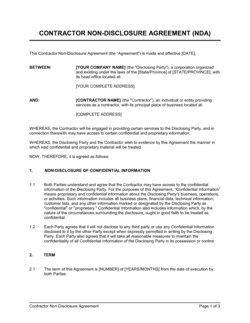
Contractor shall not, during or after the term of this Agreement, disclose or use any Confidential Information of Client without prior written consent. 'Confidential Information' means any non-public information relating to Client's business, technology, customers, finances, or operations disclosed to Contractor in connection with this Agreement.

Common mistake: No carve-out for information that becomes publicly known through no fault of the contractor. An overbroad definition with no standard exceptions exposes the clause to challenge and may make it unenforceable in full.

Non-solicitation

In plain language: Prevents the contractor from recruiting the client's employees or soliciting the client's customers for a defined period after the engagement ends, and optionally prevents the client from hiring the contractor's team members.

Sample language
For [12] months following termination of this Agreement, Contractor shall not directly or indirectly solicit or hire any employee or contractor of Client. Client shall not directly solicit or hire Contractor's personnel involved in this engagement during the same period.

Common mistake: Using a mutual non-solicitation without distinguishing between the contractor as an individual and their broader firm. A solo freelancer needs different protections than a staffing firm with 50 contractors.

Term and termination

In plain language: Sets the start and end date of the engagement, states each party's right to terminate early with notice or for cause, and defines what happens to deliverables and payment upon termination.

Sample language
This Agreement begins on [START DATE] and continues until [END DATE] or completion of the Statement of Work. Either party may terminate this Agreement with [15] days' written notice. Client may terminate immediately for cause. Upon termination, Client shall pay for all work accepted to date; Contractor shall deliver all work product in progress.

Common mistake: No provision for what happens to in-progress work product upon termination. Without it, a contractor can withhold partially complete deliverables as leverage, and the client has no clear right to the work they have already paid for.

Indemnification and limitation of liability

In plain language: Allocates responsibility for third-party claims — typically requiring the contractor to indemnify the client for IP infringement or negligence — and caps each party's maximum financial exposure.

Sample language
Contractor shall indemnify Client against any third-party claims arising from Contractor's breach of this Agreement or infringement of third-party intellectual property. Neither party shall be liable for indirect, incidental, or consequential damages. Each party's total liability is limited to the fees paid or payable in the [3] months preceding the claim.

Common mistake: No liability cap at all, leaving the contractor exposed to claims that dwarf the project fee, or a cap set so low it offers no real protection to the client in the event of a data breach or IP dispute.

Governing law and dispute resolution

In plain language: Specifies which jurisdiction's law governs the agreement and how disputes are resolved — litigation, mediation, or binding arbitration — and in which venue.

Sample language
This Agreement is governed by the laws of [STATE / PROVINCE / COUNTRY], without regard to its conflict-of-law provisions. Any dispute shall be resolved by binding arbitration administered by [AAA / JAMS] in [CITY], except that either party may seek injunctive relief in any court of competent jurisdiction.

Common mistake: Choosing a governing law with no connection to where either party operates or where the work is performed. Several jurisdictions apply local employment and labor law regardless of the chosen governing law when the engagement resembles employment.

How to fill it out

  1. 1

    Identify both parties with their legal names

    Enter the client's full registered legal entity name — not a brand or DBA — and the contractor's legal name or the registered name of their business entity. Include addresses and, where required, tax identification numbers.

    💡 Ask the contractor whether they are contracting as an individual or through a registered LLC or corporation — the answer affects your tax reporting obligations and their liability exposure.

  2. 2

    Draft a detailed statement of work as Exhibit A

    List every deliverable with a description, format, and deadline. Include acceptance criteria — how the client will evaluate whether work is complete — and a process for requesting revisions.

    💡 Treat Exhibit A as the most important part of the agreement. The more specific it is, the fewer disputes arise over what was promised.

  3. 3

    Set the compensation structure and payment schedule

    Choose between a fixed project fee, hourly rate, or milestone-based payments. Enter the invoicing procedure, due date (e.g., Net 15 or Net 30 from invoice receipt), and a late-payment interest rate.

    💡 Milestone payments tied to deliverable acceptance — rather than calendar dates — give the client payment leverage to ensure quality before funds are released.

  4. 4

    Confirm the independent contractor status provisions

    Review the status clause and confirm the working arrangement actually reflects what is written. The contractor should use their own equipment, set their own hours, and be free to work for other clients — otherwise the classification may not hold up to IRS or CRA scrutiny.

    💡 Document behavioral independence in writing where possible — for example, confirm in an email that the contractor sets their own schedule — to reinforce the written contract.

  5. 5

    Tailor the IP assignment clause to the work type

    If the contractor is creating software, creative assets, or product designs you need to own, ensure both the work-for-hire designation and the fallback assignment clause are present. Add a contractor IP background license if the contractor will incorporate pre-existing tools or libraries.

    💡 If the contractor insists on retaining background IP, negotiate a perpetual, royalty-free license to use it in the deliverables — without this, you may not be able to use what you paid for.

  6. 6

    Set non-solicitation and confidentiality terms proportionate to the engagement

    Calibrate the non-solicitation period and confidentiality scope to the sensitivity of what the contractor will access. A contractor building your core product needs tighter restrictions than one designing a marketing brochure.

    💡 Add a confidentiality carve-out for information the contractor can demonstrate they knew independently before the engagement — this makes the clause more defensible and more likely to be enforced.

  7. 7

    Execute before work begins and before sharing any confidential information

    Both parties must sign before any work is performed and before any proprietary information is disclosed. A signed agreement is the only reliable way to establish the contractor relationship, IP ownership, and confidentiality obligations from day one.

    💡 Use a digital signature platform to timestamp execution — this eliminates disputes about when the agreement became effective and creates a permanent audit trail.

Frequently asked questions

What is an independent contractor agreement?

An independent contractor agreement is a binding contract between a hiring party and a self-employed worker that defines the terms of a project-based or ongoing service engagement. It establishes that the worker is not an employee, specifies deliverables and payment terms, assigns intellectual property to the client, and sets confidentiality and termination obligations. It is the primary document protecting both parties in any contractor engagement.

What is the difference between an independent contractor agreement and an employment contract?

An employment contract creates an employer-employee relationship, entitling the worker to benefits, overtime protection, workers' compensation, and employer-side tax contributions. An independent contractor agreement establishes a commercial services relationship with no employment entitlements — the contractor pays their own taxes, provides their own equipment, and is free to work for other clients. Misusing a contractor agreement to cover what is functionally an employment relationship exposes the hiring party to significant tax and labor law penalties.

Does an independent contractor agreement need to be signed before work starts?

Yes. A signed agreement is the only reliable way to establish IP ownership, confidentiality obligations, and payment terms from day one. Work performed before signing may be subject to default copyright ownership rules — meaning the contractor retains rights to everything they created. In practice, the agreement should be signed before any kickoff call, system access, or sharing of confidential information.

Who owns the intellectual property created by an independent contractor?

Without a written agreement, the contractor typically owns the IP they create. The work-for-hire doctrine in the US can transfer ownership automatically for certain commissioned works, but only when a written agreement explicitly designates them as such and the work falls within a narrow statutory category. In Canada, the UK, and the EU, no automatic work-for-hire transfer exists for contractors. A well-drafted agreement includes both a work-for-hire designation and a fallback IP assignment clause to cover all jurisdictions.

What should a statement of work include?

A statement of work should include a description of each deliverable, the format and specifications it must meet, the deadline for each milestone, the acceptance criteria the client will use to evaluate completion, the revision process, and any dependencies the contractor requires from the client to proceed. The more specific the statement of work, the fewer disputes arise about what was agreed.

Is an independent contractor agreement enforceable if the worker is later classified as an employee?

Courts and tax authorities look at the substance of the working relationship, not the label in the contract. If the hiring party controls how, when, and where the work is performed, provides equipment, and restricts the worker from taking other clients, a contractor agreement will not prevent a reclassification finding. The agreement is enforceable as to its commercial terms — payment, confidentiality — but the contractor would also become entitled to employee-side rights, including back benefits, tax contributions, and potential reinstatement.

Can a contractor agreement include a non-compete clause?

Non-compete clauses in contractor agreements are treated differently from those in employment contracts and vary widely by jurisdiction. In the US, they are generally more enforceable against contractors than employees because the contractor bargaining position is presumed equal, but enforceability still depends on reasonableness of scope and duration. California bans most non-competes regardless of worker classification. In the UK and EU, post-engagement restrictions for contractors are enforceable if reasonable but may require financial compensation in some member states.

What payment terms are standard in contractor agreements?

Net 30 from invoice receipt is the most common standard for project-based contractor engagements. Freelancers and small contractors often negotiate Net 15 or milestone-based payments with a deposit — typically 25–50% upfront — to protect cash flow. For engagements longer than 90 days, monthly billing on a fixed retainer or time-and-materials basis with Net 15 terms is typical. Always include a late-payment interest rate — 1.5% per month is standard in most jurisdictions — to create a financial incentive for timely payment.

Do I need a lawyer to draft an independent contractor agreement?

For standard domestic engagements involving straightforward services and a single jurisdiction, a high-quality template is typically sufficient. Engage a lawyer when the contractor will have access to core IP or trade secrets, when the engagement crosses international borders with different IP ownership rules, when the project fee exceeds $50,000, or when misclassification risk is elevated. A legal review of a template typically costs $300–$600 and is worthwhile for any high-value or high-sensitivity engagement.

How this compares to alternatives

vs Employment Contract

An employment contract creates a formal employer-employee relationship with tax withholding, benefits, and statutory protections. An independent contractor agreement creates a commercial services relationship with no employment entitlements. Use an employment contract when you control how and when the work is done; use a contractor agreement when the worker is genuinely self-directed and provides services to multiple clients.

vs Consulting Agreement

A consulting agreement is a specialized contractor agreement typically used for strategic, advisory, or management consulting engagements where the deliverable is advice or recommendations rather than a tangible work product. A standard independent contractor agreement is broader and better suited to implementation work, creative services, or technical development where IP assignment and deliverable acceptance are central concerns.

vs Non-Disclosure Agreement

An NDA protects confidential information shared during early conversations or negotiations, before any engagement is formalized. An independent contractor agreement includes confidentiality obligations as one of many clauses governing an active engagement. Use an NDA before sharing sensitive information during vetting; replace or supplement it with a contractor agreement once the engagement is confirmed.

vs Statement of Work

A statement of work defines the specific deliverables, timeline, and fees for a single project or phase. It is typically used as an exhibit or addendum under a master independent contractor agreement that sets the overarching legal terms. The master agreement governs IP, confidentiality, and liability across all engagements; the statement of work governs the specifics of each one.

Industry-specific considerations

Technology / SaaS

IP assignment for source code and algorithms is critical; background IP licensing for pre-existing libraries must be addressed; offshore contractor engagements require jurisdiction-specific assignment language.

Creative and Marketing Agencies

Work-for-hire designation for creative assets, photography, and copy; licensing terms for stock assets incorporated into deliverables; revision round limits defined in the statement of work.

Professional Services

Non-solicitation of clients is the primary concern; engagement-specific confidentiality covering client data and strategy; milestone billing tied to deliverable acceptance rather than calendar dates.

Construction and Trades

Subcontractor insurance and indemnification requirements; lien waiver obligations upon payment; compliance with contractor licensing laws that vary by state or province.

Healthcare / Life Sciences

HIPAA Business Associate Agreement required when contractor accesses patient data; data security and breach notification obligations; credentialing and licensing conditions precedent to engagement.

E-commerce and Retail

Seasonal and project-based engagements for logistics, design, or content; ownership of product photography and brand assets; platform-specific compliance for contractors accessing marketplace accounts.

Jurisdictional notes

United States

The IRS applies a behavioral, financial, and relationship control test (Publication 15-A) to determine worker classification. California applies the stricter ABC test under AB5, which presumes all workers are employees unless the hiring party can prove otherwise. Non-compete clauses in contractor agreements are banned in California, restricted in Minnesota and Oklahoma, and subject to varying enforceability in all other states. Workers paid $600 or more in a calendar year must receive IRS Form 1099-NEC.

Canada

The CRA uses the RC4110 guide to assess worker classification based on control, ownership of tools, chance of profit, and risk of loss. Copyright in work product created by a contractor vests automatically in the contractor under the Copyright Act — there is no work-for-hire doctrine for independent contractors. An explicit IP assignment clause is essential. Quebec-based contractors require agreements in French for provincially regulated clients, and non-compete restrictions must be reasonable in scope and duration to be enforced.

United Kingdom

UK employment law recognizes three categories — employee, worker, and self-employed contractor — and courts look at the actual working relationship to assign the correct status. IR35 (off-payroll working rules) requires medium and large private sector clients to assess whether a contractor working through a personal service company would be an employee if engaged directly; if so, the client is responsible for PAYE and NICs. Copyright in contractor-created work belongs to the contractor by default under the CDPA 1988 — a written assignment is required to transfer ownership.

European Union

The EU Platform Work Directive (2024) creates a rebuttable presumption of employment for platform-based workers and signals broader scrutiny of contractor classification across member states. GDPR imposes data processing agreement obligations when contractors access personal data — a standalone Data Processing Agreement or GDPR addendum is required in addition to the contractor agreement. Copyright ownership rules vary by member state, with most defaulting ownership to the creator — explicit written assignment is required to transfer rights to the client.

Template vs lawyer — what fits your deal?

PathBest forCostTime
Use the templateStandard domestic contractor engagements under $50,000 in a single jurisdiction with straightforward deliverablesFree30 minutes
Template + legal reviewEngagements involving core IP, offshore contractors, or any fee above $50,000$300–$6001–3 days
Custom draftedMulti-jurisdiction engagements, high-value long-term retainers, contractors with access to sensitive customer data or regulated systems$1,000–$3,500+1–2 weeks

Glossary

Independent Contractor
A self-employed individual or entity engaged to perform specific work for a client without becoming an employee — responsible for their own taxes, benefits, and equipment.
Worker Misclassification
Treating an employee as an independent contractor to avoid payroll taxes and benefits obligations — a violation that triggers back taxes, penalties, and potential lawsuits in most jurisdictions.
Work for Hire
A legal doctrine under which creative or technical work produced by a contractor is automatically owned by the hiring party when the agreement explicitly designates it as such.
Scope of Work
A detailed description of the specific deliverables, tasks, and outcomes the contractor is engaged to produce, used to define performance obligations and limit scope creep.
1099 Contractor
The US colloquial term for an independent contractor, named after IRS Form 1099-NEC — the tax form used to report payments of $600 or more to non-employees.
IP Assignment
A contractual clause transferring ownership of all work product, inventions, and intellectual property created during the engagement from the contractor to the client.
Non-Solicitation Clause
A restriction preventing the contractor from recruiting the client's employees, or the client from poaching the contractor's team members, for a defined period after the engagement ends.
Indemnification
A clause requiring one party to cover the other's losses, legal costs, or damages arising from a specific breach or act — for example, a contractor indemnifying a client for third-party IP infringement.
Right to Control Test
The primary legal standard used by courts and tax authorities to determine worker classification — focusing on whether the hiring party controls how, when, and where the work is performed.
Limitation of Liability
A clause capping the maximum financial exposure of one or both parties — typically expressed as a multiple of fees paid under the agreement — in the event of a breach or dispute.
Kill Fee
A defined payment owed to the contractor if the client cancels the engagement after work has begun but before completion, compensating for time and resources already committed.

Part of your Business Operating System

This document is one of 3,000+ business & legal templates included in Business in a Box.

  • Fill-in-the-blanks — ready in minutes
  • 100% customizable Word document
  • Compatible with all office suites
  • Export to PDF and share electronically

Create your document in 3 simple steps.

From template to signed document — all inside one Business Operating System.
1
Download or open template

Access over 3,000+ business and legal templates for any business task, project or initiative.

2
Edit and fill in the blanks with AI

Customize your ready-made business document template and save it in the cloud.

3
Save, Share, Send, Sign

Share your files and folders with your team. Create a space of seamless collaboration.

Save time, save money, and create top-quality documents.

★★★★★

"Fantastic value! I'm not sure how I'd do without it. It's worth its weight in gold and paid back for itself many times."

Managing Director · Mall Farm
Robert Whalley
Managing Director, Mall Farm Proprietary Limited
★★★★★

"I have been using Business in a Box for years. It has been the most useful source of templates I have encountered. I recommend it to anyone."

Business Owner · 4+ years
Dr Michael John Freestone
Business Owner
★★★★★

"It has been a life saver so many times I have lost count. Business in a Box has saved me so much time and as you know, time is money."

Owner · Upstate Web
David G. Moore Jr.
Owner, Upstate Web

Run your business with a system — not scattered tools

Stop downloading documents. Start operating with clarity. Business in a Box gives you the Business Operating System used by over 250,000 companies worldwide to structure, run, and grow their business.

Start free · No credit card required