1
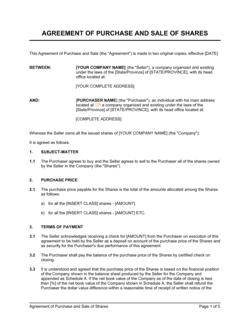
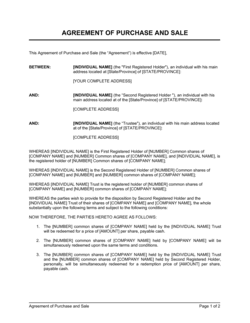
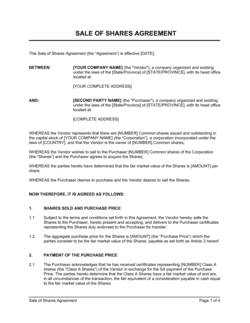
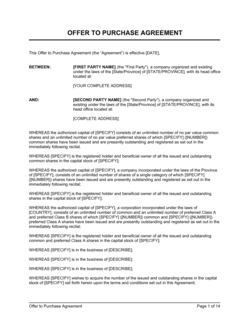
Identify all parties and the target company
Enter the full registered legal names of the seller, the buyer, and the company whose shares are being transferred. Confirm entity types and jurisdiction of incorporation for each.
💡 Pull the exact legal name from the company's certificate of incorporation or corporate registry filing — trade names are not sufficient.
2
Define the shares being sold with precision
State the exact number of shares, the class (common, preferred, Class A, etc.), and the percentage of total issued and outstanding shares they represent on a fully diluted basis.
💡 Obtain a copy of the company's share register and capitalization table before completing this section to confirm the seller actually holds the shares described.
3
Set the purchase price and payment terms
Enter the total purchase price, the per-share price, the payment method (wire transfer, certified check, or structured payments), and the specific closing date or date calculation formula.
💡 If any portion of the price is deferred or contingent, describe the earn-out or holdback mechanics in a separate schedule — keeping the main clause clean reduces ambiguity.
4
Negotiate and complete the representations and warranties
Work through both the seller and buyer warranty schedules. The seller's warranties on the company's financials, material contracts, and litigation should reflect actual due diligence findings.
💡 Attach a disclosure schedule alongside the representations — matters disclosed on the schedule are exceptions to the warranties and limit indemnification exposure.
5
List all conditions precedent
Identify every consent, approval, or filing required before closing — shareholder approval, board resolution, regulatory filing, landlord consent, or lender waiver. Each should be a named, specific condition.
💡 Set a drop-dead date by which all conditions must be satisfied. If conditions are not met by that date, the agreement should automatically terminate to avoid an indefinite obligation.
6
Complete the indemnification and survival terms
Set the survival period (typically 12–36 months), the indemnification cap (commonly 10–100% of the purchase price), the basket or deductible threshold, and which representations survive indefinitely as fundamental warranties.
💡 Fundamental representations — title to shares, authority, and capitalization — should always survive indefinitely regardless of the general survival period.
7
Draft the non-compete and non-solicitation scope
Define the restricted activities, geographic area, and duration calibrated to the seller's actual role and knowledge. Tie the restriction to the specific business activities of the company.
💡 In jurisdictions that require financial consideration for post-closing non-competes (some EU countries), confirm the purchase price itself is sufficient or add a nominal separate payment.
8
Execute before or on the closing date
Both parties must sign the agreement — and all closing deliverables must be exchanged — on or before the stated closing date. Use electronic signatures where permitted by local law.
💡 Confirm that the company's share register is updated immediately at closing and that new share certificates or DRS statements are issued to the buyer on the same day.