Collateral Agreement Template

Free Word download • Edit online • Save & share with Drive • Export to PDF

7 pages30–40 min to fillDifficulty: ComplexSignature requiredLegal review recommended
Learn more ↓
FreeCollateral Agreement Template

At a glance

What it is
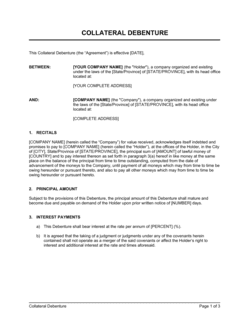
A Collateral Agreement is a legally binding security document under which a borrower pledges one or more specified assets to a lender as security for a loan or other financial obligation. This free Word download lets you describe the collateral, attach the security interest, and define the lender's remedies on default — ready to edit online and export as PDF for signing.
When you need it
Use it whenever a lender requires a borrower to back a loan with a specific asset — such as equipment, inventory, receivables, real property, or intellectual property — before funds are advanced or credit is extended.
What's inside
Parties and recitals, a precise description of the pledged collateral, grant of security interest, representations and warranties, borrower obligations, events of default, lender remedies, release conditions, and governing law.

What is a Collateral Agreement?

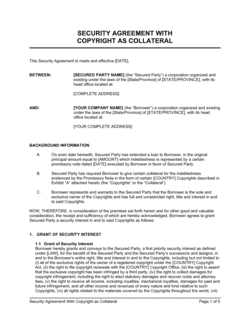
A Collateral Agreement — also called a security agreement — is a legally binding document under which a borrower (the grantor) pledges one or more specifically identified assets to a lender (the secured party) as security for a loan or other financial obligation. The agreement names the collateral, attaches the lender's security interest to that property, establishes the borrower's ongoing obligations to protect the asset, and defines the lender's remedies — including repossession and sale — if the borrower defaults. In the United States, collateral agreements covering personal property (equipment, inventory, receivables, and intangibles) are governed by Article 9 of the Uniform Commercial Code; comparable regimes exist under provincial PPSA statutes in Canada and the Companies Act in the United Kingdom.

Why You Need This Document

Without a written collateral agreement, a lender has no enforceable claim over any specific asset if the borrower defaults — the loan becomes unsecured, and the lender stands in line with every other general creditor in a bankruptcy proceeding. A signed collateral agreement is also a prerequisite for filing a UCC-1 financing statement, which perfects the security interest and establishes priority over later creditors. The practical consequences of skipping this document are severe: in a default scenario, a lender without a perfected security interest can lose its entire position to a later creditor who filed first, or watch the collateral be liquidated by a bankruptcy trustee for the benefit of other creditors. For borrowers, a properly drafted agreement protects them too — the release clause and clear default definitions prevent lenders from making unjustified claims on pledged assets or delaying termination statements after the debt is repaid. This template gives both parties a clear, enforceable framework from the moment funds change hands.

Which variant fits your situation?

If your situation is…Use this template
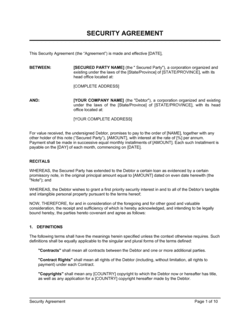
Securing a business loan with movable personal property (equipment, inventory, receivables)Collateral Agreement (UCC Security Agreement)
Pledging publicly traded shares or investment securities as collateralStock Pledge Agreement
Securing a real estate loan with a specific propertyMortgage or Deed of Trust
Pledging all present and future assets as a floating chargeGeneral Security Agreement
Documenting the underlying loan terms alongside the security interestLoan Agreement
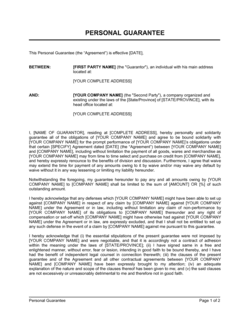
Guaranteeing a third-party obligation without pledging a specific assetPersonal Guarantee
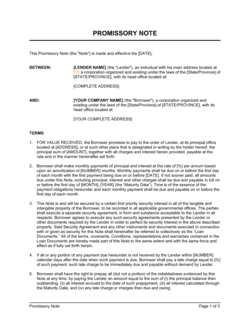
Securing payment under a promissory note with identified collateralSecured Promissory Note

Common mistakes to avoid

❌ Filing the UCC-1 in the wrong state

Why it matters: Perfection rules under Revised UCC Article 9 are determined by the debtor's location — state of organization for entities — not the choice-of-law clause or the location of the collateral. A filing in the wrong state is unperfected and subordinate to later creditors who file correctly.

Fix: Confirm the debtor's state of organization from the certificate of formation before filing. For foreign entities registered in multiple states, file in the state of original organization, not the state of qualification.

❌ Using an inaccurate or insufficient collateral description

Why it matters: A description that does not reasonably identify the collateral — or one so vague it is effectively a supergeneric description of 'all assets' for a consumer transaction — fails the UCC Article 9 sufficiency standard and the security interest may not attach.

Fix: Describe collateral by specific type, category, or item. For equipment, include make, model, and serial number. For receivables, describe the class of accounts. Attach a detailed schedule if the list is long.

❌ Signing after funds are advanced

Why it matters: A security agreement signed after value is given may fail the attachment requirement in some structures, and a subsequent filing may be subject to a 90-day preference clawback in bankruptcy if the debtor files within that window.

Fix: Execute the collateral agreement and file the UCC-1 before — or simultaneously with — the advance of funds. For revolving credit, execute at closing before any draw.

❌ Not disclosing existing prior liens

Why it matters: A borrower who represents clear title while a prior security interest is on file is in immediate breach of warranty. The lender's security interest is junior to the undisclosed prior creditor, and the breach may not be discovered until default — when it is too late to recover.

Fix: Conduct an independent UCC lien search before signing and require the borrower to list all existing encumbrances in a schedule. Make the accuracy of that schedule a closing condition.

❌ Omitting the lender as loss payee on the borrower's insurance

Why it matters: If collateral is destroyed by fire, flood, or theft and the insurance proceeds go directly to the borrower, the lender loses its practical security. The borrower can spend the payout rather than replace or pay down the secured debt.

Fix: Require the borrower covenant to name the lender as loss payee on all casualty insurance covering the collateral, and obtain a certificate of insurance at closing confirming this endorsement is in place.

❌ Failing to file a UCC-3 termination after repayment

Why it matters: An active UCC filing against a borrower who has repaid the loan in full clouds the borrower's title and can block future financing. Under UCC §9-513, a lender who fails to file a termination within 20 days of a proper demand is liable for $500 plus actual damages.

Fix: Build a post-payoff checklist that triggers a UCC-3 termination filing and a written release letter within 30 days of final payment. Track open UCC filings in a tickler system with the lapse date.

The 10 key clauses, explained

Parties and recitals

In plain language: Identifies the borrower (grantor) and lender (secured party) as legal entities and states the purpose — typically securing performance under a named loan agreement or promissory note.

Sample language
This Collateral Agreement ('Agreement') is entered into as of [DATE] between [BORROWER LEGAL NAME], a [STATE] [ENTITY TYPE] ('Grantor'), and [LENDER LEGAL NAME], a [STATE] [ENTITY TYPE] ('Secured Party'), to secure all obligations under the Loan Agreement dated [DATE].

Common mistake: Using trade names instead of registered legal entity names. Enforcement actions and UCC filings must reference the exact legal name on the debtor's government-issued records or the filing may be seriously misleading and ineffective.

Description of collateral

In plain language: Specifies exactly which assets are pledged — by type, serial number, account number, or category — and whether after-acquired property of the same type is included.

Sample language
The Collateral consists of all of Grantor's right, title, and interest in and to: (a) the equipment listed in Schedule A; (b) all accounts receivable arising from Grantor's business; and (c) all proceeds and products of the foregoing, whether now owned or hereafter acquired.

Common mistake: Using overly vague descriptions such as 'all business assets.' Courts and UCC filing offices require a description that reasonably identifies the collateral — a description so broad it covers everything may be challenged as a disguised attempt to take a general lien without proper disclosure.

Grant of security interest

In plain language: The operative clause in which the borrower formally grants the lender a security interest in the described collateral to secure the stated obligations.

Sample language
Grantor hereby grants to Secured Party a continuing security interest in the Collateral to secure the prompt and complete payment and performance of all Obligations, as defined herein.

Common mistake: Omitting the word 'continuing' — without it, the security interest may be read as terminated once an initial debt is repaid, leaving later advances unsecured even if the same collateral covers them.

Representations and warranties

In plain language: Statements by the borrower confirming ownership of the collateral, absence of prior liens, authority to grant the security interest, and accuracy of the asset description.

Sample language
Grantor represents and warrants that: (a) Grantor has good and marketable title to the Collateral, free and clear of all liens except as disclosed in Schedule B; (b) Grantor has full authority to grant the security interest herein; and (c) the Collateral description is accurate and complete.

Common mistake: Failing to schedule existing prior liens. A borrower who does not disclose a prior security interest is in breach at signing, and the lender's interest may be junior to an undisclosed creditor it never knew existed.

Borrower obligations and covenants

In plain language: Ongoing duties of the borrower while the security interest is in place — maintaining and insuring the collateral, not selling or encumbering it, and giving the lender access for inspection.

Sample language
Grantor shall: (a) maintain the Collateral in good condition and repair; (b) keep the Collateral insured for full replacement value, naming Secured Party as loss payee; (c) not sell, transfer, or encumber the Collateral without Secured Party's prior written consent; and (d) permit Secured Party to inspect the Collateral upon [48 hours'] notice.

Common mistake: Not requiring the lender to be named as loss payee on the borrower's insurance policy. If collateral is destroyed and an insurance payout goes directly to the borrower, the lender loses its practical security before default remedies can be triggered.

Events of default

In plain language: Defines the specific circumstances that constitute a default — non-payment, breach of covenant, insolvency, or material impairment of the collateral — and may include a cure period.

Sample language
Each of the following constitutes an Event of Default: (a) failure to pay any Obligation within [10] days of its due date; (b) material breach of any covenant herein not cured within [30] days of written notice; (c) Grantor's insolvency, bankruptcy filing, or appointment of a receiver; (d) loss, destruction, or material impairment of the Collateral not covered by insurance.

Common mistake: Omitting a cure period for technical or non-payment breaches. Without one, a minor administrative lapse triggers immediate default remedies — courts may view aggressive enforcement on a trivial breach as bad faith and limit the lender's recovery.

Lender remedies on default

In plain language: Sets out what the lender may do after an event of default — taking possession of the collateral, selling it, applying proceeds to the debt, and pursuing any deficiency balance.

Sample language
Upon an Event of Default, Secured Party may: (a) declare all Obligations immediately due and payable; (b) take possession of the Collateral with or without judicial process to the extent permitted by applicable law; (c) sell, lease, or otherwise dispose of the Collateral in a commercially reasonable manner; and (d) apply net proceeds to the Obligations, with any deficiency remaining the personal liability of Grantor.

Common mistake: Specifying a self-help repossession right without the qualifying phrase 'to the extent permitted by applicable law.' In some jurisdictions, self-help repossession without notice is prohibited, and a blanket authorization to take possession without this qualifier may be unenforceable and expose the lender to liability.

UCC filing and perfection authorization

In plain language: Authorizes the lender to file UCC-1 financing statements and any continuation or amendment statements without further consent from the borrower.

Sample language
Grantor authorizes Secured Party to file, in any jurisdiction Secured Party deems necessary, UCC financing statements and any amendments or continuations describing the Collateral, without Grantor's signature or further authorization.

Common mistake: Not including this authorization at all, requiring the borrower to sign every financing statement separately. A borrower who later refuses to sign a continuation statement can effectively extinguish the lender's perfected security interest when the initial five-year UCC filing lapses.

Release of security interest

In plain language: States the conditions under which the lender will terminate the security interest and file a UCC-3 termination statement — typically full repayment of the secured obligations.

Sample language
Upon payment in full of all Obligations and termination of all commitments to advance funds, Secured Party shall, within [30] days of Grantor's written request, file a UCC-3 termination statement and execute such other documents as Grantor reasonably requests to evidence the release of the security interest.

Common mistake: Leaving the release obligation open-ended with no deadline. Lenders who fail to file a timely termination statement after full repayment expose themselves to statutory damages under UCC Article 9 and equivalent provincial legislation.

Governing law and dispute resolution

In plain language: Specifies which jurisdiction's law governs the agreement and how disputes are resolved — litigation, arbitration, or mediation — along with venue selection.

Sample language
This Agreement is governed by the laws of [STATE / PROVINCE], without regard to conflicts-of-law principles. Any dispute shall be resolved exclusively in the state and federal courts located in [CITY, STATE], and each party irrevocably submits to such jurisdiction.

Common mistake: Choosing a governing law state that differs from the state where the collateral is located or the debtor is organized. UCC Article 9 perfection rules are determined by the debtor's location, not the contract's choice-of-law clause — a mismatch leads to filings in the wrong state and an unperfected security interest.

How to fill it out

  1. 1

    Identify the parties using exact legal entity names

    Enter the borrower's and lender's full registered legal names — as they appear on state or provincial incorporation records — along with entity type and state of formation. Add principal business addresses for both.

    💡 Run a free search on your Secretary of State's business entity database to confirm the exact legal name before drafting. A name mismatch between the agreement and a UCC filing can render the financing statement seriously misleading.

  2. 2

    Reference the underlying loan or obligation precisely

    Identify the specific debt being secured — the loan agreement, promissory note, or credit facility — by its title, date, and principal amount. If the collateral secures multiple obligations, list each one.

    💡 Include an 'all obligations' dragnet clause only if you intend the collateral to secure future advances. If the pledge is for a single defined loan, limit it explicitly to avoid unintended cross-collateralization.

  3. 3

    Describe the collateral with precision

    List every pledged asset by type and, where applicable, serial number, account number, or VIN. For revolving pools (inventory, receivables), use category descriptions and include an after-acquired property clause. Attach detailed lists as Schedule A.

    💡 For equipment, pull the serial numbers from the asset register — not the invoice. Serial numbers on invoices are sometimes incorrect.

  4. 4

    Disclose any existing prior liens in Schedule B

    Search the relevant UCC, PPSA, or Companies House register for existing filings against the borrower and list every prior lien in Schedule B. The borrower must warrant that the disclosure is complete.

    💡 Order a formal UCC lien search from the Secretary of State rather than relying on the borrower's representation — the search takes 24–48 hours and costs under $30.

  5. 5

    Complete the borrower covenants block

    Specify the insurance coverage amount, the inspection notice period, and any permitted-transfer exceptions. Tailor the covenants to the collateral type — inventory covenants differ from equipment covenants.

    💡 Require the borrower to provide you with a certificate of insurance naming you as loss payee within five business days of signing, not at some future date.

  6. 6

    Set events of default and cure periods

    Define each event of default precisely. Include payment default with a grace period of 5–10 days, covenant breach with a 30-day cure period after written notice, and automatic defaults for insolvency events with no cure period.

    💡 Distinguish between automatic defaults (insolvency, appointment of receiver) and defaults requiring notice and cure. Mixing them leads to ambiguity about when remedies actually become available.

  7. 7

    Execute the agreement and authorize the UCC filing

    Have both parties sign the agreement before any funds are advanced. The borrower's signature on the agreement also serves as the authenticated record authorizing UCC financing statement filings under Revised Article 9.

    💡 File the UCC-1 on the same day as — or the day before — execution. Priority among competing creditors runs from the date of filing, not the date of signing.

  8. 8

    Perfect the security interest by filing a UCC-1

    File a UCC-1 financing statement with the Secretary of State in the state where the debtor is organized (for entities) or resides (for individuals). Use the debtor's exact legal name. Set a calendar reminder to file a continuation statement before the five-year filing lapses.

    💡 A single character error in the debtor's name on the UCC-1 — even a missing comma — can make the filing seriously misleading and therefore ineffective against a bankruptcy trustee.

Frequently asked questions

What is a collateral agreement?

A collateral agreement is a security document under which a borrower (the grantor) pledges specific assets to a lender (the secured party) as security for a loan or other financial obligation. It names the collateral, attaches the lender's security interest, and sets out what the lender may do — including seizing and selling the assets — if the borrower defaults. It is also called a security agreement under UCC Article 9 in the United States.

What is the difference between a collateral agreement and a loan agreement?

A loan agreement documents the terms of the debt — principal, interest rate, repayment schedule, and covenants. A collateral agreement is the security document that backs the loan by pledging specific assets as collateral. The two documents work together: the loan agreement creates the obligation; the collateral agreement gives the lender a legal claim over identified assets if that obligation is not met. Both should be signed at the same closing.

What assets can be pledged as collateral?

Under UCC Article 9, almost any personal property can serve as collateral — equipment, inventory, accounts receivable, deposit accounts, investment securities, intellectual property licenses, and general intangibles. Real property (land and buildings) is governed by mortgage or deed-of-trust law, not UCC Article 9, and requires a separate instrument. The collateral agreement should describe the pledged asset category precisely enough that a third party could identify it.

What does it mean to 'perfect' a security interest?

Perfection is the step that makes a security interest enforceable against third parties — including other creditors and a bankruptcy trustee. For most personal property in the US, perfection requires filing a UCC-1 financing statement with the Secretary of State in the state where the debtor is organized. Without perfection, the lender's interest is valid between the parties but loses priority to later creditors who do file, and may be avoided entirely in a bankruptcy.

Do I need to file a UCC-1 financing statement for every collateral agreement?

For the security interest to be perfected against third parties and in bankruptcy, yes — a UCC-1 filing is required for most personal property collateral. Exceptions include security interests perfected by possession (such as pledged certificated securities or cash) and purchase-money security interests in consumer goods, which are automatically perfected without filing. For real property, the equivalent public notice is a mortgage or deed of trust recorded with the county recorder.

What happens to the collateral if the borrower defaults?

After an event of default, the lender may — in most US states — take possession of the collateral without judicial process if it can do so without breaching the peace, then sell or lease the collateral in a commercially reasonable manner. Proceeds are applied first to the costs of enforcement, then to the outstanding debt. If proceeds are insufficient, the borrower typically remains liable for the deficiency balance. The lender must send reasonable notice of any public sale or the method and time of a private sale.

Can a collateral agreement cover assets the borrower does not yet own?

Yes — an after-acquired property clause extends the security interest to assets the borrower acquires in the future that fall within the described collateral category. This is common for inventory and receivables financing, where the collateral pool changes daily. The security interest attaches automatically when the borrower acquires rights in a new asset of the covered type, without any additional documentation.

Is a collateral agreement enforceable without notarization?

For personal property collateral under UCC Article 9, notarization is generally not required for the agreement itself to be enforceable between the parties. However, some states require notarization for UCC fixture filings covering personal property affixed to real estate, and real property mortgages typically require notarization for recordation. Consider consulting a lawyer to confirm requirements in the governing jurisdiction before signing.

What is the difference between a collateral agreement and a personal guarantee?

A collateral agreement pledges a specific asset — the lender's recourse is limited to that asset on default. A personal guarantee makes an individual personally liable for the full debt, regardless of whether any asset was pledged. Lenders often require both: a collateral agreement for the asset-level security and a personal guarantee from the business owner to close any gap between the collateral's value and the outstanding loan balance.

How this compares to alternatives

vs Loan Agreement

A loan agreement establishes the terms of the debt — amount, interest rate, repayment schedule, and financial covenants. A collateral agreement provides the security for that debt by pledging specific assets. Both documents are typically executed at the same closing, and the collateral agreement cross-references the loan agreement as the obligation being secured. Neither document alone is sufficient for a fully documented secured lending transaction.

vs Personal Guarantee

A personal guarantee makes an individual personally liable for a debt if the primary borrower defaults — recourse is against the guarantor's personal assets generally. A collateral agreement limits the lender's recourse to the specific pledged asset. Lenders frequently require both: the collateral agreement provides first-resort asset-level security; the personal guarantee fills any gap between collateral value and the outstanding balance.

vs Promissory Note

A promissory note is the borrower's unconditional written promise to repay a stated sum — it is the evidence of the debt itself. A collateral agreement is the security document that backs that promise with a lien on specific assets. A promissory note can exist without collateral (unsecured note); a collateral agreement always references an underlying obligation, such as a promissory note or loan agreement.

vs Mortgage Agreement

A mortgage (or deed of trust) is a collateral instrument specific to real property — it is recorded with the county recorder to create a lien on land and buildings. A collateral agreement under UCC Article 9 applies to personal property — equipment, inventory, receivables, and intangibles. For loans secured by both real and personal property, lenders use both instruments simultaneously, with the mortgage covering real estate and the collateral agreement covering everything else.

Industry-specific considerations

Commercial Lending

Banks and credit unions use collateral agreements to secure term loans and revolving lines of credit with equipment, inventory, or receivables as the pledged collateral pool.

Manufacturing

Manufacturers pledge specific machinery, production equipment, or raw-material inventory — often with serial-number schedules — to secure equipment financing or supplier credit facilities.

Real Estate and Construction

Developers pledge assignment of rents, construction equipment, or material inventory as secondary collateral alongside a primary mortgage when lenders require additional security.

Technology and SaaS

Tech companies pledge accounts receivable, software licenses, or intellectual property rights as collateral for revenue-based financing or venture debt facilities where physical assets are limited.

Jurisdictional notes

United States

Collateral agreements covering personal property are governed by Article 9 of the Uniform Commercial Code, adopted in all 50 states with minor variations. A security interest attaches when value is given, the debtor authenticates a security agreement, and the debtor has rights in the collateral. Perfection for most personal property requires a UCC-1 filing in the debtor's state of organization. California, Texas, and Delaware each have nuances in their UCC filing offices and debtor-name indexing rules worth confirming with local counsel.

Canada

Personal property security is governed provincially under each province's Personal Property Security Act (PPSA) — broadly similar to UCC Article 9 but with provincial variations in filing registries and priority rules. Ontario, British Columbia, and Alberta each maintain separate PPSA registries. Quebec uses a distinct civil-law hypothec regime under the Civil Code of Quebec rather than a PPSA framework, making Quebec collateral transactions significantly different in both documentation and registration requirements.

United Kingdom

Security over personal property in England and Wales is governed by the Companies Act 2006 and general common law. Fixed charges attach to specific identified assets; floating charges cover a changing pool of assets and crystallize on default or appointment of a receiver. Security created by a UK-registered company must be registered at Companies House within 21 days of creation or it is void against a liquidator and other creditors. Scotland has a separate Scots law framework for heritable (real) and movable (personal) property security.

European Union

There is no unified EU personal property security law — each member state has its own framework. Germany uses the Sicherungsübereignung (security transfer of title) and Sicherungszession (security assignment of receivables). France uses the nantissement for pledges over business assets and the cession Dailly for receivables. The EU Financial Collateral Directive (2002/47/EC) provides a streamlined regime for financial collateral arrangements (cash and securities) but does not cover general commercial asset pledges. Cross-border EU collateral transactions typically require legal opinions from each relevant jurisdiction.

Template vs lawyer — what fits your deal?

PathBest forCostTime
Use the templateStraightforward loans between known parties with clearly identified personal property collateral and no prior liensFree30–60 minutes
Template + legal reviewLoans above $50,000, multiple collateral types, existing prior liens, or cross-border transactions$400–$800 for a transactional attorney review2–5 business days
Custom draftedComplex secured lending — revolving credit facilities, IP collateral, inter-creditor arrangements, or multi-jurisdictional enforcement$1,500–$5,000+1–3 weeks

Glossary

Security Interest
A creditor's legal right in a debtor's property that serves as collateral for the repayment of a debt or other obligation.
Collateral
The specific asset or assets pledged by a borrower to secure a loan, which the lender may seize or sell if the borrower defaults.
Attachment
The process by which a security interest becomes enforceable against the debtor — requiring a security agreement, value given, and the debtor having rights in the collateral.
Perfection
The step that makes a security interest enforceable against third parties, typically achieved by filing a UCC-1 financing statement or taking possession of the collateral.
UCC-1 Financing Statement
A public notice document filed with a state agency under Article 9 of the Uniform Commercial Code to perfect a lender's security interest in personal property.
Default
A borrower's failure to meet a defined condition — such as missing a payment, breaching a covenant, or becoming insolvent — that triggers the lender's remedies under the agreement.
Foreclosure / Enforcement
The legal process by which a secured lender takes possession of and sells pledged collateral to recover the outstanding debt after a default.
Release of Security Interest
A lender's formal relinquishment of its claim over the collateral, typically issued when the underlying debt has been repaid in full.
After-Acquired Property
A clause extending the security interest to cover assets the borrower acquires after the agreement is signed, not just assets owned at signing.
Floating Charge
A security interest that applies to a changing pool of assets — such as inventory or receivables — rather than specific, identified items.
Subordination
An agreement by which one creditor's security interest is ranked below another's, determining the order of repayment from collateral proceeds.

Part of your Business Operating System

This document is one of 3,000+ business & legal templates included in Business in a Box.

  • Fill-in-the-blanks — ready in minutes
  • 100% customizable Word document
  • Compatible with all office suites
  • Export to PDF and share electronically

Create your document in 3 simple steps.

From template to signed document — all inside one Business Operating System.
1
Download or open template

Access over 3,000+ business and legal templates for any business task, project or initiative.

2
Edit and fill in the blanks with AI

Customize your ready-made business document template and save it in the cloud.

3
Save, Share, Send, Sign

Share your files and folders with your team. Create a space of seamless collaboration.

Save time, save money, and create top-quality documents.

★★★★★

"Fantastic value! I'm not sure how I'd do without it. It's worth its weight in gold and paid back for itself many times."

Managing Director · Mall Farm
Robert Whalley
Managing Director, Mall Farm Proprietary Limited
★★★★★

"I have been using Business in a Box for years. It has been the most useful source of templates I have encountered. I recommend it to anyone."

Business Owner · 4+ years
Dr Michael John Freestone
Business Owner
★★★★★

"It has been a life saver so many times I have lost count. Business in a Box has saved me so much time and as you know, time is money."

Owner · Upstate Web
David G. Moore Jr.
Owner, Upstate Web

Run your business with a system — not scattered tools

Stop downloading documents. Start operating with clarity. Business in a Box gives you the Business Operating System used by over 250,000 companies worldwide to structure, run, and grow their business.

Start free · No credit card required