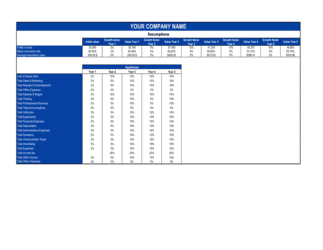
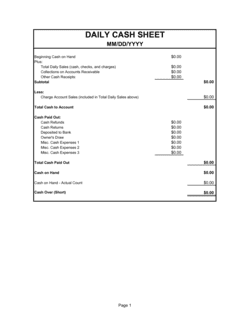
- Operating budget
- A forward-looking plan that estimates revenue and expenses over a defined period, typically 12 months.
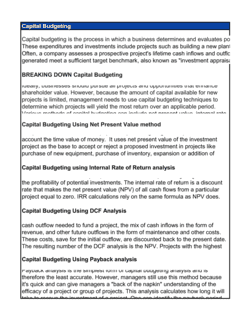
- Capital budget
- A financial analysis used to evaluate whether a long-term investment — equipment, facility, or acquisition — is worth pursuing.
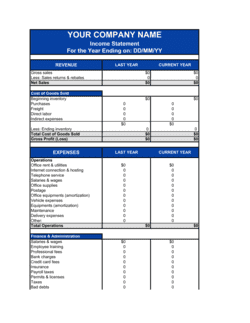
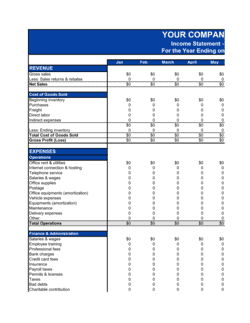
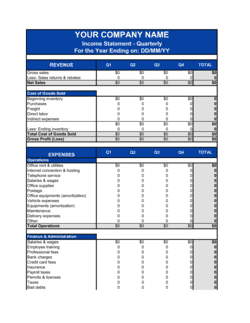
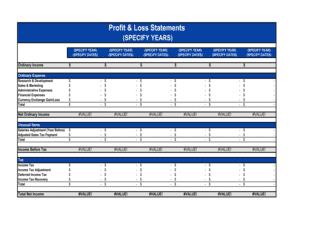
- Income statement
- A financial report that shows revenue, costs, and net profit or loss over a completed accounting period.
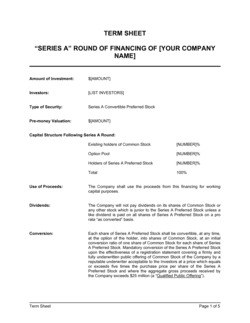
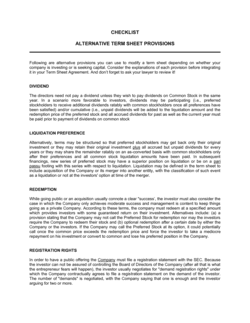
- Term sheet
- A non-binding document summarizing the proposed terms of a financing or investment deal before formal agreements are drafted.
- Equity investment
- Capital provided to a business in exchange for an ownership stake rather than a repayment obligation.
- Net present value (NPV)
- The current value of expected future cash flows from an investment, discounted at a required rate of return — a positive NPV means the investment is expected to create value.
- Conditions precedent
- Specific events or requirements that must be satisfied before a financial obligation or transaction becomes effective.
- Events of default
- Defined circumstances — such as missed payments or insolvency — that entitle a lender or investor to accelerate repayment or exercise remedies.
- Series A round
- Typically the first significant institutional equity financing round a startup raises after seed funding, used to scale a proven business model.
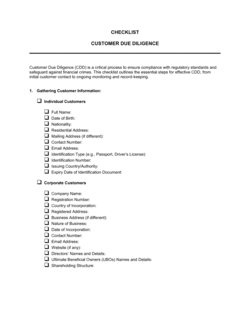
- Anti-money laundering (AML) policy
- A set of internal procedures designed to detect and prevent the business from being used to conceal the origins of illegally obtained money.
- Preferred shares
- A class of equity that typically carries priority over common shares for dividends and liquidation proceeds, often issued to investors.
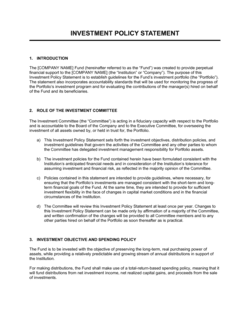
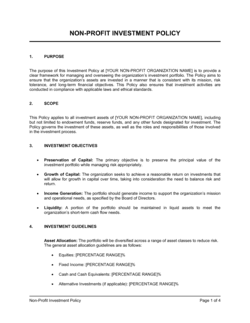
- Investment policy statement (IPS)
- A written document that governs how an organization's investment assets are to be managed, including objectives, risk tolerance, and constraints.