1
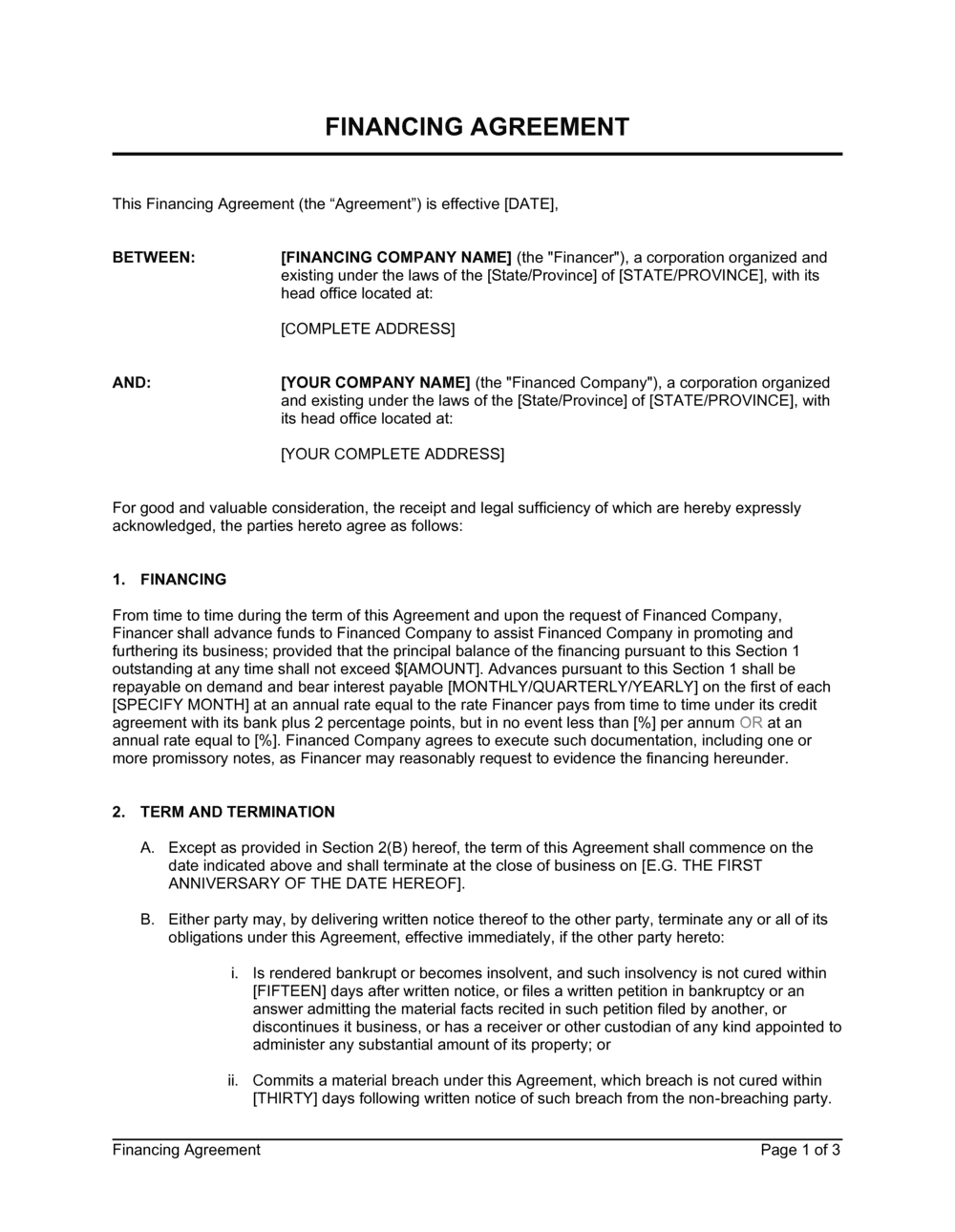
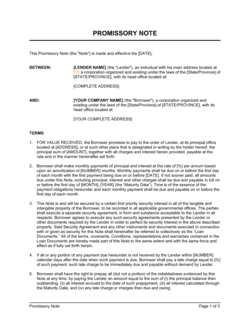
Identify both parties with their full legal entity names
Enter the lender's and borrower's registered legal names — not trade names — along with their jurisdiction of formation and principal business address. Include the date of execution.
💡 Cross-check the borrower's entity name against the relevant corporate registry before signing. A mismatch between the contract name and the registered name weakens enforceability against the entity's assets.
2
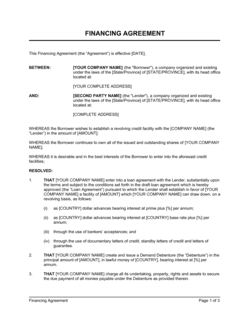
Define the facility amount, currency, and permitted purpose
State the total approved amount in the applicable currency, specify whether the facility is a single advance or a multi-draw arrangement, and restrict the use of funds to the specific purpose — asset purchase, project costs, or working capital.
💡 If the facility is multi-draw, cap each individual drawdown and set a drawdown period end date after which no further advances can be requested.
3
Set the interest rate, day-count basis, and payment dates
Choose fixed or floating rate. For floating, specify the reference rate (e.g., SOFR, SONIA, or prime) and the spread in basis points. Select the day-count convention (actual/365 is standard in the UK and Canada; 30/360 is common in the US) and the payment dates.
💡 For floating-rate facilities, include a floor — e.g., 'not less than 0%' — to protect the lender if the reference rate goes negative.
4
Build the repayment schedule and set the maturity date
Decide on equal installments, a custom amortization, or a bullet structure. Calculate the first payment date, the number of periods, and the final maturity date. Attach a full amortization table as a schedule.
💡 Always include a separate maturity date even if you have a complete amortization schedule — it acts as a backstop if payments are restructured mid-term.
5
Describe the collateral and perfection requirements
Identify the specific assets pledged — serial numbers for equipment, legal description for real property, account numbers for financial assets — and specify the steps required to perfect the security interest in each applicable jurisdiction.
💡 For personal property collateral in the US, file a UCC-1 within 5 business days of signing to establish your priority date against competing creditors.
6
Draft the financial covenants with defined testing dates
List each financial metric the borrower must maintain (DSCR, minimum cash, maximum leverage ratio), the threshold, the testing frequency (quarterly is standard), and the cure period for a breach before it becomes an event of default.
💡 Set covenant thresholds with a 10–15% buffer above your actual underwriting threshold — this gives early warning before a breach becomes a crisis.
7
List events of default and include cure periods
Enumerate each default trigger — payment failure, covenant breach, misrepresentation, cross-default, change of control, insolvency. Assign a cure period (typically 5 business days for payment, 30 days for covenant breaches) to prevent technical defaults from triggering acceleration unnecessarily.
💡 Include a 'material adverse change' default carefully — courts scrutinize MAC clauses closely and they are difficult to invoke without extensive documentation.
8
Execute before any funds are advanced
Both parties must sign and date the agreement — and the borrower should provide all conditions-precedent documents — before the first advance is made. Obtain corporate authorization resolutions from the borrower at the same time.
💡 For secured facilities, do not advance funds until you have confirmed the security interest has been perfected (UCC filed, charge registered, or mortgage recorded) in all required jurisdictions.