1
Identify parties with full legal names and entity types
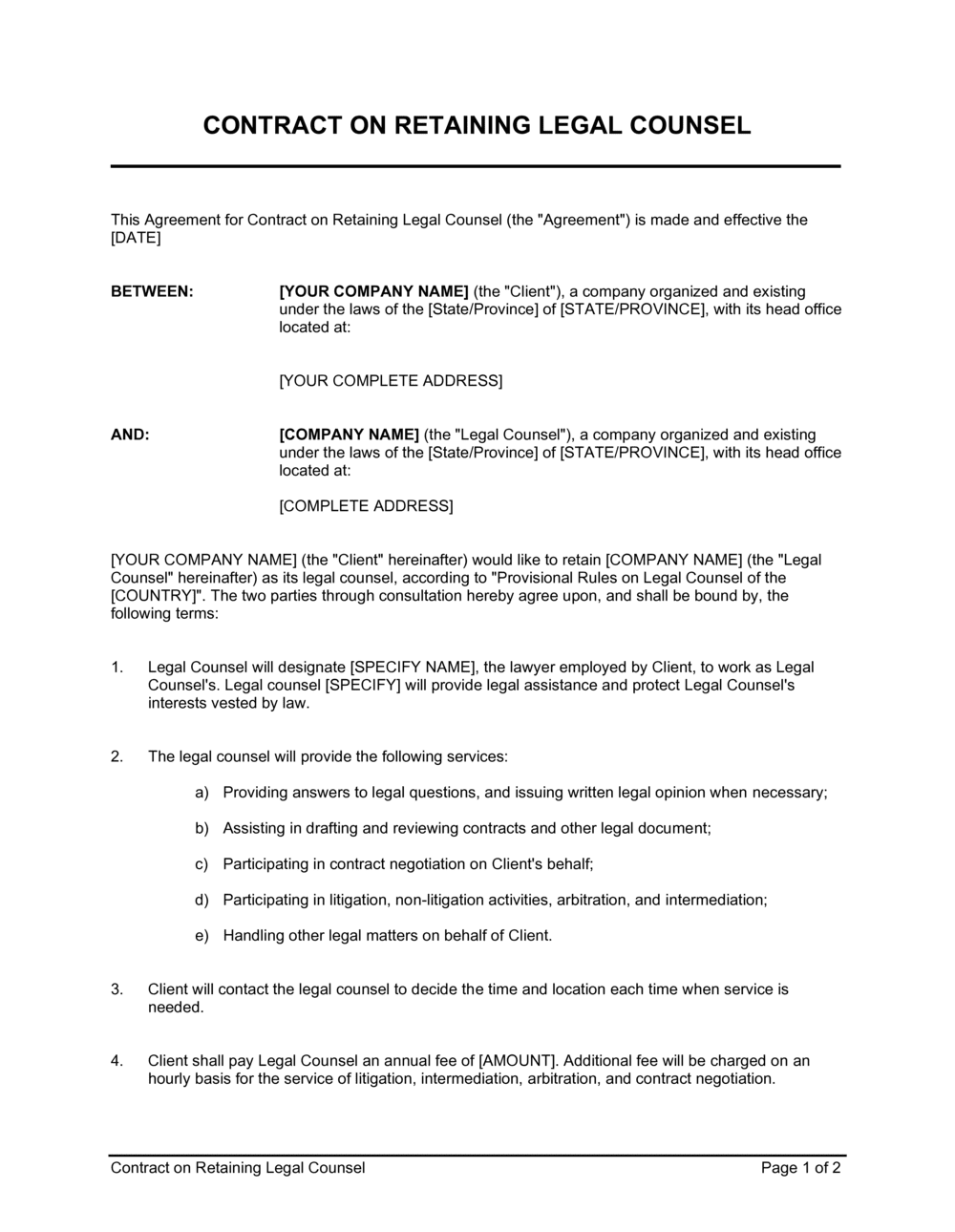
Enter the client's registered legal name — LLC, corporation, or individual — and the law firm's formal professional entity name. Include state of incorporation and principal office addresses for both parties.
💡 Confirm the law firm's registered entity name from their state bar listing, not their marketing website, to ensure the contract binds the correct professional entity.
2
Define the scope of representation precisely
Write a one- to three-sentence description of the specific matter or services covered. Then add an explicit exclusion sentence naming at least two categories of work that are not covered by this agreement.
💡 If the engagement is expected to expand, include a clause allowing scope amendments by signed addendum rather than leaving the original scope broad.
3
Fill in the fee arrangement and hourly rates
Select the fee type — hourly, flat, contingency, or blended — and enter the rate for each billing category (partner, associate, paralegal). If rates will be reviewed annually, set the notice period for rate changes.
💡 Request a matter budget alongside the retainer agreement — even a rough estimate of total anticipated fees helps the client plan cash flow and creates a reference point for billing disputes.
4
Set the retainer deposit amount and replenishment threshold
Enter the initial retainer deposit, confirm it will be held in a trust account, and set a specific dollar threshold that triggers a replenishment request. Tie the replenishment deadline to a fixed number of business days.
💡 A replenishment threshold at 25–30% of the initial retainer gives enough buffer to avoid work stoppages while keeping the client's cash commitment manageable.
5
Specify billing cycle, invoice format, and payment terms
Choose monthly or bi-monthly billing. Confirm invoices will be itemized by date, matter, timekeeper, activity description, and time spent. Set a payment due date and late-interest rate.
💡 Require electronic invoice delivery to the client's accounts-payable email — invoices that go to the project contact instead of AP consistently pay 10–15 days later.
6
Add the conflict of interest disclosure and waiver language
Confirm the attorney has performed a conflict check and insert the result. If a limited waivable conflict exists, describe it specifically and include the client's written consent in this clause.
💡 Do not use a blanket advance conflict waiver for future unknown conflicts — courts and bar associations in several jurisdictions refuse to enforce them for matters that are directly adverse.
7
State termination notice periods and retainer settlement procedure
Enter the notice period for voluntary termination (typically 10–15 business days) and the timeline for returning unused retainer funds. Reference bar association rules on court-supervised withdrawal where the matter is in litigation.
💡 Include a clause confirming that termination does not relieve the client of the obligation to pay for fees earned up to the termination date — this prevents clients from terminating to avoid an invoice.
8
Execute before any substantive legal work begins
Both parties must sign and date the agreement before the attorney begins work. Send the signed copy to the client's legal or finance contact and store the original in your matter management system.
💡 Use a timestamped electronic signature to document exact execution time — this matters if a dispute arises about whether services rendered before a formal signature are covered.