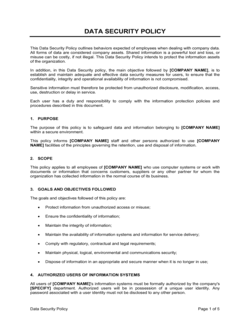
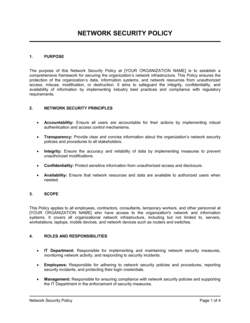
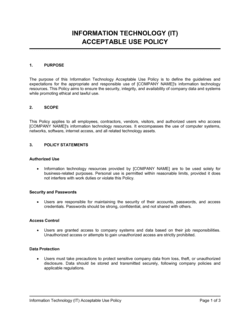
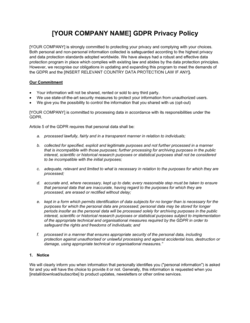
Business-in-a-Box has all 75 in this category, plus the rest of the library, ready to edit. See what's inside
250K+Clients
20M+Free users
20+Years
190+Countries
10,000+Law firms
50M+Downloads
Trusted across review platforms
Capterra★★★★☆4.649 reviews
G2★★★★☆4.713 reviews
GetApp★★★★☆4.649 reviews
Google Play★★★★☆4.6179 ratings
Google Reviews★★★★☆4.567 reviews
Frequently asked questions
Do I need a separate NDA before signing a software development agreement?
Yes, in most cases. A software development agreement typically includes a confidentiality clause, but that clause only applies once the contract is signed. If you need to share specifications, source code, or business logic before the deal is finalized, a standalone NDA should be in place first. Many companies use an NDA during evaluation, then roll confidentiality obligations into the development agreement once work begins.
Who owns the software built under a custom development agreement?
Ownership depends entirely on what the agreement says. Without a written contract, courts in many jurisdictions default to the developer retaining copyright. A properly drafted custom software development agreement should contain a work-for-hire clause or an explicit IP assignment transferring all rights to the client upon final payment. Always confirm this clause is present before signing.
What is the difference between an exclusive and a non-exclusive software licence?
An exclusive licence means only the licensee may use or distribute the software in the defined territory or field of use — not even the licensor can grant the same rights to anyone else. A non-exclusive licence lets the licensor grant the same rights to multiple parties simultaneously. Exclusive licences command higher fees; non-exclusive licences are standard for commercial software sold to many customers.
Can I use an end-user licence agreement (EULA) for B2B software sales?
A standard B2C EULA is generally not appropriate for B2B software sales. Business customers negotiate data-processing terms, liability caps, SLAs, enterprise support, and multi-seat pricing that a consumer EULA does not address. Use a business-oriented software licence agreement for enterprise deals, and reserve the B2C EULA for consumer-facing app stores and click-through deployments.
What should a software maintenance agreement cover?
At minimum: the scope of maintenance (bug fixes, patches, updates, or major version upgrades), response and resolution SLAs by severity level, scheduled maintenance windows, fees and billing frequency, escalation procedures, and conditions for termination. Agreements that also cover hosting or cloud delivery should add uptime guarantees and data-handling obligations.
Is a technology transfer agreement the same as an IP assignment?
They are closely related but not identical. A technology transfer agreement typically transfers ownership of a defined technology bundle — patents, know-how, documentation, and related trade secrets — and may include transition assistance, training, and support obligations. An IP assignment is usually a shorter instrument that conveys specific registered or unregistered rights. For complex technology bundles, a full transfer agreement is the more appropriate instrument.
What is a clickable software licence notice and when is it used?
A clickable software licence notice (sometimes called a click-wrap licence) is an on-screen licence that requires the user to actively accept its terms before proceeding — typically by clicking "I Agree." Courts in most jurisdictions treat properly implemented click-wrap agreements as enforceable contracts. They are standard practice for software downloaded from the web, installed on a device, or accessed via a browser.
When do I need a software distribution agreement rather than a licence agreement?
Use a distribution agreement when your channel partner (a reseller, OEM, or distributor) will be marketing and selling your software to their own customers. The distributor is not the end user — they are an intermediary. The distribution agreement governs the publisher-distributor relationship; the end-user licence agreement governs the distributor-customer relationship. Both documents are typically required.
A software license agreement grants someone the right to use software you already own. A software development agreement commissions the creation of new software and determines who owns it once built. If you are procuring custom work, you need a development agreement first; a license agreement is relevant only once the software exists and you want to grant usage rights to others.
Technology Licensing Agreement vs. Technology Transfer Agreement
A technology licensing agreement lets the licensee use the technology while the original owner retains title. A technology transfer agreement permanently conveys ownership to the new party. Use a licence when you want recurring royalties and control; use a transfer when you want a clean, one-time sale of the IP.
End-User License Agreement (EULA) vs. Software Distribution Agreement
A EULA governs the relationship between the software publisher and the end user — the person actually running the software. A distribution agreement governs the relationship between the publisher and the intermediary (reseller, OEM, or distributor) who gets the software to market. You typically need both: one for your channel partners and one for the customers they serve.
Software Maintenance Agreement vs. Software Development Agreement
A software development agreement covers the creation of a software product. A maintenance agreement takes over once the product is live, covering bug fixes, updates, patches, and support SLAs. They are separate contracts because the obligations, pricing models, and risk profiles are fundamentally different after go-live.
Key clauses every Software & Technology contains
Regardless of variant, every software and technology agreement is built from a common set of core clauses — the specific wording differs by situation, but the structure does not.
Grant of rights. Defines exactly what the licensee or recipient may do: use, copy, modify, sublicense, or distribute — and what is expressly forbidden.
Intellectual property ownership. States who owns the software, code, documentation, and derivative works during and after the agreement.
Payment and royalties. Sets out licence fees, milestone payments, revenue-share percentages, and the timing and method of payment.
Warranties and representations. Describes what the developer or licensor guarantees about the software's functionality, originality, and freedom from third-party claims.
Limitation of liability. Caps the financial exposure of each party and typically excludes consequential, indirect, or incidental damages.
Confidentiality. Protects trade secrets, source code, pricing, and other non-public information exchanged during the engagement.
Term and termination. Specifies the agreement's duration, renewal mechanics, and the conditions under which either party may terminate early.
Acceptance and testing. Defines the criteria and process by which the client formally accepts deliverables, triggering payment and ownership transfer.
Governing law and dispute resolution. Names the jurisdiction whose laws apply and how disputes will be resolved — litigation, arbitration, or mediation.
How to write a software or technology agreement
The right agreement starts with clarity about what is being transferred, who owns it, and what happens when something goes wrong. Follow these steps before you open any template.
1
Identify the transaction type
Decide whether you are licensing, developing, distributing, assigning, or transferring technology — the answer determines which template you need.
2
Name all parties precisely
Use the full registered legal name of each company or individual, including entity type (LLC, Inc., Ltd.) and jurisdiction of formation.
3
Define the technology or software
Describe the software product, system, or technology being covered — version numbers, modules, documentation, and any included source code.
4
Specify the scope of rights granted
State whether the licence is exclusive or non-exclusive, the permitted territory, permitted use cases, and any sublicensing rights.
5
Set out payment terms
Define the fee structure: one-time payment, recurring licence fee, per-seat pricing, royalty percentage, or milestone-based payment schedule.
6
Address IP ownership and work-for-hire status
Confirm in writing who owns deliverables, background IP, improvements, and any jointly developed modifications.
7
Include confidentiality, liability limits, and warranties
Protect trade secrets, cap financial exposure at a reasonable amount, and be explicit about what functionality is and is not guaranteed.
8
Set term, renewal, and termination conditions
Specify the agreement's start and end date, auto-renewal triggers, and the notice period required to terminate for convenience or cause.
At a glance
What it is
Software and technology agreements are legal contracts that govern how software is built, licensed, distributed, assigned, and maintained between businesses, developers, and end users. They protect intellectual property rights, define permitted uses, allocate risk, and set out remedies when obligations are not met.
When you need one
Any time software or technology changes hands — whether through a license, development contract, distribution deal, or IP assignment — a written agreement is required to define ownership, usage rights, and liability.
The right template depends on the relationship (developer, licensor, distributor, end user) and what you're doing with the software or technology (building it, licensing it, distributing it, or transferring ownership). Pick the scenario that matches yours.
Your situation
Recommended template
Hiring a developer to build custom software you will own
Establishes that ownership vests in the client upon delivery and payment.
Custom Software Development Agreement
Licensing your software product to a business customer
Drafted in the licensor's favour with tight use restrictions and liability limits.
Licensor Oriented Software License Agreement
Signing a software license as the paying customer
Drafted in the licensee's favour with broader use rights and lower indemnity exposure.
Licensee Oriented Software License Agreement
Distributing a third-party software product to resellers or end users
Covers resale rights, territory, support responsibilities, and royalty structure.
Software Distribution Agreement
Transferring ownership of technology or a patent to another company
Conveys all rights, title, and interest in the technology to the new owner.
Technology Transfer Agreement
Allowing a partner to use your technology under a formal licence
Grants defined usage rights while you retain underlying ownership.
Technology Licensing Agreement
Providing ongoing support and updates for deployed software
Defines SLAs, update schedules, and support scope for post-deployment care.
Software Maintenance Agreement
Letting a prospect trial software before purchasing
Time-limited, no-fee licence with restrictions on production use and data handling.
Trial Software License Agreement
Glossary
Licensor
The party that owns software or technology and grants usage rights to another party under a licence agreement.
Licensee
The party that receives the right to use software or technology under the terms of a licence agreement.
End-User Licence Agreement (EULA)
A contract between a software publisher and the individual or organisation that installs and uses the software.
Work for hire
A legal arrangement in which work created by a developer is automatically owned by the commissioning party rather than the creator.
Source code
The human-readable instructions that make up a software program, as distinct from compiled binary code that machines execute.
Intellectual property assignment
A written transfer of ownership of copyrights, patents, trade secrets, or other IP rights from one party to another.
SLA (Service Level Agreement)
A contractual commitment that defines minimum performance standards — such as uptime percentage or bug-fix response time — and the consequences of missing them.
Royalty
A periodic payment made to a licensor calculated as a percentage of revenue, units sold, or another agreed metric.
Derivative work
A new work based on or incorporating elements of an existing copyrighted work; ownership of derivative works must be addressed explicitly in software contracts.
Escrow (source code escrow)
An arrangement in which a neutral third party holds a copy of source code, releasing it to the licensee if the licensor ceases to maintain the software.
Value-Added Reseller (VAR)
A company that purchases software, bundles it with additional services or hardware, and resells the combined solution to end customers.
Click-wrap agreement
An online licence accepted by clicking a button or checkbox, considered binding in most jurisdictions when the terms are accessible before acceptance.
What is a software & technology agreement?
A software and technology agreement is a legal contract that governs how software or technology is created, licensed, distributed, transferred, or maintained between two or more parties. These agreements define who owns the intellectual property, what the recipient is permitted to do with it, how much they pay, and what remedies apply if something goes wrong. Without a written agreement, disputes over ownership, usage rights, and liability become difficult and expensive to resolve.
The category covers a wide range of instruments. At one end are development agreements, which commission the creation of software and establish who owns the result. In the middle are licence agreements, which grant defined usage rights while the original owner retains title — whether to a single end user, an enterprise customer, or a network of resellers. At the other end are assignment and transfer agreements, which permanently convey ownership of software or technology from one party to another. Supporting documents such as maintenance agreements, technology policies, and distribution agreements fill out the operational side of software-driven businesses.
When you need a software & technology agreement
Any time software or technology moves between parties — whether through a development contract, a licence, a distribution deal, or an outright sale of IP — a written agreement should be in place before work begins or access is granted. Operating without one leaves ownership ambiguous and makes enforcement of any obligation nearly impossible.
Common triggers:
A company commissions a developer or agency to build custom software
A software vendor grants a business or consumer the right to use its product
A SaaS company signs a reseller or OEM distribution deal
A technology owner licences patents, know-how, or a software platform to a partner
A founder transfers software IP into a newly formed company or to an acquirer
A business outsources IT or administrative systems to a third-party provider
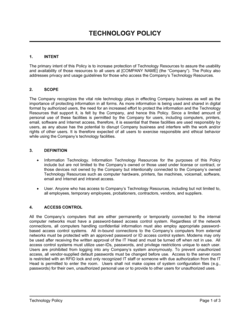
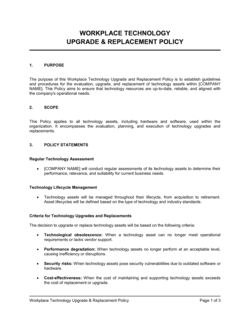
A software company needs to document internal technology policies and upgrade cycles
An organisation hires a Director of IT and needs a structured role definition and interview process
Skipping the paperwork rarely saves time — it creates it, usually at the worst possible moment: when a client disputes who owns the deliverable, when a reseller exceeds their territory, or when a departing developer claims copyright over code your business depends on. The templates in this folder cover every major scenario so you can protect your software assets at each stage of the product and commercial lifecycle.
Award-winning platform
Great Place to Work 2025
BIG Award — Product of the Year 2025
Smartest Companies 2025
Global 100 Excellence 2026
Best of the Best 2025
Create your document in 3 simple steps.
From template to signed document — all inside one Business Operating System.
1
Download or open template
Access over 3,000+ business and legal templates for any business task, project or initiative.
2
Edit and fill in the blanks with AI
Customize your ready-made business document template and save it in the cloud.
3
Share with your team
Share your files and folders with your team. Create a space of seamless collaboration.
Save time, save money, and create top-quality documents.
★★★★★
"Fantastic value! I'm not sure how I'd do without it. It's worth its weight in gold and paid back for itself many times."
Managing Director · Mall Farm
RW
Robert Whalley
Managing Director, Mall Farm Proprietary Limited
★★★★★
"I have been using Business in a Box for years. It has been the most useful source of templates I have encountered. I recommend it to anyone."
Business Owner · 4+ years
MF
Dr Michael John Freestone
Business Owner
★★★★★
"It has been a life saver so many times I have lost count. Business in a Box has saved me so much time and as you know, time is money."
Owner · Upstate Web
DM
David G. Moore Jr.
Owner, Upstate Web
Run your business with a system — not scattered tools
Stop downloading documents. Start operating with clarity. Business in a Box gives you the Business Operating System used by over 250,000 companies worldwide to structure, run, and grow their business.