- Accounts Receivable (AR)
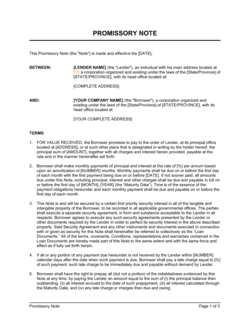
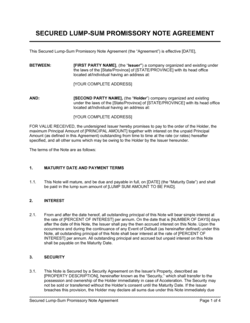
- Money owed to a business by its customers or clients for goods or services already delivered but not yet paid for.
- Creditor
- The party owed money — the business or individual that delivered goods or services and is waiting for payment.
- Debtor
- The party that owes money — the customer or client who received goods or services and has an outstanding balance.
- Outstanding Balance
- The total amount currently owed by the debtor, including principal, accrued interest, and any applicable fees as of a stated date.
- Payment Schedule
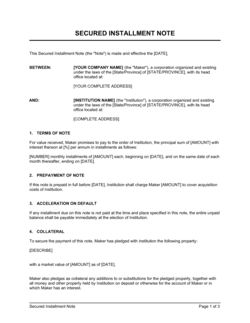
- A contractually agreed series of payment dates and amounts by which the debtor will retire the outstanding balance.
- Late Payment Interest
- Interest charged on overdue amounts, typically expressed as an annual percentage rate applied per month to the unpaid balance.
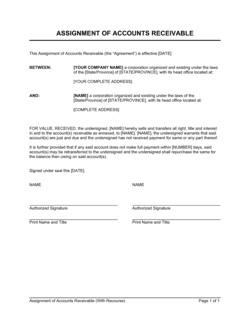
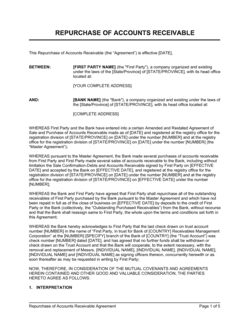
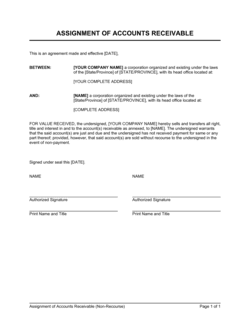
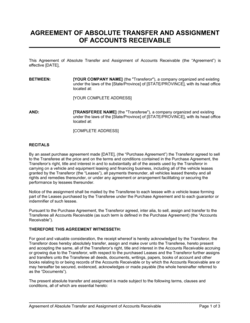
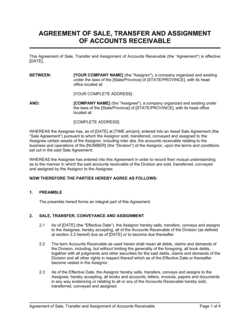
- Assignment of Receivables
- The transfer of the right to collect an outstanding debt from the original creditor to a third party, such as a factoring company or lender.
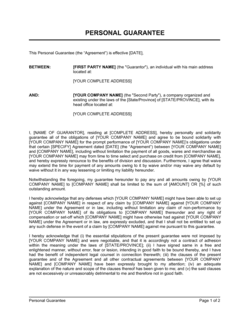
- Personal Guarantee
- A clause in which an individual — typically a director or sole trader — agrees to be personally liable for the debtor's obligation if the entity cannot pay.
- Acceleration Clause
- A provision that makes the entire outstanding balance immediately due and payable if the debtor misses a scheduled payment or breaches a material term.
- Aging Report
- An internal AR report grouping outstanding invoices by how long they have been unpaid, typically in 0–30, 31–60, 61–90, and 90+ day buckets.
- Factoring
- A financing arrangement in which a business sells its receivables to a third party at a discount in exchange for immediate cash.
- Net Payment Terms
- The number of days from invoice date within which a buyer must pay — e.g., Net 30 means full payment is due within 30 calendar days.