Board Governance Templates

4.7from 280+ reviews Trusted by 20M+ businesses

Document every board decision, policy, and resolution with templates built for corporate governance.

WordEditable onlinePDF78+ board governance templates

Other Administration categories

Advisory Board Formation Guide Template
Annual Report Template
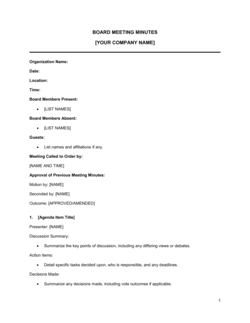
Board Meeting Minutes Template
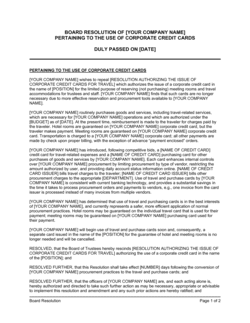
Board Resolution — Corporate Credit Card Use Template
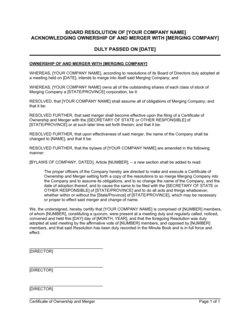
Board Resolution Acknowledging Merger Template
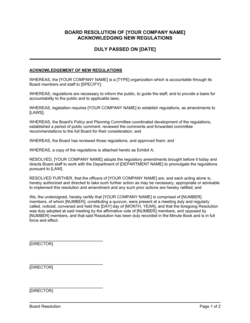
Board Resolution Acknowledging New Regulations
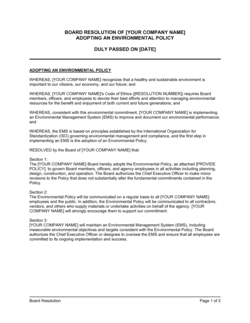
Board Resolution Adopting An Environmental Policy
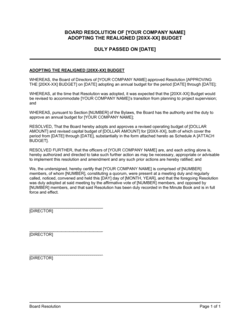
Board Resolution Adopting Realigned Budget Template
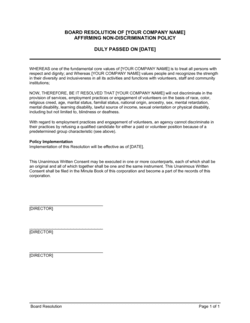
Board Resolution Affirming Non-Discrimination Policy
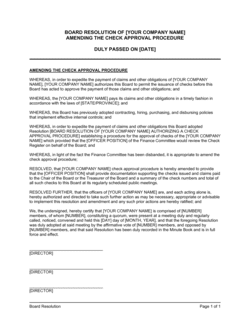
Board Resolution Amending Check Approval Procedure
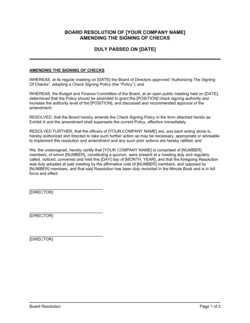
Board Resolution Amending Check Signing Template
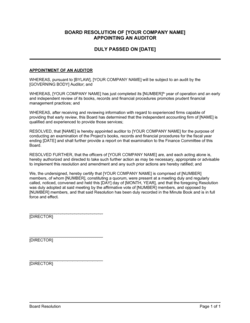
Board Resolution Appointing An Auditor Template
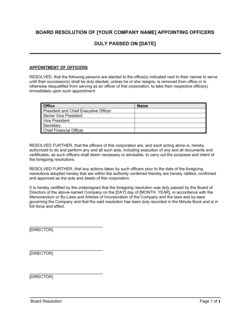
Board Resolution Appointing Officers Template
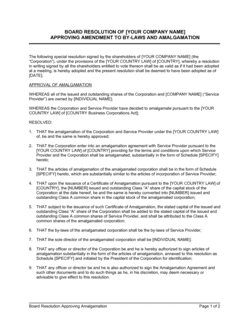
Board Resolution Approving Amalgamation Template
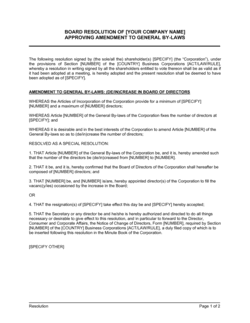
Board Resolution Approving Amendment to General
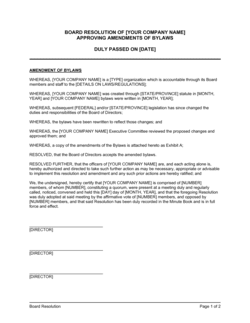
Board Resolution Approving Amendments of Bylaws
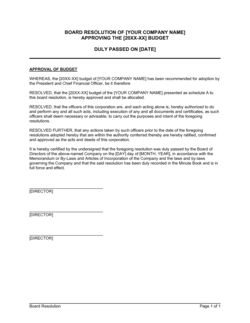
Board Resolution Approving Budget Template
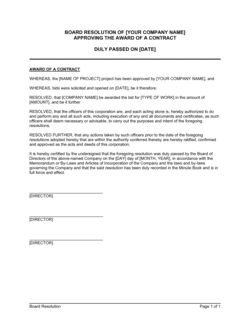
Board Resolution Approving Contract Award Template
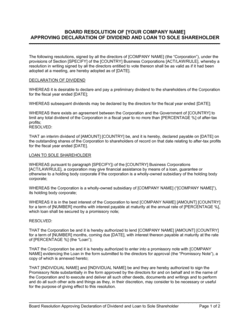
Board Resolution Approving Declaration of Dividend or
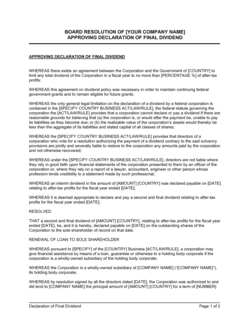
Board Resolution Approving Declaration of Final
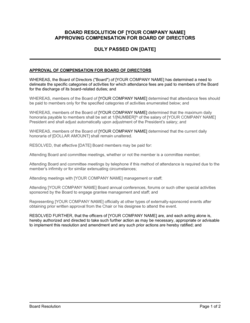
Board Resolution Approving Director Compensation
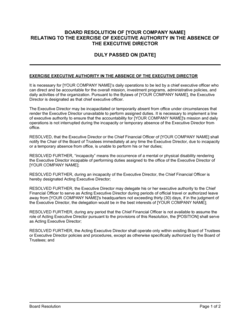
Board Resolution Approving Executive Authority
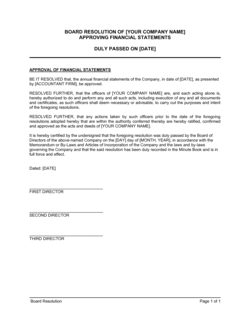
Board Resolution Approving Financial Statements
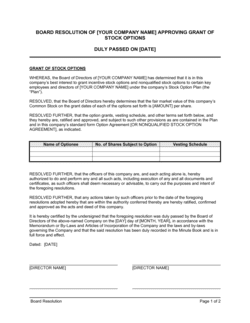
Board Resolution Approving Grant of Options Template
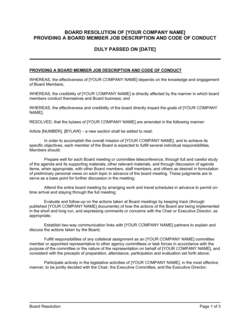
Board Resolution Approving Job Description Code of
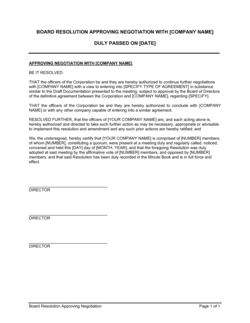
Board Resolution Approving Negotiation Template
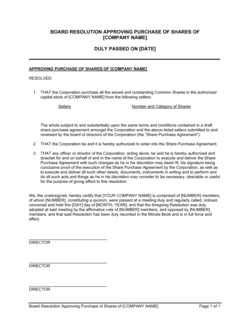
Board Resolution Approving Purchase of Shares Template
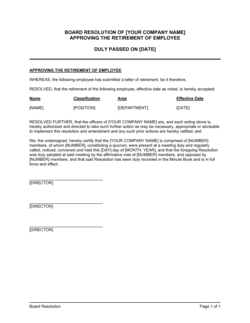
Board Resolution Approving Retirement of Employee
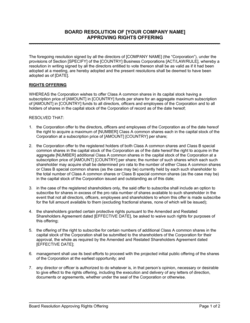
Board Resolution Approving Rights Offering Template
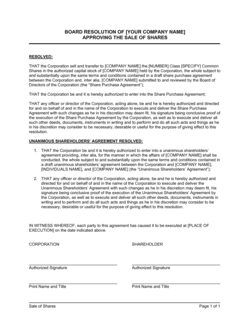
Board Resolution Approving Sale of Shares Template
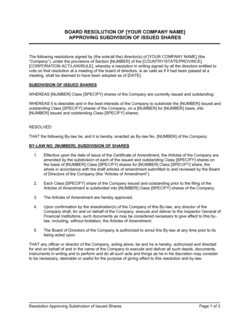
Board Resolution Approving Subdivision of Issued
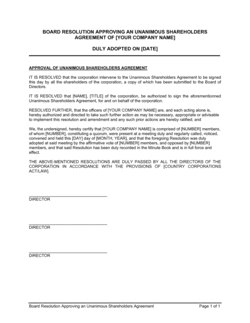
Board Resolution Approving Unanimous Shareholders
Board Resolution Authorizing Agreements Renewal
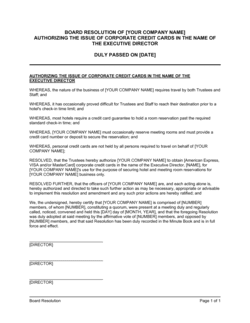
Board Resolution Authorizing Corporate Credit Cards
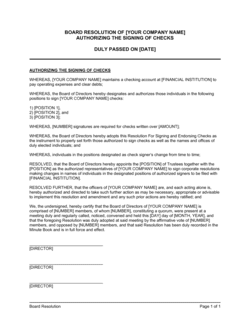
Board Resolution Authorizing Signing of Checks
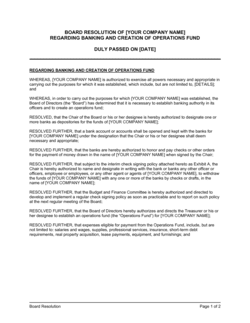
Board Resolution Banking & Operations Fund Template
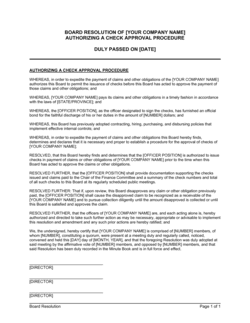
Board Resolution Check Approval Procedure Template
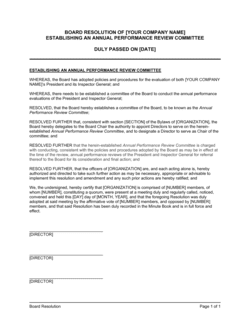
Board Resolution Establishing Performance Committee
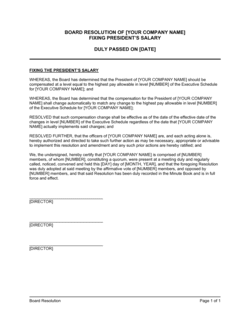
Board Resolution Fixing the President's Salary
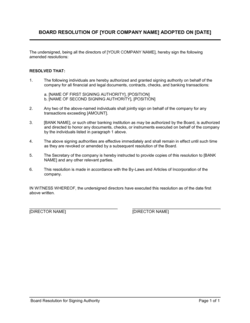
Board Resolution for Signing Authority Template
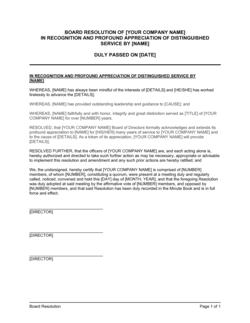
Board Resolution In Recognition Of Distinguished
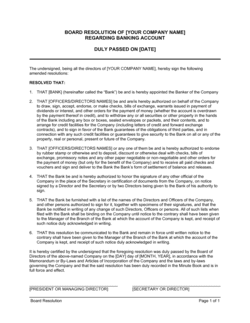
Board Resolution Regarding Banking Account Template
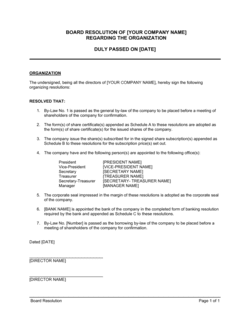
Board Resolution Regarding Organization Template
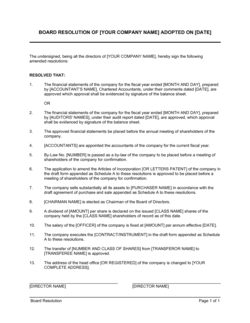
Board Resolution Template
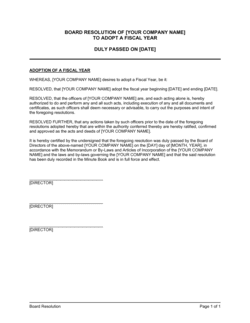
Board Resolution To Adopt A Fiscal Year Template
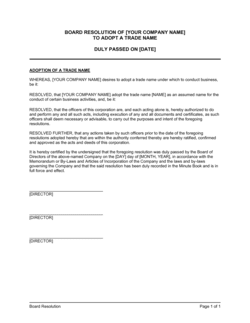
Board Resolution to Adopt a Trade Name Template
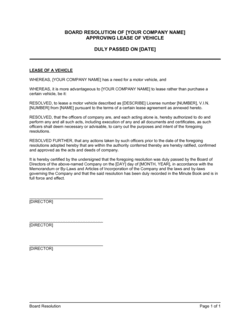
Board Resolution To Lease Motor Vehicle Template
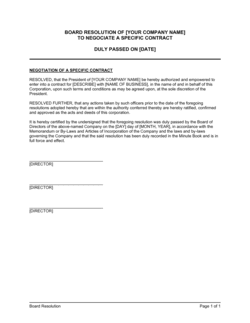
Board Resolution To Negotiate A Specific Contract
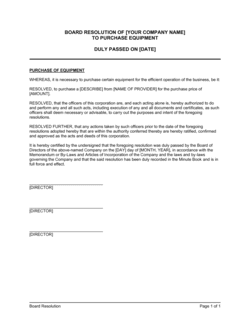
Board Resolution To Purchase Equipment Template
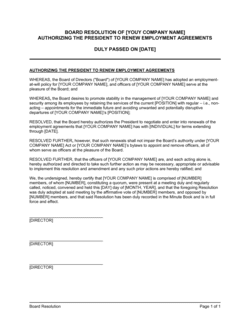
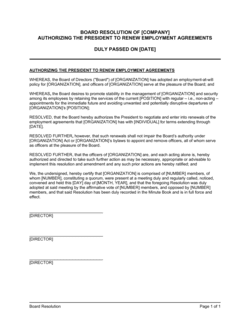
Board Resolution to Renew Employment Agreements
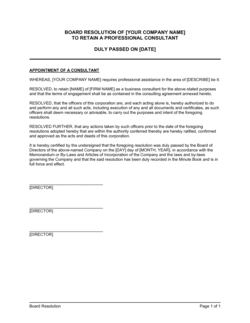
Board Resolution To Retain A Professional Consultant
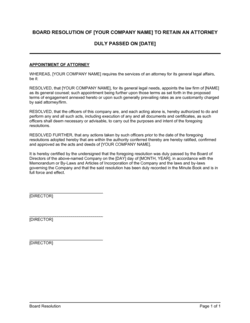
Board Resolution to Retain an Attorney Template
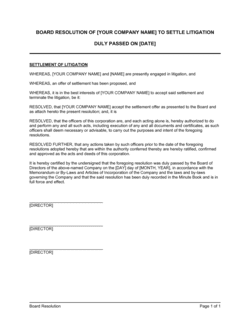
Board Resolution To Settle Litigation Template
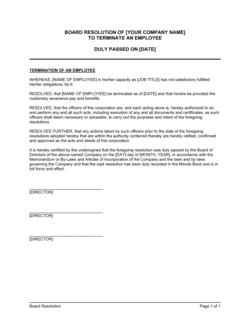
Board Resolution To Terminate An Employee Template
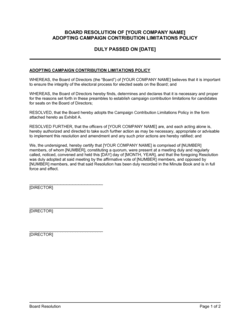
Board Resolution: Campaign Contribution Limitations
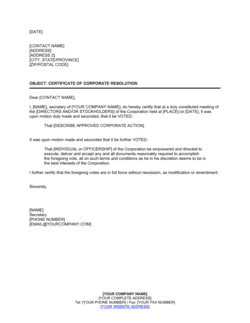
Certificate of Corporate Resolution Template
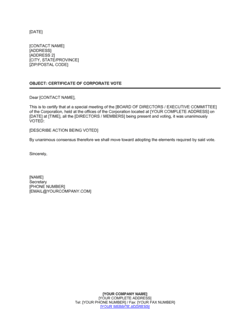
Certificate of Corporate Vote Template
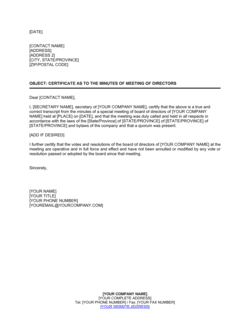
Certificate of Minutes of Meeting of Directors
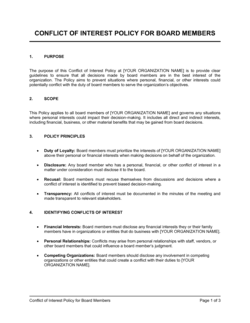
Conflict of Interest Policy for Board Members Template
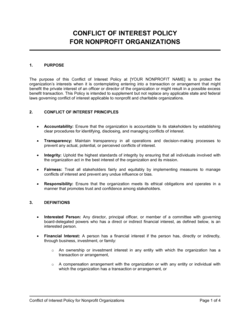
Conflict of Interest Policy for Nonprofits
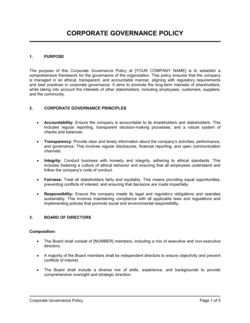
Corporate Governance Policy Template
XLS
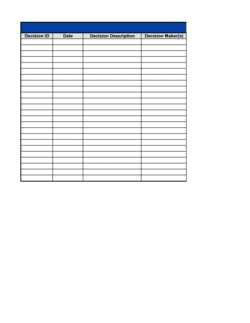
Decision Log Template
Minutes of First Meeting of Directors Template
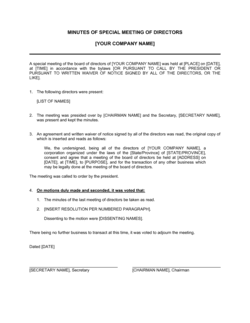
Minutes of Meeting of Directors Special Template
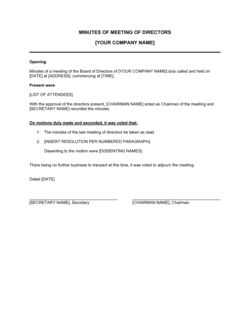
Minutes of Meeting of Directors Template
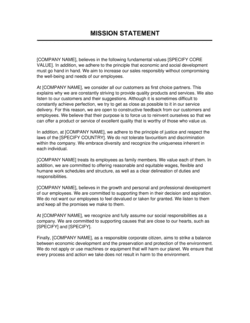
Mission Statement Template
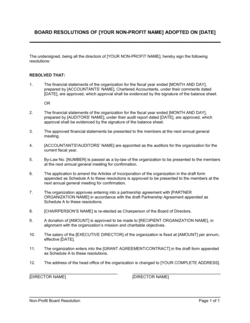
Non-Profit Board Resolution Template
Notice of Meeting of Directors Template
Notice of Special Meeting of Directors Template
Notice of Special Meeting of Shareholders Template
XLS
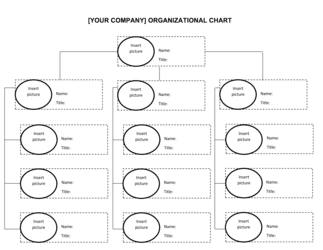
Organization Chart Template
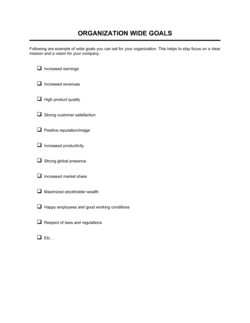
Organization Wide Goals Template
Organizational Chart Template
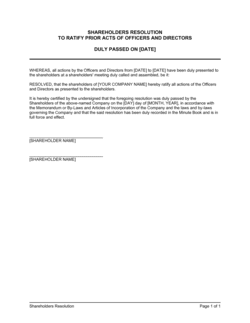
Shareholders Resolution Ratifying Prior Acts of
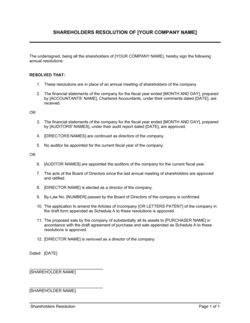
Shareholders Resolution Template
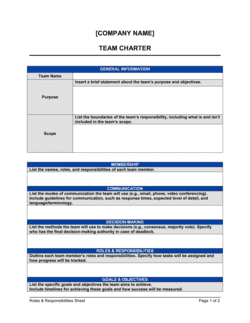
Team Charter Template
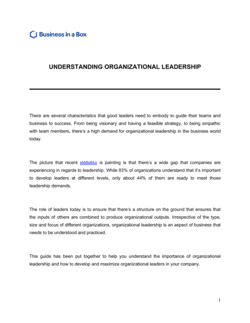
Understanding Organizational Leadership Template
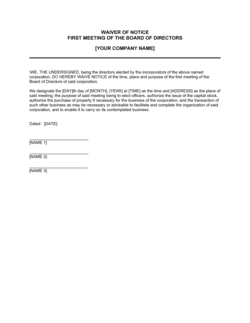
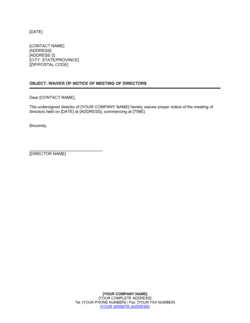
Waiver of Notice of Meeting of Directors Template
250K+Clients
20M+Free users
20+Years
190+Countries
10,000+Law firms
50M+Downloads

Trusted across review platforms

  • Capterra★★★★☆4.649 reviews
  • G2★★★★☆4.713 reviews
  • GetApp★★★★☆4.649 reviews
  • Google Play★★★★☆4.6179 ratings
  • Google Reviews★★★★☆4.567 reviews

Related categories

Frequently asked questions

What is a board resolution and why is it legally important?
A board resolution is a formal written record of a decision made by a company's board of directors. It is legally important because it provides documented proof that the board authorized a specific action — such as signing a contract, appointing an officer, or approving a budget. Banks, lawyers, auditors, and regulators commonly require resolutions before acting on corporate instructions. Without one, an officer's authority to act on behalf of the company can be challenged.
Does every board decision require a written resolution?
In most jurisdictions, significant corporate actions — appointing officers, approving financial statements, authorizing transactions above a threshold, amending bylaws — require a written resolution. Routine operational decisions made by management generally do not. The company's bylaws and applicable corporate law define which actions require board approval. When in doubt, document the decision in writing; the cost of an unnecessary resolution is minimal compared to the cost of proving authority was granted.
Can a board resolution be passed without a meeting?
Yes. Most corporate statutes allow boards to pass resolutions by written consent in lieu of a meeting, provided all directors (or the required majority) sign the document. This is common for routine or time-sensitive actions. The resolution should recite that it is being adopted by written consent and should be signed and dated by all required directors. Check your jurisdiction's requirements and your bylaws before relying on this method.
What is corporate governance and why does it matter?
Corporate governance is the system of rules, practices, and processes by which a company is directed and controlled. It defines the relationship between the board of directors, management, shareholders, and other stakeholders. Good governance reduces legal and regulatory risk, supports access to capital, and builds organizational credibility. Poor governance — undocumented decisions, unclear authority, missing policies — is a frequent source of disputes, regulatory action, and director liability.
What is the difference between a data governance policy and a data governance framework?
A data governance policy sets the rules: what data must be protected, who owns it, and what behavior is required. A data governance framework is the broader operational structure that puts those rules into practice — defining roles, processes, tools, and metrics for managing data across the organization. Most organizations need both: the policy establishes the obligation; the framework explains how to meet it.
What is an ESG policy and which companies need one?
An ESG (Environmental, Social, and Corporate Governance) policy documents a company's commitments and reporting practices across environmental impact, social responsibility, and governance standards. Public companies, those seeking institutional investment, and organizations operating in regulated industries typically need one. Increasingly, large private companies and government contractors are also expected to maintain and publish ESG disclosures as part of procurement and stakeholder accountability requirements.
Who should sign a board resolution?
Typically the chairperson of the board and the corporate secretary sign a board resolution — the chair to confirm the vote, the secretary to certify the adoption. Some jurisdictions or transaction types (such as real estate transfers or bank authorizations) require signatures from all directors or a specified quorum. Review your bylaws and any third-party requirements before finalizing signature blocks.
How long should board governance documents be retained?
Board resolutions and governance policies are permanent corporate records in most jurisdictions and should be retained indefinitely in the corporate minute book. They form part of the chain of authority for corporate actions and may be required in due diligence, litigation, regulatory review, or succession events years or decades after adoption. Dispose of them only on legal advice.

Board Governance vs. related documents

Board resolution vs. corporate bylaw amendment

A board resolution records a specific decision made at a point in time — it authorizes one action. A bylaw amendment changes the permanent governing rules of the corporation. When the board approves a bylaw change, it does so via a resolution, but the resulting document (the amended bylaws) is distinct from the resolution that authorized it. Use a board resolution template for the authorization; see bylaw documents for the amendment itself.

Board resolution vs. board minutes

Board minutes are a narrative record of everything that happened in a meeting: who attended, what was discussed, motions made, and votes cast. A board resolution is a standalone formal document that records a single, specific decision and the authority granted by it. Many companies attach resolutions to the minutes as exhibits. Both are required for a complete governance record.

Corporate governance policy vs. data governance policy

A corporate governance policy sets the broad framework for how the entire organization is directed, controlled, and held accountable — covering board composition, decision rights, and stakeholder responsibilities. A data governance policy is narrower, focusing specifically on how data assets are owned, classified, protected, and used. Large organizations typically maintain both, with data governance sitting under the broader corporate governance umbrella.

Board resolution vs. shareholder resolution

A board resolution is passed by the directors of a company and covers matters within the board's authority. A shareholder resolution is passed by the company's shareholders and typically covers fundamental changes — such as approving a merger, electing directors, or amending the articles of incorporation. Some actions require both: the board authorizes, the shareholders ratify.

Key clauses every Board Governance contains

Board resolutions and governance policies share a common set of structural elements regardless of the specific action being authorized or the policy being set.

  • Recitals / whereas clauses. State the factual background and reasons for the resolution, establishing that the board acted on an informed basis.
  • Resolved clause. The operative section that states precisely what the board has decided or authorized — must be specific and unambiguous.
  • Authority and scope. Defines the limits of any authority delegated to officers or agents as a result of the resolution.
  • Effective date. Specifies when the resolution or policy takes effect, which may differ from the date it was signed.
  • Quorum and voting record. Confirms that the required number of directors was present and that the vote met the threshold required by the bylaws.
  • Secretary certification. A statement by the corporate secretary certifying that the resolution was duly adopted, making it relying-party ready.
  • Policy purpose and scope. In governance policies, defines what the policy covers and which entities, roles, or data types it applies to.
  • Review and amendment procedure. States how often the policy is reviewed and the process required to amend it — critical for maintaining living governance documents.

How to write a board resolution or governance policy

The process differs slightly between resolutions (which authorize one action) and policies (which set ongoing rules), but both follow a consistent structure.

  1. 1

    Identify the type of document needed

    Decide whether the board needs to authorize a specific action (resolution) or establish an ongoing rule (policy), then select the appropriate template.

  2. 2

    Confirm the board has authority to act

    Verify that the action falls within the board's authority under the corporate bylaws and applicable law before drafting.

  3. 3

    Draft the recitals

    Write the 'whereas' clauses that explain the factual background — who is affected, why the action is needed, and what the board considered.

  4. 4

    Write the resolved or policy clauses

    State exactly what is being authorized, prohibited, or required — use specific names, amounts, dates, and limits rather than general language.

  5. 5

    Define scope and delegated authority

    Specify which officers, employees, or committees are authorized to act under the resolution, and any conditions or limits on that authority.

  6. 6

    Set an effective date and review cycle

    Include the date the document takes effect; for policies, add a scheduled review period — typically annually.

  7. 7

    Obtain required approvals and certify

    Present the document at a properly constituted board meeting, record the vote, and have the corporate secretary certify the adoption.

  8. 8

    File and distribute

    Store the signed document in the corporate minute book and distribute copies to relevant officers, legal counsel, and any third parties who require it.

At a glance

What it is
Board governance documents are the formal records through which a board of directors exercises its authority — approving actions, setting policy, and creating an auditable trail of organizational decisions. They range from single-action board resolutions to comprehensive governance policies that define how a company is directed and controlled.
When you need one
Any time a board must authorize a significant action — hiring an officer, approving a budget, adopting a policy, or executing a transaction — a formal governance document is required to make that authority legally effective and defensible.

Which Board Governance do I need?

Board governance documents split into two broad types: resolutions that authorize a specific action, and policies that set ongoing rules. Use the scenarios below to find the right template.

Your situation
Recommended template

The board needs to formally authorize an action with no specific sub-template

The general-purpose resolution covers any board action not addressed by a specialized template.

Appointing a CEO, CFO, or other corporate officer

Provides the required formal record of the appointment and defined authority.

Approving the annual operating or capital budget

Creates an auditable record of the board's financial authorization for the period.

Setting overarching rules for how the company is directed

Establishes the framework of roles, responsibilities, and accountability structures.

Governing how company data is collected, stored, and used

Defines ownership, classification, and handling rules for organizational data.

Authorizing who can sign checks on behalf of the company

Formally designates signing authority to prevent unauthorized financial transactions.

Approving the sale or transfer of company assets

Records the board's specific authorization for the asset disposition.

Addressing environmental, social, and governance reporting obligations

Covers ESG disclosure requirements and stakeholder accountability obligations.

Glossary

Board of directors
The group of elected or appointed individuals responsible for overseeing the management and strategic direction of a corporation.
Board resolution
A formal written record of a specific decision made by a board of directors, authorizing a named action or policy.
Corporate governance
The system of rules, practices, and processes by which a company is directed, controlled, and held accountable.
Quorum
The minimum number of directors who must be present at a board meeting for decisions made at that meeting to be valid.
Written consent resolution
A board resolution adopted by the written signature of all required directors in lieu of a formal meeting.
Corporate secretary
The officer responsible for maintaining corporate records, certifying resolutions, and ensuring governance compliance.
Fiduciary duty
The legal obligation of directors to act in the best interests of the corporation and its shareholders.
Data governance
The policies, roles, and processes that define how an organization manages, protects, and uses its data assets.
ESG
Environmental, Social, and Governance — a framework for measuring and disclosing a company's non-financial performance and risk.
Delegated authority
The specific powers granted by the board to an officer, employee, or committee to act on the board's behalf within defined limits.
Minute book
The official corporate record that stores all board resolutions, meeting minutes, and key governance documents.
Bylaws
The internal rules that govern a corporation's operations, including board procedures, voting thresholds, and officer roles.

What is board governance?

Board governance refers to the formal structures, documents, and processes through which a company's board of directors exercises its authority, fulfills its legal duties, and creates an auditable record of its decisions. In practice, it encompasses two categories of documents: board resolutions, which authorize specific actions such as appointing an officer, approving a budget, or authorizing a transaction; and governance policies, which establish the ongoing rules and frameworks — corporate governance, data governance, IT governance, ESG — that guide how the organization is directed and controlled.
Well-governed organizations treat board documents as operational infrastructure, not paperwork. Every significant corporate action that requires board authority — signing a major contract, disposing of assets, amending bylaws, or changing authorized signatories — must be supported by a properly adopted resolution to be legally effective. Governance policies complement resolutions by defining the standing rules within which those decisions are made, reducing ambiguity about authority, accountability, and process.

When you need a board governance document

A board governance document is required any time the board needs to formally authorize an action or establish a rule that binds the organization. Banks, auditors, regulators, and counterparties routinely ask for certified resolutions before acting on corporate instructions. Without them, the authority behind a corporate action can be questioned, which creates risk in transactions, employment decisions, and regulatory reviews.

Common triggers:

  • Appointing or removing a corporate officer, auditor, or legal counsel
  • Approving an annual budget, financial statements, or a major capital expenditure
  • Authorizing the purchase or sale of significant assets, shares, or real estate
  • Amending the company's bylaws, articles, or organizational structure
  • Designating who may sign checks, contracts, or banking documents on behalf of the company
  • Authorizing the company to enter, renew, or terminate a material contract or lease
  • Adopting a new corporate, data, IT, or ESG governance policy
  • Responding to new legislation or regulatory changes that affect company operations

Skipping formal governance documentation doesn't eliminate the board's obligations — it just eliminates the evidence that they were met. In a dispute, due diligence review, or regulatory inquiry, the absence of a resolution or policy is itself a finding. The templates in this folder cover the full range of routine and specialized board actions, so the right document is available before you need it.

Award-winning platform

  • Great Place to Work 2025
  • BIG Award — Product of the Year 2025
  • Smartest Companies 2025
  • Global 100 Excellence 2026
  • Best of the Best 2025

Create your document in 3 simple steps.

From template to signed document — all inside one Business Operating System.
1
Download or open template

Access over 3,000+ business and legal templates for any business task, project or initiative.

2
Edit and fill in the blanks with AI

Customize your ready-made business document template and save it in the cloud.

3
Save, Share, Send, Sign

Share your files and folders with your team. Create a space of seamless collaboration.

Save time, save money, and create top-quality documents.

★★★★★

"Fantastic value! I'm not sure how I'd do without it. It's worth its weight in gold and paid back for itself many times."

Managing Director · Mall Farm
Robert Whalley
Managing Director, Mall Farm Proprietary Limited
★★★★★

"I have been using Business in a Box for years. It has been the most useful source of templates I have encountered. I recommend it to anyone."

Business Owner · 4+ years
Dr Michael John Freestone
Business Owner
★★★★★

"It has been a life saver so many times I have lost count. Business in a Box has saved me so much time and as you know, time is money."

Owner · Upstate Web
David G. Moore Jr.
Owner, Upstate Web

Run your business with a system — not scattered tools

Stop downloading documents. Start operating with clarity. Business in a Box gives you the Business Operating System used by over 250,000 companies worldwide to structure, run, and grow their business.

Free Forever Plan · No credit card required