1
Enter the company's registered legal name and effective date
Open the template header and replace the placeholder with the exact legal entity name as it appears on your certificate of incorporation or registration. Set the effective date to the date the structure will be officially adopted.
💡 Use the registered name, not the trading name. If they differ, note both: '[TRADING NAME], trading as [LEGAL NAME].'
2
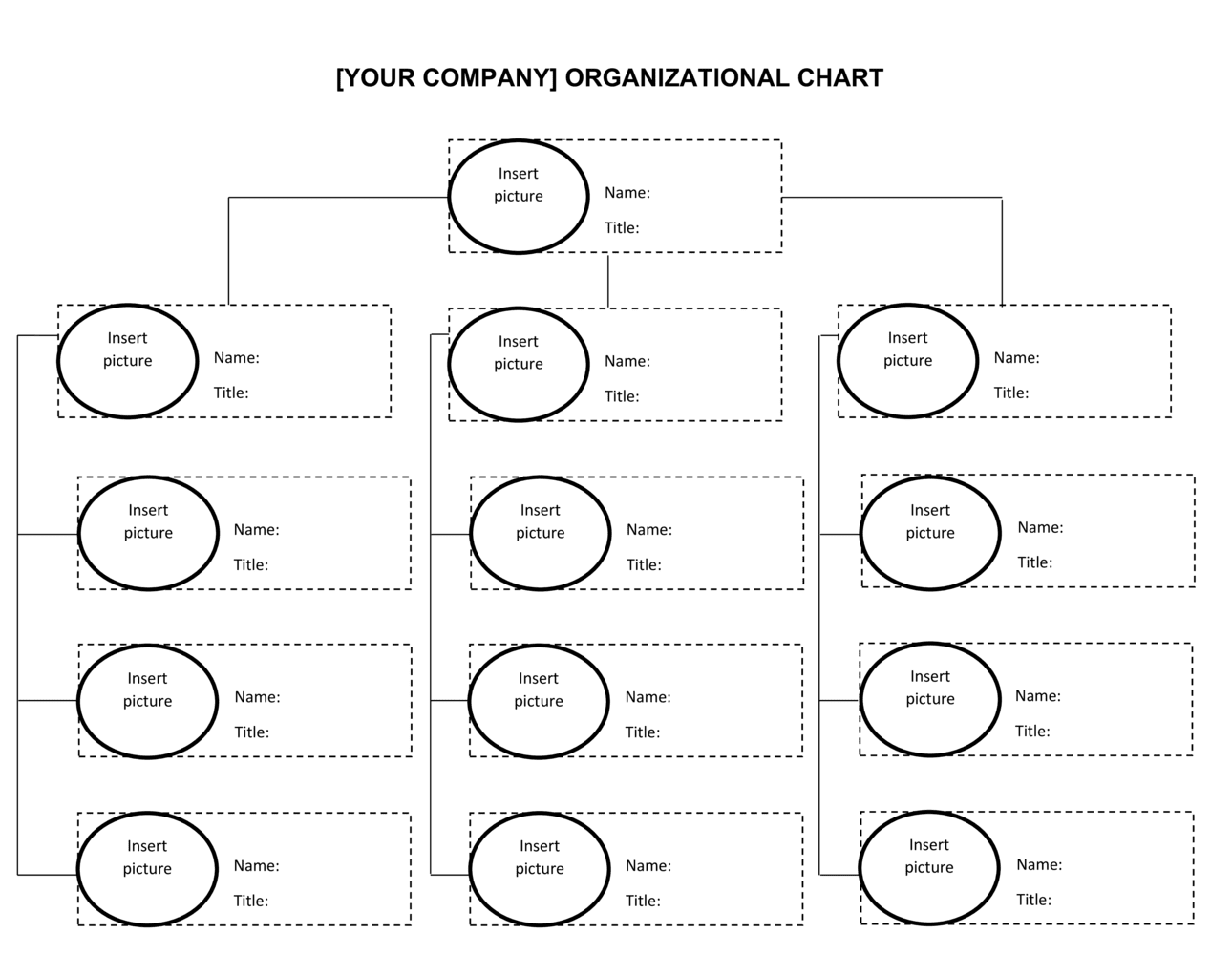
Place the board of directors at the apex
List each director by full name and role (Chair, Independent Director, Executive Director). If you have an advisory board, add them in a separate row with dotted lines to the CEO and a clear 'Advisory — non-voting' label.
💡 Confirm each director's title against the most recent board resolution — titles change after elections and are easy to carry forward incorrectly.
3
Map the executive leadership tier
Add one box per officer role — CEO, COO, CFO, CTO, and any other C-suite or VP-level positions. Use legal officer titles, not role descriptions. Connect each to the board with a solid reporting line.
💡 Check your corporate bylaws for the official officer titles — they govern signing authority on contracts and bank resolutions.
4
Build out department and business-unit nodes
Create a named node for each department or business unit, assign a department head by name and title, and connect them to the appropriate executive with a solid line.
💡 If two departments share a function — e.g., Legal reports to both CEO and CFO — use a dual solid line and document the exception in an HR policy note attached to the chart.
5
Populate individual roles and mark vacancies
Add each filled role beneath its department head with the job title as the primary label and the incumbent's name as a secondary label. Mark unfilled positions as '[VACANT]' in a dashed box.
💡 Vacant roles are as important to document as filled ones — investors and regulators want to see planned headcount, not just current headcount.
6
Add subsidiary and affiliated entity branches
If the company has subsidiaries, joint ventures, or controlled affiliates, add them as separate branches below the parent entity box with ownership percentage and jurisdiction labeled.
💡 Cross-reference your corporate structure chart against the most recent cap table and any shareholder agreement to confirm ownership percentages are current.
7
Add the legend, version block, and approval signature
Complete the legend to define all line types and box styles. Fill in the version number (start at v1.0), last-revised date, and the approver's name and title. Obtain a wet or electronic signature from the approving officer.
💡 Schedule a recurring calendar reminder every quarter to review and re-approve the chart — a stale org chart filed during due diligence is a red flag that slows deals.
8
Export as PDF and file in your corporate record book
Save the completed chart as a dated PDF and store it in your corporate governance folder alongside your bylaws, board resolutions, and shareholder agreements. Share the Word source file only with the HR or legal team responsible for updates.
💡 Name the file with the effective date in ISO format — e.g., 'OrgChart_2026-05-02_v1.0.pdf' — so version history is immediately readable from the file name alone.