- Ordinary Resolution
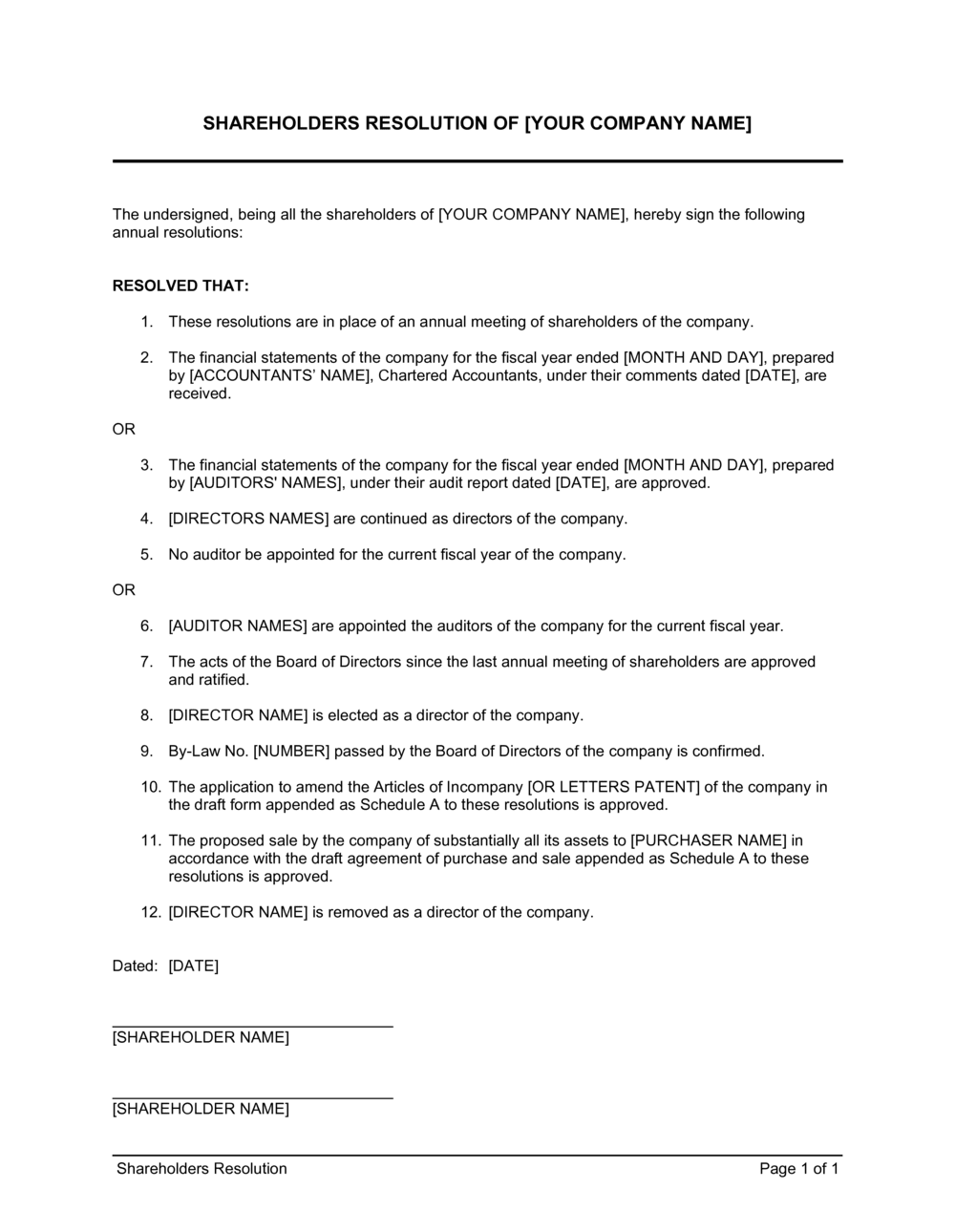
- A shareholder decision that passes by a simple majority — more than 50% of votes cast — typically used for routine matters such as director elections and dividend declarations.
- Special Resolution
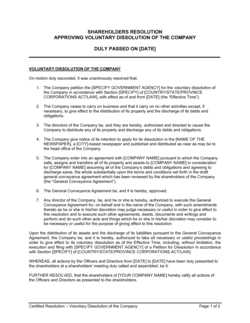
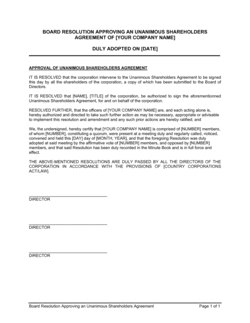
- A shareholder decision that requires a higher threshold — commonly 66⅔% or 75% of votes cast — used for fundamental changes such as articles amendments, mergers, or dissolution.
- Quorum
- The minimum number or percentage of shareholders who must be present or represented at a meeting for any resolution passed to be valid.
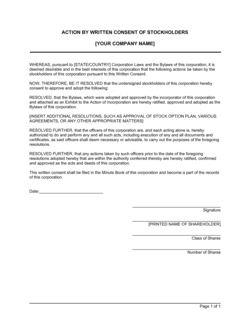
- Written Consent (in lieu of meeting)
- A mechanism allowing shareholders to adopt a resolution without holding a formal meeting, by signing a written document — subject to statutory and bylaw requirements on unanimity or majority consent.
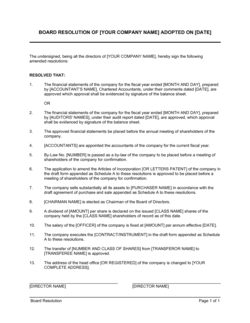
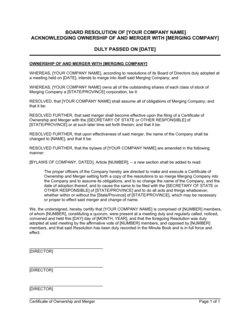
- Recitals
- Introductory 'whereas' clauses in a resolution that state the factual background and reasons for the decision, giving context to the operative resolution language.
- Operative Clause
- The 'resolved that' language in a resolution that records the actual decision — the legally binding portion that directors and officers rely on as authority to act.
- Corporate Minute Book
- A company's official records register containing the articles, bylaws, share register, and all director and shareholder resolutions — required to be maintained in most jurisdictions.
- Supermajority
- A voting threshold above simple majority — typically 66⅔%, 75%, or unanimity — required by statute or bylaws for certain fundamental corporate changes.
- Proxy
- Written authorization from a shareholder allowing another person to vote their shares at a meeting on their behalf.
- Ratification
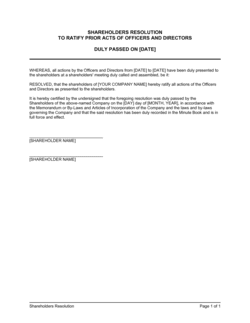
- A resolution that retroactively approves an act already taken — often used to confirm contracts signed or commitments made before formal shareholder approval was obtained.
- Share Register
- The official record of all shareholders, the number and class of shares each holds, and the dates of issuance and transfer — used to determine voting entitlements.