1
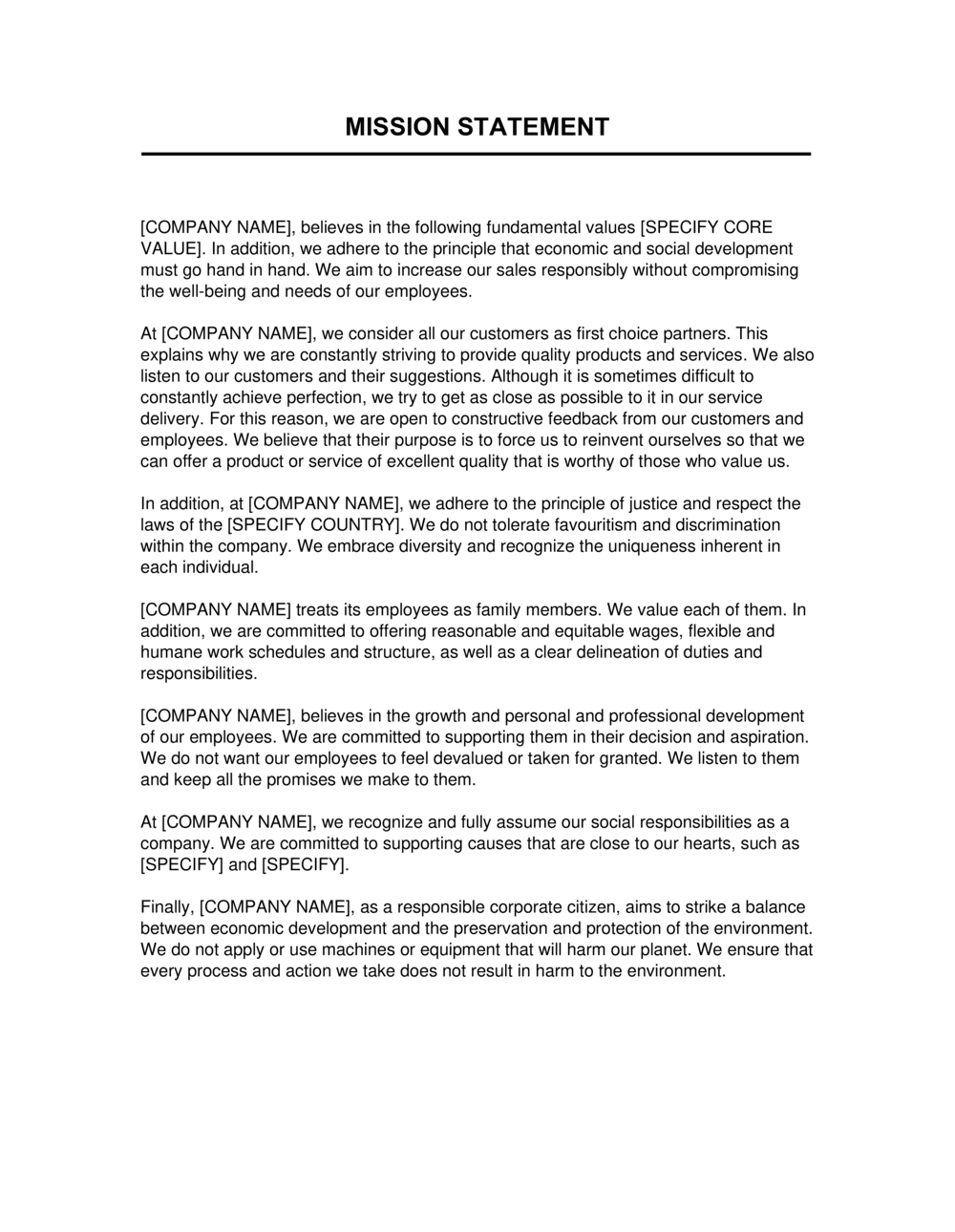
Enter the organization's full legal name and entity type
Use the exact registered name as it appears in your articles of incorporation, certificate of formation, or equivalent founding document. Record the entity type — corporation, LLC, nonprofit association — and the jurisdiction of formation.
💡 Cross-check your registered name against your most recent government filing before drafting. Discrepancies between the mission statement and incorporation documents can delay grant applications and regulatory filings.
2
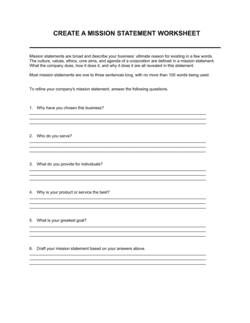
Draft the purpose declaration
Write one to three sentences answering three questions: what does the organization do, for whom, and to what end? Avoid jargon, superlatives, and competitive claims. The purpose should still be accurate in ten years.
💡 Read the draft aloud to someone outside the organization. If they cannot explain back what you do and who you serve, the declaration is not clear enough.
3
Define the target audience with specificity
Identify the primary beneficiaries or customers — demographic, geographic, or sectoral — with enough detail to prioritize decisions. If the organization serves multiple audiences, list them in order of priority.
💡 For nonprofits seeking 501(c)(3) or charitable status, the audience definition must align with a qualifying exempt purpose category — charitable, educational, scientific, or religious — not a commercial one.
4
Articulate the value proposition
Write one to two sentences on what makes the organization's approach, method, or position distinctive. This should differentiate the mission from similar organizations operating in the same space.
💡 If you cannot complete the sentence 'We are different from [COMPARABLE ORGANIZATION] because...' with a specific, verifiable claim, your value proposition needs more work.
5
List and define two to five guiding principles
Select values that reflect how the organization actually operates — not how it aspires to operate. Add a one-sentence behavioral definition to each value so it can be applied in decision-making.
💡 Test each value against a real decision the organization has made. If the value wouldn't have changed the outcome, it is decorative, not functional.
6
Define the scope of operations
State the geographic territory, industry sector, or program category within which the organization primarily works. For nonprofits with multi-jurisdictional operations, list each jurisdiction separately.
💡 Keep the scope broad enough to accommodate growth but specific enough to exclude activities the organization will never pursue — overly broad scope attracts scrutiny in charitable registration filings.
7
Set the review cycle and amendment threshold
Choose a review period — typically every two to five years for stable organizations, annually for fast-growing ones — and specify the vote required to amend. Record both in the amendment clause.
💡 A two-thirds board majority is the most commonly enforced amendment threshold for nonprofit mission statements; majority vote is standard for for-profit organizations.
8
Obtain formal board adoption and collect signatures
Present the final draft at a duly constituted board or leadership meeting, record the adoption in the meeting minutes, and collect signatures from authorized officers — at minimum, the Chair and Executive Director or CEO.
💡 Attach the signed mission statement to the meeting minutes as an exhibit. This creates a clean governance record that satisfies grant auditors and regulatory reviewers.