Shareholders & Investors Templates
★★★★★4.7from 280+ reviews· Trusted by 20M+ businesses
Govern ownership, protect investor rights, and document every shareholder decision with the right template.
WordEditable onlinePDF10+ shareholders & investors templates
Other Administration categories
Most popular shareholder templates
Resolutions and written decisions
Investor and financial documents
Certificates, declarations, and governance records
250K+Clients
20M+Free users
20+Years
190+Countries
10,000+Law firms
50M+Downloads
Trusted across review platforms
- Capterra★★★★☆4.649 reviews
- G2★★★★☆4.713 reviews
- GetApp★★★★☆4.649 reviews
- Google Play★★★★☆4.6179 ratings
- Google Reviews★★★★☆4.567 reviews
Frequently asked questions
Do I need a shareholders agreement if I'm the only shareholder?
A sole shareholder rarely needs a full shareholders agreement, but a Declaration of the Sole Shareholder is useful for corporate governance purposes — it records key decisions formally and protects the corporate veil. If you plan to take on investors or co-founders in the future, drafting a shareholders agreement early is much easier than negotiating one under time pressure when a deal is on the table.
What happens if shareholders don't have a written agreement?
Without a written agreement, the company falls back entirely on its corporate bylaws and the relevant corporate statute of the jurisdiction. Default rules rarely reflect what the shareholders actually agreed to informally. Disputes over dividends, share transfers, or exit valuation become significantly harder — and more expensive — to resolve without a written document to reference.
What is a unanimous shareholders agreement (USA)?
A unanimous shareholders agreement is a contract signed by every shareholder of a corporation, often used in Canada and other Commonwealth jurisdictions. It can restrict or transfer powers normally held by the board of directors directly to the shareholders. Because it binds all shareholders, it carries more authority than a standard majority shareholders agreement for the matters it covers.
Can a shareholders resolution be passed without a meeting?
Yes. In most jurisdictions, shareholders can pass a valid resolution by written consent — without holding a formal meeting — as long as the required percentage of shareholders signs the written consent document. This is the purpose of the Action by Written Consent of Shareholders template.
How is a shareholder loan different from a capital contribution?
A shareholder loan is recorded as debt on the company's balance sheet — the company owes the money back with interest. A capital contribution increases the shareholder's equity stake but carries no repayment obligation. Loans give the shareholder priority in liquidation; equity contributions do not. A Shareholder Loan Agreement documents the terms of the debt so it is treated correctly for tax and accounting purposes.
What does a right of first refusal protect against?
A right of first refusal prevents a shareholder from selling their stake to an unknown third party without first offering it to existing shareholders. This keeps ownership within the original group, prevents unwanted outsiders from acquiring influence, and gives remaining shareholders a chance to maintain their proportional ownership. Without it, a co-founder could sell to a competitor or an investor with conflicting interests.
What is a phantom stock plan and when is it used?
A phantom stock plan grants employees the economic value of company shares — cash bonuses tied to share price growth — without issuing actual equity. It is most common in private companies that want to incentivize key employees with ownership-like rewards without diluting existing shareholders or creating voting complications. Payouts are typically triggered by a sale of the company or a defined performance period.
When should we update our shareholders agreement?
Review the shareholders agreement whenever a material change occurs: a new investor joins, a founder departs, the company raises a new round of financing, or a shareholder's role significantly changes. Many agreements also include a scheduled review period — every two to three years — to ensure the terms still reflect the current ownership structure and business strategy.
Shareholders & Investor vs. related documents
Corporate bylaws are a public-facing constitutional document filed with the state or province; a shareholders agreement is a private contract between the shareholders themselves. Bylaws govern how the corporation operates; the shareholders agreement governs the relationship between the owners. In practice, both documents coexist — bylaws establish the legal framework, while the shareholders agreement handles economic rights, transfer restrictions, and dispute resolution between specific individuals.
A shareholders resolution is a formal decision made by the company's owners, typically required for major matters such as dissolution, amendments to the shareholder agreement, or approval of major transactions. A board resolution is a decision made by the directors on day-to-day management matters. Some actions require both: the board proposes, and the shareholders ratify.
A right of first refusal (ROFR) gives existing shareholders the right to match a third-party offer before the selling shareholder can accept it. A right of first offer (ROFO) requires the seller to offer shares to existing shareholders first, before approaching outside buyers at all. ROFR is more seller-friendly; ROFO is more buyer-friendly. Both serve to keep ownership within the existing group.
A shareholder loan is debt: the company owes the shareholder money with interest and a repayment schedule, and the shareholder has priority in liquidation. An equity investment increases the shareholder's ownership percentage but carries no repayment obligation. Loans are simpler and faster to arrange but add leverage to the company's balance sheet; equity dilutes existing owners but strengthens the balance sheet.
Key clauses every Shareholders & Investor contains
Most shareholder and investor documents share a set of core clauses that define ownership rights, decision-making authority, and exit conditions.
- Ownership structure and capitalization. Lists each shareholder's name, share class, and percentage ownership at the time of signing.
- Voting rights and quorum. Specifies how votes are counted, what percentage constitutes a quorum, and which decisions require a supermajority.
- Transfer restrictions. Sets out conditions under which shares can be sold, transferred, or pledged — including lock-up periods and pre-approval requirements.
- Right of first refusal. Requires a selling shareholder to offer shares to existing holders before selling to a third party.
- Drag-along and tag-along rights. Drag-along allows a majority to compel minority shareholders to join a sale; tag-along lets minority holders participate in a majority-shareholder sale on the same terms.
- Dividend policy. Defines how and when profits are distributed, including any preference for certain share classes.
- Dispute resolution. Establishes the process for resolving disagreements between shareholders — negotiation, mediation, arbitration, or buyout mechanism.
- Exit and buy-sell provisions. Governs what happens when a shareholder wants to leave: valuation method, buyout timeline, and funding mechanism.
How to write a shareholders agreement
A shareholders agreement works best when it anticipates disagreements before they happen. Here is how to structure one from scratch.
1
Name the parties and define the share structure
List every shareholder by legal name, the number and class of shares they hold, and the percentage of total equity each represents.
2
Set out voting rights and reserved matters
Specify which decisions require a simple majority, supermajority, or unanimous consent — and which decisions require shareholder approval at all.
3
Define transfer restrictions
State whether shares can be freely transferred, what approval is needed, and whether lock-up periods apply to founders or early investors.
4
Add a right of first refusal clause
Require any selling shareholder to offer their shares to existing shareholders at the same price before selling to an outsider.
5
Include drag-along and tag-along rights
Protect both majority and minority shareholders by defining each party's right to participate in — or compel — a sale of the company.
6
Establish a dividend policy
Decide whether profits will be reinvested or distributed, and whether any share class carries a preference for dividend payments.
7
Draft a buy-sell (shotgun) clause
Include a deadlock-breaking mechanism that sets a fair process for one shareholder to buy out another if the relationship breaks down.
8
Choose governing law and dispute resolution
Name the jurisdiction whose laws apply and specify whether disputes go to mediation, arbitration, or the courts.
At a glance
- What it is
- Shareholders and investor documents are the legal instruments that govern who owns a company, how ownership decisions are made, and what rights and obligations each investor holds. They range from foundational agreements (shareholders agreements, stock certificates) to day-to-day governance records (resolutions, written consents, loan agreements).
- When you need one
- Any time a company issues shares, admits a new investor, passes a corporate resolution, transfers ownership, or borrows from a shareholder, the right document must be in place to make it legally valid and enforceable.
Which Shareholders & Investor do I need?
The right document depends on what corporate action you're taking and who is involved. Use the scenarios below to find the best fit.
Your situation
Recommended template
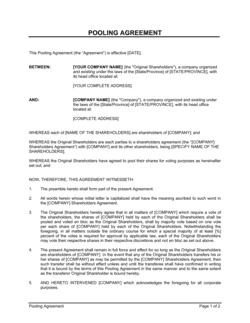
Formalizing ownership rights and rules between multiple shareholders
Sets out voting rights, dividend policy, transfer restrictions, and dispute resolution in one binding document.Shareholders voting on a company matter without holding a meeting
Records a valid shareholder decision by written consent in lieu of a formal meeting.A shareholder lending money to the company
Specifies repayment terms, interest rate, and subordination so the loan is properly documented.Selling or transferring shares from one party to another
Documents the price, conditions, and representations for a private share transfer.Giving an existing shareholder the right to buy shares before outsiders
Protects existing shareholders by requiring the seller to offer shares internally first.A new investor joining an existing unanimous shareholder agreement
Brings a new party into the existing USA without rewriting the whole agreement.Preparing a concise overview to attract external investors
Structured one-pager that covers business model, market, and financial highlights for investor review.Issuing equity-like compensation without actual shares
Rewards employees with the economic value of shares without diluting actual equity ownership.Glossary
- Shareholders agreement
- A private contract between a company's shareholders that governs ownership rights, decision-making, transfers, and exit procedures.
- Unanimous shareholders agreement (USA)
- A shareholders agreement signed by every shareholder, which can transfer certain director powers directly to the shareholders.
- Shareholders resolution
- A formal decision made by shareholders — either at a meeting or by written consent — on matters requiring owner-level approval.
- Right of first refusal (ROFR)
- A contractual right that gives existing shareholders the option to purchase shares being sold before any third party can buy them.
- Drag-along right
- A majority shareholder's right to require minority shareholders to join in a sale of the company on the same terms.
- Tag-along right
- A minority shareholder's right to participate in a majority shareholder's sale of their stake on the same terms.
- Phantom stock plan
- An incentive plan that pays employees a cash amount equal to the value of company shares without granting actual equity.
- Share transfer
- The process of moving ownership of shares from one party to another, typically requiring documentation and board or shareholder approval.
- Capitalization table (cap table)
- A spreadsheet or ledger showing every shareholder, the number and class of shares they hold, and their percentage ownership.
- Buy-sell agreement
- A clause or standalone agreement that sets the process and valuation method for one shareholder to buy out another, particularly on death, disability, or deadlock.
- Shareholder loan
- A loan made by a shareholder to the corporation, recorded as debt on the balance sheet and subject to a formal loan agreement.
- Stock certificate
- A formal document issued by a corporation that certifies a shareholder's ownership of a specific number of shares.
What is a shareholders & investors document?
A shareholders and investors document is any legal instrument that records, governs, or protects the rights and obligations of the people who own equity in a company or have committed capital to it. This category spans a wide range — from foundational ownership contracts like a shareholders agreement or a unanimous shareholders agreement, to day-to-day governance records like resolutions and written consents, to financial instruments like shareholder loan agreements and phantom stock plans.
What unites all of these documents is their function: they make ownership arrangements explicit and enforceable. Without them, disputes over dividends, share transfers, voting authority, or investor exits become difficult to resolve because there is no written record of what the parties actually agreed to. With them, every major ownership decision has a paper trail that directors, courts, and auditors can rely on.
Shareholders and investor documents apply to all business structures that issue shares or accept outside investment — corporations, close companies, family businesses, and startups alike. The right mix of documents depends on how many shareholders you have, whether external investors are involved, and how actively the shareholders participate in managing the business.
When you need a shareholders & investors document
Any time a company changes its ownership structure, makes a major corporate decision, or enters into a financial arrangement with one of its owners, the right document needs to be in place before the transaction is complete. Verbal agreements and handshake deals are common among founders and family members — and they are also the most common source of expensive disputes.
Common triggers:
- A startup takes on a co-founder or angel investor and needs to formalize equity splits
- An existing shareholder wants to sell their shares to a third party
- Shareholders vote to dissolve, merge, or restructure the company
- A shareholder loans money to the business to fund operations or expansion
- A new employee or executive receives equity or equity-like compensation
- A company needs to record a formal resolution without convening a physical meeting
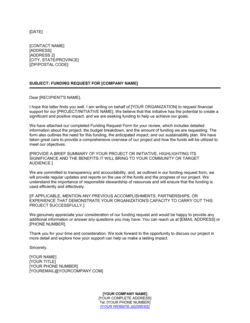
- An investor requests an executive summary before committing capital
- The company needs to document that a departing shareholder has waived their right of first refusal
The consequences of skipping these documents range from voided share transfers to unenforceable loan terms to shareholder disputes that require litigation to untangle. The templates in this folder give you professionally drafted, jurisdiction-aware starting points for every scenario — so ownership decisions are recorded correctly the first time.
Award-winning platform
- Great Place to Work 2025
- BIG Award — Product of the Year 2025
- Smartest Companies 2025
- Global 100 Excellence 2026
- Best of the Best 2025