1
Enter the company's full legal name and jurisdiction
Use the exact legal name as it appears in the certificate of incorporation or articles of organization. Include the state, province, or country of formation to ensure the resolution references the correct corporate entity.
💡 Cross-reference the company's registration filing — trade names or shortened names can invalidate the resolution as a corporate act.
2
Record the meeting date, location, and quorum confirmation
State whether the resolution was passed at a physical meeting, by video conference, or by unanimous written consent. Confirm the number of directors present constitutes quorum under the company's bylaws.
💡 Check your bylaws for the quorum threshold before drafting — some companies require a majority of the full board, others only a majority of those present.
3
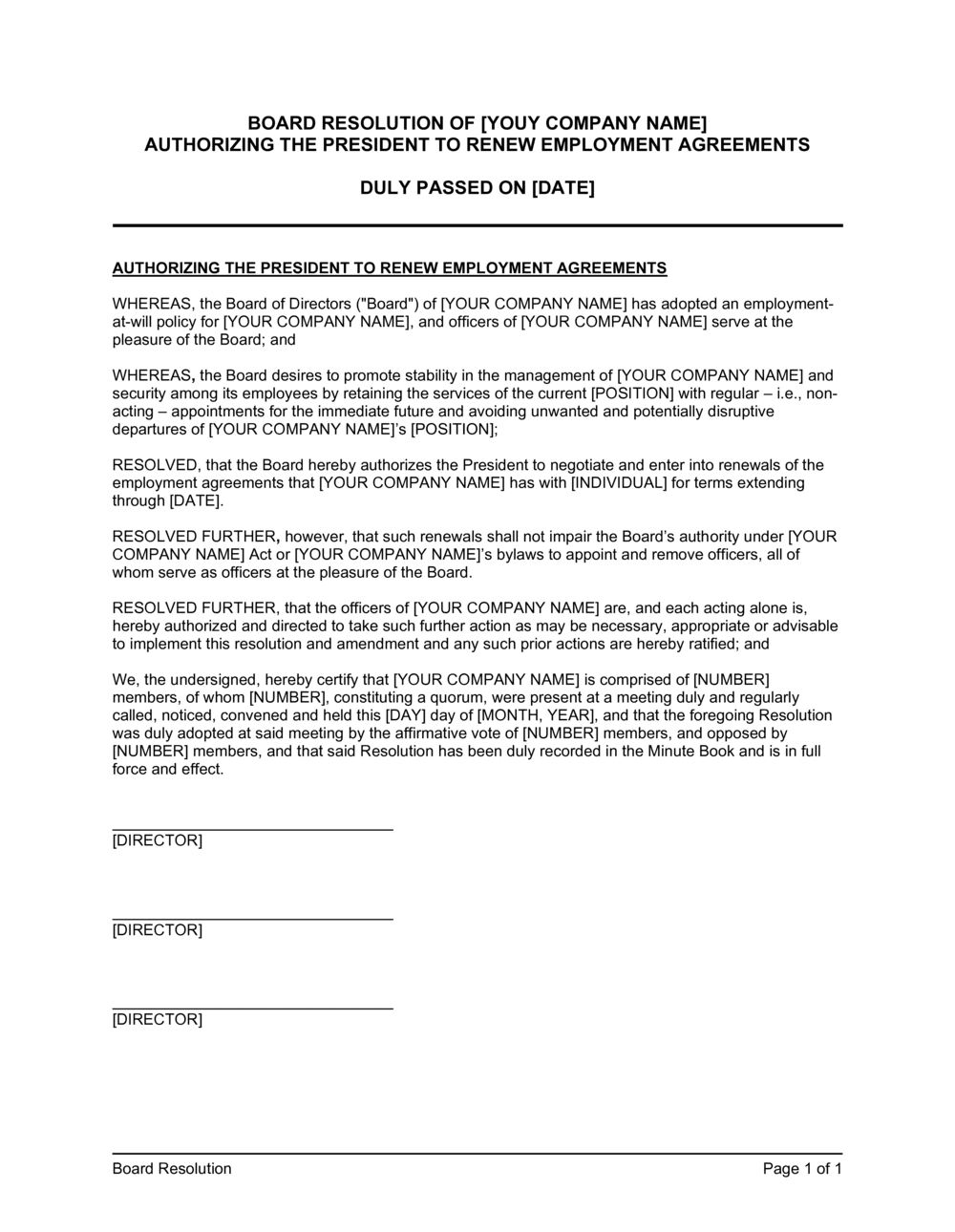
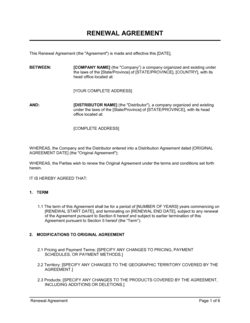
Identify the agreement being renewed with precision
Include the full agreement title, original execution date, counterparty's legal name, and any prior renewal dates. If a master agreement covers multiple schedules or orders, specify which schedule or order is being renewed.
💡 Attach a copy of the original agreement as an exhibit to the resolution — it eliminates any ambiguity about which contract the board authorized.
4
State the new renewal term with specific start and end dates
Enter the exact commencement and expiration dates of the renewed term. Do not rely on phrases like 'for one additional year' without anchoring them to a specific calendar date.
💡 Verify that the renewal start date aligns with the expiration date of the existing term — a gap between old and new terms can create an unintended lapse in the agreement's coverage.
5
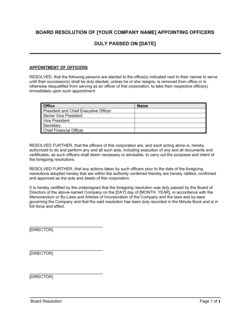
Name the authorized officers by title
List the specific officer titles — and, where preferred, the names — of individuals authorized to execute the renewal. If the company requires dual signatures above a dollar threshold, list both.
💡 Confirm the named officers are currently in their roles — authorizing a former officer creates execution problems and may require a corrective resolution.
6
Set modification authority limits
If officers need flexibility to negotiate minor changes, define the outer boundaries — a maximum percentage deviation in price, scope, or term — beyond which a new resolution is required.
💡 Expressing limits as a dollar amount rather than a percentage is clearer for counterparties and auditors reviewing the file.
7
Have the corporate secretary certify and sign
The secretary should complete the certification block confirming the resolution was duly adopted, sign and date it, and store the original in the minute book. Provide a certified copy to the counterparty if requested.
💡 Issue the secretary's certificate on a separate page from the director signatures so it can be detached and delivered to third parties without disclosing the full signatory list.
8
Execute the resolution before signing the renewal agreement
Ensure the resolution date precedes or matches the execution date of the renewal agreement itself. File the resolution in the corporate minute book alongside the executed renewal agreement.
💡 Some counterparties — particularly financial institutions and government agencies — require a certified copy of the resolution before they will countersign the renewal. Have certified copies ready at closing.