Construction Templates
General contractors, trades, building, civil works.
Instant downloads • Fully editable • Export to Word, Excel or PDF
34 templates
Includes Construction Agreement, Mechanic Lien, Agreement Between Owner and Contractor and 31 more.
At a glance
What it is
This filter surfaces templates that general contractors, specialty trades, renovation firms, and civil works operators reach for to run projects, manage subcontractors, and stay compliant on site. The documents cover everything from pre-construction agreements and safety plans to lien releases and job descriptions, giving construction businesses a single source for the paperwork each project requires.
When you need one
Operators in this filter typically need these templates the moment a project is scoped — before a shovel breaks ground, contracts must be signed, safety protocols documented, and subcontractor relationships formalized. They return to the filter throughout a project lifecycle as change orders, lien releases, and staffing documents arise.
Popular Construction Templates














Which template fits your situation?
The right starting point depends on where a contractor is in the project cycle — pre-contract, active site management, subcontractor coordination, or closing out. Match your current situation to the template below.
How construction operators get the most from these templates
Working through these templates in project order — rather than pulling them ad hoc — reduces the chance of a gap in coverage that creates a dispute or delay.
Start with a business plan before pursuing your first major project
Use the Construction Company Business Plan or Renovation Contractor Business Plan to document your market, financials, and operational capacity before approaching lenders or large clients.
Establish the owner-contractor relationship in writing before mobilizing
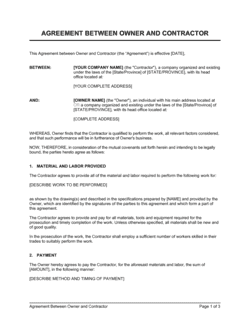
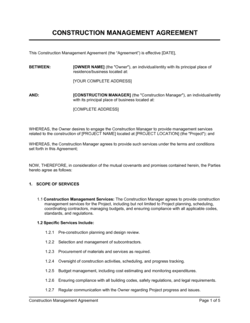
Execute the Agreement Between Owner and Contractor or Construction Agreement to lock in scope, price, and schedule before any work or purchases begin.
Formalize every subcontractor engagement with its own agreement
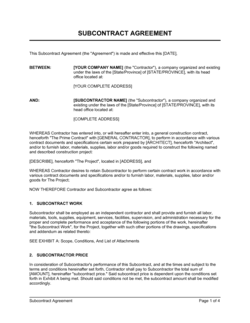
Issue an Independent Contractor Agreement or Exclusive Contractor Agreement for each trade to define deliverables, payment terms, and site responsibilities.
Put a safety plan on site before workers arrive
Complete the Construction Safety Plan and make it available to all workers, subcontractors, and inspectors as required by applicable occupational health regulations.
Document scope changes with a written amendment
Use the Agreement for Work Change to capture any additions or deletions to the original scope, preventing 'he said / she said' disputes over extras.
Collect lien releases as each subcontractor is paid
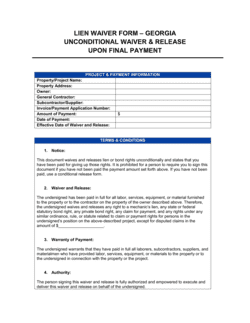
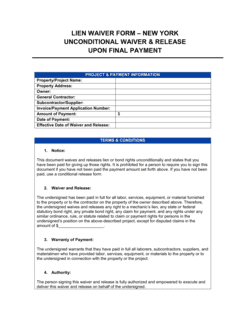
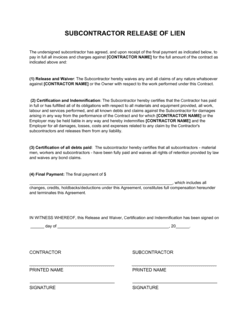
Issue the Subcontractor Release Of Lien at each payment milestone so you can demonstrate clear title when the project closes.
Hire site staff using role-specific job descriptions
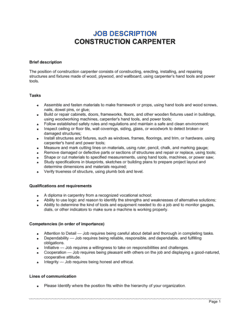
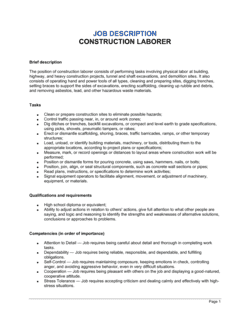
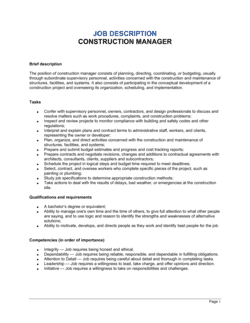
Use the Construction Manager, Construction Carpenter, and Construction Laborer Job Descriptions to attract qualified candidates and set clear performance expectations.
Glossary
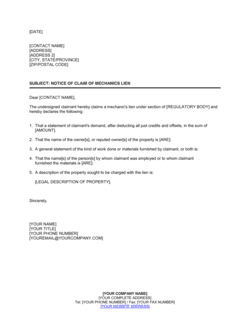
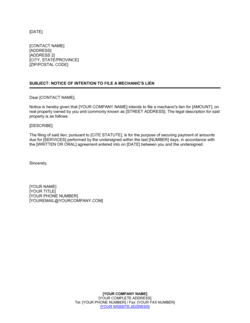
- mechanics lien
- A legal claim filed against a property by a contractor, subcontractor, or supplier who has not been paid for work or materials, giving them a security interest in the property until the debt is resolved.
- lien waiver
- A written document in which a contractor or subcontractor relinquishes their right to file a mechanics lien, typically exchanged at the time of payment.
- change order
- A written amendment to an existing construction contract that documents a change in scope, price, or schedule agreed to by both parties after the original contract is signed.
- substantial completion
- The stage in a project when the work is sufficiently complete for the owner to occupy or use it for its intended purpose, typically triggering final payment and the start of the warranty period.
- retainage
- A percentage of each progress payment withheld by the owner until the project reaches substantial or final completion, providing an incentive for the contractor to finish the work.
- general contractor (GC)
- The primary contractor who holds the contract with the property owner, coordinates all subcontractors and trades, and bears overall responsibility for delivering the project.
- subcontractor
- A specialty trade or services firm hired by the general contractor to perform a defined portion of the work, such as electrical, plumbing, or framing.
- scope of work
- A detailed written description of the work to be performed under a construction contract, including materials, methods, and project boundaries.
- build to suit
- A development arrangement in which a property is designed and constructed to a tenant's or buyer's specific requirements, with the construction obligation tied to a lease or purchase agreement.
- progress draw
- A payment made to a contractor at a defined milestone or percentage of project completion, rather than in a single lump sum at the end.
- indemnification clause
- A contractual provision in which one party agrees to compensate the other for specified losses, damages, or legal costs arising from the project.
Construction Templates by department
Browse other industries
Frequently asked questions
What construction templates are available?
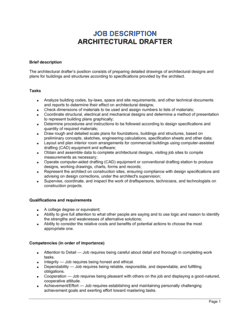
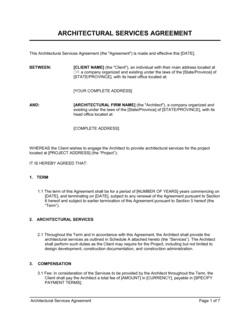
34 construction templates, including Construction Agreement, Mechanic Lien, Agreement Between Owner and Contractor, Architectural Drafter Job Description, Architectural Services Agreement.
What is the difference between a Construction Agreement and an Agreement Between Owner and Contractor?
A Construction Agreement is a general-purpose contract that any two parties — including subcontractors and GCs — can use to formalize a construction engagement. The Agreement Between Owner and Contractor is written specifically for the primary relationship between a property owner and the general contractor they are hiring, including owner-side obligations like site access and permits. Both templates cover scope, payment, and completion, but the owner-contractor form includes provisions unique to that principal relationship. For most GC-to-owner projects, the Agreement Between Owner and Contractor is the more precise fit.
Do I need a Construction Safety Plan if I am a sole-trade contractor working alone?
In most jurisdictions, occupational health legislation requires a written safety plan once a worksite reaches a threshold number of workers or a certain level of hazard — but many solo operators document safe work procedures voluntarily to satisfy client requirements and reduce liability. The Construction Safety Plan template scales down to a single-operator context by removing crew-management sections. Even if not legally required in your area, presenting a safety plan to a general contractor or property owner signals professionalism and is often a prerequisite for being awarded work. Consider consulting a local occupational health authority to confirm the exact requirement for your trade and jurisdiction.
When should I use a Subcontractor Release Of Lien?
You should collect a Subcontractor Release Of Lien each time you make a progress payment or final payment to a subcontractor or supplier. The release documents that the payee has been paid for the work or materials covered and waives their right to file a mechanics lien for that amount. Collecting releases at every payment milestone — not just at project close — protects the GC and the property owner from lien claims surfacing after the fact. Some jurisdictions require conditional releases at payment and unconditional releases after funds clear.
Which business plan template is best for a new construction company?
This filter includes three Construction Company Business Plan variants plus a Residential Construction Business Plan and a Renovation Contractor Business Plan. The standard Construction Company Business Plan is the broadest starting point for a general contracting firm. The Residential Construction Business Plan is a better fit if your work is exclusively residential builds, while the Renovation Contractor Business Plan is designed for firms focused on remodels and retrofits rather than ground-up construction. All three follow the same financial and market-analysis structure that lenders and investors expect.
How does an Independent Contractor Agreement protect a construction firm from worker misclassification?
An Independent Contractor Agreement documents the factors that distinguish an independent contractor relationship from employment — including the worker's control over how and when they work, their use of their own tools, and their right to work for other clients. While no agreement alone determines legal classification, a well-drafted contract creates a written record of the parties' intent and the operational reality of the arrangement. In most jurisdictions, misclassification can trigger payroll tax liability, benefits obligations, and penalties, so the agreement is an important part of a broader compliance posture. Consider having a labour lawyer review your classification practices if you engage multiple trades regularly.
Can I use the Agreement for Work Change to handle verbal change orders retroactively?
You can use the template to document an agreed scope change after the fact, but retroactive change orders carry risk because the cost and schedule impact may already be in dispute. The best practice is to pause work on any out-of-scope item until both parties sign a written change order. If a change was performed without prior written approval, both parties should agree on the scope, price, and schedule impact in writing as soon as possible — using the Agreement for Work Change — before proceeding with further work. Courts in most jurisdictions look for contemporaneous written evidence when evaluating change order disputes.
What templates should a construction firm use when hiring site managers?
The Construction Manager Job Description is the primary template for defining the role, responsibilities, and qualifications for a site manager position. Once a candidate is selected, pair it with an employment or contractor agreement appropriate to their classification. If the manager will have access to project budgets, subcontractor relationships, or proprietary methods, consider adding a Consultant Non-Disclosure Agreement to the onboarding package. The Construction Laborer and Construction Carpenter Job Descriptions cover the two most common trade roles beneath the manager level.
Is the Build To Suit Agreement appropriate for a standard commercial construction project?
A Build To Suit Agreement is specifically for arrangements where a developer or landlord agrees to construct or modify a property to a tenant's specifications before the tenant takes occupancy — the lease and the construction obligation are linked in the same instrument. For a standard commercial build where the owner and contractor are separate from any leasing relationship, the Agreement Between Owner and Contractor or Construction Agreement is the more appropriate starting point. Build To Suit templates are common in retail and industrial development where an anchor tenant drives the project.
One document. A more organized business.
Your documents are part of how your business operates. Business in a Box brings the work, people and information around them into one workspace.
Start with the template you need. Bring the rest of your business together when you're ready.
How our templates are made
Every template is written by the Business in a Box editorial team and published by Bruno Goulet, CEO & Editor-in-Chief. Business in a Box has published business and legal templates for more than 20 years. Each document page explains what the template covers and how to fill it in; for legal documents, have a qualified professional review the final version when the stakes warrant it.