E-Commerce Templates
Online stores, marketplaces, drop-shipping, DTC brands.
Instant downloads • Fully editable • Export to Word, Excel or PDF
14 templates
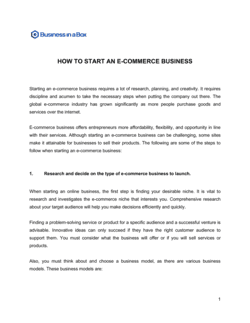
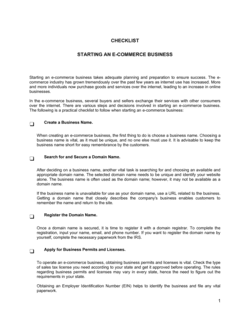
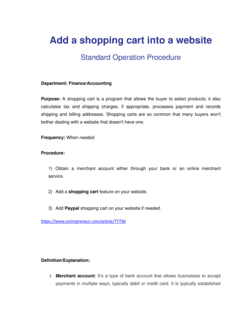
Includes How To Start An Ecommerce Business, Starting Ecommerce Business Checklist, How To Setup A Shopping Cart and 11 more.
At a glance
What it is
This filter surfaces documents that online store operators, direct-to-consumer brands, and marketplace sellers reach for when planning, launching, or scaling a channel. The templates cover strategic planning, platform selection, and social-driven revenue tactics specific to selling online.
When you need one
Operators reach for these templates when they are mapping out a new online channel, choosing between competing platform vendors, or building a repeatable playbook for social commerce. Each document saves time that would otherwise be spent structuring analysis or strategy from scratch.
Popular E-Commerce Templates
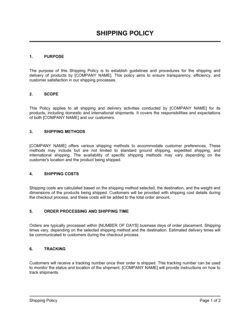
Which template fits your situation?
The three templates in this filter serve distinct phases: planning the channel, selecting the platform, and activating social sales. Match the template to where you are in that sequence.
How e-commerce operators get the most from these templates
Working through the templates in sequence — strategy first, platform second, social activation third — prevents costly misalignment between goals and execution.
Define your channel and customer
Open the E-Commerce Strategy Plan and complete the channel scope and target customer sections before touching any other document.
Set measurable revenue goals
Enter specific conversion rate, average order value, and monthly revenue targets so every downstream decision has a clear success bar.
Score platform options objectively
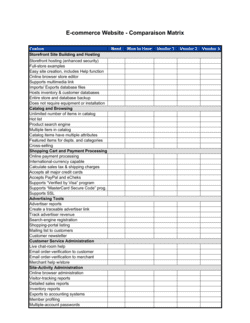
Use the E-Commerce Solution Providers Comparison Matrix to weight criteria — cost, features, scalability — before talking to any vendor.
Select and document your platform choice
Record the final scores and rationale in the matrix so the decision is auditable and shareable with stakeholders.
Build your social commerce playbook
Use the social commerce guide to assign channel owners, content formats, and weekly posting targets tied to the revenue goals from step 2.
Review and iterate quarterly
Revisit the strategy plan each quarter to update KPIs and reflect changes in platform, audience, or product mix.
Glossary
- direct-to-consumer (DTC)
- A selling model in which a brand sells directly to end buyers through its own online store, bypassing wholesalers and third-party retailers.
- marketplace seller
- A business that lists and sells products on a third-party platform such as Amazon, eBay, or Etsy rather than on a self-hosted storefront.
- dropshipping
- A fulfilment model where the seller does not hold inventory; instead, orders are forwarded to a supplier who ships directly to the customer.
- conversion rate
- The percentage of website visitors who complete a desired action, most commonly a purchase, within a given period.
- average order value (AOV)
- The mean revenue generated per completed transaction, calculated by dividing total revenue by the number of orders.
- social commerce
- Buying and selling that takes place natively within a social media platform, allowing customers to complete a purchase without leaving the app.
- customer acquisition cost (CAC)
- The total marketing and sales spend required to acquire one new paying customer over a defined period.
- platform migration
- The process of moving an online store from one e-commerce platform to another, including transferring products, customer data, and integrations.
- headless commerce
- An architecture that decouples the customer-facing front end from the back-end commerce engine, allowing greater flexibility in how products are presented.
- return merchandise authorisation (RMA)
- A process by which a customer requests approval to return a product, used to manage refunds and restocking in an organised way.
E-Commerce Templates by department
Browse other industries
Frequently asked questions
What e-commerce templates are available?
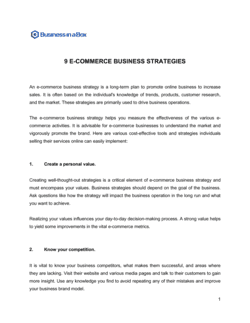
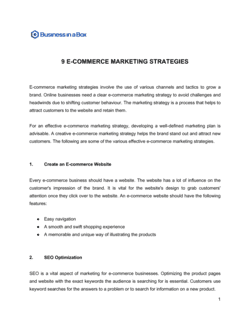
14 e-commerce templates, including How To Start An Ecommerce Business, Starting Ecommerce Business Checklist, How To Setup A Shopping Cart, 9 Ecommerce Business Strategies, 9 Ecommerce Marketing Strategies.
What types of businesses should use e-commerce templates?
Any business that sells products or services through a digital channel can use these templates. That includes direct-to-consumer brands, marketplace sellers on platforms like Amazon or Etsy, dropshippers, and traditional retailers adding an online channel. The documents are written to be platform-agnostic, so they apply whether you are on Shopify, WooCommerce, a custom storefront, or a social commerce channel.
Can I use the E-Commerce Strategy Plan before my store launches?
Yes — the strategy plan is designed for both pre-launch planning and ongoing channel optimisation. Completing it before launch forces you to commit to a target customer, a platform, and measurable goals rather than adjusting reactively. Many operators revisit the document at each major growth milestone.
How does the vendor comparison matrix help me choose a platform?
The E-Commerce Solution Providers Comparison Matrix gives you a structured scoring grid where you define the criteria that matter to your business — cost, features, integration ecosystem, support quality — and rate each vendor consistently. This removes recency bias and makes it easier to defend the final choice to co-founders, investors, or a board.
What is social commerce and why does it have its own template?
Social commerce refers to completing a purchase directly within a social media platform, such as Instagram Shopping or TikTok Shop, rather than clicking through to an external website. It has its own template because the tactics, content formats, and conversion mechanics differ meaningfully from a traditional online store — driving social sales requires a repeatable content and engagement process, not just a product listing.
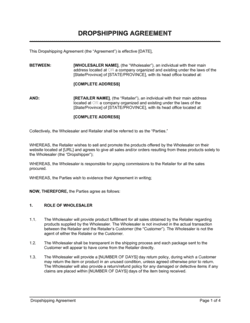
Are these templates suitable for a dropshipping business?
Yes. The strategy plan and vendor comparison matrix both accommodate dropshipping models. In the strategy plan, you would note supplier-managed fulfilment in the logistics assumptions section. The vendor matrix is equally useful for comparing dropshipping platform integrations such as DSers or Spocket alongside a core e-commerce platform.
How often should I update my e-commerce strategy plan?
A quarterly review is a practical cadence for most online businesses. Markets, ad costs, and platform algorithms shift frequently enough that an annual review often leaves operators reacting to changes rather than anticipating them. At minimum, revisit the document whenever you change your primary sales channel, launch a significant product line, or set a new revenue target.
One document. A more organized business.
Your documents are part of how your business operates. Business in a Box brings the work, people and information around them into one workspace.
Start with the template you need. Bring the rest of your business together when you're ready.
How our templates are made
Every template is written by the Business in a Box editorial team and published by Bruno Goulet, CEO & Editor-in-Chief. Business in a Box has published business and legal templates for more than 20 years. Each document page explains what the template covers and how to fill it in; for legal documents, have a qualified professional review the final version when the stakes warrant it.