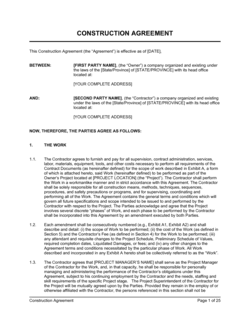
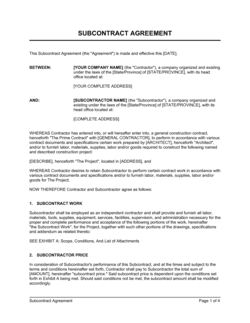
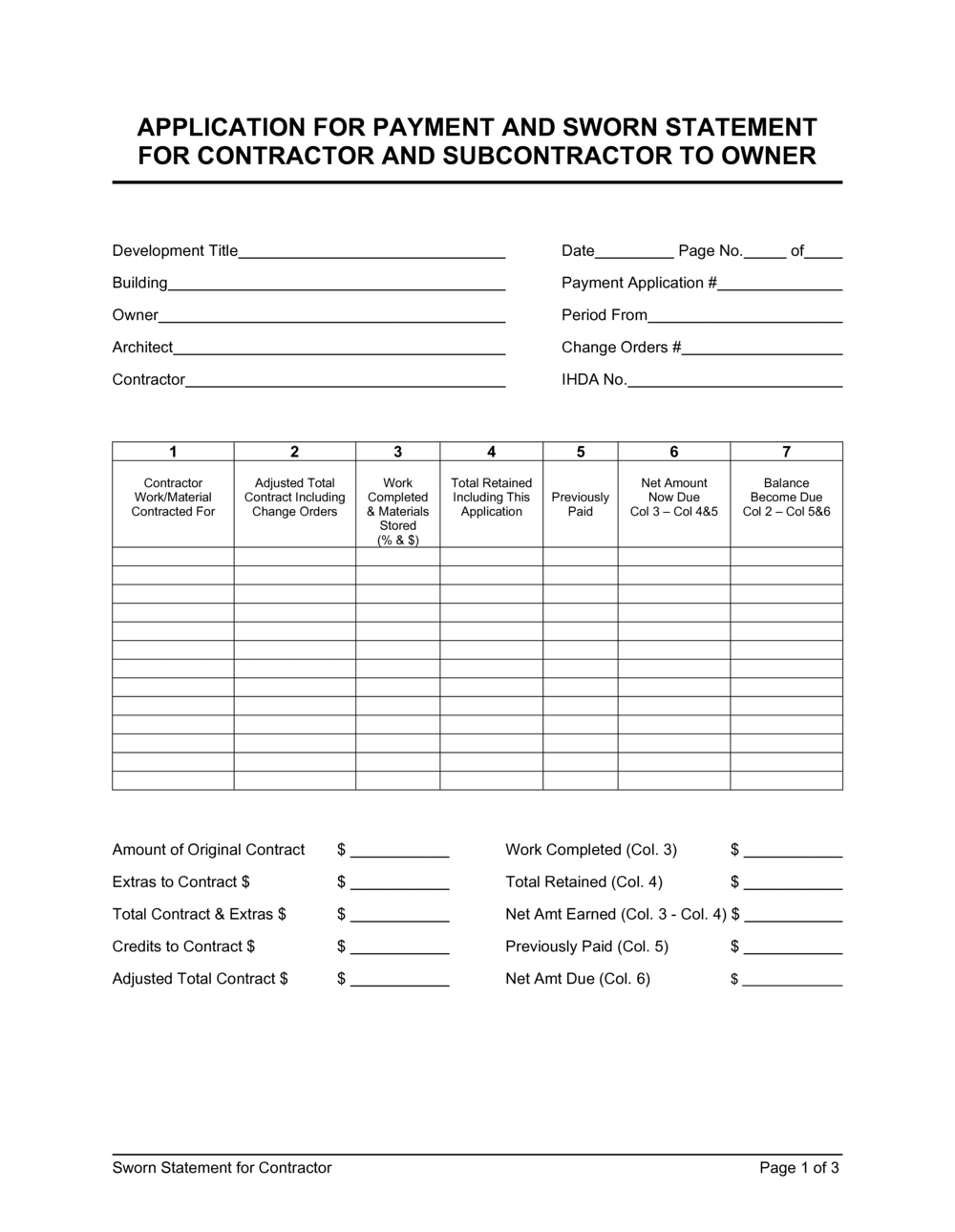
Sworn Statement for Contractor Template

Free Word download • Edit online • Save & share with Drive • Export to PDF

3 pages25–30 min to fillDifficulty: StandardSignature requiredLegal review recommended
Learn more ↓
FreeSworn Statement for Contractor Template

At a glance

What it is
A Sworn Statement for Contractor is a notarized legal declaration in which a general contractor formally attests — under oath and under penalty of perjury — to the status of payments made to subcontractors, suppliers, and materialmen on a construction project. This free Word download gives you a structured, jurisdiction-ready starting point you can edit online and export as PDF before notarization and submission to a project owner, lender, or title company.
When you need it
Use it when a project owner or lender requires confirmation that all subcontractors and suppliers have been paid — or will be paid from the current draw — before releasing a progress payment, final payment, or construction loan disbursement. It is also required in many jurisdictions before a title company will issue a clean title or a lender will fund a final draw.
What's inside
Project and parties identification, a complete schedule of subcontractors and suppliers with amounts owed and paid, lien waiver confirmation, warranty of no outstanding claims, contractor's oath, and notary acknowledgment block.

What is a Sworn Statement for Contractor?

A Sworn Statement for Contractor is a notarized legal declaration in which a general contractor attests — under oath and under penalty of perjury — to the payment status of every subcontractor, supplier, and materialman engaged on a construction project. Submitted to a project owner or construction lender as a condition of releasing a draw payment or final disbursement, it creates a formal, legally binding record that funds from prior draws have been distributed as previously certified, and that proceeds from the current draw will be applied to the parties listed on the attached subcontractor schedule. Unlike a standard payment certification or cover letter, a properly executed sworn statement carries the full legal weight of a sworn affidavit — meaning a false or materially incomplete statement exposes the signing contractor to perjury charges, civil fraud liability, and loss of licensure.

Why You Need This Document

Without a properly executed sworn statement, a general contractor cannot trigger disbursement under most construction loan agreements, and a project owner has no documented basis to confirm that subcontractors and suppliers have been paid before releasing funds. The consequences of skipping this step are concrete and severe: a single unpaid sub-tier vendor can file a mechanic's lien against the property after the owner has already paid the GC in full, clouding the title and blocking refinancing or sale for months. Lenders typically freeze draw disbursements — halting construction — until a compliant sworn statement is on file. Title companies will not issue clean title insurance at project closeout without one. This template gives you a structured, jurisdiction-ready starting point that covers every required element — parties, subcontractor schedule, lien waiver confirmation, no-claims warranty, and notary block — so you can execute quickly, protect your draw schedule, and give owners and lenders the documented assurance they require.

Which variant fits your situation?

If your situation is…Use this template
Releasing a mid-project progress payment drawSworn Statement for Contractor (Progress Draw)
Closing out a completed project and releasing final paymentSworn Statement for Contractor (Final Payment)
Subcontractor waiving lien rights upon receipt of paymentLien Waiver (Subcontractor)
Contractor waiving lien rights for a specific draw amountConditional Lien Waiver
Owner confirming no outstanding claims before property saleOwner's Affidavit (No Liens)
Documenting subcontractor payment history for a disputeSubcontractor Payment Schedule
Certifying substantial completion for loan disbursementCertificate of Substantial Completion

Common mistakes to avoid

❌ Omitting lower-tier subcontractors from the schedule

Why it matters: Any party who furnished labor or materials to the project retains mechanic's lien rights whether or not they appear on the sworn statement. An omitted sub-tier vendor can file a valid lien against the property after the owner has already paid the GC in full.

Fix: Require each first-tier subcontractor to submit a list of their own sub-tier vendors and suppliers, and include all of them on Schedule A. Follow up directly with any party whose lien rights could attach.

❌ Signing the no-outstanding-claims warranty without verification

Why it matters: Courts treat a sworn false statement about no outstanding claims as fraudulent misrepresentation — not mere breach. The contractor can face personal liability, loss of contractor's license, and criminal perjury exposure.

Fix: Send a written inquiry to each subcontractor and supplier before signing, and document their responses. A brief email chain takes 30 minutes and is worth thousands in avoided liability.

❌ Using unconditional lien waivers before funds clear

Why it matters: An unconditional waiver signed before payment clears eliminates lien rights immediately — if the check bounces or the draw is clawed back, the subcontractor has no recourse against the property and will pursue the GC directly.

Fix: Use conditional lien waivers tied to receipt of a specific payment amount. Convert to unconditional waivers only after confirming funds have cleared the subcontractor's account.

❌ Having an unauthorized employee execute the sworn statement

Why it matters: A sworn statement signed by someone without authority to bind the contractor entity may be voidable — which means the lender or owner can refuse to release funds and require re-execution, delaying the project and triggering penalties.

Fix: Verify the signatory's authority against the entity's operating agreement, bylaws, or a specific corporate resolution before execution. Attach the resolution if the lender requires evidence of authority.

❌ Selecting a governing law that does not match the project state

Why it matters: Mechanic's lien rights, notice requirements, and enforcement timelines are governed by the state where the property is located — not the state chosen in the contract. A mismatched governing-law clause creates ambiguity about which lien statutes apply.

Fix: Always set the governing law to the state in which the project property is physically located, regardless of where the contractor is incorporated or headquartered.

❌ Submitting without a complete notarization block

Why it matters: A sworn statement without a proper notary acknowledgment — including the notary's seal, commission expiration date, and signature — is not a sworn statement at all. Lenders and title companies will reject it and restart the draw clock.

Fix: Before leaving the notary's office, verify that the seal is legible, the commission expiration date is present and current, and every field in the acknowledgment block is completed. Do not submit until all notarization elements are confirmed.

The 10 key clauses, explained

Parties and Project Identification

In plain language: Identifies the contractor, project owner, property address, project name, and the specific draw or payment period the statement covers.

Sample language
This Sworn Statement is made by [CONTRACTOR LEGAL NAME] ('Contractor'), a [STATE] [ENTITY TYPE], with respect to the project known as [PROJECT NAME], located at [PROJECT ADDRESS], for the benefit of [OWNER NAME] ('Owner'), covering the payment period ending [DATE].

Common mistake: Using a trade name instead of the contractor's full registered legal entity name — mismatched names between the sworn statement and the construction contract create title and lender processing delays.

Subcontractor and Supplier Schedule

In plain language: A complete list of every subcontractor and supplier engaged on the project, showing their contract amount, total paid to date, the amount included in the current draw, and the remaining balance.

Sample language
Schedule A attached hereto lists all subcontractors and materialmen engaged on the Project. For each, the following is stated: (a) Contract Amount: $[X]; (b) Amount Paid to Date: $[X]; (c) Amount of Current Draw: $[X]; (d) Balance Remaining: $[X].

Common mistake: Omitting lower-tier subcontractors or small material suppliers. Any party with unpaid amounts retains lien rights regardless of whether they appear on the schedule.

Payment Confirmation and Disbursement Intent

In plain language: The contractor's affirmative statement that all prior draw payments have been distributed to subcontractors and suppliers as previously sworn, and that the current draw proceeds will be applied to the amounts listed in the schedule.

Sample language
Contractor hereby affirms that all funds received from prior draw requests have been applied to the payment of subcontractors and materialmen as set forth in previous sworn statements, and that proceeds of the current draw in the amount of $[DRAW AMOUNT] will be applied to the amounts set forth in Schedule A.

Common mistake: Confirming prior disbursements without actually verifying subcontractor receipts — if a dispute arises later, a false confirmation exposes the contractor to fraud liability, not just breach.

Lien Waiver Confirmation

In plain language: States that the contractor has obtained, or will obtain upon payment, executed lien waivers from each subcontractor and supplier listed on the schedule.

Sample language
Contractor warrants that (a) conditional lien waivers from all subcontractors and materialmen listed in Schedule A have been or will be obtained upon disbursement of the current draw, and (b) copies will be provided to Owner within [10] business days of payment.

Common mistake: Stating that waivers 'have been obtained' before they are actually signed and in hand — an owner or lender who relies on this and later faces a lien claim will hold the contractor liable for the misrepresentation.

Warranty of No Outstanding Claims

In plain language: The contractor's sworn representation that no mechanic's liens have been filed against the property and that, to the best of their knowledge, no unpaid claims exist that could give rise to a lien.

Sample language
Contractor warrants that no mechanic's liens, stop notices, or other claims have been filed or threatened against the Project property as of the date of this statement, and that Contractor is not aware of any unpaid obligations that could give rise to such claims.

Common mistake: Signing this clause without confirming through a title search or direct inquiry with each subcontractor — 'to the best of knowledge' is not a shield if the contractor deliberately avoided learning of a known dispute.

Contractor's Representations and Warranties

In plain language: Broad representations covering the accuracy of all information in the statement, the contractor's authority to sign, and the absence of undisclosed claims, back-charges, or disputes with any party on the project.

Sample language
Contractor represents and warrants that: (a) all information contained herein and in all attached schedules is true, accurate, and complete; (b) Contractor has full authority to execute this statement on behalf of [CONTRACTOR ENTITY]; and (c) there are no undisclosed back-charges, disputes, or pending claims with any subcontractor or supplier.

Common mistake: Signing a broad warranty without disclosing a known subcontractor dispute — courts treat non-disclosure of a known material fact as fraudulent misrepresentation, voiding any indemnity protection.

Indemnification

In plain language: The contractor agrees to indemnify and hold harmless the owner and lender from any losses, costs, or damages arising from a lien or claim filed in contradiction of the sworn statement.

Sample language
Contractor shall indemnify, defend, and hold harmless Owner and Lender from and against any claims, losses, costs, or expenses — including reasonable attorneys' fees — arising out of any lien, stop notice, or claim filed by any party in contravention of the representations made herein.

Common mistake: No cap on indemnification exposure — without a limit tied to the contract value or draw amount, a single disputed sub-tier claim can expose the contractor to unlimited defense costs.

Contractor's Oath and Signature

In plain language: The formal sworn declaration by the contractor's authorized representative that the contents of the statement are true, made under penalty of perjury.

Sample language
The undersigned, being duly authorized on behalf of [CONTRACTOR LEGAL NAME], hereby swears and affirms under penalty of perjury that the foregoing statements and all attached schedules are true, correct, and complete to the best of their knowledge and belief.

Common mistake: Having an unauthorized employee sign instead of an officer with authority to bind the entity — if the signer lacks authority, the document may be voidable and the oath unenforceable.

Notary Acknowledgment Block

In plain language: The notary's certification that the signatory appeared in person, was identified, and executed the document under oath before the notary on the stated date.

Sample language
State of [STATE], County of [COUNTY]. On this [DAY] day of [MONTH], [YEAR], before me personally appeared [SIGNER NAME], known to me to be the [TITLE] of [CONTRACTOR ENTITY], who executed the foregoing instrument and acknowledged to me that they did so as their free act. [NOTARY SIGNATURE, SEAL, COMMISSION EXPIRATION DATE].

Common mistake: Using an expired notary commission or omitting the notary's commission expiration date — both can render the notarization defective and require the document to be re-executed.

Governing Law and Lender/Owner Reliance

In plain language: States the jurisdiction whose laws govern the statement and expressly acknowledges that the owner and lender are relying on the sworn statement in releasing funds.

Sample language
This Sworn Statement shall be governed by the laws of the State of [STATE]. Contractor acknowledges that Owner and Lender are relying upon the accuracy of this statement as a condition of disbursing funds in the amount of $[DRAW AMOUNT], and that any misrepresentation constitutes a material breach.

Common mistake: Choosing a governing-law state that differs from the project location — mechanic's lien rights are governed by the state where the property sits, regardless of what the contract says.

How to fill it out

  1. 1

    Enter project and party details

    Fill in the contractor's full registered legal entity name, the owner's name, the property address, and the project name exactly as they appear in the construction contract. Include the specific draw period or payment date this statement covers.

    💡 Cross-reference the construction contract's recitals to ensure entity names match exactly — discrepancies between the sworn statement and the contract are a common cause of lender processing delays.

  2. 2

    Build a complete subcontractor and supplier schedule

    List every subcontractor and supplier engaged on the project — including lower-tier subs and small material vendors. For each, enter the contract amount, cumulative amount paid through the prior draw, the amount included in this draw, and the remaining balance.

    💡 Contact each subcontractor directly to confirm their payment figures before completing the schedule — a discrepancy between your records and theirs is far easier to resolve before the statement is sworn than after.

  3. 3

    Verify prior draw disbursements

    Confirm with your accounts payable records that all funds from previous draw requests were actually distributed to the parties listed in prior sworn statements. Note any discrepancies and resolve them before signing.

    💡 Keep bank transfer receipts or cancelled checks as supporting documentation for each prior disbursement — if a lien is later filed, these records are your first line of defense.

  4. 4

    Collect or condition lien waivers

    Obtain executed conditional lien waivers from each subcontractor and supplier before or simultaneously with submission of the sworn statement. For final payment, collect unconditional lien waivers once funds have cleared.

    💡 Use conditional waivers — never unconditional — until you have confirmed the subcontractor's check has cleared. Unconditional waivers signed before funds clear leave you exposed if a payment is reversed.

  5. 5

    Complete the warranties and representations

    Review the no-outstanding-claims warranty carefully. Run a quick title search or ask each subcontractor in writing whether any liens or claims have been filed or are anticipated. Document the responses.

    💡 A brief email to each subcontractor asking 'Are you aware of any unfiled lien claims or unpaid lower-tier subs on this project?' creates a contemporaneous record that supports your 'to the best of knowledge' representation.

  6. 6

    Have an authorized officer sign

    Confirm that the signing individual is an officer or authorized representative of the contractor entity — typically the president, managing member, or a person with a corporate resolution authorizing signature. Their title must match the entity records.

    💡 Attach a corporate resolution or operating agreement excerpt authorizing the signatory if the project owner or lender is a sophisticated party — this eliminates authority challenges at the worst possible time.

  7. 7

    Execute before a notary public

    Bring government-issued ID and the completed (but unsigned) document to a commissioned notary. Sign in the notary's presence. Confirm the notary's commission has not expired before execution.

    💡 Many banks and UPS Store locations offer walk-in notary services. Remote online notarization (RON) is accepted in over 40 US states — confirm acceptance with the lender or title company before using a remote notary.

  8. 8

    Submit with supporting schedule and lien waivers

    Deliver the notarized original to the owner or lender along with Schedule A (the subcontractor list) and copies of all collected lien waivers. Retain a complete copy for your project file.

    💡 Scan the notarized original immediately after execution — notary seals can fade, and a high-resolution scan is often accepted by title companies in lieu of the original for their records.

Frequently asked questions

What is a sworn statement for a contractor?

A sworn statement for a contractor is a notarized legal declaration in which a general contractor attests under oath to the payment status of all subcontractors, suppliers, and materialmen on a construction project. It is submitted to a project owner or construction lender as a condition of releasing a draw payment or final disbursement. Because it is made under penalty of perjury, it carries greater legal weight than an ordinary certification or cover letter.

When is a sworn statement for a contractor required?

It is typically required by construction lenders before each draw disbursement, by project owners before releasing progress or final payments, and by title companies before issuing a clean title at project closeout. Several US states — including Illinois, Michigan, and Minnesota — have statutes that specifically govern the form and use of contractor sworn statements. Even where not legally mandated, most commercial construction contracts require one as a condition of payment.

Does a contractor sworn statement need to be notarized?

Yes. The document's legal value — and the perjury exposure that backs it — depends entirely on the sworn oath administered by a notary public. Without notarization, it is an ordinary certification with no greater weight than any other letter. Most lenders and title companies will not accept an unnotarized version. Remote online notarization is accepted in most US states, but confirm acceptance with the receiving party before using it.

What is the difference between a sworn statement and a lien waiver?

A sworn statement is a comprehensive declaration by the general contractor covering the payment status of all parties on the project. A lien waiver is a document signed by an individual subcontractor or supplier waiving their specific lien rights, typically in exchange for a payment. A sworn statement typically references and attaches lien waivers from each listed party as supporting exhibits. The two work together: the sworn statement is the contractor's certification; the lien waivers are the individual releases.

What happens if a contractor submits a false sworn statement?

Submitting a materially false sworn statement exposes the contractor to multiple simultaneous consequences: criminal perjury charges, civil fraud liability to the owner and lender, loss of contractor's license in many states, personal liability piercing corporate protections, and immediate breach of the construction contract. Courts have held that a false sworn statement voids the contractor's right to retain any payments received on the basis of that statement.

Can a subcontractor file a lien if they are listed on the sworn statement?

Yes, if they have not actually been paid the amounts stated. Being listed on a sworn statement does not waive a subcontractor's lien rights — only a properly executed lien waiver does that. If the contractor certifies payment of an amount that is never actually disbursed to the subcontractor, that subcontractor retains full lien rights against the property and may also have a fraud claim against the contractor personally.

What should Schedule A (the subcontractor list) include?

Schedule A should list every subcontractor, sub-tier subcontractor, and materialman engaged on the project, regardless of the amount owed. For each, include the company name, trade or scope, original contract amount, total paid through the previous draw, amount included in the current draw, and remaining contract balance. Omitting any party — even a small supplier — leaves an open lien risk that a sworn statement cannot address.

Is a sworn statement for a contractor the same as an owner's affidavit?

No. A contractor's sworn statement is executed by the general contractor to certify payment status of subs and suppliers. An owner's affidavit is executed by the property owner — typically at closing — to certify that no unrecorded liens, encumbrances, or disputes exist on the property. Both are often required by a title company at project closeout, but they are separate documents executed by different parties for different purposes.

Do I need a lawyer to complete a contractor sworn statement?

For standard residential or smaller commercial projects following a jurisdiction's statutory form, a well-structured template is typically sufficient. Legal review is advisable for large commercial or public projects with complex subcontractor tiers, projects in states with specific statutory form requirements (such as Illinois or Michigan), or situations where a dispute with a subcontractor exists at the time of signing. The cost of a brief legal review — typically $200–$500 — is small relative to the perjury and fraud exposure of an incorrectly executed statement.

How this compares to alternatives

vs Lien Waiver

A lien waiver is signed by an individual subcontractor or supplier to release their specific lien rights upon receiving payment. A contractor's sworn statement is signed by the general contractor to certify the payment status of all parties on the project. They serve complementary but distinct functions — the sworn statement references lien waivers as supporting exhibits rather than replacing them.

vs Certificate of Substantial Completion

A certificate of substantial completion documents that construction work has reached a stage where the owner can use the project for its intended purpose, triggering final payment milestones. A sworn statement certifies that all parties have been or will be paid from the released funds. The certificate establishes project status; the sworn statement clears the payment and lien record.

vs Owner's Affidavit

An owner's affidavit is executed by the property owner at closing to confirm no undisclosed liens or encumbrances exist. A contractor's sworn statement is executed by the contractor to confirm payment to all subcontractors and suppliers. Both are typically required by a title company before issuing a clean title, but they are executed by different parties covering different scopes of liability.

vs Contractor's Final Affidavit

A contractor's final affidavit is a specific sworn statement issued at project completion confirming all parties have been paid in full and all lien rights have been waived. A general contractor's sworn statement may be issued at any draw stage — progress or final — and does not necessarily confirm full and final payment of all parties. The final affidavit is the sworn statement's project-closeout equivalent with a higher threshold of completeness required.

Industry-specific considerations

Commercial Construction

Multi-tier subcontractor schedules with dozens of parties make a thorough sworn statement essential before each draw; lender-required form often specifies a statutory template.

Residential Homebuilding

Title companies require a notarized sworn statement before issuing title insurance at closing; even single-family projects typically involve 10–20 sub-tier vendors with lien exposure.

Real Estate Development

Construction lenders tie every loan draw to a compliant sworn statement; failure to deliver one on time can pause disbursements and trigger default provisions under the loan agreement.

Government and Public Works

Federal and state contracts often require sworn statements that comply with specific statutory formats and include prevailing-wage certifications alongside payment confirmations.

Jurisdictional notes

United States

Mechanic's lien rights and sworn statement requirements are governed by individual state statutes — there is no uniform federal form. Illinois (the Illinois Mechanics Lien Act) and Michigan have particularly detailed statutory forms that must be followed precisely. Notice deadlines for preserving lien rights range from 20 days before first furnishing (California) to 90 days after last furnishing, depending on the state. Always use the statutory form for the state where the project is located.

Canada

Construction lien legislation is provincial — Ontario's Construction Act (2018), British Columbia's Builders Lien Act, and Alberta's Builders' Lien Act each have distinct requirements for statutory declarations (the Canadian equivalent of a sworn statement). Ontario requires a statutory declaration before the holdback can be released. Quebec operates under civil law and uses a 'hypothec' rather than a mechanic's lien, requiring a notice of hypothec rather than a traditional sworn statement.

United Kingdom

England, Wales, and Scotland do not have mechanic's lien systems comparable to North America. Instead, the Construction Act 1996 governs payment rights through interim payment notices and pay-less notices. A contractor's sworn declaration in the UK context typically arises in the form of a statutory declaration under the Statutory Declarations Act 1835 or as part of final account documentation under JCT or NEC contract forms. Scotland uses separate construction law provisions.

European Union

EU member states do not share a unified construction lien framework. Germany uses the Bauhandwerkersicherung (construction security) under §650f BGB; France has the privilege de constructeur under the Code civil. Sworn declarations in EU construction contexts typically appear as notarized affidavits (acte authentique in France; beglaubigte Erklärung in Germany) under national civil procedure rules. GDPR may apply to personal data included in subcontractor schedules submitted to lenders.

Template vs lawyer — what fits your deal?

PathBest forCostTime
Use the templateSmaller residential or commercial projects with straightforward subcontractor tiers and no active payment disputesFree30–60 minutes per draw
Template + legal reviewMid-size commercial projects, first-time use of a lender's required form, or projects in states with statutory form requirements$200–$500 per review1–2 business days
Custom draftedLarge commercial or public works projects with complex sub-tiers, active lien disputes, or lender-specific form requirements$500–$2,000+3–7 business days

Glossary

Mechanic's Lien
A legal claim against a property filed by a contractor, subcontractor, or supplier who has not been paid for work or materials furnished to that property.
Lien Waiver
A document in which a contractor or supplier waives their right to file a mechanic's lien, typically conditioned on receiving a specific payment.
Sworn Statement
A written declaration made under oath, signed before a notary public, attesting that the stated facts are true to the best of the signer's knowledge.
Notarization
The formal process by which a licensed notary public witnesses a signature, verifies the signer's identity, and affixes an official seal — giving the document evidentiary weight.
Draw Request
A formal application by a contractor to receive a scheduled disbursement of construction loan funds tied to completed work milestones.
Materialman
A supplier or vendor who furnishes materials used in a construction project and who may have lien rights if unpaid.
Subcontractor Schedule
The exhibit attached to a sworn statement listing every subcontractor and supplier, the contract amount, amounts paid to date, and the balance currently owed.
Perjury
The criminal offense of making a false statement under oath — the legal consequence that gives a sworn statement its binding weight.
Conditional Lien Waiver
A lien waiver that becomes effective only upon receipt of a specified payment — protecting both parties until funds actually clear.
Unconditional Lien Waiver
A lien waiver that takes effect immediately upon signing, regardless of whether payment has actually been received — used only after funds have cleared.
Affidavit
A written statement confirmed by oath, used interchangeably with 'sworn statement' in many jurisdictions and legal contexts.
Title Insurance
An insurance policy protecting a property buyer or lender against losses from undisclosed liens, encumbrances, or defects in the title — often requiring a sworn statement before issuance.

Part of your Business Operating System

This document is one of 3,000+ business & legal templates included in Business in a Box.

  • Fill-in-the-blanks — ready in minutes
  • 100% customizable Word document
  • Compatible with all office suites
  • Export to PDF and share electronically

Create your document in 3 simple steps.

From template to signed document — all inside one Business Operating System.
1
Download or open template

Access over 3,000+ business and legal templates for any business task, project or initiative.

2
Edit and fill in the blanks with AI

Customize your ready-made business document template and save it in the cloud.

3
Save, Share, Send, Sign

Share your files and folders with your team. Create a space of seamless collaboration.

Save time, save money, and create top-quality documents.

★★★★★

"Fantastic value! I'm not sure how I'd do without it. It's worth its weight in gold and paid back for itself many times."

Managing Director · Mall Farm
Robert Whalley
Managing Director, Mall Farm Proprietary Limited
★★★★★

"I have been using Business in a Box for years. It has been the most useful source of templates I have encountered. I recommend it to anyone."

Business Owner · 4+ years
Dr Michael John Freestone
Business Owner
★★★★★

"It has been a life saver so many times I have lost count. Business in a Box has saved me so much time and as you know, time is money."

Owner · Upstate Web
David G. Moore Jr.
Owner, Upstate Web

Run your business with a system — not scattered tools

Stop downloading documents. Start operating with clarity. Business in a Box gives you the Business Operating System used by over 250,000 companies worldwide to structure, run, and grow their business.

Free Forever Plan · No credit card required