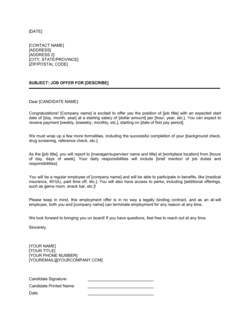
Architectural Drafter Job Description Template

Free Word download • Edit online • Save & share with Drive • Export to PDF

3 pages20–30 min to fillDifficulty: StandardSignature requiredLegal review recommended
Learn more ↓
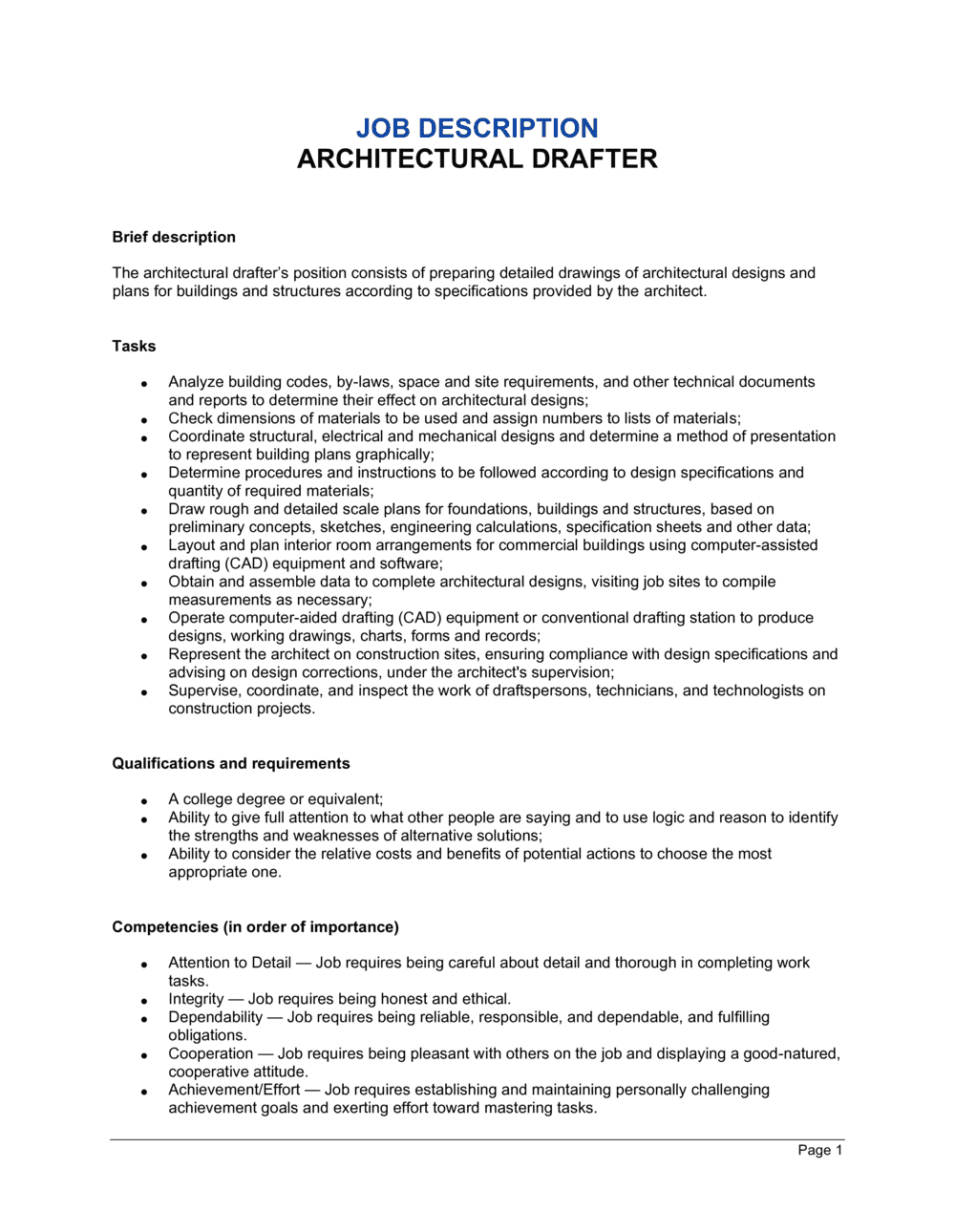
FreeArchitectural Drafter Job Description Template

At a glance

What it is
An Architectural Drafter Job Description is a binding employment document that defines the position title, reporting structure, core duties, required software proficiencies, and qualifications for a drafter who produces technical drawings and construction documents within an architecture or engineering firm. This free Word download gives you a professionally structured starting point you can edit online and export as PDF to attach to an offer letter or employment contract.
When you need it
Use it when opening a new drafting position, backfilling a departing drafter, or standardizing an existing role that has grown organically without formal documentation. It is also required when classifying the position for payroll, FLSA overtime purposes, or union-covered work.
What's inside
Position title and department, reporting hierarchy, a detailed list of daily duties and responsibilities, required CAD and BIM software proficiencies, educational and licensing prerequisites, physical and environmental requirements, and compensation range with FLSA classification.

What is an Architectural Drafter Job Description?

An Architectural Drafter Job Description is a formal employment document that defines the scope, duties, qualifications, software requirements, compensation range, and legal classification of a drafter who produces technical construction drawings within an architecture, engineering, or construction firm. Unlike a casual hiring note or a generic posting copied from a job board, a properly structured job description carries legal weight: it establishes the FLSA exempt or non-exempt classification, documents physical requirements for ADA and workers' compensation purposes, includes a confidentiality acknowledgment covering proprietary drawings and project data, and creates a signed record that the employee understood their role before day one.

Why You Need This Document

Without a written, signed job description, you are exposed on several fronts simultaneously. FLSA misclassification of a non-exempt drafter as exempt — a common error — creates liability for every unpaid overtime hour worked, often reaching back two or three years. A drafter who departs with project files has no documented obligation to return them if there was no confidentiality acknowledgment on file. Vague duty statements make performance-based termination difficult to defend when a drafter challenges a dismissal decision. And in California, Colorado, New York, and Washington, posting a role without a stated salary range violates pay-transparency law regardless of how the hiring conversation goes. This template closes all four gaps in under 30 minutes, giving you a compliant, enforceable foundation that pairs directly with a full employment contract and offer letter.

Which variant fits your situation?

If your situation is…Use this template
Hiring a drafter focused exclusively on residential projectsResidential Drafter Job Description
Recruiting a senior CAD technician with project coordination dutiesSenior CAD Technician Job Description
Defining a BIM modeler role using Revit rather than AutoCADBIM Modeler Job Description
Engaging a drafter as a freelance contractor rather than an employeeIndependent Contractor Agreement
Hiring a drafter for a fixed project term with a defined end dateFixed-Term Employment Contract
Formalizing the full employment terms alongside the job descriptionEmployment Contract
Posting the role externally and tracking applicantsJob Offer Letter

Common mistakes to avoid

❌ Misclassifying the role as FLSA exempt

Why it matters: Most architectural drafters perform production work under the direction of a licensed architect and do not meet the FLSA exemption thresholds. Misclassification exposes the employer to back overtime pay, penalties, and class-action risk.

Fix: Apply the FLSA duties test before finalizing the classification. If the drafter does not manage employees or exercise genuine discretion on significant business matters, classify as non-exempt and pay overtime.

❌ Omitting a salary or wage range

Why it matters: Several US states now mandate pay-range disclosure on job postings. Omitting it creates legal exposure in those states and slows hiring by generating salary-expectation mismatches late in the process.

Fix: Include a salary or hourly range in the compensation clause and verify disclosure requirements in the posting jurisdiction before publishing.

❌ No confidentiality or IP acknowledgment

Why it matters: Architectural drawings and project data are proprietary assets. Without a documented acknowledgment, a departing drafter who retains project files has no clear contractual prohibition to enforce against.

Fix: Include a confidentiality and IP clause in the job description and supplement it with a standalone NDA or IP assignment clause in the full employment contract.

❌ Writing duties too broadly to support performance management

Why it matters: Vague duty statements like 'support the design team' make it nearly impossible to document performance deficiencies or justify a termination decision, increasing wrongful-dismissal risk.

Fix: Write each duty as a specific, measurable action: 'Deliver fully coordinated permit drawings within the schedule agreed at project kickoff.'

❌ Requiring an architecture degree for a production drafting role

Why it matters: Over-credentialing a drafting role screens out technically qualified candidates from two-year architectural technology programs and drives up compensation expectations without adding production value.

Fix: Set the minimum at an associate's degree or vocational certificate in drafting or architectural technology, with a preference for relevant certifications like Autodesk ACP.

❌ No signed acknowledgment block

Why it matters: Without a signed acknowledgment, the employer cannot demonstrate the employee was informed of duties, confidentiality expectations, or at-will status — weakening the employer's position in any subsequent dispute.

Fix: Add a signature and date line to the bottom of the document and collect a signed copy before or on day one, storing it in the personnel file.

The 9 key clauses, explained

Position identification and classification

In plain language: States the official job title, department, FLSA exempt or non-exempt status, and whether the role is full-time, part-time, or contract.

Sample language
Position Title: Architectural Drafter | Department: Design and Production | Employment Type: Full-Time, Non-Exempt | FLSA Status: Non-Exempt | Reports To: [PROJECT ARCHITECT / CAD MANAGER].

Common mistake: Misclassifying a drafter as exempt when the role does not meet the FLSA duties test for administrative or professional exemptions — exposing the employer to back overtime pay liability.

Reporting structure

In plain language: Defines who the drafter reports to directly and any secondary oversight relationships, such as a senior drafter or project architect on specific engagements.

Sample language
The Architectural Drafter reports directly to the [CAD MANAGER / SENIOR PROJECT ARCHITECT] and receives task-level direction from assigned Project Architects for individual project assignments.

Common mistake: Listing dual reporting lines without clarifying priority — creating conflicting instructions the drafter cannot resolve without escalating unnecessarily.

Core duties and responsibilities

In plain language: Enumerates the drafter's primary daily tasks — producing drawings, managing revisions, coordinating with consultants, and maintaining file standards.

Sample language
Prepare and revise 2D construction documents and 3D models in AutoCAD and Revit per project standards. Incorporate redline markups from project architects within [X] business days. Maintain consistent drawing standards, layer naming conventions, and title block accuracy across all project files.

Common mistake: Writing duties so broadly ('support the design team') that performance management becomes impossible when output quality falls below standard.

Software and technical proficiencies

In plain language: Lists the specific CAD, BIM, and project management platforms the drafter must be able to operate, distinguishing required proficiencies from preferred ones.

Sample language
Required: AutoCAD (proficient, minimum [X] years), Revit (proficient). Preferred: SketchUp, Bluebeam Revu, [PROJECT MANAGEMENT PLATFORM]. File management in [BIM 360 / PROCORE / SHAREPOINT].

Common mistake: Listing every software tool the firm owns rather than the tools the drafter will actually use daily — inflating qualifications and discouraging qualified candidates.

Qualifications and education

In plain language: States the minimum educational background, certifications, and years of experience required to be considered for the role.

Sample language
Associate's degree in Architectural Technology, Drafting, or a related field — or equivalent vocational training. Minimum [X] years of professional architectural drafting experience. Autodesk Certified Professional (ACP) designation preferred.

Common mistake: Requiring a four-year architecture degree for a production drafting role, which screens out qualified technical-college graduates and inflates the candidate pool's salary expectations.

Physical and environmental requirements

In plain language: Documents any physical demands of the role — extended computer use, occasional site visits, ability to lift drawing sets — to support ADA compliance and workers' compensation classification.

Sample language
Ability to sit and operate a computer workstation for up to [8] hours per day. Occasional construction site visits requiring hard hat, safety vest, and steel-toed boots. Ability to carry and transport drawing sets weighing up to [30] lbs.

Common mistake: Omitting physical requirements entirely — creating exposure if a workers' compensation or ADA accommodation claim arises and there is no documented baseline for the role.

Confidentiality and IP obligations

In plain language: Confirms that all drawings, project data, client information, and design concepts produced or accessed by the drafter are proprietary to the employer and must not be shared or retained after separation.

Sample language
All drawings, models, specifications, and project data created or accessed by Employee in connection with [EMPLOYER NAME] projects are the sole property of [EMPLOYER NAME] and constitute Confidential Information. Employee shall not retain, copy, or disclose such materials following separation from employment.

Common mistake: No IP or confidentiality clause in the job description at all — leaving the employer without a documented acknowledgment that the drafter understood ownership rules before starting work.

Compensation range and benefits summary

In plain language: States the hourly wage or annual salary range, overtime eligibility, and a brief summary of benefits, consistent with applicable pay-transparency laws.

Sample language
Hourly wage: $[MINIMUM]–$[MAXIMUM] per hour, commensurate with experience. Overtime paid at 1.5× for hours exceeding 40 per week. Benefits: [HEALTH / DENTAL / VISION / 401K / PTO] per the Company's standard benefits program.

Common mistake: Omitting the salary range in jurisdictions with pay-transparency laws (California, Colorado, New York, Washington) — creating legal exposure and slowing candidate screening.

At-will statement and acknowledgment

In plain language: Confirms the at-will nature of the employment relationship (where applicable) and includes a signature block where the drafter acknowledges receipt and understanding of the job description.

Sample language
This job description is not a contract of employment. Employment with [EMPLOYER NAME] is at-will and may be terminated by either party at any time for any lawful reason. Employee acknowledges receipt and understanding of this document. Signature: _______________ Date: _______________

Common mistake: Missing an acknowledgment signature block — without it, the employer cannot prove the employee was informed of role expectations, making performance-based termination harder to defend.

How to fill it out

  1. 1

    Enter the employer's legal entity name and location

    Replace every [EMPLOYER NAME] placeholder with the firm's full registered name and add the office location where the drafter will primarily work. This anchors jurisdiction-specific requirements like pay-transparency disclosures.

    💡 Use the exact legal entity name from your state registration — not a trade name — to ensure consistency with payroll and tax documents.

  2. 2

    Set the FLSA classification and employment type

    Confirm whether the role is non-exempt (entitled to overtime) or exempt. Most production drafters are non-exempt unless they manage other employees or exercise significant independent judgment. Set full-time, part-time, or contract accordingly.

    💡 When in doubt, default to non-exempt. Misclassifying a non-exempt drafter as exempt exposes the employer to back-pay liability for every unpaid overtime hour.

  3. 3

    Define the reporting structure clearly

    Name the specific title — not the individual's name — that the drafter reports to. If the drafter will receive direction from multiple project architects, note that project-level direction flows through the assigned architect but administrative oversight sits with the CAD manager.

    💡 Using titles instead of names prevents the clause from going stale every time personnel change.

  4. 4

    List duties with measurable specificity

    Write each duty as a verb-led, outcome-oriented statement: 'Produce permit-ready construction documents in AutoCAD within the schedule established by the project architect.' Avoid generic statements like 'assist with drafting.'

    💡 Aim for 8–12 duty statements. Fewer than 6 is too vague for performance management; more than 15 becomes unworkable day-to-day.

  5. 5

    Specify required versus preferred software

    Separate must-have proficiencies (AutoCAD, Revit) from preferred skills (SketchUp, Bluebeam) using two distinct lists. Include minimum years of experience for each required platform.

    💡 Listing preferred skills as required will cut your qualified candidate pool by 30–50% and add weeks to your search.

  6. 6

    Complete the qualifications and education block

    State the minimum degree or vocational credential, the years of experience, and any preferred certifications. Calibrate the bar to what the role actually needs — not to what your most experienced drafter happens to have.

    💡 An Autodesk Certified Professional (ACP) designation is a meaningful differentiator worth listing as preferred, not required.

  7. 7

    Add the compensation range and verify pay-transparency compliance

    Enter the hourly or salary range for the role. Check whether the employer's posting location requires disclosure — California, Colorado, New York City, and Washington state all mandate pay ranges on job postings.

    💡 Even where not legally required, posting a salary range typically reduces time-to-fill by 30% by pre-qualifying candidates on compensation expectations.

  8. 8

    Obtain a signed acknowledgment before the first day

    Print or send the completed document for the drafter's signature before or on day one of employment. File the signed copy in the employee's personnel record.

    💡 Digital signatures timestamped through an eSign platform are legally equivalent to wet signatures in all major jurisdictions and are easier to retrieve during disputes.

Frequently asked questions

What does an architectural drafter do?

An architectural drafter converts architects' design concepts, sketches, and specifications into precise technical drawings used for building permits, contractor bidding, and construction. Daily tasks typically include producing floor plans, elevations, sections, and detail drawings in AutoCAD or Revit, incorporating redline markups from project architects, coordinating drawing sets with structural and MEP consultants, and maintaining file and layer standards. The role requires strong CAD proficiency and attention to dimensional accuracy rather than original design creativity.

What qualifications should an architectural drafter have?

Most architectural drafting roles require an associate's degree or vocational certificate in architectural technology, drafting, or a related field, plus a minimum of two to three years of professional experience using AutoCAD and Revit. An Autodesk Certified Professional (ACP) designation is a valued credential. A four-year architecture degree is generally not required for production drafting positions and over-qualifies candidates for the typical compensation range.

Is a job description a legally binding document?

A job description is not a standalone employment contract, but it carries legal weight in several ways. A signed acknowledgment creates a record that the employee understood their duties, at-will status, and confidentiality obligations — relevant in performance-management and wrongful-dismissal disputes. Pay-range disclosures in the description must comply with applicable state pay-transparency laws. The document is also used to establish FLSA classification and workers' compensation job codes.

What software should be listed in an architectural drafter job description?

AutoCAD is the baseline requirement for virtually every architectural drafting role. Revit proficiency is increasingly required at firms using BIM workflows. Bluebeam Revu is common for PDF markup and review. SketchUp, Rhino, or other 3D modeling tools may be preferred depending on the firm's project type. List only software the drafter will actively use — including every tool the firm owns inflates the requirements and discourages qualified applicants who are strong in the tools that actually matter.

Should an architectural drafter be classified as exempt or non-exempt under the FLSA?

Most production architectural drafters are non-exempt and entitled to overtime pay for hours worked beyond 40 per week. The FLSA professional exemption requires that the employee's primary duty involve work requiring advanced knowledge in a field of science or learning, customarily acquired through a prolonged course of specialized instruction. Drafting work performed under the supervision of a licensed architect typically does not meet this threshold. Employers should apply the duties test carefully and consult an employment attorney when the classification is unclear.

What is the difference between an architectural drafter and an architectural designer?

An architectural drafter translates existing design decisions into precise technical drawings — their role is production, coordination, and documentation. An architectural designer exercises creative and technical judgment in developing design solutions, often working toward or holding a professional license. The distinction matters for FLSA classification, compensation benchmarking, and job-posting accuracy. Using the wrong title can attract the wrong candidates and create misaligned role expectations.

Does a job description need to include physical requirements?

Yes, including physical requirements is strongly recommended for two reasons. First, it documents the baseline physical capabilities the role genuinely requires, which is relevant if an ADA accommodation request arises — the employer must assess whether the accommodation would eliminate an essential function. Second, it ensures accurate workers' compensation classification, which affects premium rates. For drafting roles, typical requirements include extended computer use, occasional site visits, and the ability to transport drawing sets.

Can I use one job description template across multiple office locations?

You can use a single template as the base document, but you must customize the compensation range, pay-transparency disclosures, and at-will language for each posting jurisdiction. California, Colorado, New York, and Washington require salary or hourly range disclosure on job postings. Canada and the UK have different employment classification and notice-period standards. Posting the same document in every location without jurisdiction-specific adjustments creates compliance gaps and potential legal exposure.

How often should an architectural drafter job description be updated?

Review the job description annually or whenever the role's duties, software requirements, or reporting structure change materially. Rapid adoption of Revit and BIM 360 over the past decade has made many older AutoCAD-only job descriptions obsolete. Updated descriptions should be re-acknowledged and signed by current employees in the role to ensure the personnel file reflects current expectations.

How this compares to alternatives

vs Employment Contract

A job description defines the role — duties, qualifications, software requirements, and reporting structure. An employment contract governs the legal relationship — compensation, IP assignment, non-compete, severance, and termination. Both documents are needed: the job description establishes expectations; the employment contract creates enforceable obligations. Using a job description alone leaves the employer without enforceable restrictive covenants.

vs Independent Contractor Agreement

An independent contractor agreement engages a self-employed drafter for project-based work with no employment entitlements, no tax withholding, and no overtime. An architectural drafter job description is an employment document for a direct hire. Misclassifying an employee as a contractor triggers back taxes, benefit liability, and FLSA penalties — the degree of supervision and control the firm exercises is the key classification test.

vs Job Offer Letter

A job offer letter confirms the role, salary, and start date to secure a candidate's acceptance. A job description is the detailed operational document defining duties, qualifications, and classification. The offer letter references the job description but does not replace it — candidates should receive both before their first day, with the job description signed as an acknowledgment.

vs Executive Employment Agreement

An executive employment agreement governs senior leadership roles with equity, enhanced severance, change-of-control provisions, and heavily negotiated non-competes. An architectural drafter job description covers a technical production role with standard compensation and no equity component. The document complexity, legal review requirements, and negotiation dynamics are substantially different.

Industry-specific considerations

Architecture and design firms

Drafters work within project teams producing permit and construction document sets across residential, commercial, and institutional projects — Revit and BIM coordination experience are standard requirements.

Engineering and MEP firms

Structural, mechanical, electrical, and plumbing engineering firms use drafters to produce discipline-specific drawings that coordinate with the architect's base drawings — AutoCAD and coordination platform proficiency are critical.

Construction and general contracting

In-house drafters at construction firms focus on shop drawings, as-built documentation, and RFI sketch responses rather than design development — speed and field coordination skills take precedence.

Government and public agencies

Municipal facilities departments and public works agencies hire drafters to maintain building records, produce renovation drawings, and support capital improvement projects — union classification and civil service job codes may apply.

Jurisdictional notes

United States

Most architectural drafters are non-exempt under the FLSA and entitled to 1.5× overtime for hours over 40 per week. California, Colorado, New York, and Washington state require the salary or hourly range to appear on the job posting itself — not just on request. Some states, including California, restrict the enforceability of non-compete clauses even when included in job description acknowledgments.

Canada

At-will employment does not exist in Canada — the job description's at-will clause must be replaced with a notice-period clause meeting provincial Employment Standards Act minimums. Pay-equity legislation in Ontario and federally regulated workplaces may affect how the compensation range is set and disclosed. Quebec employers must provide the document in French for provincially regulated positions.

United Kingdom

UK employers must provide a written statement of employment particulars — which the job description supports but does not replace — on or before the employee's first day. Drafters are generally classified as workers entitled to National Living Wage minimums and Working Time Regulations protections on overtime. Post-employment restrictions included in job description acknowledgments must be reasonable in scope to be enforceable.

European Union

The EU Transparent and Predictable Working Conditions Directive requires employers to provide written terms of employment within seven days of the start date. Several member states — including Germany, France, and the Netherlands — mandate works council consultation before creating or significantly modifying a job description for an existing role. GDPR applies to any personal data collected during the recruitment process.

Template vs lawyer — what fits your deal?

PathBest forCostTime
Use the templateArchitecture or engineering firms hiring standard production drafters in a single US state or Canadian provinceFree20–30 minutes
Template + legal reviewFirms posting in multiple states with differing pay-transparency laws, or adding custom IP and non-compete language$200–$500 for an employment attorney review1–3 days
Custom draftedGovernment or union-regulated employers, multi-jurisdiction postings, or firms with complex FLSA classification questions$500–$1,5003–7 days

Glossary

Architectural Drafter
A technical professional who converts architects' sketches, specifications, and design concepts into detailed construction drawings using CAD or BIM software.
CAD (Computer-Aided Design)
Software used to create precise 2D and 3D technical drawings — AutoCAD and MicroStation are the most common platforms in architectural drafting.
BIM (Building Information Modeling)
A process for creating and managing digital representations of a building's physical and functional characteristics, most commonly executed in Revit.
Construction Documents
The full set of drawings and specifications — site plans, floor plans, elevations, sections, and details — issued for building permit applications and contractor bidding.
FLSA Classification
The designation of a position as exempt or non-exempt under the Fair Labor Standards Act, determining whether the employee is entitled to overtime pay for hours worked over 40 per week.
As-Built Drawings
Revised construction documents that reflect the actual conditions of a building as it was constructed, incorporating field changes made during the build.
Shop Drawings
Detailed fabrication and installation drawings produced by contractors or subcontractors and reviewed against the architect's construction documents for compliance.
Redline Markup
Handwritten or digital annotations on a drawing indicating corrections, changes, or field conditions that the drafter must incorporate into the official document set.
Title Block
The standardized information block on a technical drawing that identifies the project name, drawing number, revision status, scale, and drafter's initials.
Xref (External Reference)
A CAD feature that links one drawing file into another as a live reference, allowing multiple team members to work on different parts of a project simultaneously.
Drawing Revisions
Formally numbered and dated updates to an issued drawing, tracked in a revision cloud and recorded in the title block to maintain an auditable change history.

Part of your Business Operating System

This document is one of 3,000+ business & legal templates included in Business in a Box.

  • Fill-in-the-blanks — ready in minutes
  • 100% customizable Word document
  • Compatible with all office suites
  • Export to PDF and share electronically

Create your document in 3 simple steps.

From template to signed document — all inside one Business Operating System.
1
Download or open template

Access over 3,000+ business and legal templates for any business task, project or initiative.

2
Edit and fill in the blanks with AI

Customize your ready-made business document template and save it in the cloud.

3
Save, Share, Send, Sign

Share your files and folders with your team. Create a space of seamless collaboration.

Save time, save money, and create top-quality documents.

★★★★★

"Fantastic value! I'm not sure how I'd do without it. It's worth its weight in gold and paid back for itself many times."

Managing Director · Mall Farm
Robert Whalley
Managing Director, Mall Farm Proprietary Limited
★★★★★

"I have been using Business in a Box for years. It has been the most useful source of templates I have encountered. I recommend it to anyone."

Business Owner · 4+ years
Dr Michael John Freestone
Business Owner
★★★★★

"It has been a life saver so many times I have lost count. Business in a Box has saved me so much time and as you know, time is money."

Owner · Upstate Web
David G. Moore Jr.
Owner, Upstate Web

Run your business with a system — not scattered tools

Stop downloading documents. Start operating with clarity. Business in a Box gives you the Business Operating System used by over 250,000 companies worldwide to structure, run, and grow their business.

Free Forever Plan · No credit card required